
A gothic Christmas tree transforms the traditional festive aesthetic into something darker, more dramatic, and deeply atmospheric. With black branches as the foundation and red crystal ornaments as the focal point, this design blends elegance with mystery, creating a centerpiece that commands attention. Far from being morbid or somber, a well-styled gothic tree exudes sophistication—like a vintage ballroom lit by candlelight and garnished with rubies.
The key lies in balance: contrast without chaos, opulence without clutter. This guide walks through every step of curating a cohesive, visually compelling gothic Christmas tree using black-branched artificial trees and red crystal accents. Whether you're embracing a year-round love for dark academia or simply want a bold seasonal statement, this approach offers timeless allure.
Selecting the Right Tree Base
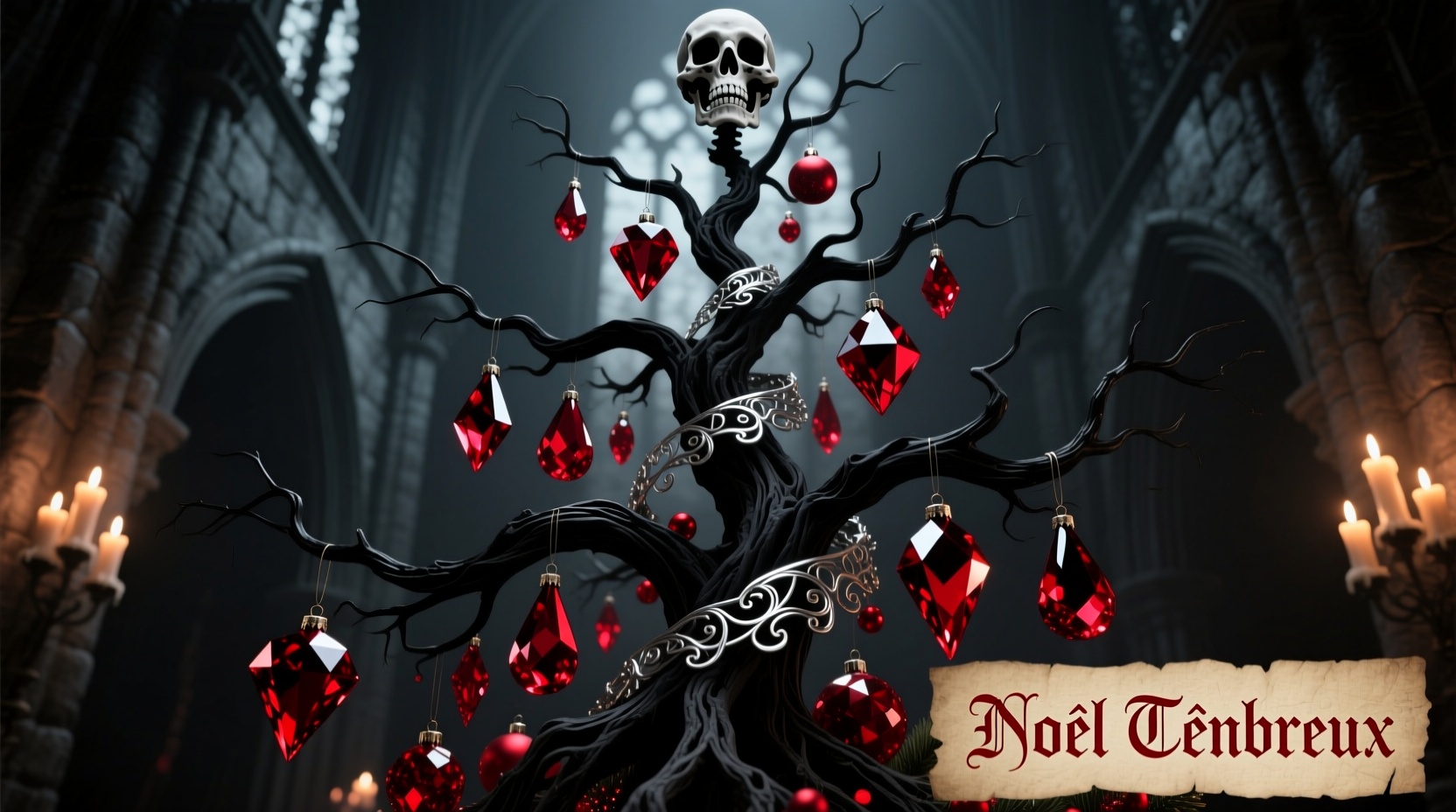
The foundation of any themed Christmas tree is the tree itself. For a gothic aesthetic, a model with black or deep charcoal-colored branches is essential. These are increasingly available from specialty decor retailers and often marketed as “black forest,” “raven,” or “gothic” trees. Unlike traditional green pines, black branches create instant drama and serve as a neutral yet intense backdrop for reflective or jewel-toned décor.
When choosing your tree, consider branch density and angle. A full, tiered silhouette with downward-sweeping limbs enhances the theatrical feel and allows ornaments to hang visibly without getting lost. Trees ranging from 6.5 to 9 feet tall work best in open living areas or foyers where they can be appreciated from multiple angles.
Tip: Opt for a tree with built-in LED lighting in warm white or soft amber—it mimics candlelight and adds depth without disrupting the dark palette.Curating a Cohesive Ornament Palette
While red crystal ornaments take center stage, they should not stand alone. A monochromatic scheme can appear flat. Instead, layer textures and finishes within a tight color range: black, deep crimson, wine, burgundy, and hints of metallic gunmetal or antique gold.
Red crystals catch and refract light beautifully, especially when paired with matte or velvet-finish baubles in black or dark plum. Consider mixing in a few mercury glass ornaments with a smoky finish—they echo Victorian-era mystique and complement the gothic mood. Avoid bright, glossy reds; instead, choose deeper ruby or garnet tones for richness.
“Gothic decor isn’t about darkness for its own sake—it’s about reverence for history, texture, and emotional resonance.” — Lila Moreau, Interior Stylist & Themed Environment Designer
Ornament Layering Strategy
Begin by distributing larger ornaments (3–4 inches) evenly throughout the tree’s midsection and lower tiers. These act as anchors. Then fill in with medium (2–3 inch) crystals and textured spheres. Use smaller pieces (1–1.5 inches) near the tips of branches and at the top to create visual movement.
Space red crystals strategically so they interact with light sources—whether ambient room lighting or built-in LEDs. Position them to face outward, maximizing their sparkle. Cluster odd numbers (three or five) of similar-sized crystals together for a curated, intentional look rather than random scattering.
Enhancing Depth with Lighting and Foliage Accents
Lighting is critical in preventing a black tree from appearing flat or void-like. Warm white string lights are ideal—cool whites clash with red tones and make the space feel sterile. Wrap lights starting from the trunk outward, threading them deep into the branches to create an inner glow, like embers within shadow.
To add subtle contrast and break up large swaths of black, weave in delicate foliage sprays in deep green eucalyptus, dried ferns, or faux ivy with dark stems. These should be sparse—no more than three or four small clusters on a 7-foot tree—to maintain the minimalist intensity of the theme.
For added luxury, incorporate a few black-dyed preserved elements such as peacock feathers, dried lotus pods, or raven-wing-shaped cutouts tucked discreetly among branches. These details reward close inspection without overwhelming.
| Element | Recommended Style | Avoid |
|---|---|---|
| Tree Color | Matte black or charcoal branches | Glossy black (can look plastic) |
| Ornaments | Red crystal, mercury glass, velvet-finish | Bright red plastic, cartoonish shapes |
| Lighting | Warm white LEDs, candle-style bulbs | Cool white, multicolor, strobe |
| Foliage Additions | Dried eucalyptus, black-dyed feathers | Artificial pine garlands, tinsel |
| Tree Topper | Antique silver star, black angel, crescent moon | Traditional Santa or glowing snowflake |
Step-by-Step Styling Timeline
Creating a polished gothic tree takes time and intention. Rushing leads to overcrowding or imbalance. Follow this sequence over one to two evenings for best results.
- Day 1 – Setup & Lighting (60–90 mins): Assemble the tree and secure it in a sturdy stand. Begin wrapping warm white LED lights from the inside out, ensuring even distribution and no dark zones.
- Day 1 – Base Ornaments (30 mins): Hang all large and medium-sized red crystal and black-textured ornaments. Focus on structural balance—visual weight should be centered and slightly heavier at the base.
- Day 2 – Texture & Detail (45 mins): Insert dried botanical elements, feathers, or metallic sprays. Tuck them into gaps where solid ornament coverage creates monotony.
- Day 2 – Final Embellishments (30 mins): Add smaller crystal drops, dangle chains, or charm accents. Install the tree topper. Step back and rotate the tree, adjusting any sparse areas.
- Final Check (15 mins): View the tree from multiple angles and under different lighting conditions (daylight, evening, lamp-lit). Remove any piece that feels out of harmony.
Complementary Decor: Extending the Theme Beyond the Tree
A gothic Christmas tree stands strongest when integrated into a broader seasonal narrative. Extend the motif to mantels, dining tables, and entryways using consistent materials and color cues.
On the mantel, arrange black pillar candles of varying heights alongside clusters of red crystal geodes or glass cloches containing dried roses and black feathers. Drape a narrow runner in black velvet or crushed wine satin, then scatter loose red crystals or miniature skull-shaped ornaments sparingly.
The dining table can feature black linen napkins tied with burgundy silk cord, charger plates in matte black ceramic, and centerpieces of low crystal bowls filled with floating candles and cranberries. Overhead, suspend a few hanging crystal prisms above the table to mirror the tree’s sparkle.
“Thematic consistency doesn’t mean repetition—it means resonance. One red crystal on the table echoes ten on the tree, creating unity through subtlety.” — Marcus Tran, Event Designer & Atmosphere Curator
Mini Case Study: The Velvet Parlor Transformation
In 2022, interior designer Naomi Pierce was commissioned to style a holiday pop-up lounge in a historic brownstone. The space featured dark wood paneling, stained glass, and a grand fireplace—ideal for a gothic interpretation.
Pierce selected a 7.5-foot black-branched tree placed in a cast iron planter painted matte black. She used 42 red crystal orbs ranging from 1.5 to 4 inches, interspersed with 18 matte black velvet balls and six antique gold filigree stars. Warm Edison-style bulbs were woven deep into the branches, and three raven feathers were subtly placed near the base.
The result? Visitors described the tree as “hauntingly beautiful” and “like something out of a Bram Stoker novel.” Social media engagement spiked, with the tree becoming a photo destination. Most importantly, sales of matching décor items in the adjacent boutique increased by 68% compared to the previous year.
The success lay not in excess, but in restraint—every element had purpose, and the red crystals became emotional touchpoints in an otherwise dark composition.
Essential Checklist for Your Gothic Tree
Before finalizing your display, run through this checklist to ensure cohesion and impact:
- ✅ Tree has black or charcoal branches with realistic texture
- ✅ Built-in or wrapped warm white LED lighting is installed and functional
- ✅ Red crystal ornaments are varied in size and cut (faceted, round, teardrop)
- ✅ At least three complementary textures included (e.g., velvet, mercury glass, metal)
- ✅ No clashing colors—avoid bright greens, silvers, or traditional Christmas patterns
- ✅ Tree topper aligns with theme (e.g., black angel, silver moon, wrought iron star)
- ✅ Surrounding décor echoes at least one element from the tree (color, material, shape)
- ✅ Tree is viewed and adjusted from all major angles in the room
Frequently Asked Questions
Can I use real flowers or greenery on a gothic tree?
Yes, but selectively. Fresh flowers wilt and disrupt the long-term aesthetic. Instead, opt for preserved or dyed botanicals—such as black-dyed eucalyptus, bleached pampas grass, or dried amaranthus in deep maroon. These last the entire season and enhance the moody elegance.
Are red crystals too flashy for a gothic theme?
Not if chosen thoughtfully. Avoid cheap, plastic-looking red balls. Instead, select high-quality crystal or glass ornaments with faceted cuts that refract light softly. Their brilliance contrasts beautifully against black branches, symbolizing life within darkness—a core theme in gothic tradition.
How do I store my gothic tree and ornaments safely?
Use compartmentalized ornament storage trays to prevent scratching, especially for crystal pieces. Store red crystals separately from black velvet ornaments to avoid dye transfer. Keep the tree in a breathable fabric bag—never plastic—to prevent moisture buildup. Label boxes clearly for easy retrieval next season.
Conclusion: Embrace the Elegance of Shadow and Light
Styling a gothic Christmas tree with black branches and red crystal ornaments is more than a decorating choice—it’s a celebration of contrast, emotion, and refined taste. It challenges the notion that holidays must be bright and cheerful at all costs, offering instead a space for introspection, beauty, and quiet drama.
By focusing on quality materials, intentional placement, and atmospheric lighting, you create not just a tree, but an experience—one that lingers in memory far longer than any mass-produced display. The red crystals become symbols of passion, vitality, and resilience, shining all the more brightly because they exist within darkness.
🚀 Ready to redefine your holiday aesthetic? Gather your black branches, source those deep-red crystals, and begin crafting a Christmas tree that doesn’t just decorate a room—but transforms it. Share your finished look online with #GothicTreeStyle and inspire others to embrace the beauty of the unconventional.








