
Coastal holiday displays bring joy and community spirit, especially when neighborhoods light up with festive inflatables. But for those living near the ocean—where winter storms intensify wind speeds and salt-laden air weakens materials—keeping these decorations intact can be a persistent challenge. In December, nor’easters, low-pressure systems, and sudden gusts often exceed 50 mph along the Atlantic coast, turning cheerful snowmen and reindeer into airborne hazards or shredded remnants by morning.
Securing lightweight inflatables isn’t just about preserving seasonal cheer—it’s also about safety, property protection, and avoiding fines from local ordinances that prohibit loose debris during high winds. This guide offers practical, field-tested solutions tailored specifically for coastal residents who face relentless winter gales. From anchoring systems and material upgrades to strategic placement and storm-response protocols, every step is designed to keep your display grounded—literally.
Understand Coastal Wind Dynamics in Winter
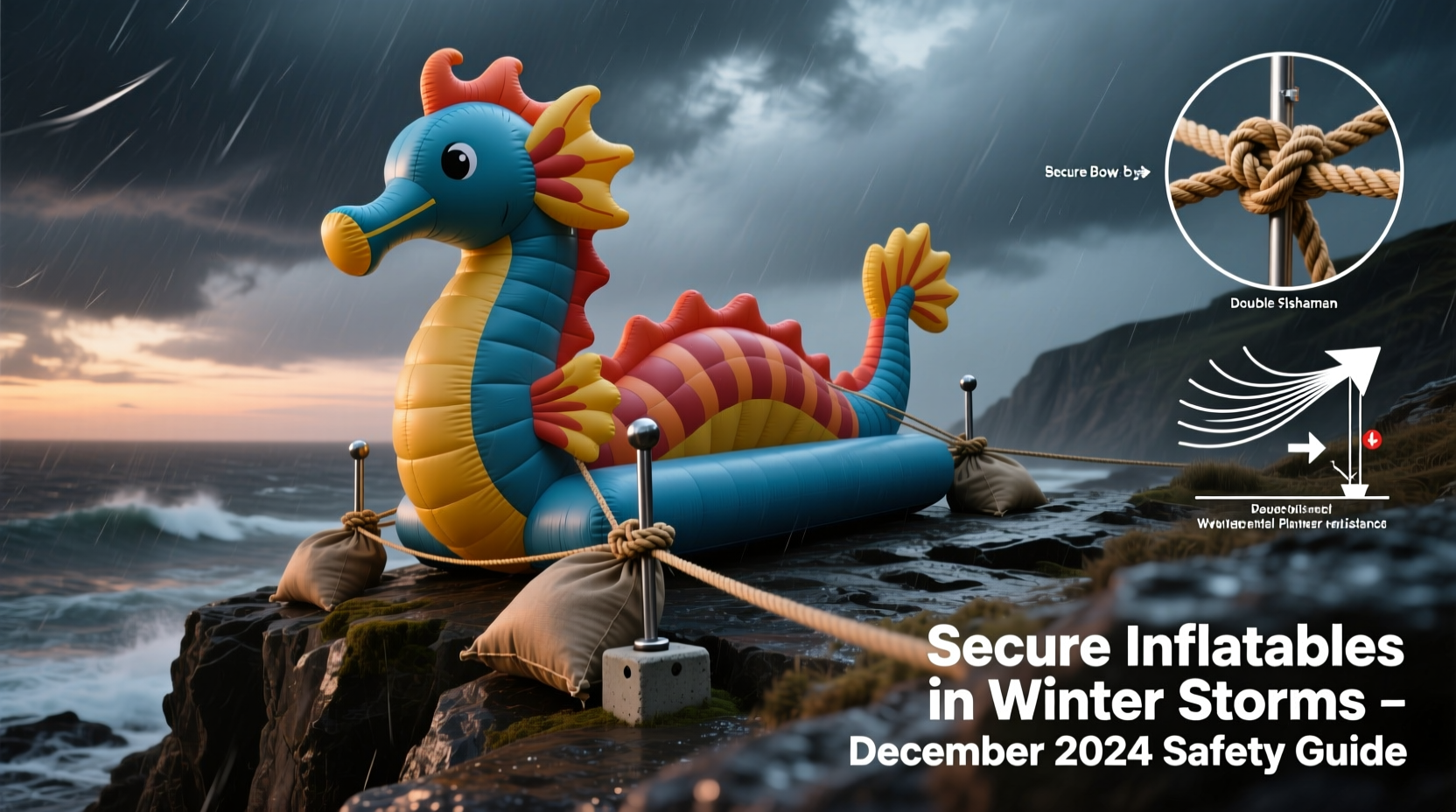
Before selecting any securing method, it’s essential to understand what makes coastal wind conditions uniquely destructive in December. Unlike inland areas where wind may be intermittent, coastal regions experience consistent onshore flow due to temperature differentials between cold landmasses and relatively warmer ocean waters. These dynamics fuel powerful storm systems that generate sustained winds of 30–40 mph and gusts over 60 mph.
Salt spray compounds the issue. Over time, salt corrodes metal stakes, degrades nylon fabrics, and stiffens seams, reducing tensile strength. UV exposure earlier in the year may have already weakened materials, making them more susceptible to tearing under stress. Combine these factors with frequent freeze-thaw cycles that loosen soil and destabilize ground anchors, and you have a perfect storm for inflatable failure.
Experts emphasize that preparation must begin well before the first storm hits.
“Treating inflatables like temporary structures—not just decorations—dramatically improves their resilience. Think like an engineer: calculate load, anchor properly, and inspect regularly.” — Dr. Lena Torres, Coastal Environmental Engineer, University of Rhode Island
Anchoring Systems That Work in Sandy and Loamy Soils
Standard plastic stakes included with most inflatables are ineffective in sandy or water-saturated soils common in coastal yards. They pull out easily under moderate tension. Effective anchoring requires deeper penetration, wider surface area, and corrosion resistance.
The following anchoring methods have been validated through municipal park maintenance programs in high-wind zones such as Cape Cod, Outer Banks, and Long Island:
- Rebar Anchors: ½-inch diameter steel rebar, 18–24 inches long, driven at a 45-degree angle away from the inflatable. Attach heavy-duty nylon straps (rated for 500+ lbs) using marine-grade carabiners.
- Screw-In Ground Anchors: Helical anchors (commonly used for tents and signs) provide superior hold in soft soil. Models like the E-Z Anchor EZ-24 offer 900-lb pullout resistance.
- Sandbag Ballasting: For decks or patios without soil access, fill UV-resistant sandbags (not burlap) and strap them to base corners. Use two per corner, minimum 30 lbs each.
- Cross-Tethering: Connect multiple anchor points diagonally across the inflatable frame to distribute wind load evenly and prevent pivoting.
Step-by-Step: Securing an Inflatable in 7 Actions
Follow this timeline-based protocol to install and maintain your inflatable safely throughout the storm-prone season.
- Inspect the Unit (Before Installation): Check for punctures, seam splits, or motor housing cracks. Repair with PVC patch kits if needed. Replace frayed power cords immediately.
- Choose Location Wisely: Avoid open hilltops or unobstructed beachfront lawns. Position near windbreaks like fences, hedges, or house walls—but not so close that airflow creates lift underneath.
- Install Primary Anchors: Drive four rebar rods or screw anchors into the ground at each corner, 18 inches deep. Angle them 30–45 degrees outward.
- Attach Tethers: Use adjustable webbing straps with ratchets. Do not use rope—it stretches under load. Connect one end to the inflatable’s D-rings and the other to the anchor.
- Add Secondary Stabilization: Install two additional mid-panel tethers on longer inflatables (over 6 feet). Use Y-splitters to connect one anchor to dual points on the unit.
- Test Tension: Once inflated, gently push the top. There should be minimal sway. If movement exceeds 4 inches, tighten tethers or add anchors.
- Monitor Weather Daily: Set alerts for wind speeds above 35 mph. Have a plan to deflate and store the unit within 30 minutes of warning issuance.
Material Upgrades and Protective Modifications
Most retail inflatables use thin polyester or nylon with single-stitched seams—insufficient for coastal exposure. Consider upgrading critical components:
| Component | Standard Issue | Recommended Upgrade | Rationale |
|---|---|---|---|
| Fabric | 0.2 mm polyester | 0.3 mm ripstop nylon with PU coating | Higher tear resistance; better moisture barrier |
| Tethers | Elastic cord or string | 1-inch wide polyester webbing with ratchet buckles | No stretch under load; easy adjustment |
| Stakes | Plastic spiral stakes | Galvanized steel rebar or helical anchors | Resists corrosion and pullout |
| Electrical Cover | None or flimsy sleeve | Weatherproof conduit box with drip loop | Prevents short circuits from rain and salt |
Additionally, apply a silicone-based fabric protector to repel salt and moisture. Reapply monthly during the season. Avoid vinyl protectants containing petroleum distillates—they degrade coated fabrics over time.
Real-World Case: The Nantucket Snow Globe Incident
In December 2022, a 7-foot inflatable snow globe in Nantucket was torn from its moorings during a 58-mph gust and carried 200 yards into a cranberry bog, damaging power lines en route. The homeowner had used only the included plastic stakes and standard zip ties. After the incident, town officials collaborated with the University of Massachusetts Extension Service to develop a coastal decoration safety checklist.
The revised protocol mandated:
- Minimum 4-point anchoring with metal stakes
- Daily inspection logs during storm season
- Automatic shut-off timers linked to weather APIs
By December 2023, participating households reported zero inflatable losses despite three major storms. One resident, Diane Marsh, said: “I used to lose at least one decoration every winter. Now I use rebar and sandbags, and my giant Santa hasn’t budged—even in 45-mile-an-hour winds.”
Essential Checklist for Storm-Ready Inflatables
Checklist: Secure Your Inflatable Before December Winds Hit- ❏ Inspect for tears, leaks, or electrical damage
- ❏ Replace plastic stakes with rebar or screw anchors
- ❏ Install heavy-duty webbing straps with ratchets
- ❏ Position unit behind a windbreak (fence, shrubbery, wall)
- ❏ Seal electrical connections with waterproof conduit
- ❏ Set up weather alert notifications (NOAA, Weather.com)
- ❏ Create a 30-minute emergency deflation and storage plan
- ❏ Apply fabric protectant spray (silicone-based)
Frequently Asked Questions
Can I leave my inflatable up during a storm if it’s “weather-resistant”?
No. “Weather-resistant” typically means protection against light rain and brief wind, not sustained gales. Even commercial-grade units can fail under hurricane-force gusts. The safest practice is to deflate and store inflatables when wind speeds exceed 35 mph. Many insurance policies exclude damage caused by improperly secured outdoor items during known storm events.
What’s the best way to store an inflatable between storms?
Clean and dry the unit completely before storage. Fold loosely and place in a breathable cotton bag—never plastic, which traps moisture and promotes mold. Store indoors in a cool, dark space. Keep the blower motor in a sealed container with silica gel packets to prevent condensation.
Are weighted bases enough on wooden decks?
Weighted bases alone are insufficient in coastal storms. While sandbags help, they must be combined with tethered anchors to adjacent railings or structural points. A deck-mounted inflatable should have at least six tie-down points: four corners and two mid-span reinforcements.
Expert Insight: Engineering for Wind Load
Wind exerts pressure measured in pounds per square foot (psf). At 40 mph, wind load reaches approximately 5 psf. A 6’ x 4’ inflatable presents 24 sq ft of surface area, equating to 120 lbs of total force. Without proper anchoring, this force easily overcomes weak fasteners.
“You can’t fight physics with hope. Each attachment point must handle at least 30 lbs of uplift force. That means industrial hardware, not hobby-grade parts.” — Mark Fuentes, Structural Consultant, Coastal Build Advisors
This principle underscores why DIY fixes like duct tape or bungee cords fail. Invest in marine-grade components designed for constant stress.
Conclusion: Stay Festive, Stay Safe
Living on the coast doesn’t mean giving up holiday displays—it means adapting them to the environment. With the right anchoring strategy, upgraded materials, and proactive monitoring, you can enjoy your outdoor inflatables all December long, even when nor’easters roll in. The key is treating your decorations not as disposable novelties, but as semi-permanent installations subject to real engineering forces.
Start now. Reinforce your setup before the first major storm. Share your success stories and lessons learned. By building smarter traditions today, you protect your home, your neighbors, and the spirit of the season.
💬 Have a coastal inflatable hack that survived a December gale? Share your tip in the comments and help others keep their holidays joyful—and grounded.








