Cut flowers bring life, color, and emotion into homes and offices. Whether received as a gift or picked from the garden, their beauty is fleeting—but it doesn’t have to end in just a few days. With thoughtful care and a few clever household tricks, you can extend the vase life of cut flowers by several days, sometimes even doubling it. The secret lies not in expensive floral preservatives alone, but in understanding how flowers drink water, what causes them to wilt, and how everyday items in your kitchen can make a real difference.
This guide reveals practical, science-supported techniques using common household ingredients like sugar, vinegar, and aspirin. These are not myths or old wives’ tales—they’re grounded in botany and used by professionals. By following these steps, you’ll enjoy vibrant blooms longer, reduce waste, and get more joy from every bouquet.
Why Cut Flowers Wilt: The Science Behind the Fade
Once a flower is cut from its plant, it’s disconnected from its primary source of nutrients and water. While stems can still absorb water through capillary action, they are vulnerable to blockages, bacterial growth, and nutrient depletion. Wilting occurs when one or more of the following happens:
- Vascular blockage: Air bubbles or bacteria build up in the stem, preventing water uptake.
- Dehydration: The flower loses more water through transpiration than it can absorb.
- Nutrient deficiency: Without sugars or energy sources, petals droop and fade.
- Microbial growth: Bacteria and fungi in stagnant water accelerate decay.
Florists combat these issues with commercial preservatives containing sugar (food), acidifiers (to lower pH and improve water uptake), and biocides (to kill microbes). But you don’t need specialty products. Many effective alternatives are already in your pantry.
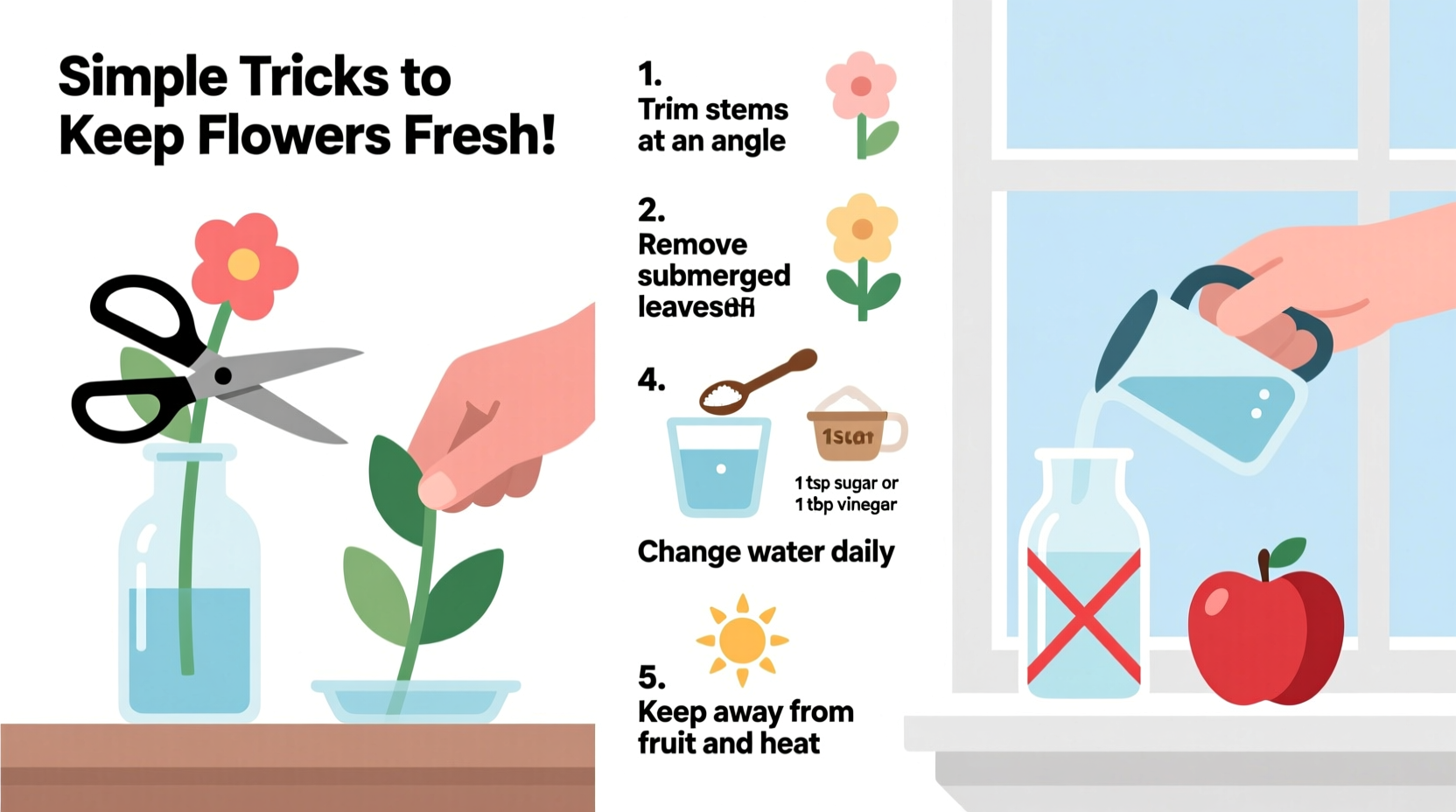
Tip: Always re-cut stems at an angle before placing them in water—it increases surface area for absorption and prevents flat ends from sitting flush against the vase bottom.Proven Household Tricks to Extend Flower Life
You don’t need a green thumb or floral expertise to keep cut flowers fresh. These time-tested methods use common household items and require minimal effort.
1. Use Boiled Water for Certain Flowers
For woody-stemmed flowers like chrysanthemums, lilacs, or hydrangeas, pouring hot (not boiling) water over the cut ends helps open vessels for better hydration. Alternatively, dip the bottom inch of the stem in boiling water for 30 seconds before placing in room-temperature water. This prevents air embolisms and seals tissues to reduce sap loss.
2. Add Sugar and Vinegar to the Vase
A homemade preservative can be made with two ingredients:
- 1 teaspoon sugar (provides energy)
- 2 teaspoons white vinegar (lowers pH and inhibits bacteria)
Mix into a quart (about 1 liter) of lukewarm water. The slightly acidic environment mimics commercial solutions and enhances water flow up the stem.
3. Drop in a Copper Penny
Place a copper penny in the vase. Copper acts as a natural fungicide, suppressing microbial growth in the water. While not a standalone solution, it works best when combined with clean water and regular maintenance.
4. Try Aspirin for Extended Bloom Time
Crush one uncoated aspirin tablet and dissolve it in the vase water. Aspirin contains salicylic acid, which some studies suggest helps plants manage stress and improves vascular function. Though research is limited, many florists and home users report noticeably longer-lasting arrangements.
5. Keep Flowers Away from Ripening Fruit
Apples, bananas, and other ripening fruits release ethylene gas, a plant hormone that speeds up aging and petal drop. Even small amounts can shorten flower life significantly. Store bouquets away from fruit bowls or kitchen counters where produce is stored.
“Ethylene sensitivity varies among species, but nearly all cut flowers deteriorate faster when exposed to this gas.” — Dr. Linda Chalker-Scott, Urban Horticulturist and Extension Specialist, Washington State University
Step-by-Step Guide: How to Prepare and Maintain Cut Flowers
Follow this daily and weekly routine to maximize freshness:
- Day 0 – Immediate Care After Receiving Flowers:
- Unwrap flowers immediately.
- Re-cut stems at a 45-degree angle using sharp scissors or shears (dull tools crush stems).
- Remove any leaves that would sit below the waterline to prevent rot.
- Use lukewarm water—too cold slows absorption; too hot shocks the plant.
- Add a preservative solution (homemade or store-bought).
- Day 1 – First Check:
- Ensure the vase is clean—microbes thrive in dirty containers.
- Place flowers in a cool spot, out of direct sunlight and drafts.
- Mist petals lightly if the air is dry, especially in winter.
- Days 2–3 – Maintenance:
- Change the water every two days, even if it looks clear.
- Re-trim stems slightly each time you change the water.
- Reapply preservative solution with each refill.
- Days 4–7 – Final Stretch:
- Watch for signs of wilting or slimy stems—remove affected flowers promptly.
- If using tall vases, consider adding floral tape across the top to support heavy blooms and prevent bending.
- Keep monitoring temperature and light exposure.
Do’s and Don’ts: A Quick Reference Table
| Do | Don't |
|---|---|
| Re-cut stems every time you change water | Use dull scissors or tear stems |
| Use lukewarm water for optimal uptake | Pour icy or scalding water into the vase |
| Clean the vase thoroughly between uses | Reuse dirty vases without washing |
| Keep flowers in a cool room (65–72°F / 18–22°C) | Place near heaters, TVs, or sunny windowsills |
| Remove spent blooms to prolong others | Leave decaying flowers in the arrangement |
| Add a pinch of bleach (¼ tsp per quart) to control bacteria | Overdo chemicals—too much bleach damages stems |
Real Example: Reviving a Wedding Bouquet
Sarah received her wedding bouquet late Friday evening after the reception. Tired and emotional, she placed it in a vase with tap water and left it on the dining table—directly under a bright chandelier. By Sunday morning, the roses were limp, and the lilies had begun to brown.
She recalled reading about re-cutting stems and changing water. On Sunday afternoon, she followed a strict revival protocol:
- Trimmed all stems at an angle.
- Washed the vase with soapy water and rinsed thoroughly.
- Prepared fresh water with 1 tsp sugar and 2 tsp vinegar per quart.
- Moved the bouquet to a cooler bedroom away from lights and heat.
- Changed water and re-cut stems every two days.
The result? The bouquet stayed vibrant through Thursday—nearly doubling its expected lifespan. Sarah was able to preserve key flowers by pressing them afterward, creating lasting keepsakes.
Checklist: Maximize Your Flower Longevity
Print or save this checklist to follow every time you handle cut flowers:
- ☐ Unwrap flowers immediately
- ☐ Remove lower leaves below water level
- ☐ Re-cut stems at a 45° angle
- ☐ Use a clean vase
- ☐ Fill with lukewarm water
- ☐ Add preservative (commercial or DIY)
- ☐ Place in a cool, shaded area
- ☐ Change water every 2 days
- ☐ Re-trim stems during water changes
- ☐ Keep away from fruit, heat, and drafts
- ☐ Remove wilted flowers promptly
Frequently Asked Questions
Can I use lemon-lime soda instead of making a preservative?
Yes, but sparingly. Clear sodas like Sprite or 7-Up contain sugar and citric acid, which can act as a preservative. However, they also contain carbonation and extra additives. Dilute one part soda with three parts water to avoid stickiness or fermentation. Never use dark sodas—they discolor water and promote mold.
Should I refrigerate cut flowers at night?
For most flowers, yes—if possible. Keeping them in the refrigerator overnight (between 34–40°F / 1–4°C) dramatically slows aging. Place them in a sealed container or cover loosely with a plastic bag to avoid ethylene exposure from food. Avoid storing near apples or avocados. Remove before morning to enjoy during the day.
Why do my flower stems turn slimy?
Slime indicates bacterial growth, usually due to stagnant water or organic matter (like leaves) decomposing underwater. Prevent this by removing submerged foliage, changing water frequently, and cleaning the vase. Adding a quarter-teaspoon of bleach per quart of water helps disinfect without harming most flowers.
Final Thoughts: Small Actions, Big Results
Keeping cut flowers fresh isn’t about perfection—it’s about consistency. Simple habits like re-cutting stems, changing water, and avoiding heat sources make a measurable difference. The household tricks outlined here—using vinegar, sugar, aspirin, or copper—are accessible, affordable, and backed by both tradition and science.
Every bouquet carries meaning. Whether it’s a anniversary gift, a sympathy gesture, or a spontaneous treat, extending its life honors the sentiment behind it. With just a few minutes of care each week, you can stretch beauty further, reduce waste, and deepen your appreciation for nature’s fleeting elegance.
💬 Have a favorite flower-preserving hack? Share your experience in the comments and help others enjoy longer-lasting blooms!








