The holiday season is as much about atmosphere as it is about decoration. While most focus on visual appeal—twinkling lights, shiny ornaments, and perfectly wrapped gifts—few consider the power of scent in shaping memory and mood. Aromatherapy, the practice of using essential oils and natural fragrances to enhance well-being, can be seamlessly woven into traditional decor. One unexpected but highly effective canvas? The Christmas tree skirt.
A tree skirt isn’t just a decorative base for presents—it’s a functional piece that sits at the heart of your holiday display. By integrating aromatherapeutic elements into its design, you can transform it into a subtle diffuser of seasonal scents like pine, cinnamon, orange, and clove. This fusion of craft and wellness elevates your space from merely festive to sensorially immersive.
Why Combine Aromatherapy with Tree Skirt Design?
Scent has a direct line to the limbic system, the part of the brain responsible for emotion and memory. The smell of evergreen or spiced citrus during the holidays often evokes nostalgia, comfort, and joy. Rather than relying solely on candles or plug-in diffusers—which require electricity and constant monitoring—you can embed fragrance directly into your decor.
Aromatherapy-infused tree skirts offer a passive, safe, and long-lasting way to release calming or invigorating scents throughout your home. Unlike synthetic air fresheners, natural essential oils provide both ambiance and therapeutic benefits: peppermint can boost alertness, lavender promotes relaxation, and sweet orange uplifts the spirit.
Moreover, this approach aligns with growing interest in holistic living and sustainable holiday practices. Handcrafting a tree skirt allows personalization, reduces waste from mass-produced decor, and supports mindful consumption.
Tip: Choose fabrics like cotton, linen, or wool—they absorb and retain essential oils better than synthetics.Selecting Materials for Scent Retention and Safety
Not all fabrics are created equal when it comes to holding fragrance. Natural fibers have microscopic textures that trap aromatic molecules more effectively than smooth, petroleum-based materials like polyester.
- Cotton: Highly absorbent, breathable, and easy to sew. Ideal for hand-stitched skirts with hidden sachets.
- Linen: Durable and porous, perfect for heavier skirts with layered construction.
- Wool Felt: Naturally flame-resistant and excellent at retaining oils without becoming greasy.
- Hemp: Eco-friendly and robust, great for rustic designs with earthy tones.
When selecting essential oils, ensure they are 100% pure and free from additives. Avoid diluting oils in alcohol or water before application unless necessary—direct drops onto fabric or felted inserts work best for slow release.
Crucially, keep safety in mind. Never saturate fabric with oil, as this increases flammability risk near heat sources (including tree lights). Always place infused elements away from direct contact with bulbs or electrical cords.
“Integrating aromatherapy into textiles requires balance—enough scent to be noticeable, but not so much that it compromises safety or overwhelms the senses.” — Dr. Lena Pruitt, Holistic Design Consultant
Step-by-Step Guide: Creating an Aromatherapy-Infused Tree Skirt
Building a scented tree skirt doesn’t require advanced sewing skills. With basic tools and intentional design choices, you can create a piece that delights both the eyes and nose.
- Choose Your Base Design
Decide on size and shape—round, square, or star-shaped—based on your tree stand and floor space. Most standard skirts range from 36 to 48 inches in diameter. - Pick a Dual-Layer Construction
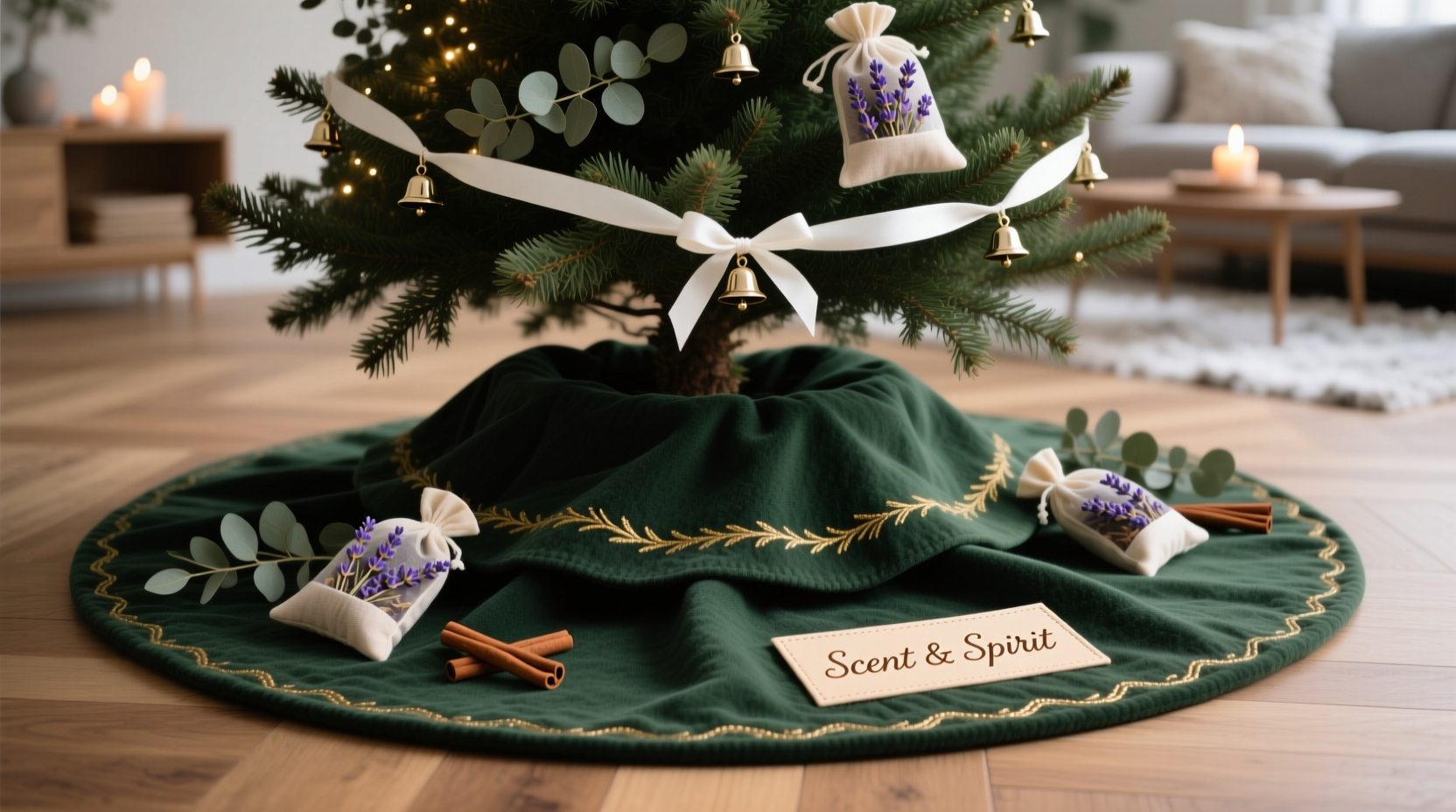
Use two layers of fabric: an outer decorative layer (e.g., red velvet, plaid cotton) and an inner liner made of unbleached cotton or muslin. The inner layer will hold your aromatic components. - Create Hidden Pockets or Liners
Sew small pouches along the inner rim or center circle of the skirt. These act as removable sachets. Alternatively, stitch a full circular liner pocket where dried botanicals or felt pads can be inserted. - Prepare Aromatic Inserts
Cut circles or squares of wool felt (about 3–4 inches wide). Apply 3–5 drops of essential oil per pad. Let dry for 10 minutes before insertion to prevent staining. Rotate oils weekly for variety. - Fill Pouches with Dried Botanicals
Combine dried orange slices, whole cloves, crushed cinnamon sticks, and pine needles in muslin bags. Tie securely. These add texture and authentic spice notes while reducing reliance on concentrated oils. - Assemble and Finish
Insert prepared pads or sachets into pockets. Close any openings with Velcro, buttons, or hand stitching for future access. Embellish the outer layer with embroidery, ribbon, or appliqué if desired. - Maintain and Refresh
Every 7–10 days, remove inserts and reapply 1–2 drops of oil. Replace dried botanicals every three weeks or if mold appears.
Best Essential Oils for Holiday Aromatherapy Skirts
Certain scents naturally align with winter traditions and emotional needs. Here’s a guide to choosing oils based on desired effect:
| Essential Oil | Fragrance Profile | Therapeutic Benefit | Blend Pairings |
|---|---|---|---|
| Fir or Pine | Crisp, woody, forest-like | Boosts mental clarity and energy | Peppermint, Orange, Cedarwood |
| Sweet Orange | Bright, citrusy, cheerful | Elevates mood and reduces stress | Clove, Cinnamon, Vanilla (fragrance oil) |
| Cinnamon Bark | Warm, spicy, rich | Stimulates circulation and warmth | Orange, Clove, Nutmeg |
| Clove | Sharp, pungent, slightly sweet | Natural antimicrobial; enhances focus | Orange, Cinnamon, Frankincense |
| Lavender | Floral, herbal, calming | Promotes sleep and reduces anxiety | Fir, Bergamot, Vanilla |
| Peppermint | Cool, sharp, refreshing | Clears sinuses, boosts alertness | Pine, Eucalyptus, Orange |
For a classic “Christmas” blend, combine 3 drops orange, 2 drops cinnamon, and 1 drop clove—commonly known as \"spice cookie\" or \"holiday simmer pot\" mix. For a woodland feel, use fir, cedarwood, and a hint of peppermint. Those seeking calm might prefer lavender with a touch of vanilla-scented jojoba oil on soft inserts.
Mini Case Study: The Scented Skirt That Became a Family Tradition
In Portland, Oregon, interior stylist Mia Thompson began experimenting with sensory decor after noticing her children responded strongly to certain holiday smells. “My youngest would get anxious around loud music and crowded rooms,” she recalls, “but the moment I lit a pine-scented candle, he’d relax.”
That year, she crafted a tree skirt lined with eight removable wool felt discs, each treated with a different seasonal oil. She involved her kids in labeling them—“Calm Clover,” “Merry Mint,” “Jolly Juniper”—and taught them to rotate them weekly.
The result was more than decorative. Family members began requesting specific scents based on mood. On stressful evenings, they’d choose lavender-fir blends. On busy gift-wrapping days, peppermint-orange provided a mental boost. Within two years, the scented skirt became a centerpiece of their holiday ritual, passed down with care instructions written inside the hem.
“It’s not just a decoration,” Mia says. “It’s a tool for connection, memory, and emotional regulation during a hectic time.”
Checklist: Building Your Aromatherapy Tree Skirt
Follow this practical checklist to ensure success:
- ☐ Measure tree base and decide on skirt size
- ☐ Select natural fiber fabric for outer and inner layers
- ☐ Purchase 100% pure essential oils (start with 3–5 key scents)
- ☐ Cut wool felt or muslin into insert shapes (6–8 pieces recommended)
- ☐ Sew hidden pockets or a removable liner sleeve
- ☐ Prepare sachets with dried botanicals or oil-soaked felt
- ☐ Insert and secure aromatic elements safely
- ☐ Place skirt under tree, away from heat sources
- ☐ Schedule weekly refreshment reminders
- ☐ Store inserts in labeled tins when off-season
Common Mistakes to Avoid
Even well-intentioned projects can go awry without proper planning. Watch out for these pitfalls:
- Over-saturating fabric: Too much oil can stain furniture, damage flooring, or increase fire risk.
- Using synthetic fragrances: Artificial perfumes lack therapeutic value and may trigger headaches or allergies.
- Ignoring airflow: Sealing scents in non-breathable plastic during storage traps moisture and degrades oils.
- Placing near heat: Setting the skirt too close to radiators or dense light clusters accelerates evaporation and degradation.
- Skipping rotation: Constant exposure to one scent leads to olfactory fatigue—rotate oils every 10 days for maximum impact.
Frequently Asked Questions
Can I wash a scented tree skirt?
Yes, but only if you remove all aromatic inserts first. Spot clean the outer layer with mild soap and cold water. Do not machine wash unless the fabric label permits it. Allow to air dry completely before reinserting scent pads.
How long do essential oils last in fabric?
On average, 7–14 days depending on oil type and room temperature. Citrus oils fade fastest (5–7 days), while resins like frankincense or woods like cedarwood can linger up to three weeks. Reapply 1–2 drops weekly to maintain presence.
Are there pet-safe options for homes with cats or dogs?
Many essential oils are toxic to pets, especially cats. Avoid tea tree, eucalyptus, citrus, and pine if animals have direct access. Safer alternatives include diluted lavender (in small amounts) or unscented dried herbs like rosemary or mint. Always place inserts out of reach or behind secure linings.
Conclusion: A New Dimension of Holiday Joy
Incorporating aromatherapy into your Christmas tree skirt design transforms a simple decorative item into a dynamic element of wellness and tradition. It invites intentionality—not just in how your home looks, but how it feels and smells. By blending craftsmanship with the science of scent, you create an environment that nurtures joy, calms stress, and deepens seasonal connection.
This holiday season, go beyond aesthetics. Craft a tree skirt that tells a story through fragrance—one that welcomes guests with warmth, supports family well-being, and becomes a cherished heirloom over time. Whether you're making your first DIY skirt or upgrading an old favorite, the addition of thoughtful aroma can make all the difference.
💬 Ready to infuse your holidays with scent and soul? Try making your own aromatherapy tree skirt this year and share your creation or favorite oil blend in the comments below!