Hosting a cocktail party shouldn’t mean sacrificing your values for convenience. A zero-waste cocktail party isn’t about austerity—it’s about intentionality, craftsmanship, and thoughtful hospitality. It means every glass poured, garnish placed, and napkin folded serves a purpose beyond the evening: it affirms that celebration and sustainability are not opposing forces, but natural partners. This approach eliminates landfill-bound straws, plastic-wrapped olives, disposable stirrers, and compostable cups that rarely compost—and replaces them with tools built to last, often for decades. The result? A more elegant, calmer, and deeply satisfying experience—for your guests, your conscience, and your kitchen cabinet.
Why “zero-waste” means more than just skipping plastic straws
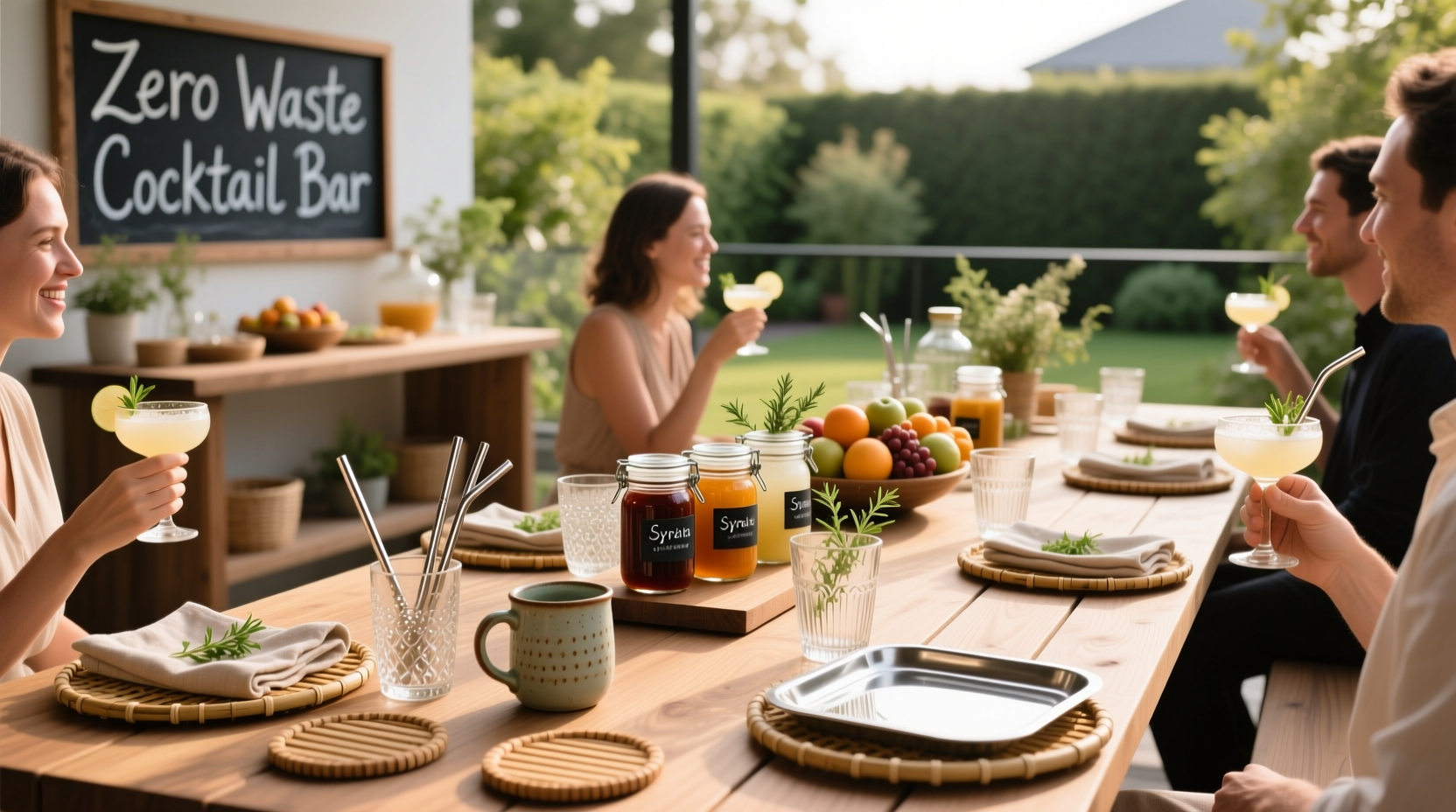
True zero-waste hosting begins with rejecting the myth of “disposable convenience.” Many so-called eco-alternatives—bamboo stirrers, sugarcane fiber plates, PLA-lined paper cups—fail in real-world conditions: they contaminate recycling streams, require industrial composting facilities (available to only 12% of U.S. households), or degrade inconsistently. A 2023 study published in Environmental Science & Technology found that 78% of “compostable” foodservice items tested did not break down within 180 days under standard municipal composting conditions.
Zero-waste, by contrast, is circular by design. It relies on materials that retain value across repeated use: stainless steel, borosilicate glass, solid wood, unglazed stoneware, and high-grade silicone. These aren’t “eco upgrades”—they’re professional-grade tools long used in bars, restaurants, and homes where durability, hygiene, and performance are non-negotiable.
“Hospitality isn’t measured in disposables—it’s measured in attention. When you serve a drink in a hand-blown coupe that’s been washed and reused 200 times, you’re offering continuity, care, and quiet confidence.” — Javier Mendez, Bar Director at The Copper Still (Portland, OR) and co-author of Bar Tools That Last
Your reusable toolkit: what to invest in (and why each piece matters)
Building a zero-waste bar doesn’t require replacing everything at once. Start with five foundational tools—each selected for longevity, cleanability, and functional elegance. Prioritize items made in certified ethical workshops or from recycled-content metals and glass.
| Tool | Material Recommendation | Minimum Lifespan (with care) | Key Functional Advantage |
|---|---|---|---|
| Coupe or Nick & Nora glasses | Borosilicate glass (e.g., Duralex, Libbey Eco) | 15+ years | Thermal shock resistance prevents cracking during rapid chilling; smooth rim enhances mouthfeel |
| Stirring spoon | Stainless steel (18/10 grade, forged, not stamped) | 30+ years | Weighted bowl ensures consistent dilution; seamless construction prevents bacterial harborage |
| Cocktail shaker (Boston style) | Stainless steel tins (28 oz bottom, 16 oz top) | Indefinite | No gaskets or plastic parts to degrade; tins can be polished back to like-new finish |
| Strainer (Hawthorne) | Stainless steel spring + solid metal frame | 25+ years | Spring retains tension over thousands of uses; no rubber or plastic components |
| Garnish tray & picks | Maple or walnut board + stainless steel skewers (blunt-tipped) | Board: 20+ years; picks: indefinite | Wood resists knife marks better than bamboo; steel picks hold citrus twists without tearing |
The zero-waste cocktail party timeline: planning, prep, and cleanup
A successful zero-waste event flows smoothly because preparation happens in advance—not during service. Follow this realistic 72-hour timeline, designed for home hosts managing work, family, and logistics.
- 72 hours before: Finalize your menu around three signature cocktails max. Choose drinks with minimal garnish complexity (e.g., a Negroni, a Gin Sour, a Mezcal Old Fashioned). Source all spirits, bitters, and syrups in glass or aluminum containers—avoid plastic jugs or pouches.
- 48 hours before: Wash and polish all glassware, shakers, and tools. Dry completely and store inverted on a clean linen towel. Prepare simple syrups in reusable glass jars (label with date); avoid corn syrup–based mixes—they encourage microbial growth and shorten shelf life.
- 24 hours before: Prep garnishes: peel citrus zest with a channel knife (not a peeler) and store in a sealed glass container with a damp paper towel. Slice cucumbers or herbs and refrigerate in a lidded mason jar. Never pre-squeeze juice—citric acid degrades flavor rapidly.
- 2 hours before: Chill glasses in the freezer (not fridge—freezer achieves uniform 35°F surface temp). Fill ice buckets with large, clear cubes (made in silicone trays, not plastic). Set out napkins (linen or heavy cotton, washed and ironed).
- During the party: Assign one person to manage the “return station”: a designated counter with a labeled bin for used glasses, a small tub of warm soapy water for immediate rinse, and a drying rack. This prevents piles of dirty stemware and keeps service fluid.
- Within 1 hour after guests leave: Soak shakers and spoons in hot water + baking soda (not bleach). Hand-wash glassware with microfiber cloth and mild castile soap. Air-dry upright—never towel-dry fine glass, which can cause micro-scratches.
Real example: The Oak Street Apartment Party (Portland, OR)
In October 2023, Maya R., a sustainable events consultant, hosted a 14-person cocktail party in her 700-square-foot apartment using only reusable tools. She served three drinks: a Smoked Maple Manhattan (in coupe glasses), a Cucumber-Lavender Gimlet (in double old-fashioned rocks glasses), and a Sparkling Rosé Spritz (in flutes). No plastic, no paper, no compostables—even the olive brine was served in a repurposed apothecary jar with stainless steel tongs.
Maya sourced all glassware from a local reuse center ($42 total). Her shaker set came from a retired bartender friend. She made her own lavender syrup using dried organic buds and raw cane sugar, stored in amber glass. For ice, she used a silicone mold that produces 2-inch cubes—slow-melting and visually striking. Guests remarked repeatedly on the “weight and clarity” of the glasses and how “calm” the evening felt—no crinkling wrappers, no clattering disposables, no frantic clearing.
Post-party, Maya spent 22 minutes cleaning. All tools were dry and back in their designated drawer by 10:47 p.m. She reused the same linen napkins for her next two dinner parties. “The biggest shift wasn’t the gear,” she says. “It was realizing that ‘hosting well’ meant designing for return—not disposal.”
Do’s and Don’ts: building habits that last beyond the party
Adopting zero-waste hosting is less about perfection and more about pattern recognition. These behavioral shifts compound quickly—turning one-time effort into effortless routine.
- Do keep a dedicated “bar drawer” with all tools washed, dried, and organized—not tucked away in storage. Visibility encourages use.
- Do label your syrup jars with permanent marker on masking tape—removable, legible, plastic-free.
- Do freeze citrus halves (cut side down on parchment) for future juicing—no waste, no plastic wrap.
- Don’t buy “reusable” products marketed as “eco-friendly” but made with mixed materials (e.g., wood handles glued to steel blades)—they fail at the bond line and can’t be repaired or recycled.
- Don’t soak stainless steel in vinegar or saltwater solutions longer than 10 minutes—chlorides and acidity accelerate pitting corrosion.
- Don’t assume “glass” means safe—avoid leaded crystal for regular use (lead leaches with acidic cocktails) and low-borosilicate glass that clouds or crazes after repeated dishwasher cycles.
FAQ: answering practical concerns head-on
What if a guest breaks a glass? Isn’t that wasteful?
Breakage is statistically rare with borosilicate glass—less than 0.7% per year in commercial settings (per National Restaurant Association 2022 audit). Should it happen, collect all fragments, wrap securely in paper, and dispose in the trash—not recycling, where shards endanger workers. View it as an infrequent cost of beauty and function—not waste. Most high-quality glassware is repairable via cold bonding or ceramic welding, and many artisans offer restoration services.
How do I handle ice without plastic bags or single-use scoops?
Use a dedicated stainless steel ice scoop with a hook for hanging, stored inside your insulated ice bucket. Fill the bucket directly from your freezer tray—no bagging needed. For transport, place the bucket inside a canvas tote lined with a folded tea towel to absorb condensation. Avoid plastic-lined “ice sleeves”—they trap moisture and promote mold.
Can I really make zero-waste cocktails without buying expensive equipment?
Absolutely. Start with what you already own: a heatproof mason jar becomes a shaker (lid on tight); a sturdy metal spoon works as a stirrer; wine glasses double as coupes. Prioritize replacing items as they wear out—not all at once. Your first zero-waste party needs only three things: clean reusable glasses, a metal stirring spoon, and cloth napkins. Everything else amplifies joy—not necessity.
Conclusion: your party is a practice in presence
A zero-waste cocktail party is never really about the absence of trash. It’s about the presence of care—in the weight of a well-balanced shaker, the clarity of a chilled glass, the scent of fresh citrus peeled moments before serving. It’s about honoring your guests’ time and senses by removing visual and tactile noise: no crinkling, no flimsy textures, no hidden environmental costs. Each reusable tool you choose is a vote for systems that value longevity over turnover, craftsmanship over convenience, and connection over consumption.
You don’t need to host flawlessly the first time. You need only to begin—with one glass, one spoon, one intention. The tools will last. The memories will deepen. And the quiet pride of knowing your celebration left nothing behind but goodwill? That’s the rarest spirit of all.
💬 Share your first zero-waste swap. Did you switch to stainless straws? Reuse a favorite pitcher? Tell us in the comments—we’ll feature your story in next month’s community roundup.








