For many people, the subtle aroma of lavender hand soap, the citrusy zing of a scented candle, or even the faint trace of a bartender’s perfume isn’t just background ambiance—it’s a trigger for debilitating symptoms: migraines, asthma attacks, nausea, brain fog, and respiratory distress. Fragrance sensitivity is not a preference; it’s a documented medical reality affecting an estimated 1 in 5 adults in North America and Europe, according to peer-reviewed studies published in BMJ Open and the Journal of Allergy and Clinical Immunology. In hospitality settings—especially bars, where alcohol, cleaning agents, and personal care products converge—the risk of unintentional exposure multiplies. A scent-free bar zone isn’t about eliminating charm or warmth. It’s about precision, empathy, and operational discipline—transforming a potential health hazard into a model of inclusive service.
Why “Scent-Free” Is Not the Same as “Unscented”
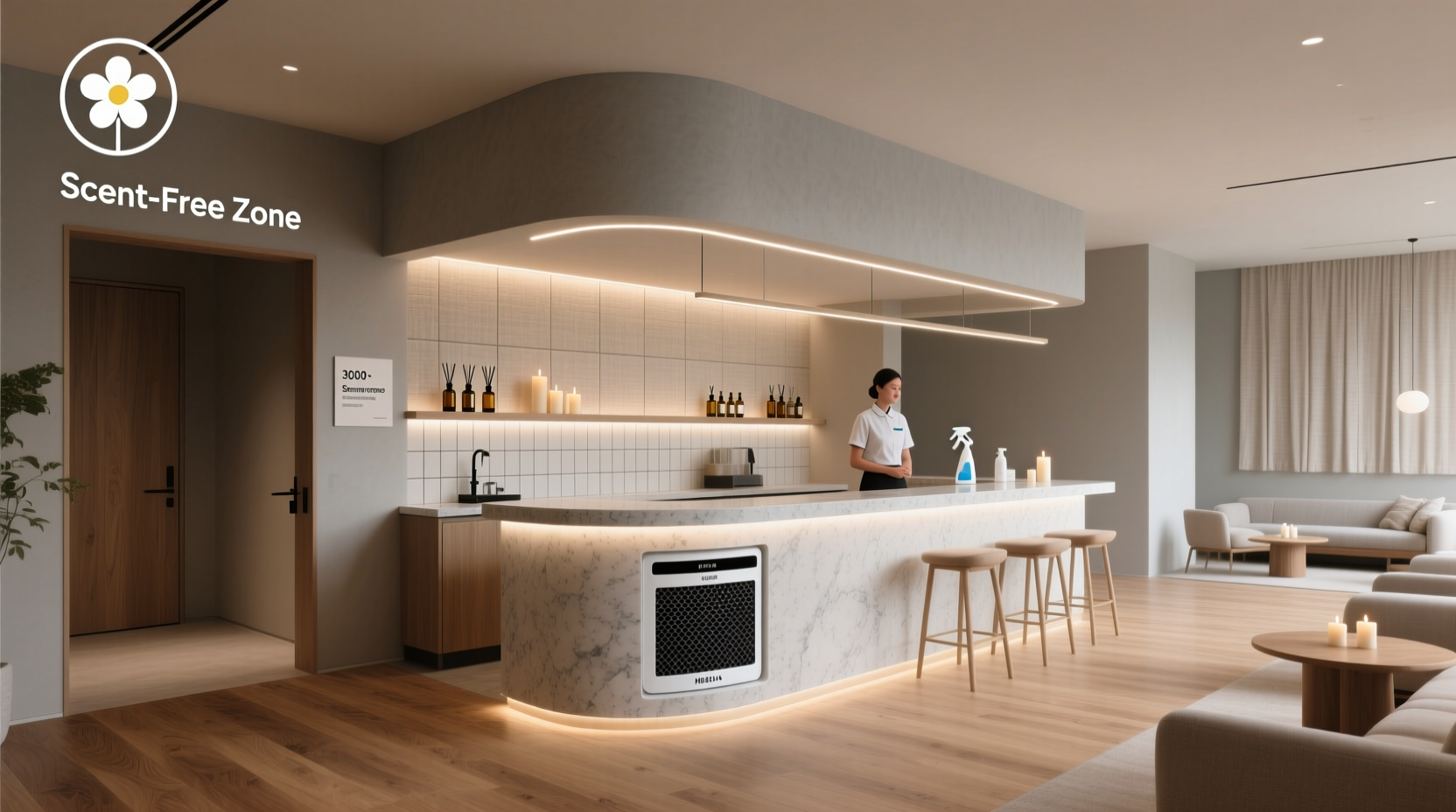
The distinction matters deeply—and legally. “Unscented” products often contain masking fragrances to neutralize odors, which can still provoke reactions. “Fragrance-free” means no added aromatic compounds whatsoever—not even natural essential oils like eucalyptus, peppermint, or tea tree, which are common in “natural” cleaners but biologically active and highly volatile. The U.S. Centers for Disease Control and Prevention (CDC) and the Canadian Human Rights Commission both emphasize that fragrance sensitivity qualifies as a disability under accessibility law when it substantially limits major life activities. That means accommodations aren’t optional extras—they’re obligations rooted in dignity and safety.
Tip: Replace “unscented” hand soap with certified fragrance-free, pH-balanced formulas (e.g., those meeting the ECARF or Asthma & Allergy Friendly® certification standards). Never assume “natural” equals safe.Step-by-Step Implementation: Building Your Scent-Free Bar Zone
Creating a functional, reliable scent-free bar zone requires coordination across procurement, staff training, spatial design, and maintenance protocols. Follow this sequence to avoid gaps that compromise safety:
- Define the zone precisely. Identify a dedicated area—ideally at least 6 feet from any seating or high-traffic path—with its own ventilation system or strong cross-airflow. Avoid shared HVAC ducts with adjacent scented zones.
- Audit all consumables. Review every product used within 10 feet of the zone: glass cleaners, polish, disinfectants, hand soaps, dish detergents, garnish sprays, cocktail syrups, and even ice scoop handles. Eliminate anything listing “fragrance,” “parfum,” “essential oil blend,” or “aroma compound” on its ingredient label.
- Replace with certified alternatives. Source only products verified by third-party programs: ECARF (European Centre for Allergy Research Foundation), Asthma & Allergy Friendly®, or the National Eczema Association Seal. These require rigorous volatile organic compound (VOC) testing—not just marketing claims.
- Train staff on inhalation risks. Explain that fragrance chemicals evaporate rapidly—even from dry surfaces—and can linger in air for hours. Emphasize that “I didn’t spray anything today” doesn’t guarantee safety if residue remains on countertops or cloth napkins.
- Install visual cues and enforce boundaries. Use floor decals, table tents, and laminated signage stating “Scent-Free Bar Zone: For Guests with Chemical Sensitivities.” Train staff to politely redirect guests who bring in scented items (e.g., perfumed hand sanitizer) without shaming.
Do’s and Don’ts: A Practical Compliance Table
| Action | Do | Don’t |
|---|---|---|
| Cleaning Supplies | Use fragrance-free, alcohol-free quaternary ammonium (quat) disinfectants approved for food contact surfaces (e.g., Zoono Food Safe Surface Sanitizer). | Use vinegar-and-water mixes (acetic acid vapors irritate airways) or citrus-based degreasers (limonene oxidizes into formaldehyde). |
| Glassware Handling | Rinse glasses twice in fragrance-free, low-residue dish detergent; air-dry on stainless steel racks (no cloth towels). | Wipe glasses with linen napkins stored near scented candles or laundered with scented detergent. |
| Staff Attire | Provide unisex, fragrance-free uniform laundry service using detergent like All Free & Clear or Tide Free & Gentle. Require staff to store personal items (bags, jackets) outside the zone. | Allow staff to wear personal lotions, hair sprays, or colognes—even “light” ones—or assume “just one spritz” is harmless. |
| Garnishes & Ingredients | Use fresh herbs rinsed in filtered water (no floral spritzes); opt for unscented bitters and certified fragrance-free simple syrups. | Infuse syrups with rosewater, orange blossom water, or lavender—common allergens with high dermal and inhalational reactivity. |
Real-World Case Study: The Harborview Tavern Retrofit
In Portland, Oregon, Harborview Tavern—a neighborhood bar known for craft cocktails and live jazz—began receiving consistent feedback from regular patrons reporting dizziness and throat tightening after visits. One guest, a nurse with multiple chemical sensitivity (MCS) diagnosed by her occupational medicine specialist, provided detailed notes: symptoms worsened near the bar rail, improved within minutes of stepping outside, and correlated with the installation of new “eco-friendly” citrus-scented glass cleaner and cedar-scented wood polish.
Management responded not with dismissal but with rigor. They partnered with an industrial hygienist to conduct VOC air sampling during peak service hours. Results showed airborne limonene levels 3.7 times above the EPA’s chronic reference concentration—and detectable benzaldehyde (from almond extract in house-made syrup) lingering in the bar’s exhaust ducts. Over six weeks, they replaced all cleaning agents, switched to fragrance-free hand soap and dish detergent, installed HEPA-filtered local exhaust above the bar rail, and retrained staff using symptom recognition cards. Within two months, scent-related complaints dropped to zero. More significantly, repeat patronship among guests with sensitivities increased by 42%, and online reviews highlighted the bar’s “quiet thoughtfulness”—a reputation now featured in their website’s “Inclusive Hospitality” section.
“Fragrance sensitivity isn’t about being ‘overly sensitive.’ It’s about neuroinflammatory responses triggered by airborne chemicals our bodies cannot metabolize efficiently. Accommodating it isn’t charity—it’s basic occupational health science.” — Dr. Sarah Lin, MD, Occupational Medicine Specialist, Harvard T.H. Chan School of Public Health
FAQ: Addressing Common Operational Concerns
How do I explain the scent-free zone to guests without sounding defensive or alienating others?
Frame it inclusively and matter-of-factly: “We maintain a designated scent-free bar zone to ensure comfort and safety for guests with chemical sensitivities—similar to how we accommodate dietary restrictions or mobility needs. If you’d like to sit in this area, just let your server know.” Avoid qualifiers like “for people who don’t like smells.” Language shapes perception: “chemical sensitivity” signals medical legitimacy; “preference” undermines it.
Can I still use candles or diffusers elsewhere in the venue?
Yes—but only if they’re physically isolated from the scent-free zone by at least 15 feet *and* separated by a solid barrier (e.g., closed door, full-height partition). Even with open-air ventilation, fragrance molecules travel unpredictably. A 2022 study in Indoor Air found that terpenes from a single scented candle placed 20 feet away were detectable in adjacent rooms within 8 minutes. If your layout doesn’t allow strict separation, choose non-emitting ambiance: LED flameless candles, fiber-optic centerpieces, or curated ambient soundscapes instead.
What if a staff member refuses to comply—citing personal freedom or claiming “I don’t smell anything”?
Clarify policy as a health and safety requirement—not a lifestyle suggestion. Cite your jurisdiction’s human rights code (e.g., ADA Title III, Ontario Human Rights Code) and internal duty-to-accommodate obligations. Offer support: provide fragrance-free personal care samples, cover laundry costs for uniform cleaning, and connect them with HR for confidential dialogue. Document all conversations. As with food allergy protocols, consistency protects everyone—including staff who may develop sensitivities over time.
Maintaining Integrity: The Ongoing Protocol
A scent-free zone degrades silently. Residue accumulates on surfaces, new staff arrive unaware, and well-intentioned vendors substitute “similar” products that reintroduce fragrance. Prevent backsliding with these non-negotiable practices:
- Quarterly ingredient audits: Pull every bottle used within the zone. Cross-check labels against a master “Banned Ingredients” list (including hidden terms like “parfum,” “aroma,” “natural fragrance,” and specific allergens like linalool or coumarin).
- Monthly air quality spot checks: Use a handheld VOC meter (e.g., Aeroqual S-Series) at bar height during service. Log readings. Anything above 100 ppb warrants immediate investigation.
- Guest feedback loop: Include a discreet, anonymous option on digital receipts: “Did you experience any scent-related discomfort? [Yes/No] If yes, please describe briefly.” Analyze trends quarterly—not for blame, but for system refinement.
- Vendor contracts: Require written assurance from all suppliers that products delivered for the scent-free zone meet ASTM D6744-21 (Standard Specification for Fragrance-Free Products) and include batch-specific SDS documentation.
Conclusion: Beyond Compliance, Toward Culture
Creating a scent-free bar zone is rarely about grand gestures. It’s in the quiet decision to read a label twice. It’s in the patience to explain why the lavender linen spray must stay in the break room—not because the guest is “difficult,” but because their nervous system is literally under siege. It’s in the pride of knowing your space welcomes a nurse recovering from long COVID, a teacher managing mast cell activation syndrome, or a teenager navigating newly diagnosed environmental illness—not as exceptions, but as honored guests.
This work pays dividends far beyond legal protection. It sharpens operational discipline, deepens staff empathy, and builds loyalty among a demographic consistently underserved in hospitality. When your scent-free zone functions flawlessly, it doesn’t feel sterile—it feels intentional, respectful, and human. Start with one bar rail. Audit one shelf. Train one shift. Then expand—not as an afterthought, but as a cornerstone of your values.
💬 Your experience matters. Have you implemented a scent-free zone—or been a guest who benefited from one? Share your insight, challenge, or success in the comments. Let’s build better hospitality—together.








