Every year, thousands of households face the same holiday dilemma: how to celebrate with festive tradition while keeping pets safe, calm, and out of trouble. A Christmas tree isn’t just décor—it’s an irresistible vertical playground for cats, a chewable novelty for teething puppies, and a potential hazard zone filled with toxic plants, sharp ornaments, and unstable stands. According to the ASPCA Animal Poison Control Center, calls related to holiday plant ingestion (especially pine needles and tree water additives) spike 37% between December 1st and January 5th. Meanwhile, veterinary ERs report a 22% rise in foreign-body ingestions—tinsel, ribbon, and broken ornament shards—during the same period.
This isn’t about eliminating joy or sacrificing aesthetics. It’s about thoughtful design: choosing materials with intention, anchoring with engineering precision, and layering behavioral safeguards that respect your pet’s instincts—not suppress them. The goal isn’t a “pet-proof” tree (a myth), but a *pet-resilient* one—one that accommodates natural curiosity without compromising safety, stability, or spirit.
1. Choose the Right Tree Type—and Prep It Strategically
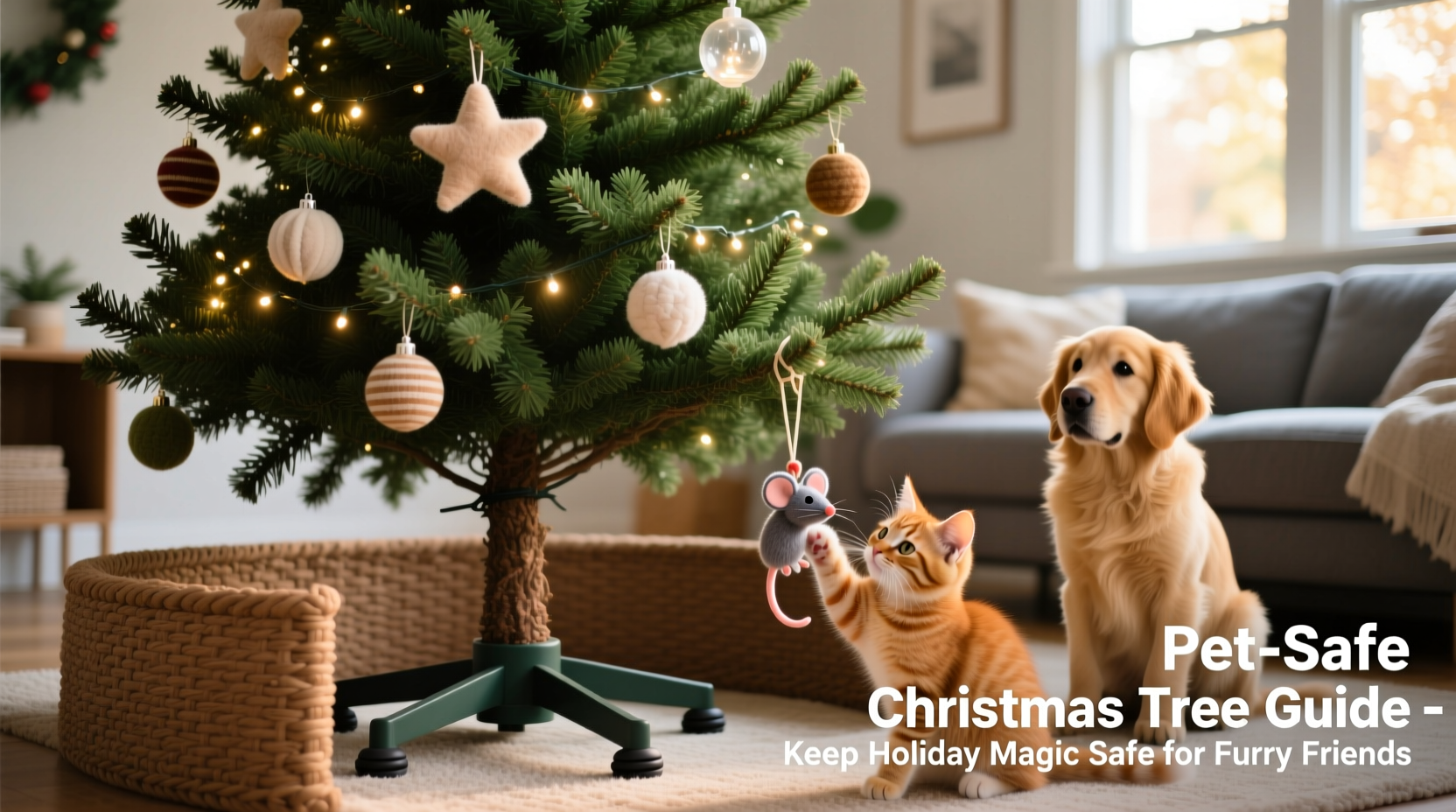
Not all trees are created equal when pets are involved. Real trees introduce biological risks: sap, oils, and needle toxicity. Artificial trees eliminate those concerns—but introduce new ones: plastic leaching, wire frame hazards, and static-prone surfaces that attract curious paws.
Fir and spruce species (e.g., Fraser, Balsam, or Blue Spruce) contain less volatile oil than pines like Norfolk or Scotch Pine—reducing gastrointestinal irritation if nibbled. But even low-toxicity doesn’t mean safe: pine needles can puncture intestinal walls, and sap may trigger drooling or vomiting. For artificial trees, opt for PVC-free polyethylene (PE) branches over older PVC models; PE is stiffer, less brittle, and contains no phthalates linked to endocrine disruption in animals.
Tip: Before bringing any real tree indoors, rinse needles thoroughly with cool water to remove pesticide residue, sap, and dust—common irritants for sensitive noses and paws.Crucially, skip the commercial tree preservatives entirely. These often contain sugar, fertilizer, bleach, or aspirin—all dangerous if licked from the water basin. Instead, use plain, fresh water changed every 2–3 days. Add a splash of white vinegar (1 tbsp per gallon) to inhibit bacterial growth—safe for pets and effective at keeping the trunk hydrated.
2. Anchor Like an Engineer—Not Just a Decorator
A wobbling tree invites investigation. A toppling one invites injury. Cats don’t climb because they’re “misbehaving”—they’re following instinctual vertical exploration. Puppies don’t knock trees over to “spite you”—they’re testing boundaries and textures. Stability isn’t optional; it’s foundational.
Start with the stand: choose a heavy-duty, three-point metal base with rubberized feet and adjustable screws—not a lightweight plastic model with a single central bolt. Fill the reservoir with water *first*, then insert the trunk fully and tighten all clamps evenly. Use a torque wrench if possible—most quality stands require 18–25 ft-lbs of pressure across each clamp arm to secure a 6–7 ft tree.
Then go further: install a secondary anchor system. Run two 60-lb test nylon cables (not rope—too stretchy) from the upper third of the trunk to wall-mounted eye bolts placed at least 6 ft high and 3 ft apart. Position bolts into wall studs, not drywall anchors. This creates a triangulated support that resists lateral force—critical when a 12-lb cat launches from the sofa or a 25-lb puppy barrels past during play.
| Anchor Method | Load Capacity | Pet-Resilience Rating | Notes |
|---|---|---|---|
| Standard tripod stand only | 30–40 lbs lateral force | ★☆☆☆☆ | Fails under sustained paw pressure or tail swipes |
| Stand + wall cables (2-point) | 120+ lbs lateral force | ★★★★★ | Withstands full-body impact; invisible when cables are clear |
| Stand + ceiling hook + pulley | 90–110 lbs | ★★★★☆ | Effective but requires ceiling access; visible hardware |
| Weighted base + sandbag perimeter | 60–75 lbs | ★★★☆☆ | Good for low-ceiling rentals; adds floor clutter |
3. Ornament Selection: Safety First, Beauty Second
Ornaments are where aesthetics and animal safety most frequently collide. Glass baubles look elegant—but shatter into razor-sharp fragments. Tinsel and ribbons mimic prey movement and are highly attractive to cats; once ingested, they cause linear foreign body obstructions requiring emergency surgery. Scented ornaments (cinnamon, clove, citrus) often contain essential oils toxic to dogs and cats—even small amounts can trigger tremors or liver failure.
Instead, prioritize durability and digestibility. Use wooden beads, felted wool balls, or unglazed ceramic ornaments with smooth, rounded edges. Avoid anything smaller than a golf ball—pets can’t swallow it whole, reducing choking risk. Skip hooks entirely: use wide, flat ribbon loops tied directly around branches, or invest in pet-safe ornament hangers made from soft silicone with wide bases.
Strategically place items by height and risk: reserve breakables and shiny objects for the top third of the tree—out of paw and leap range. Keep the bottom 30 inches completely ornament-free except for large, stable items like fabric gift boxes or woven baskets filled with pet-safe toys. This creates a “no-ornament buffer zone” where pets can investigate safely.
“Cats aren’t drawn to ‘shiny’—they’re wired to track rapid, unpredictable motion. That’s why tinsel, dangling ribbons, and reflective glass catch their attention so intensely. Replace motion-based triggers with texture and scent alternatives.” — Dr. Lena Torres, DVM, Veterinary Behavior Specialist, Cornell University College of Veterinary Medicine
4. The Step-by-Step Pet-Resilient Tree Setup Timeline
Building a pet-safe tree isn’t a single afternoon task—it’s a staged process designed to minimize stress for both humans and animals. Follow this timeline over 3 days for optimal results:
- Day 1 (Prep Day): Clean and inspect the tree stand; drill wall anchors into studs (use stud finder); purchase and cut anchor cables; wash real tree needles or wipe artificial branches with damp microfiber cloth.
- Day 2 (Assembly Day): Set up stand in final location; insert tree trunk and tighten clamps; attach wall cables and tension evenly; fill reservoir with plain water + vinegar; let tree acclimate overnight—keep pets out of the room.
- Day 3 (Decor Day): Place bottom-zone items first (large fabric boxes, pet-safe chew toys); add mid-zone ornaments (wood, felt, silicone-hung); finish top third with delicate or reflective pieces; plug in lights *after* all ornaments are secured; run cord covers along baseboards and secure with double-sided tape.
Never decorate while pets are present. Even calm animals become hyper-alert during novel activity. Use this time to redirect their energy: give a long-lasting lick mat smeared with pumpkin puree (unsweetened) for dogs, or engage cats with a 10-minute wand toy session *away* from the tree area before decorating begins.
5. Behavioral Integration: Train, Don’t Restrict
Physical barriers alone won’t solve the problem. Pets learn through repetition and consequence. If your cat leaps onto the tree daily and nothing happens, she learns it’s permitted. If your puppy chews the trunk and gets scolded *after* the fact, he associates your anger—not the chewing—with the punishment. Proactive, positive reinforcement reshapes behavior more effectively than correction ever can.
Create parallel engagement zones. Place a tall, sturdy cat tree 4–5 feet from the Christmas tree, topped with a soft fleece blanket and a catnip pouch. For puppies, position a chew station nearby: a durable rubber toy stuffed with kibble and frozen, plus a designated “chew rug” marked with a distinct scent (like diluted lavender hydrosol on a corner terry cloth). Reward calm proximity—toss a treat when your dog sits quietly 3 feet away, or click-and-treat when your cat observes the tree without moving toward it.
Tip: Apply a light, pet-safe deterrent spray (citrus-free, alcohol-free, based on bitter apple or yucca extract) to the lowest 12 inches of the trunk. Reapply every 3 days. Most pets dislike the taste but won’t associate it with punishment—making it a neutral boundary marker.Also, monitor lighting cords carefully. Never leave strands plugged in unattended if pets have unsupervised access. Use cord protectors rated for chew resistance (look for UL 62-rated thermoplastic elastomer sleeves), and route all power strips behind furniture—not under rugs where heat builds and cords fray.
Real-World Example: The Miller Household Success Story
The Millers adopted Luna, a 9-month-old Maine Coon mix, in early November. She’d already knocked over two houseplants and shredded a throw pillow. Their 4-year-old artificial tree had toppled twice last year—once during a game of chase with their golden retriever, Milo. This season, they followed the pet-resilient framework: installed wall cables anchored into studs, used only wooden and wool ornaments below the 4-ft mark, and placed Luna’s favorite perch directly beside the tree—but facing outward, with a view of the backyard birds. They also trained Milo to “leave it” using high-value treats near the tree base, rewarding stillness instead of chasing lights.
Result? No toppling. No chewed wires. Luna spent her first week sniffing the trunk, then lost interest—drawn instead to her new perch and window view. Milo learned that “tree zone = treat zone,” and now lies calmly beside it during family movie nights. Their tree stayed pristine through New Year’s—and their peace of mind remained intact.
FAQ
Can I use fake snow or flocking on my pet-safe tree?
No. Most aerosol or powdered flocking contains formaldehyde, silica, or binding glues that become airborne dust or stick to paws and fur. Ingestion or inhalation can cause respiratory distress or gastric upset. If you want texture, use undyed cotton batting wrapped loosely around branch tips—secure with fabric-safe glue dots, not hot glue.
Are LED lights safer for pets than incandescent bulbs?
Yes—primarily because they generate far less heat, reducing burn risk and fire hazard if chewed. But voltage matters more than bulb type: ensure all strands are UL-listed and operate at ≤12V. Avoid cheap, uncertified “twinkle lights” sold online—they often lack proper insulation and short-circuit easily when wet or compressed.
What should I do if my pet eats pine needles or tinsel?
Contact your veterinarian or the ASPCA Animal Poison Control Center (888-426-4435) immediately—even if symptoms seem mild. Do not induce vomiting unless directed. Collect a sample of what was ingested (e.g., a few needles or a piece of tinsel) to show your vet. Early intervention prevents escalation to obstruction, perforation, or systemic toxicity.
Conclusion
A pet-safe Christmas tree isn’t a compromise—it’s a deeper expression of care. It says: *I see your instincts. I honor your nature. And I choose to celebrate alongside you—not in spite of you.* Every cable anchored, every ornament chosen, every treat tossed in quiet reinforcement is a quiet act of respect. You don’t need perfection—you need consistency, observation, and willingness to adapt. Your cat’s curiosity, your puppy’s energy, your shared space: these aren’t obstacles to holiday joy. They’re the very heartbeat of why home matters.
Start small. Pick one change this week—swap out the tree water preservative, install one wall anchor, or set up that chew station. Then build from there. Your tree will stand taller. Your pets will feel safer. And your holidays will hold more warmth—not despite the paws and whiskers underfoot, but because of them.
💬 Your turn: Share one pet-resilient swap you’ve made this season—or ask a question in the comments. Let’s build a smarter, kinder, more joyful holiday tradition—together.








