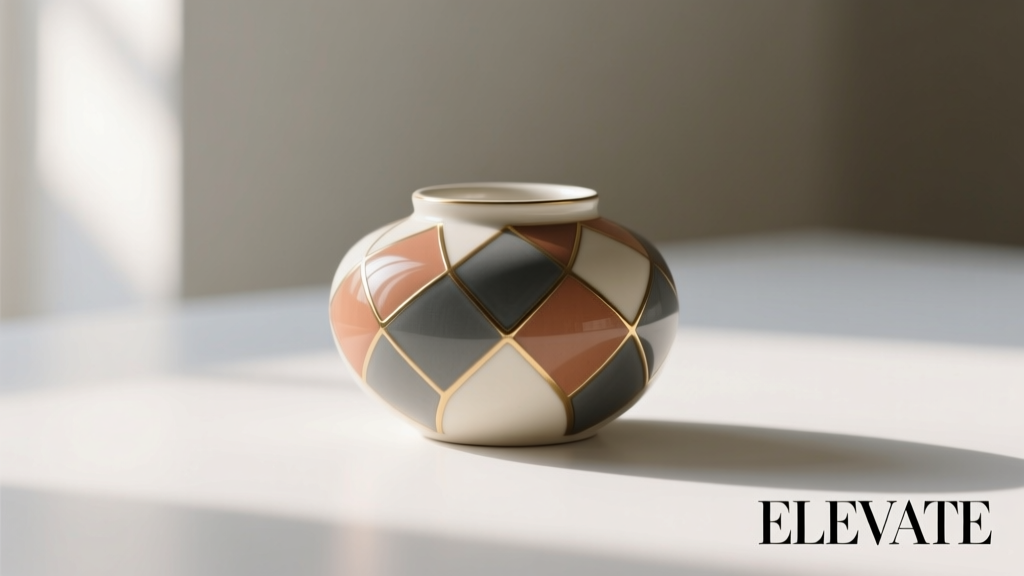
White vintage vase urns occupy a singular space in wedding design: they’re not merely containers, but quiet storytellers—evoking heirloom elegance, architectural grace, and timeless restraint. Unlike mass-produced ceramics or generic floral vessels, a thoughtfully selected vintage urn carries patina, intention, and subtle irregularities that lend authenticity to even the most curated tablescape. Yet choosing the right one is rarely intuitive. Many couples gravitate toward “vintage-looking” reproductions or misjudge scale, material durability, or stylistic cohesion—only to discover on-site that the urn overwhelms centerpieces, clashes with linens, or arrives chipped due to fragile construction. This guide distills over a decade of experience working with antique dealers, floral designers, and historic venue coordinators into actionable criteria—not trends—to help you select a vase urn that enhances your wedding’s narrative, performs reliably, and endures as a meaningful keepsake.
1. Understand What “Vintage” Really Means—Beyond Aesthetic
“Vintage” is often misused as shorthand for “white,” “curvy,” or “antique-looking.” In collecting and conservation practice, vintage refers to items made between 1920 and 1980—distinct from “antique” (pre-1920) and “retro” (1980s–1990s). For wedding decor, this distinction matters because construction methods, glaze formulations, and structural integrity vary significantly across eras. Pre-1950 porcelain urns, for example, were typically fired at higher temperatures, resulting in denser, more chip-resistant bodies. Mid-century stoneware (1950s–60s) often features matte, hand-applied glazes that develop luminous depth over time—but may be more porous and susceptible to water staining if used with fresh florals without liners.
Crucially, true vintage pieces lack modern safety certifications. Lead-based glazes were common until the late 1970s; while decorative use poses negligible risk, it’s essential to verify with sellers whether a piece has been lab-tested for leachable lead—especially if displayed near food service areas or where guests might handle it extensively.
Tip: Ask sellers for the maker’s mark, country of origin, and approximate decade. Reputable vendors document these details—and if they can’t, assume the piece is either unverified or reproduction.2. Prioritize Structural Integrity Over Surface Perfection
A flawless glaze is less important than sound engineering. Vintage urns were designed for function: holding weight, resisting thermal shock, and enduring handling. Inspect for three non-negotiable signs of structural health:
- Base stability: Place the urn on a level surface and gently rock it front-to-back and side-to-side. Any wobble indicates warping or uneven firing—a red flag for tabletop use, especially on polished wood or marble.
- Wall thickness consistency: Run your finger along the interior rim and base junction. A sharp, thin edge suggests fragile craftsmanship; a smooth, slightly rounded transition signals intentional reinforcement.
- Glaze adhesion: Examine the foot ring (the unglazed band around the base). If glaze crawls upward onto it—or appears blistered, pinholed, or chalky—the firing was inconsistent, increasing long-term vulnerability to moisture absorption and microfracturing.
Minor surface marks—light crazing (a fine web of hairline cracks in the glaze), gentle kiln dust residue, or soft wear on raised motifs—are not flaws. They’re evidence of age-appropriate use and contribute to visual warmth. What compromises utility is hidden damage: hairline fractures radiating from handles, stress lines near the neck, or chips that penetrate beyond the glaze into the clay body.
3. Match Scale, Proportion, and Function to Your Venue & Florals
An urn’s impact depends less on its height than on its visual weight relative to surroundings. A 24-inch urn may feel grounded in a barn with 20-foot ceilings but visually drown a delicate lace runner on a 30-inch round table. Use this proportionality framework:
| Setting Context | Recommended Height Range | Neck-to-Body Ratio | Functional Notes |
|---|---|---|---|
| Grand ballroom or historic mansion (high ceilings, ornate moldings) | 22–32 inches | 1:2.5 (neck height : body height) | Opt for heavier bases (e.g., turned wood or ceramic plinths) to prevent tipping; avoid overly slender profiles. |
| Rustic venue (barn, greenhouse, garden tent) | 16–24 inches | 1:3 to 1:4 | Stoneware or salt-glazed pieces hold up best outdoors; ensure drainage holes are sealed or use waterproof liners. |
| Intimate indoor ceremony (library, chapel, loft) | 12–18 inches | 1:2 or less | Prioritize urns with wide, stable mouths (≥6 inches diameter) to accommodate compact arrangements without obscuring sightlines. |
| Reception escort or place card display | 8–12 inches | 1:1.5 or more (emphasis on sculptural neck) | Choose pieces with flat, broad shoulders—ideal for tucking cards, sprigs of rosemary, or folded linen. |
Also consider floral mechanics. Most vintage urns lack built-in frog pins or foam wells. You’ll need to adapt: silicone floral tape grids, chicken wire secured with waterproof floral clay, or custom acrylic inserts. If using fresh flowers with high water demand (e.g., hydrangeas, lilacs), confirm the urn is glazed *internally*—unglazed stoneware will wick moisture and stain surfaces.
4. Material Matters: Porcelain, Stoneware, and Bone China Compared
Each material brings distinct advantages—and limitations—for wedding use. Understanding their physical properties prevents last-minute substitutions or damage.
- Pottery (stoneware & earthenware): Dense, opaque, and naturally textured. Ideal for outdoor or rustic settings. Less translucent than porcelain, so it reads as “substantial” rather than “delicate.” Requires sealing if used with water; best for dried or silk arrangements unless fully vitrified.
- Porcelain: Fired at ≥1,200°C, resulting in translucency, hardness, and low porosity. The gold standard for indoor elegance—especially Limoges, Dresden, or Japanese Imari-style white urns. Resists staining and cleans easily, but thinner-walled pieces may chip on impact.
- Bone china: Contains bone ash (25–50%), yielding exceptional strength-to-weight ratio and a warm, ivory-white tone (not stark white). Highly resistant to chipping, yet lightweight—ideal for suspended installations or multi-level tablescapes. Rare pre-1960; most vintage examples originate from English manufacturers like Royal Doulton or Coalport.
“Clients often overlook thermal expansion. A porcelain urn brought from an air-conditioned warehouse into a sun-drenched garden can fracture if filled with cold water. Always acclimate vintage ceramics for 30 minutes before adding water or florals.” — Elena Rossi, Conservation Consultant, Historic Interiors Group
5. Authentic Stylistic Harmony: Avoiding the “Costume Vintage” Trap
Not all white vintage urns belong at every wedding. Style dissonance arises when a piece’s era, region, and design language contradict the broader aesthetic. A French Art Deco urn with geometric bas-relief feels alien beside farmhouse-chic burlap runners; similarly, a heavy German Biedermeier urn overwhelms minimalist Scandinavian stationery.
Use this stylistic alignment checklist before purchasing:
Checklist: Does This Urn Belong?☐ Its silhouette echoes at least one dominant line in your venue architecture (e.g., arched windows → urn with ovoid curve)
☐ Its surface texture complements nearby materials (e.g., rough-hewn wood → matte stoneware; polished marble → high-gloss porcelain)
☐ Its scale allows breathing room around it—no adjacent decor competes for visual dominance
☐ It shares tonal warmth with your palette: cool white urns pair with silver/grey accents; warm ivory pieces harmonize with blush, taupe, or honey-toned woods
☐ Its historical origin aligns with your wedding’s cultural or regional narrative (e.g., Italian majolica for a Tuscan villa; American Brilliant cut glass-inspired porcelain for a Gilded Age mansion)
A Real Example: The Willow Creek Vineyard Wedding
At Willow Creek Vineyard—a converted 19th-century stone winery—the couple selected six 20-inch porcelain urns from a Pennsylvania dealer specializing in 1930s–40s American art pottery. Each urn featured a soft, asymmetrical curve and a satin-matte glaze that echoed the vineyard’s weathered limestone walls. Crucially, the dealer confirmed all pieces were fully vitrified and internally glazed—critical for outdoor use where dew formed nightly. Arranged in staggered heights along the aisle, they held trailing jasmine and seeded eucalyptus. Because the glaze absorbed ambient light rather than reflecting it, the urns never competed with string lights overhead. Post-wedding, the couple kept two as planters for heirloom rose bushes—proving functionality and longevity weren’t compromised by aesthetic intent.
6. Sourcing with Confidence: Where to Look (and What to Verify)
Reputable sourcing requires diligence—not just aesthetics. Auction houses (like Skinner or Leslie Hindman) offer provenance documentation but carry premium pricing and bidding complexity. Estate sales yield gems but require on-site inspection skills. Online platforms (1stDibs, Ruby Lane, Chairish) offer convenience but demand rigorous vetting.
Before purchase, verify these five points:
- Photographic transparency: Seller must provide multiple angles—including base, interior, and any imperfections—not just flattering front shots.
- Dimensional accuracy: Height, width, and mouth diameter must be listed in inches (not “approx.” or “standard size”). Request a ruler placed beside the piece in photos.
- Shipping protocol: Vintage ceramics require double-boxing, custom-cut foam cradles, and insurance covering full replacement value—not just “declared value.”
- Return policy: Legitimate sellers offer 3–5 day return windows with prepaid shipping labels for damaged or misrepresented items.
- Provenance trail: Even informal history (“acquired from a Chicago estate, circa 1952”) adds contextual weight versus “unknown origin.”
7. FAQ: Practical Concerns Answered
Can I use vintage urns for real flowers without damaging them?
Yes—if the piece is fully glazed internally and you use a waterproof liner (food-grade plastic or silicone) to protect against prolonged moisture exposure. Never soak unglazed stoneware. For high-water florals, insert a narrow glass cylinder inside the urn first, then build arrangement around it.
How do I clean a vintage white urn safely?
Wipe gently with distilled water and a soft microfiber cloth. Avoid vinegar, baking soda, or commercial cleaners—they degrade aged glazes. For stubborn mineral deposits, use a 1:1 solution of distilled water and isopropyl alcohol (70%), applied sparingly with cotton swabs. Never soak or submerge.
Is it worth restoring a chipped vintage urn?
Rarely—for weddings. Professional ceramic restoration (using reversible epoxy and pigment-matched fill) costs $150–$400+ per chip and takes 4–6 weeks. It also diminishes collector value. Instead, source a structurally sound alternative. Reserve restoration for pieces you plan to keep and display long-term.
Conclusion
Selecting the best white vintage vase urn isn’t about finding the “most beautiful” object—it’s about identifying the one that serves your wedding’s emotional logic: its scale should invite presence, not dominate; its material should honor the setting’s character, not mimic it superficially; its history should resonate with your story, not distract from it. When chosen with attention to structure, proportion, and provenance, a vintage urn becomes more than decor. It anchors the moment in continuity—linking your celebration to generations of craftsmanship, quiet intention, and human hands shaping beauty for everyday meaning. That quiet dignity is irreplaceable.
💬 Your turn: Share which detail shifted your thinking—the importance of internal glazing, the neck-to-body ratio, or perhaps how material choice affects outdoor viability. Comment below with your own vintage urn discovery story—we’ll feature thoughtful insights in our next seasonal roundup.








