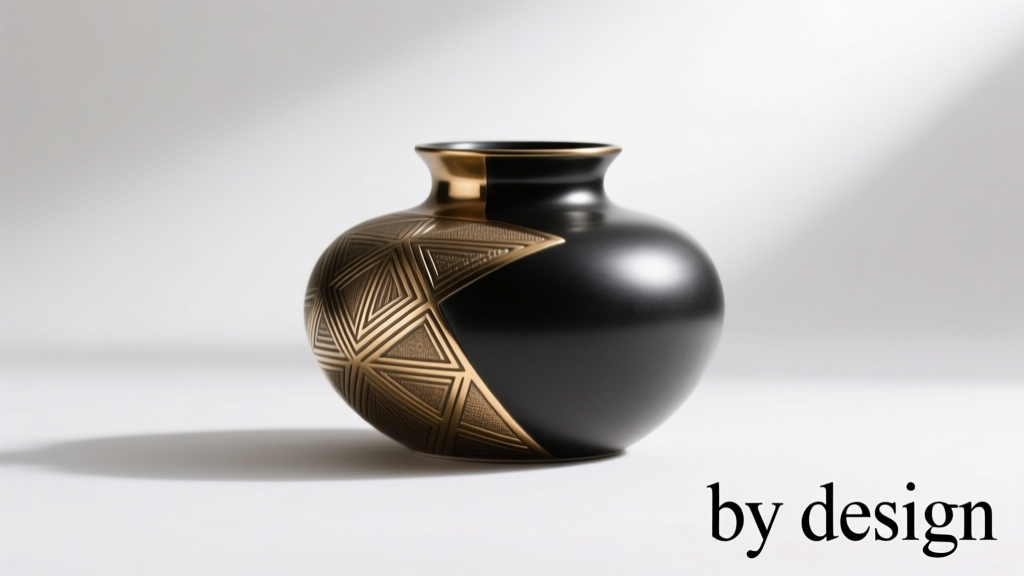
Puzzle vases are more than decorative objects—they’re tactile experiences disguised as vessels. Originating from centuries-old Chinese and Japanese joinery traditions, modern puzzle vases combine craftsmanship, cognitive engagement, and functional elegance. Unlike conventional vases, they require deliberate interaction: a twist, a slide, or a sequence of precise movements to open, revealing hidden compartments or enabling floral arrangement. Yet with rising popularity—and an influx of mass-produced imitations—the market has become cluttered with pieces that look intriguing but fail under real use: jammed mechanisms, fragile joints, or designs that prioritize novelty over longevity. Choosing the right one demands more than aesthetic appeal. It requires understanding how material integrity interacts with mechanical precision, how ergonomics affect daily handling, and how design intention aligns with your actual lifestyle.
What Makes a Puzzle Vase Truly Functional?
A puzzle vase earns its name not through gimmickry, but through thoughtful integration of form, function, and friction. At its core, it must satisfy three non-negotiable criteria: repeatability, tolerance, and purpose. Repeatability means the mechanism operates smoothly—every time—without forcing or wear-induced degradation after dozens of openings. Tolerance refers to the microscopic precision between interlocking parts; even 0.1 mm of misalignment in ceramic or wood can cause binding or wobble. Purpose distinguishes meaningful design from novelty: a well-conceived puzzle vase enhances display (e.g., concealing stems while showcasing blooms), supports seasonal arrangements (removable inner cylinders for water control), or serves dual roles (a closed vessel doubling as a sculptural object when empty).
Many consumers mistake complexity for quality—assuming more moving parts equals better craftsmanship. In reality, the most enduring puzzle vases often feature minimal, elegantly resolved mechanisms: two-part threaded ceramics, magnetically guided wooden sleeves, or gravity-assisted nesting systems. Over-engineering introduces failure points. As master woodworker Hiroshi Tanaka notes in his treatise on functional joinery: “The strongest joint is the one you don’t notice until it’s needed—and forget exists the moment it’s satisfied.” That principle applies directly to puzzle vases: excellence lies in invisibility of effort, not spectacle of motion.
Material Matters: Strength, Sensibility, and Sustainability
The material defines not only appearance but operational lifespan, thermal stability, and tactile authenticity. Below is a comparative overview of the four most common materials used in premium puzzle vases:
| Material | Key Strengths | Common Pitfalls | Lifespan Expectancy (with care) |
|---|---|---|---|
| Ceramic (stoneware or porcelain) | High compressive strength, heat-resistant, glaze options allow subtle texture cues for alignment | Brittle under lateral torque; poor shock absorption if dropped; glaze chipping obscures alignment marks | 20+ years |
| Hardwood (walnut, maple, cherry) | Natural grain provides grip and visual feedback; expands/contracts minimally with humidity; self-lubricating oils in dense species reduce wear | Unsealed wood absorbs moisture, swelling joints; low-density woods (e.g., pine) compress permanently under pressure | 30–50 years |
| Brass or Bronze | Corrosion-resistant alloys maintain dimensional stability; weight adds reassuring heft and dampens vibration | Lower-grade brass (e.g., zinc-heavy) tarnishes unevenly; poorly machined threads strip after ~200 cycles | Indefinite (with polishing) |
| Cast Concrete (fiber-reinforced) | Extreme compressive load tolerance; matte finish hides minor scuffs; excellent thermal mass stabilizes cut flowers | Heavy (impractical for frequent repositioning); porous unless sealed; cold to touch in winter | 40+ years |
When evaluating material claims, look beyond marketing terms like “artisan-crafted” or “hand-thrown.” Instead, verify specifics: Is the ceramic fired to ≥1240°C (ensuring vitrification)? Does the wood carry FSC or PEFC certification? Are metal components specified as C36000 free-cutting brass or C93200 bearing bronze? These details predict real-world performance far more reliably than glossy product photography.
Tip: Tap ceramic or concrete vases gently with a fingernail—if the sound is dull or muffled, the material is likely under-fired or improperly cured, increasing fracture risk.Mechanism Design: Beyond “Twist to Open”
The puzzle mechanism isn’t a flourish—it’s the heart of the experience. There are five dominant functional architectures, each with distinct advantages and user considerations:
- Threaded Dual-Body: Two cylindrical sections screw together via fine-pitch external threads. Requires consistent rotational pressure; best for ceramic and metal. Vulnerable to cross-threading if misaligned during closure.
- Sliding Sleeve: An outer shell slides vertically over an inner chamber, locking via recessed pins or magnetic detents. Offers intuitive, linear operation—ideal for users with limited hand strength or arthritis.
- Rotary Lock Ring: A separate band rotates to engage/disengage internal lugs. Provides tactile feedback (audible click) and prevents accidental opening. Common in high-end wooden vases.
- Nesting Cylinder System: Multiple concentric tubes fit within one another, each requiring sequential removal. Prioritizes floral versatility over speed—excellent for multi-tier arrangements.
- Gravity-Assisted Release: Weight of water or inserted stems triggers a release pin. Rare, highly specialized, and requires precise calibration—best left to museum-grade commissions.
Crucially, the mechanism must be serviceable. Avoid sealed units where disassembly voids warranties. Look for modular construction: removable base plates, replaceable O-rings (in ceramic/metal), or accessible dowel pins (in wood). A true long-term investment allows for maintenance—not just use.
Real-World Usability: A Mini Case Study
In spring 2023, landscape designer Lena Rossi commissioned three puzzle vases for her studio’s client-facing reception area: one ceramic (threaded), one walnut (sliding sleeve), and one brass (rotary lock). Her goal was functionality under constant use—not just aesthetics.
The ceramic vase failed within six weeks. Its matte-glazed threads lacked lubrication grooves, causing abrasive wear every time it opened. Fine ceramic dust accumulated in the thread valleys, accelerating binding. Staff resorted to using rubber grips to force rotation—damaging the glaze further.
The walnut vase performed flawlessly—for eight months—until unseasonal humidity spiked above 70% RH. Without climate control, the wood swelled slightly, tightening the sleeve tolerance. Rather than force it, Lena applied food-grade mineral oil to the sliding surface and allowed 48 hours for absorption. The mechanism regained smooth travel. She now monitors indoor humidity and conditions the wood quarterly.
The brass vase required no intervention. Its C93200 bronze ring maintained consistent torque resistance across temperature swings. Staff reported preferring its “confident weight” and audible click confirmation—a subtle psychological cue that the vase was securely closed.
This case underscores a vital truth: no puzzle vase is universally ideal. The best choice depends on your environment, usage frequency, and willingness to perform light upkeep. For high-traffic spaces, brass or properly engineered ceramic wins. For humid climates or minimalist interiors, hardwood with climate-aware finishing is superior.
Your 7-Step Selection Checklist
Before purchasing, walk through this field-tested verification process:
- Step 1: Confirm the mechanism is demonstrated in video—not just described. Watch for hesitation, grinding sounds, or visible flexing during operation.
- Step 2: Check weight distribution. Lift the vase at chest height and rotate slowly. If it feels front-heavy or unbalanced, floral weight will exacerbate instability.
- Step 3: Examine seam tolerances. Run a fingernail along all joins. No catch, gap, or ridge should be detectable—especially at alignment markers.
- Step 4: Verify inner diameter and depth. Measure your tallest stem bunches. Allow minimum 2 cm clearance between water line and lowest opening point.
- Step 5: Review warranty terms. Reputable makers offer minimum 5-year coverage on mechanisms—not just materials.
- Step 6: Assess cleaning access. Can you wipe interior seams with a cotton swab? If not, mineral buildup will degrade performance over time.
- Step 7: Request dimensional drawings. Legitimate artisans provide CAD schematics showing wall thickness, thread pitch, or sleeve overlap—proof of engineering intent.
“Most ‘broken’ puzzle vases aren’t defective—they’re mismatched to their environment or misused. Precision mechanisms demand respect for physics, not just admiration.” — Dr. Aris Thorne, Industrial Design Faculty, Royal College of Art
Frequently Asked Questions
Can I use a puzzle vase for fresh flowers—or is it purely decorative?
Yes, absolutely—provided it’s designed for hydration. Look for vases with removable inner liners (ceramic or stainless steel), sealed water reservoirs, or drainage channels routed away from moving parts. Avoid direct water contact with wooden joints or unsealed metal threads, as prolonged exposure causes swelling or corrosion.
Do puzzle vases require regular maintenance?
Not intensive—but yes, contextually. Ceramic and metal benefit from annual application of microcrystalline wax to threads and seams. Hardwood vases need biannual conditioning with tung oil to maintain dimensional stability. Skipping maintenance doesn’t break the vase immediately, but accelerates tolerance drift—making operation gradually stiffer over 2–3 years.
Are there puzzle vases suitable for children or seniors?
Yes—with caveats. Sliding sleeve and rotary lock mechanisms require less dexterity than fine-threaded systems. Prioritize models with wide-grip surfaces (≥4 cm diameter), tactile alignment cues (raised dots or engraved lines), and weight under 1.2 kg. Avoid small, intricate parts that could detach. The American Occupational Therapy Association recommends testing opening force: it should require ≤2.5 kg of pressure—equivalent to lifting a liter of water.
Conclusion: Choose Intentionally, Not Impulsively
A puzzle vase is never just an object on a shelf. It’s a quiet dialogue between maker and user—a compact expression of patience, geometry, and respect for material honesty. The “best” one isn’t defined by price, rarity, or Instagram appeal. It’s the one whose mechanism feels inevitable in your hands, whose weight settles comfortably on your table, and whose presence invites pause rather than perplexity. It’s the vase that still opens smoothly after 300 uses—not because it’s indestructible, but because its design anticipated your habits, your space, and your care.
Stop scrolling through endless variations promising “mind-bending elegance.” Start evaluating with purpose: measure your space, assess your climate, handle sample mechanisms if possible, and ask vendors about serviceability—not just shipping times. When you choose deliberately, you don’t just acquire a vase. You adopt a ritual—one that transforms arranging flowers into an act of mindfulness, and display into quiet celebration of human ingenuity.
💬 Have you found a puzzle vase that exceeded expectations—or one that quickly disappointed? Share your real-world experience, including material, mechanism type, and how it held up over time. Your insight helps others navigate this nuanced category with confidence.








