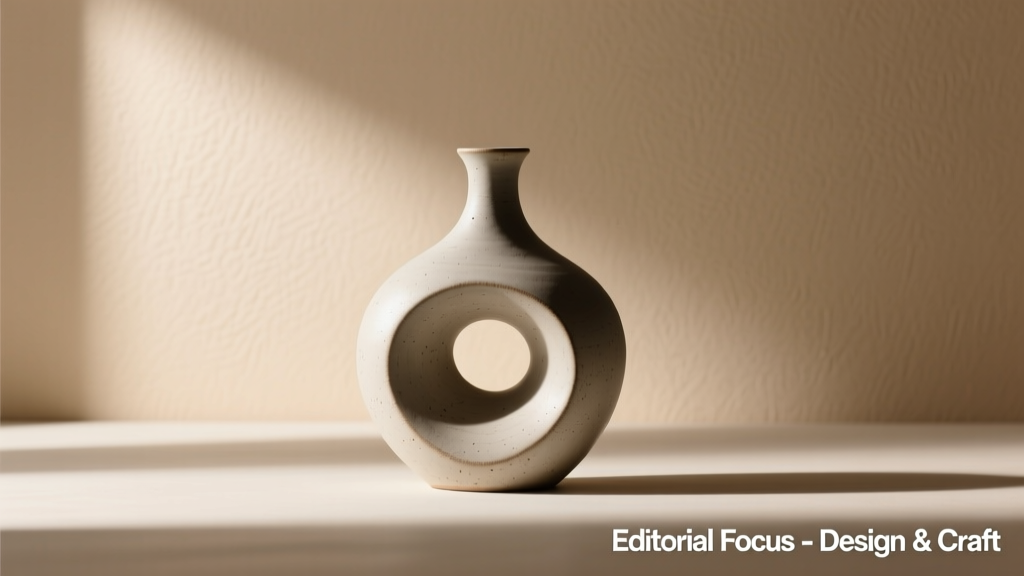
Decorating a home isn’t about filling empty corners with what’s trending—it’s about curating an environment that supports how you live, breathe, rest, and connect. Too many people begin with a throw pillow or a statement rug, only to realize weeks later that the palette clashes with natural light, the scale overwhelms the room, or the materials wear poorly under daily use. The best home decoration emerges from intention—not impulse. It balances aesthetics with ergonomics, personal resonance with spatial logic, and emotional comfort with long-term practicality. This guide walks through the foundational decisions that separate lasting harmony from short-lived style.
1. Start with Function, Not Aesthetics
Before selecting a single vase or wall print, ask: *What must this space do?* A living room used for nightly family reading and weekend video calls demands different decoration than one reserved for formal guest receptions. Function dictates form—literally. A dining nook where children eat breakfast every morning needs wipeable surfaces, rounded edges, and seating that accommodates growing bodies. A home office doubling as a guest bedroom requires layered lighting (task + ambient), sound-absorbing textiles, and furniture that transitions seamlessly between roles.
Begin by mapping three functional layers for each room:
- Primary activity (e.g., cooking in the kitchen)
- Secondary frequency (e.g., homework at the island, 4x/week)
- Physical constraints (e.g., south-facing glare, narrow doorway, low ceiling)
Only then does decoration become purposeful. A bold wallpaper behind a desk may energize focus—but only if it doesn’t compete with screen glare. A plush area rug anchors conversation—but only if its pile depth allows chairs to slide comfortably underneath the table.
Tip: Sketch a quick floor plan and annotate each zone with its top two functional requirements. Decorate only after those needs are visibly addressed.2. Understand Light, Scale, and Proportion—Not Just Color
Color is the most visible element of decoration—but often the least reliable starting point. What looks warm and inviting on a swatch card can read cold and flat under north-facing daylight or harsh LED recessed lighting. Similarly, a “medium-gray” sofa may dominate a 12’ x 14’ living room but vanish in a 20’ x 25’ great room. Scale and proportion govern perception more powerfully than hue.
Here’s how to assess them objectively:
- Measure your room’s dominant dimensions (length, width, ceiling height) and note window placement and size.
- Calculate the “visual weight” of existing fixed elements: fireplace mantel height, built-in cabinetry depth, door trim width.
- Use the 60-30-10 rule for balance: 60% dominant color (walls, large furniture), 30% secondary (upholstery, curtains), 10% accent (pillows, art, hardware).
Light quality matters equally. Natural light shifts throughout the day; artificial light has a color temperature measured in Kelvin (K). Warm white (2700K–3000K) softens textures and flatters skin tones; cool white (4000K–5000K) enhances clarity but can feel sterile in bedrooms. Always test paint chips and fabric swatches at multiple times of day—and under your actual ceiling fixtures.
3. Prioritize Material Integrity Over Surface Appeal
A velvet sofa may photograph beautifully, but if its pile crushes permanently after six months of sitting, it fails its core purpose. Likewise, a marble coffee table adds luxury—but without a honed or leathered finish, it will etch, stain, and show every fingerprint. Material choice is where decoration meets longevity.
The following table compares common decorative materials by durability, maintenance, and ideal application:
| Material | Best For | Maintenance Level | Key Limitation |
|---|---|---|---|
| Wool-blend rugs | High-traffic living rooms, hallways | Low (naturally soil-resistant, sheds dust) | Premium price; avoid direct sunlight to prevent fading |
| Honed limestone | Bathrooms, entryways, fireplace surrounds | Moderate (seal annually; clean with pH-neutral stone soap) | Not suitable for kitchens with frequent acid spills (vinegar, citrus) |
| Textured linen upholstery | Bedroom chairs, reading nooks, formal seating | Medium (spot-clean only; dry clean recommended yearly) | Shows wrinkles and pilling with heavy use |
| Matte-finish ceramic tile | Kitchen backsplashes, shower walls | Low (non-porous, grout-sealed) | Can chip at edges if struck by hard objects |
When evaluating any decorative item, ask three questions: Does it improve with age—or degrade? Can it be repaired or refreshed? Does its texture support the room’s intended mood? A rough-hewn oak shelf invites touch and ages gracefully; high-gloss lacquer feels sharp and shows every smudge. One supports calm; the other demands constant vigilance.
4. Build Around Anchors—Not Accents
Most decoration fails because people decorate *outward* from small items: “I love this lamp, so let’s find a side table to match.” That approach guarantees visual noise and incoherence. Instead, identify 1–3 non-negotiable anchors per room—pieces that define character, support function, and remain in place for years. Then layer everything else around them.
Anchors are rarely decorative. They’re structural or experiential:
- A well-proportioned dining table that seats eight comfortably
- A window treatment that controls light *and* frames the view
- A bookshelf system that organizes, displays, and defines spatial boundaries
- A kitchen island with integrated task lighting and accessible storage
Once anchors are selected, all subsequent decoration serves them—not the reverse. Curtains soften the vertical lines of tall windows. Art above a sofa echoes the rhythm of its arm height. Rug dimensions align precisely with the front legs of seating—not floating loosely beneath.
“People mistake ‘decoration’ for ornamentation. In truth, the strongest decoration is invisible: it’s the quiet confidence that comes when every object has earned its place.” — Maya Rodriguez, Interior Architect and author of Space & Stillness
5. Real-World Example: Transforming a Small Urban Living Room
Consider Lena, a graphic designer living in a 320-square-foot apartment in Portland. Her living room doubled as her studio, guest sleeping area, and primary relaxation zone. She initially filled it with mismatched thrift-store finds: a low-slung velvet sofa (too deep for her 5’2” frame), mirrored side tables (amplifying clutter), and bright abstract art (visually exhausting after screen work).
She began again—not by shopping, but by observing. She noted: (1) She used the sofa for sketching 3+ hours daily, needing lumbar support and surface access; (2) Guests slept on an air mattress stored under the sofa—so storage was non-negotiable; (3) Morning light flooded west-facing windows, washing out screens and overheating the space.
Her anchor choices were deliberate: a custom-built platform sofa with built-in drawers (supporting posture + storage), motorized roller shades with solar-reflective backing (managing heat + glare), and a compact, wall-mounted fold-down desk. Only then did she select decoration: a wool rug sized to fit *only* the seating zone (defining intimacy), matte-black metal sconces (reducing visual competition with screens), and two framed botanical prints in muted sepia (calming, not stimulating).
Result: The room felt larger, quieter, and more intentional—not because it held fewer objects, but because every object had a clear, sustained role.
6. Step-by-Step Decision Framework
Follow this five-step process before purchasing any decorative item:
- Define the non-negotiable function: “This lamp must provide adjustable task light for reading without glare on my laptop.”
- Verify dimensional compatibility: Measure clearance, weight limits, and electrical access. Does the chandelier hang low enough to avoid head bumps but high enough to allow sightlines?
- Assess material performance: Will this painted wood shelf warp in a steamy bathroom? Will this woven basket hold up to daily dog leash storage?
- Test against existing anchors: Place a photo of your sofa next to the new rug sample on your phone screen. Does the scale feel balanced? Does the tone complement—not compete with—the wall color?
- Wait 72 hours: Sleep on the decision. If excitement fades and practical concerns rise, reconsider.
7. Common Pitfalls—and How to Avoid Them
Even experienced decorators fall into predictable traps. These four missteps undermine cohesion and longevity:
- Matching sets instead of coordinating pieces: A “living room set” forces uniformity, killing visual interest. Instead, mix eras, textures, and finishes—unified by one consistent element (e.g., all wood tones within a 20% lightness range).
- Ignoring acoustics: Hard floors, glass tables, and bare walls create echo and fatigue. Introduce at least three sound-dampening elements: a rug with pad, upholstered seating, and textured wall hangings or books.
- Overloading focal points: A fireplace, large window, and gallery wall all compete for attention. Choose one true focal point per room—and design supporting elements to recede respectfully.
- Forgetting the “empty breath”: Every room needs negative space—a shelf left partially open, a wall with only one piece of art, a corner free of furniture. Clutter isn’t measured in objects, but in unresolved visual tension.
8. FAQ
How much should I spend on home decoration?
Allocate budget by longevity and impact: invest 60% in anchors (sofas, rugs, window treatments), 25% in mid-life pieces (lighting, casegoods), and 15% in accents (pillows, vases, art). Avoid spending heavily on items you’ll replace in under two years—unless they bring irreplaceable joy.
Is it okay to mix patterns and styles?
Yes—if anchored by consistent scale, color value, or line weight. A floral curtain works with a geometric rug if both share the same base color and similar motif density. Scandinavian minimalism pairs with mid-century modern because both prioritize clean lines and functional form—not because they’re “trendy together.”
How do I know when a space is “done”?
When adding one more item makes the room feel heavier—not richer. When you can walk in and immediately relax, without scanning for visual corrections. When every object either serves a need, evokes meaning, or delights the senses—without demanding maintenance or explanation.
Conclusion
Choosing the best home decoration isn’t about assembling a magazine-perfect scene. It’s about listening—to your body’s need for support, to your space’s architectural voice, to the rhythms of your daily life. It’s the quiet confidence of knowing why a chair sits where it does, why a wall is painted that precise shade of clay, why the rug’s fringe is hand-knotted rather than machine-cut. Decoration becomes meaningful when it stops being decoration and starts being habitat.
You don’t need a stylist, a big budget, or perfect taste. You need patience, observation, and the willingness to edit ruthlessly. Start with one room. Apply the anchor-first method. Test light at dusk. Feel fabric textures with your hands—not just your eyes. Let your home evolve slowly, thoughtfully, and authentically.
💬 Your space tells a story—what chapter do you want to write next? Share your biggest decoration challenge or breakthrough in the comments. Real experiences help us all choose more wisely.