For many women, dress flats are a wardrobe staple—versatile enough for the office, brunch, travel, or evening events. Yet too often, these sleek shoes come at the cost of comfort, leading to sore feet, blisters, and fatigue by midday. The truth is, comfort and elegance don’t have to be mutually exclusive. With the right knowledge and attention to detail, it’s entirely possible to find dress flats that feel as good as they look, even after eight hours on your feet.
The key lies in understanding what makes a flat truly supportive, evaluating materials and construction, and knowing how to match footwear to your daily demands. Whether you're navigating city sidewalks, standing during meetings, or walking through an airport, choosing the right pair can transform your experience.
Understand Your Foot Type and Gait
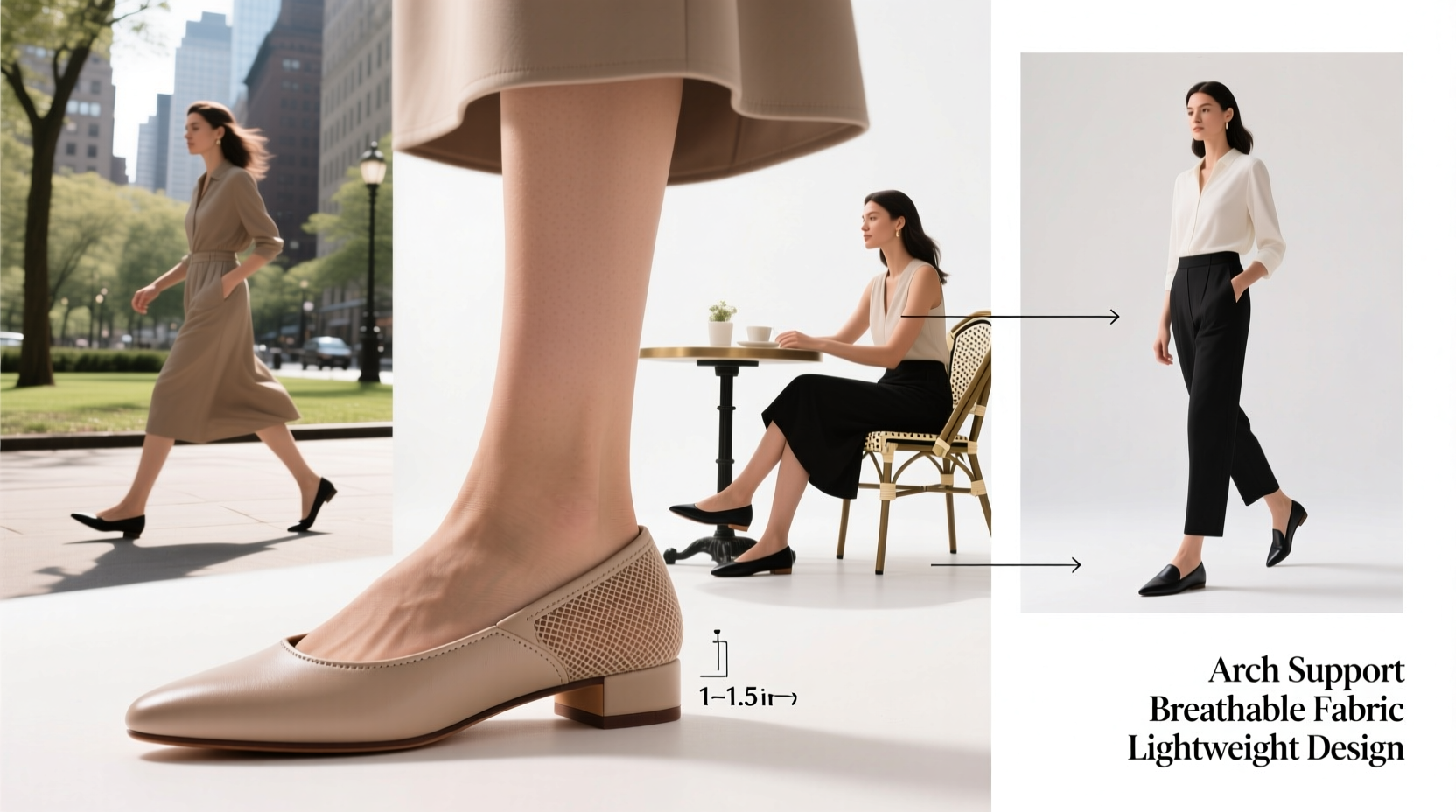
Not all feet are created equal. Some women naturally have high arches, others flat feet, and many fall somewhere in between. Your foot type directly impacts how pressure is distributed across your sole when walking in flats. Ignoring this can lead to strain on the ball of the foot, heel pain, or even long-term issues like plantar fasciitis.
A simple way to assess your arch is the \"wet test\": wet the bottom of your foot and step onto a piece of paper. If you see a full footprint with little inward curve, you likely have flat feet. A narrow band connecting heel and forefoot suggests high arches. A moderate curve indicates a neutral arch.
Tip: Women with flat feet benefit from built-in arch support, while those with high arches need cushioning and flexibility to absorb impact.“Many patients come in with foot pain traced back to unsupportive flats worn daily. Choosing shoes aligned with your biomechanics isn’t just about comfort—it’s preventive care.” — Dr. Lena Torres, Podiatrist and Foot Health Specialist
Key Features of All-Day Comfortable Flats
Comfortable dress flats aren’t defined by softness alone—they require smart engineering. Look for these structural elements when shopping:
- Arch Support: A subtle but firm rise under the midfoot helps maintain natural alignment and reduces strain.
- Cushioned Insole: Memory foam or EVA padding absorbs shock, especially important on hard surfaces.
- Firm Heel Counter: The back of the shoe should be rigid enough to stabilize the heel and prevent slippage.
- Flexible Forefoot: The toe box should bend easily where your foot naturally flexes.
- Roomy Toe Box: Toes should lie flat without crowding, reducing pressure and preventing bunions over time.
- Non-Slip Sole: Rubber or textured soles provide grip on polished floors and outdoor surfaces.
Materials That Matter
Leather—especially full-grain or soft calfskin—is ideal for dress flats. It molds to your foot over time, breathes well, and resists creasing. Avoid stiff synthetic uppers that don’t stretch and can cause friction. Linings made from breathable fabrics like microfiber or cotton help reduce moisture buildup, which is crucial for extended wear.
Smart Shopping Checklist
Before purchasing any pair of dress flats, use this checklist to ensure long-term comfort:
- Try them on in the afternoon when feet are slightly swollen.
- Walk on different surfaces (carpet, tile) in the store.
- Check for heel slippage—your heel should stay securely in place.
- Press the sole near the ball of the foot; it should bend easily.
- Inspect the interior for seams or stitching that could rub.
- Ensure there’s a thumbnail’s width between your longest toe and the end of the shoe.
- Look for brands offering removable insoles—you can replace them with orthotics if needed.
Top Brands Known for Comfort and Style
Some brands consistently deliver on both aesthetics and ergonomics. These are trusted by podiatrists and fashion editors alike:
| Brand | Best For | Price Range | Signature Feature |
|---|---|---|---|
| Tory Burch | Office elegance | $150–$250 | Premier cushioned footbed with arch contour |
| Rothy’s | Sustainable comfort | $125–$145 | Knitted upper with flexible sole and washable design |
| Clarks | All-day support | $80–$130 | OrthoLite® cushioning and adjustable fit options |
| Sam Edelman | Modern trends | $70–$120 | Balanced blend of style and memory foam insoles |
| Ecco | Biomechanical precision | $100–$180 | Direct-injected, flexible soles and anatomical lasts |
Real-Life Scenario: From Painful to Practical
Sarah, a marketing director in Chicago, used to dread workdays. Her favorite black patent leather flats looked sharp with her tailored pantsuits—but by noon, she was limping. She switched to a pair of Clarks Unstructured collection flats after a colleague recommended them. The difference was immediate. “I barely noticed I was wearing shoes,” she said. “No more carrying spares in my tote. I even walked six blocks to a client meeting without discomfort.”
What changed? The new pair had a contoured footbed, a padded collar, and a rubberized sole that absorbed sidewalk vibrations. Sarah hadn’t realized how much impact hard surfaces were having until she experienced proper cushioning.
Step-by-Step Guide to Breaking In New Flats
Even well-designed flats may need a short break-in period. Follow these steps to avoid blisters and discomfort:
- Wear them at home first: Walk around for 30–60 minutes with thick socks to gently stretch tight areas.
- Target pressure points: Use a hairdryer on low heat to warm stiff spots, then flex the shoe while wearing it.
- Add protective pads: Apply gel heel grips or ball-of-foot cushions to reduce friction.
- Limit initial outings: Wear them for no more than two hours on the first day outside the house.
- Rotate pairs: Alternate flats to give each pair time to air out and recover shape.
FAQ: Common Questions About Comfortable Dress Flats
Can dress flats be worn every day?
Yes—if they’re designed for support and properly fitted. Daily wear is sustainable when the shoe includes arch support, cushioning, and a durable sole. Rotate between 2–3 pairs to extend their life and reduce foot fatigue.
How do I prevent heel blistering?
Heel slippage is the main culprit. Choose styles with ankle straps, padded collars, or heel grips. You can also use adhesive gel pads or silicone inserts inside the back of the shoe to minimize movement.
Are flats worse for your feet than heels?
Surprisingly, poorly constructed flats can be harder on your feet than moderate heels. Flat shoes with no arch support force your foot into an unnatural position, increasing strain on ligaments. A slight heel (0.5 to 1 inch) can sometimes distribute weight more evenly than a completely flat sole.
Final Thoughts: Prioritize Comfort Without Compromising Style
Choosing comfortable dress flats isn’t about settling for ugly orthopedic shoes. Today’s market offers elegant, professional styles engineered with real foot science. By paying attention to structure, materials, and fit—and listening to your body—you can enjoy all-day comfort without sacrificing sophistication.
Start viewing your shoes not just as accessories, but as foundational tools for mobility and confidence. When you feel good on your feet, everything else follows: better posture, increased energy, and a more positive outlook throughout the day.
🚀 Ready to upgrade your shoe game? Re-evaluate your current flats using the checklist above, and invest in a pair that supports your lifestyle. Share your favorite comfortable brand or tip in the comments—your insight could help another woman walk easier tomorrow.








