For decades, drivers have personalized their vehicles in subtle ways—seat covers, dashboard trinkets, or a lucky charm hanging from the rearview mirror. In recent years, goddess car ornaments—elegant pendants often depicting deities like Lakshmi, Kali, or Quan Yin—have surged in popularity. Marketed as symbols of protection, prosperity, and spiritual grounding, these ornaments promise more than just aesthetics. But how do they stack up against the simplicity and functionality of a plain rearview mirror? Are these decorative additions truly worth the investment, or do they pose unseen risks?
This article examines the practical, aesthetic, and psychological dimensions of goddess car ornaments versus unadorned mirrors. From visibility concerns to emotional benefits, we’ll explore what matters most when deciding whether to hang a sacred symbol or keep things clean and clear.
The Rise of Spiritual Car Decor
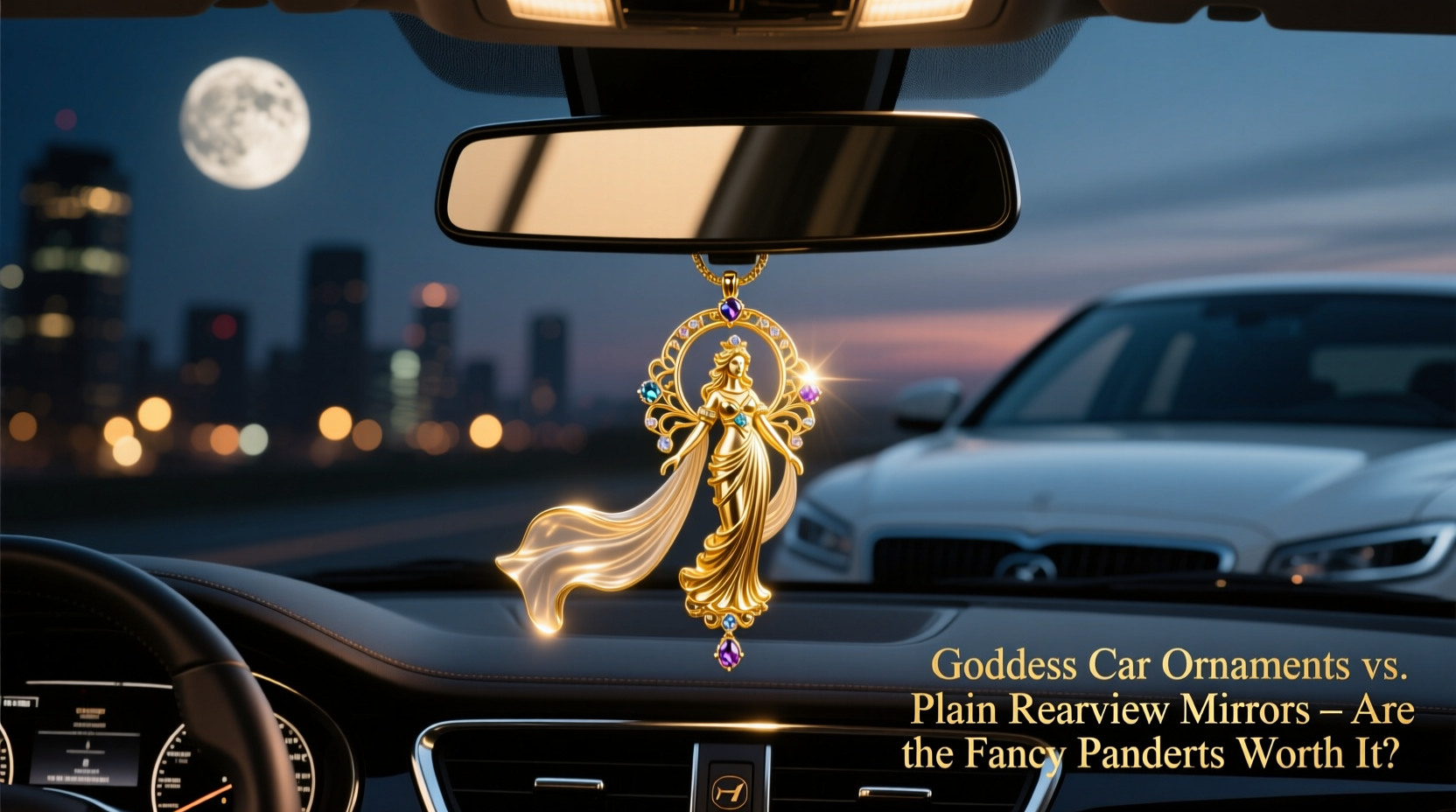
Goddess car ornaments are part of a broader trend toward mindful driving and vehicle personalization. Rooted in cultural traditions—from Hinduism’s reverence for Lakshmi as the bringer of fortune to Buddhist practices of invoking compassion through imagery—these items serve both decorative and devotional purposes. Sold widely on e-commerce platforms and in spiritual boutiques, they range from intricately carved wooden figures to delicate crystal pendants.
Many drivers report feeling calmer or more protected with such symbols in their line of sight. “I started hanging a small Tara pendant after a stressful commute,” shares Meera T., a software engineer from Austin. “It reminds me to breathe and stay centered, especially in traffic.” While anecdotal, experiences like hers reflect a growing desire to turn the car into a space of intentionality—not just transportation.
Safety First: Visibility and Distraction Risks
No matter how meaningful an ornament may be, safety must remain paramount. A cluttered or obstructed field of vision is one of the leading contributors to preventable accidents. The National Highway Traffic Safety Administration (NHTSA) advises that any object hanging from the rearview mirror should not block the driver’s view through the windshield.
In several U.S. states—including California, New York, and Massachusetts—it is illegal to hang objects from the rearview mirror if they impair visibility. Violations can result in fines ranging from $25 to over $200. Even where enforcement is lax, insurance companies may use obstruction as a factor in determining fault during accident claims.
Tip: If you choose to hang an ornament, ensure it’s small (under 3 inches), lightweight, and swings minimally. Position it so it doesn’t cross your central line of sight.Comparing Impact: Ornament vs. No Ornament
| Factor | Goddess Car Ornament | Plain Rearview Mirror |
|---|---|---|
| Visibility | Potential obstruction, especially during turns or sunlight glare | Unobstructed, optimal clarity |
| Safety Risk | Moderate (if large or reflective) | Minimal |
| Aesthetic Appeal | High—personal, spiritual, decorative value | Neutral—minimalist, functional |
| Durability | Varies by material; crystals can shatter, cords fray | High—no additional components to fail |
| Maintenance | Requires occasional dusting, repositioning | Nearly zero upkeep |
Psychological and Emotional Benefits
Beyond legality and design, many drivers value goddess ornaments for their emotional resonance. Symbols act as anchors—reminders of values, beliefs, or intentions. For some, seeing a goddess figure swaying gently in the sunlight evokes feelings of divine protection. For others, it reinforces mindfulness before starting the engine.
“Symbols aren’t just decoration—they’re cognitive cues. A small image of compassion or strength can shift a driver’s mindset before merging onto a busy highway.” — Dr. Lena Patel, Cognitive Psychologist specializing in behavioral design
Studies in environmental psychology suggest that personalized spaces increase perceived control and reduce stress. While no peer-reviewed research specifically analyzes rearview mirror pendants, related findings support the idea that meaningful objects in high-stress environments (like cars) can have measurable calming effects.
However, this benefit hinges on the driver’s relationship with the symbol. A goddess figure chosen impulsively online may offer little comfort, while one gifted during a meaningful life event could carry deep emotional weight.
Practical Guide: Choosing Wisely (If You Choose At All)
If you're considering a goddess ornament but want to balance safety and sentiment, follow this step-by-step approach:
- Evaluate your driving environment: Do you frequently drive at night, in heavy rain, or through mountainous terrain? These conditions demand maximum visibility.
- Select a minimal design: Opt for compact, non-reflective materials like matte wood, fabric, or soft resin. Avoid glass, metal, or anything that catches headlights.
- Test placement: Hang the ornament and sit in the driver’s seat. Check all angles—straight ahead, left and right turns, and rear visibility. Remove immediately if it crosses your primary sightline.
- Secure it properly: Use a non-slip hook or silicone grip to prevent swinging. Excessive motion increases distraction.
- Reassess monthly: After a few weeks, ask yourself: Does it still feel meaningful? Has it ever caused a moment of distraction? Be honest.
Checklist: Safe & Meaningful Ornament Use
- ✅ Ornament is smaller than 3 inches
- ✅ Made from non-reflective, lightweight material
- ✅ Positioned outside direct line of sight
- ✅ Securely attached without dangling cords
- ✅ Emotionally significant to the driver
- ✅ Compliant with local laws
Real-World Example: When Symbolism Met Consequence
In 2022, a driver in New Jersey was involved in a minor collision during rush hour. Though no one was injured, the insurance adjuster noted that a large crystal Shakti pendant hanging from the rearview mirror partially obscured the driver’s view of a merging vehicle. While not cited legally, the detail was included in the claim report, which later affected premium rates.
The driver, Priya R., shared her reflection: “I loved that pendant—it was blessed at my temple. But I realized I’d prioritized meaning over mechanics. Now I keep a small sticker of the same goddess on my dashboard instead. Same intention, zero risk.”
This case illustrates a balanced solution: honoring personal beliefs without compromising safety.
Frequently Asked Questions
Can goddess car ornaments improve driving safety?
Not directly. However, if the symbol promotes mindfulness or reduces anxiety, it may contribute to calmer, more focused driving. The physical presence of the ornament, though, can create visual distractions or obstructions, potentially decreasing safety.
Are there legal alternatives to hanging items from the mirror?
Yes. Consider placing the ornament on the dashboard (away from airbags), using a decal, or keeping a small token in the center console. These options preserve symbolism without violating laws or risking visibility.
Do these ornaments have any proven spiritual effect?
Spiritual effects are subjective and rooted in personal belief. There’s no scientific evidence that a pendant can influence luck or protection. However, the placebo effect of feeling safeguarded can positively influence mood and confidence behind the wheel.
Conclusion: Meaning Matters, But So Does Clarity
Goddess car ornaments occupy a unique space between devotion and decoration, offering emotional comfort to many drivers. Their beauty and symbolic power are undeniable. Yet, when placed on a rearview mirror, they enter a domain governed by physics, law, and human attention spans.
A plain rearview mirror wins on pure functionality—offering unimpeded vision, zero maintenance, and full compliance with safety standards. But for those who find genuine peace in a small symbol of divine grace, a carefully chosen ornament can coexist with responsibility—if boundaries are respected.
The true measure of worth isn’t in the ornament itself, but in how thoughtfully it’s used. If it enhances your journey without endangering it, it may indeed be worth it. Otherwise, simplicity remains the safest form of elegance.
🚀 Ready to personalize your ride safely? Share your thoughts or favorite non-distracting car rituals in the comments below—let’s build a community of mindful drivers.








