A camellia design throw blanket brings elegance, softness, and a touch of botanical sophistication to any room. With its delicate floral motif—often rendered in soft pinks, creams, or deep burgundies—this type of textile can elevate the mood of a space when paired thoughtfully with existing furniture. However, mismatched colors, clashing textures, or poor placement can disrupt the harmony you're aiming for. The key lies not just in aesthetics but in understanding color theory, fabric coordination, and spatial balance. Whether your interior leans toward modern minimalism, rustic farmhouse, or classic traditional, integrating a camellia-patterned throw requires intentionality.
Understand the Camellia Design Aesthetic
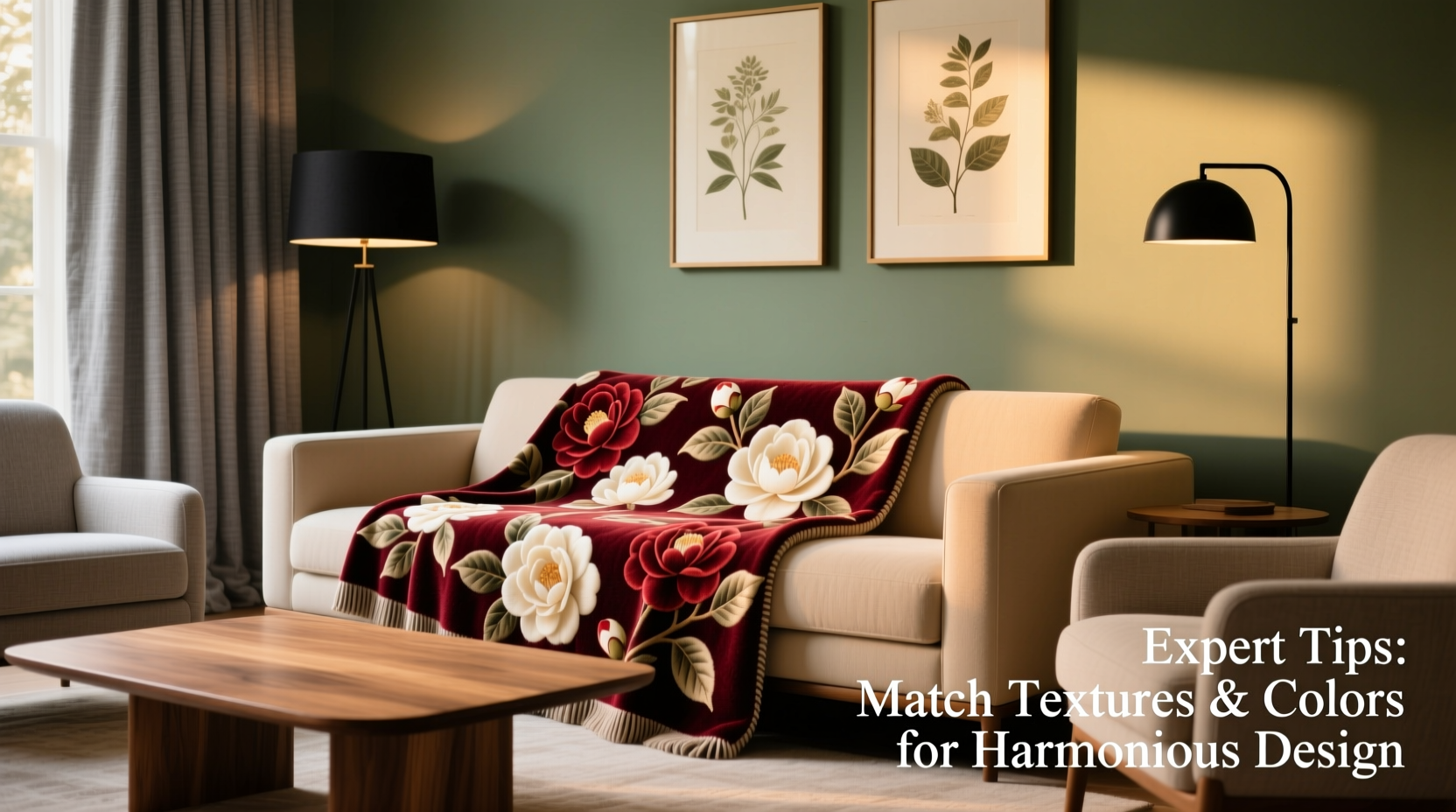
The camellia flower, known for its layered petals and symbolic associations with refinement and longevity, is often used in home decor to evoke calmness and grace. In throw blankets, the camellia motif typically appears as an all-over print, embroidered accent, or woven jacquard pattern. These designs vary in complexity—from realistic botanical illustrations to abstract watercolor washes—and this variation affects how they interact with surrounding furnishings.
Before selecting where and how to place your throw, examine its dominant features:
- Color palette: Is it monochromatic, pastel-toned, or richly saturated?
- Pattern scale: Are the flowers large and bold, or small and scattered?
- Background texture: Is the base smooth (like cotton or chenille), or textured (such as cable knit or bouclé)?
These elements will determine which furniture styles and room schemes the blanket complements best.
Tip: Hold the blanket next to your sofa or armchair in natural light before finalizing placement—colors shift under different lighting.Harmonize Color Schemes with Furniture
Matching a camellia throw with furniture begins with color coordination. The goal is to create visual continuity without monotony. Consider these strategies:
If your furniture is neutral—beige, gray, ivory, or charcoal—a camellia throw with pink or coral blooms becomes a focal point. The contrast adds warmth and personality without overwhelming the space. For instance, a dove-gray linen sofa gains depth when draped with a cream throw featuring soft rose camellias.
In rooms with bold-colored furniture—like navy blue or forest green—choose a camellia throw that includes a complementary accent hue. A sage-green armchair pairs beautifully with a throw that incorporates olive stems and blush petals, creating tonal cohesion.
For eclectic or maximalist interiors, layer the camellia throw over furniture already adorned with patterns. Just ensure one element acts as the anchor. If your sofa has a geometric print, let the camellia throw be the softer secondary layer, avoiding competing scales.
| Furniture Base Color | Recommended Camellia Throw Palette | Coordination Tip |
|---|---|---|
| White or Cream | Pink, mauve, soft red | Add a wood or rattan tray to warm up the pairing |
| Gray or Charcoal | Burgundy, coral, ivory | Use metallic accents (brass lamps) to enhance contrast |
| Navy Blue | Cream with deep pink blooms | Introduce a velvet pillow in matching bloom shade |
| Warm Wood Tones | Earthy pinks, taupe backgrounds | Pair with linen cushions for organic flow |
Selecting the Right Furniture Style
The architectural language of your furniture plays a crucial role in how well a camellia throw integrates. Traditional or vintage-inspired pieces—like rolled-arm sofas, wingback chairs, or tufted ottomans—naturally align with the romanticism of floral motifs. A camelback sofa in pale blue velvet, for example, becomes even more inviting with a lightly embroidered camellia throw casually folded over one end.
Modern or mid-century furniture, characterized by clean lines and minimal ornamentation, can still accommodate a camellia throw—but with restraint. Opt for a simplified camellia design, perhaps in a single hue or line-art style, to avoid visual clutter. Drape it neatly over the edge of a walnut loveseat rather than tossing it loosely.
“Floral throws work best when they echo the emotional tone of the room. A camellia pattern on a sleek black leather chair feels dissonant unless balanced with soft lighting and natural materials.” — Lena Torres, Interior Stylist & Textile Consultant
Step-by-Step Guide: Integrating the Throw into Your Space
- Assess your current furniture palette under both daylight and evening lighting.
- Identify one dominant color in the camellia throw—this will be your matching anchor.
- Drape the throw temporarily on different seating options to test visual weight.
- Evaluate texture contrast: Pair plush throws with tighter-weave upholstery, or lightweight knits with suede.
- Layer with coordinating pillows using one color from the throw’s design.
- Adjust placement weekly to prevent permanent creasing and maintain freshness.
Avoid Common Styling Mistakes
Even well-chosen accessories can fall flat if styling fundamentals are ignored. Here are frequent missteps when pairing camellia throws with furniture:
- Overcrowding: Adding too many textiles competes with the throw’s beauty.
- Mismatched formality: A formal brocade camellia throw looks out of place on a rugged outdoor daybed.
- Ignoring maintenance: A stained or faded throw undermines the entire aesthetic.
- Incorrect folding: Bulky folds can distort the pattern; aim for loose draping or neat quarter-folds.
Real-Life Example: Transforming a Sunroom Corner
Sarah, a homeowner in Portland, struggled to make her white wicker furniture feel cozy. She purchased a cotton-blend camellia throw in blush and sage green, hoping to add warmth. Initially, she placed it over a cushioned chair, but the effect felt disjointed. After consulting a local stylist, she adjusted her approach: she replaced the bright turquoise pillow beside it with a muted olive linen one, aligned the throw’s fold parallel to the seat edge, and added a small ceramic camellia figurine on the side table. The result was a cohesive vignette that felt intentional and serene.
This case illustrates how minor tweaks—driven by color alignment and mindful accessorizing—can maximize impact.
Checklist: Perfect Camellia Throw Integration
Use this checklist before finalizing your arrangement:
- ☐ The throw’s main color appears elsewhere in the room (pillow, artwork, rug)
- ☐ Furniture style matches the throw’s formality level
- ☐ Texture contrast enhances comfort without clashing
- ☐ Natural or ambient light highlights the pattern favorably
- ☐ The throw is machine-washable or easy to spot-clean
- ☐ It’s positioned for both visual appeal and practical use
Frequently Asked Questions
Can I use a camellia throw on leather furniture?
Yes, but choose throws with subtle embroidery or tonal prints rather than busy patterns. A cream-on-cream camellia design on a cognac leather sofa adds softness without visual competition. Avoid heavy weaves that may trap moisture against the leather.
How do I keep the throw looking fresh when used daily?
Rotate its position regularly, wash according to care instructions (preferably cold water, gentle cycle), and store it folded in a breathable cotton bag when not in seasonal use. Avoid direct sunlight to prevent fading.
Is a camellia throw suitable for a masculine-themed room?
Yes—opt for designs in deeper tones like burgundy, charcoal, or navy with minimalist floral outlines. Paired with dark wood furniture and neutral walls, it reads as sophisticated rather than overly feminine.
Final Thoughts
A camellia design throw blanket is more than a functional item—it’s a bridge between nature and nurture in your home. When matched with intention to your furniture, it enhances comfort, style, and emotional resonance. The most successful interiors aren’t defined by expensive pieces, but by thoughtful details: a well-placed fold, a color echoed in a vase, a texture that invites touch. By applying these expert principles, you turn a simple throw into a signature element of your living space.
💬 Have you found the perfect way to style your camellia throw? Share your setup ideas or ask for feedback—we’d love to hear how you bring elegance into everyday comfort.








