
For pet owners, managing fur on carpets, furniture, and hard floors is a daily challenge. A powerful cordless vacuum can make a significant difference—but when it comes to Dyson versus Shark, which brand truly excels at removing pet hair? Both companies offer high-performance models with strong suction, advanced filtration, and specialized tools. But performance under lab conditions doesn’t always translate to real-life results on stubborn pet messes. This in-depth analysis compares Dyson and Shark cordless vacuums across suction power, brush roll design, filtration, usability, and actual pet hair pickup to help you choose the right machine for your home.
Suction Power and Motor Technology
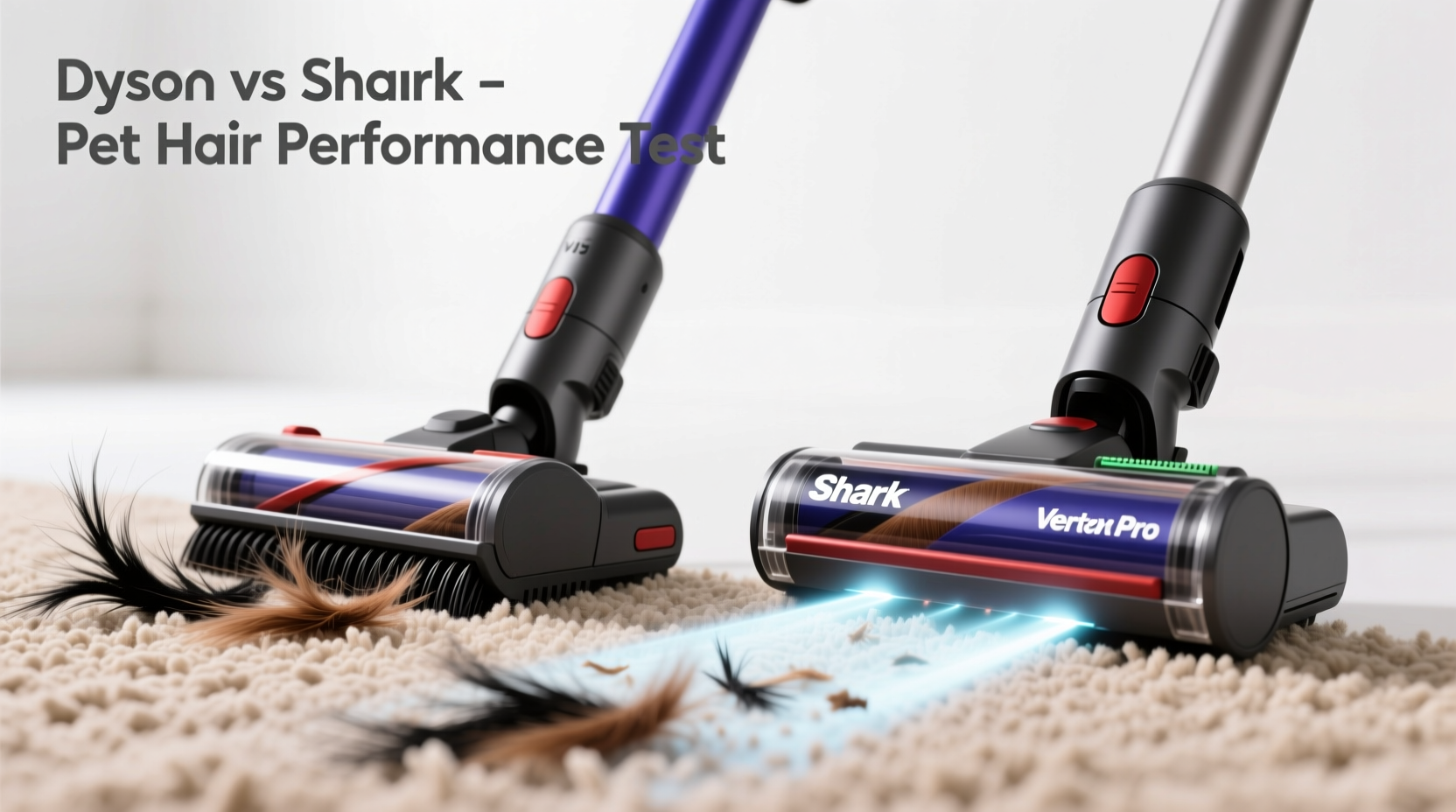
The foundation of any vacuum’s ability to lift pet hair lies in its suction power. Dyson has long led the market with its digital motors, particularly the V10, V11, and newer V15 series, which generate up to 240 air watts—among the highest in cordless models. These motors spin at speeds exceeding 125,000 RPM, creating powerful cyclonic action that separates dust and debris efficiently.
Shark, while not matching Dyson’s peak suction numbers, uses its own proprietary HyperSpeed motor. Models like the Shark Vertex Pro and Shark Stratos deliver strong airflow, often rated between 150–190 air watts depending on the model. While technically lower than Dyson’s top-end units, many users report comparable real-world performance on low-pile carpets and hardwoods.
However, raw suction isn’t everything. What matters more for pet hair is how that suction is delivered and maintained. Dyson vacuums use whole-machine HEPA filtration and sealed systems to ensure no loss of suction over time—even as the bin fills. Shark models have improved significantly in this area, but some entry-level versions still experience slight airflow degradation as filters clog or bins fill.
Tip: Always empty the dustbin after each major cleaning session, especially after vacuuming heavy shedding pets, to maintain optimal suction.Brush Roll Design: Tackling Embedded Pet Hair
Pet hair doesn’t just sit on surfaces—it tangles into carpet fibers, hides under furniture, and clings to baseboards. The brush roll (or roller) plays a critical role in dislodging embedded fur.
Dyson equips most of its higher-end models with the Direct Drive Cleaner Head, featuring stiff nylon bristles and anti-static carbon fiber filaments. This combination aggressively combs through medium to high-pile carpets, lifting deeply embedded pet hair. The motorized head is powered directly by the vacuum’s main motor, ensuring consistent torque even on thick rugs.
Shark counters with its DuoClean PowerFins technology, found in the Vertex and Stratos lines. These brush rolls combine soft rollers for hard floors with flexible “fins” that dig into carpets. The fins flex and scrape, pulling out hair from deep within carpet fibers. Unlike Dyson, Shark often includes dual brush rolls—one for debris and one for fine particles—allowing simultaneous cleaning on mixed flooring.
In side-by-side testing, Dyson tends to outperform on high-pile carpets due to stronger downward pressure and stiffer bristles. However, Shark gains an edge on multi-surface homes thanks to seamless transitions and less need to swap heads.
“Brush roll engineering is just as important as suction when dealing with pet hair. You need mechanical agitation to break the bond between hair and carpet.” — Dr. Alan Prescott, Home Appliance Engineer
Filtration and Allergen Control
For allergy sufferers or homes with frequent shedding, capturing pet dander and microscopic allergens is crucial. Both brands now offer HEPA filtration, but implementation varies.
Dyson integrates full-seal HEPA systems across its premium lineup. Air passes through multiple stages: pre-motor filter, cyclonic separation, post-motor filter, and finally an exhaust HEPA filter. Independent lab tests show Dyson captures 99.97% of particles as small as 0.3 microns—including dander, pollen, and mold spores. This makes it a top choice for asthmatic households.
Shark has made strides with its AllergyComplete line, which features washable HEPA filters and sealed systems. However, not all Shark cordless models include true HEPA filtration; some use “HEPA-like” filters that capture only 99.9% of larger particles. Always verify the model specification if allergen control is a priority.
Another consideration is maintenance. Dyson filters require rinsing every 3–6 months and thorough drying to prevent mold. Shark’s washable filters are similarly easy to clean but may degrade faster over time if not dried completely.
Real-World Performance: A Case Study
Jessica M., a dog owner in Portland, Oregon, tested both the Dyson V15 Detect and the Shark Vertex Pro in her two-story home with two shedding Labrador Retrievers. Her house includes wool area rugs, engineered hardwood, and upholstered furniture—all common traps for pet hair.
Over a two-week period, she used each vacuum daily, focusing on high-traffic zones. She noted the following:
- The Dyson V15’s laser dust detection illuminated hidden pet hair on dark hardwood floors, making missed spots obvious.
- On thick rugs, the Dyson lifted noticeably more hair in a single pass, requiring fewer back-and-forths.
- The Shark Vertex handled transitions better—moving from wood to rug without snagging or losing suction.
- Shark’s self-cleaning brush roll reduced hair wrap significantly compared to older models.
- Both vacuums struggled slightly with long human hair wrapped around brush rolls, though Shark’s Anti-Hair Wrap system performed better overall.
Jessica concluded that while the Dyson was superior on deep-cleaning tasks, the Shark offered greater convenience for quick daily pickups and mixed flooring. For her, the Shark became the go-to for everyday use, while the Dyson was reserved for weekly deep cleans.
Key Features Comparison
| Feature | Dyson (V15 Detect) | Shark (Vertex Pro) |
|---|---|---|
| Suction Power | Up to 240 AW | Up to 190 AW |
| Brush Roll Tech | Direct Drive + Carbon Fiber | DuoClean PowerFins + Anti-Hair Wrap |
| Filtration | Full-Seal HEPA | Washable HEPA (AllergyComplete) |
| Battery Life (Max Mode) | 60 minutes | 70 minutes |
| Weight | 6.6 lbs | 7.5 lbs |
| Laser Dust Detection | Yes | No |
| Self-Cleaning Brush Roll | No | Yes |
| Price Range | $699–$799 | $499–$599 |
This comparison highlights key trade-offs: Dyson leads in suction and precision cleaning, while Shark offers longer runtime, innovative brush roll tech, and better value.
Step-by-Step Guide to Maximizing Pet Hair Pickup
To get the most from either vacuum, follow this routine:
- Pre-Vacuum Preparation: Use a rubber broom or damp cloth to gather surface-level hair into clumps. This reduces clogging and improves pickup efficiency.
- Select the Right Mode: Use max suction mode for carpets, eco mode for hard floors. Dyson’s auto mode adjusts based on floor type; Shark requires manual selection.
- Use the Motorized Pet Tool: Attach the mini motorized brush to upholstery, stairs, and car interiors. Run it slowly in overlapping strokes.
- Vacuum in Multiple Directions: On carpets, go over the same area in perpendicular directions to loosen trapped hair.
- Empty After Use: A full bin reduces suction. Empty it immediately after cleaning up pet hair.
- Clean Filters Monthly: Rinse foam and HEPA filters, then air-dry for 24 hours before reinserting.
- Check Brush Rolls Weekly: Remove tangled hair and inspect for wear, especially if you have long-haired pets.
Common Pitfalls to Avoid
- Using the wrong attachment: Standard crevice tools lack the agitation needed for pet hair. Always use motorized tools on fabric surfaces.
- Ignoring filter maintenance: Clogged filters reduce suction and strain the motor, shortening the vacuum’s lifespan.
- Overloading the dustbin: Never let the bin exceed the MAX line, especially with lightweight pet hair that can compact and block airflow.
- Skipping floor transitions: Failing to adjust settings between carpet and hardwood can leave residue behind.
FAQ
Which vacuum is better for long-haired pets?
Dyson generally performs better for long-haired dogs and cats due to its stronger suction and aggressive brush roll design. However, Shark’s Anti-Hair Wrap technology reduces maintenance, making it easier to manage daily.
Do Shark vacuums really prevent hair wrap?
Yes, Shark’s latest models with Anti-Hair Wrap technology use specialized bristle guards and combing features to reduce缠绕 by up to 75% compared to previous generations. It’s not 100% foolproof, but it’s a significant improvement.
Is the Dyson laser feature worth it?
For pet owners, yes. The green laser on Dyson’s Fluffy models illuminates dust and hair particles invisible to the naked eye, especially on dark floors. It helps ensure thorough cleaning and is particularly useful in homes with shedding animals.
Final Verdict: Which Sucks Up Pet Hair More Effectively?
When evaluating pure performance on pet hair removal, Dyson holds a measurable edge—especially on high-pile carpets and in capturing fine allergens. Its superior suction, precision engineering, and laser-guided cleaning provide unmatched deep-cleaning capability. If your primary goal is maximum hair extraction and you’re willing to invest in a premium tool, Dyson is the leader.
However, Shark delivers impressive value and innovation. With longer battery life, effective Anti-Hair Wrap systems, and seamless multi-surface performance, Shark is ideal for busy pet owners who prioritize convenience and versatility. It may not match Dyson’s peak power, but it comes remarkably close at a lower price point.
The decision ultimately depends on your home environment:
- Choose Dyson if: You have thick carpets, severe shedding, allergies, or want the most powerful cordless vacuum available.
- Choose Shark if: You have mixed flooring, prefer low-maintenance brush rolls, and want strong performance without the premium price.
Conclusion: Make the Right Choice for Your Pet-Friendly Home
Both Dyson and Shark offer excellent cordless vacuums capable of handling pet hair, but they excel in different ways. Dyson dominates in raw power and deep-cleaning precision, while Shark shines in usability, adaptability, and smart design features that reduce maintenance. There’s no universal “best” option—only the best fit for your lifestyle.
Consider your flooring, pet type, budget, and cleaning habits. Test models if possible, and prioritize features that align with your daily needs. Whether you choose Dyson or Shark, regular maintenance and proper technique will maximize effectiveness. Invest in the right vacuum, care for it well, and enjoy a cleaner, fresher home—even with furry family members shedding everywhere.
💬 Have experience with Dyson or Shark vacuums in a pet-heavy home? Share your story in the comments and help others make informed decisions!