Every holiday season, homes across the country light up with festive displays—many of which remain outdoors for months at a time. As more people invest in permanent or semi-permanent outdoor lighting, a critical question arises: do UV resistant Christmas lights actually last longer when exposed to direct sunlight? The short answer is yes—but understanding why requires a closer look at materials, degradation processes, and real-world conditions.
Sunlight, particularly ultraviolet (UV) radiation, is one of the most damaging environmental factors for plastic-based products. Standard Christmas lights, often made from PVC or lower-grade plastics, begin to deteriorate within a single season when left outdoors year-round. Fading colors, brittle wires, cracked sockets, and premature burnouts are common. UV resistant lights, however, are engineered to withstand this exposure—and their longevity reflects that difference.
How Sunlight Damages Standard Christmas Lights
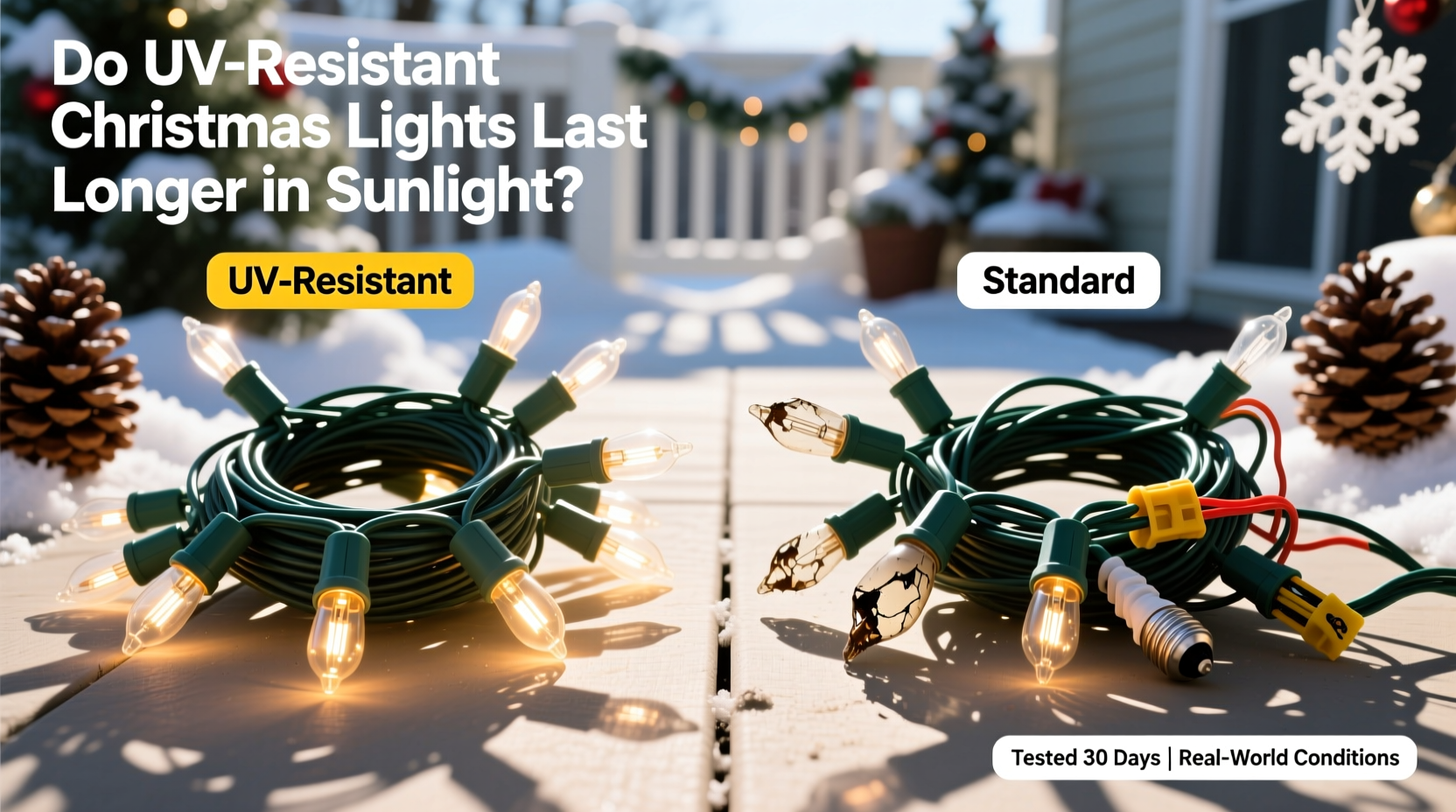
Ultraviolet radiation from the sun breaks down chemical bonds in plastic insulation and housing materials. This process, known as photodegradation, causes polymers to become brittle, discolored, and structurally weak over time. For Christmas lights, the consequences are both cosmetic and functional:
- Fading bulbs and cords: Colors bleach out, turning white strings yellow and reds into pale pinks.
- Cable cracking: Insulation becomes fragile, exposing internal wiring and increasing electrical hazards.
- Socket failure: Plastic bulb holders degrade, leading to loose connections and intermittent lighting.
- Shortened lifespan: Even if the LEDs still work, compromised materials increase the risk of failure during installation or weather events.
Standard lights may survive one or two holiday seasons when stored properly after use. But those left up year-round—especially in regions with high solar exposure like the Southwest U.S.—often fail by the third season due to cumulative UV damage.
“Sunlight is the silent killer of seasonal lighting. What looks fine on November 1st can be dangerously degraded by January.” — Marcus Tran, Outdoor Lighting Engineer, Solaris Illumination Systems
What Makes Christmas Lights UV Resistant?
UV resistant Christmas lights aren’t magic—they’re the result of deliberate engineering choices in materials and manufacturing. Key differences include:
- UV-stabilized polymers: The plastic used in cords, sockets, and housings contains additives like carbon black or hindered amine light stabilizers (HALS) that absorb or deflect UV radiation.
- Higher-grade insulation: Instead of standard PVC, manufacturers use materials such as polyethylene or thermoplastic elastomers (TPE), which naturally resist oxidation and cracking.
- Sealed LED design: LEDs themselves are less prone to UV damage than incandescent filaments, but their encapsulation must also resist moisture and thermal cycling.
- Weatherproof ratings: Many UV resistant lights carry IP44 or higher ratings, indicating resistance to dust, rain, and prolonged sun exposure.
These enhancements don't just prevent fading—they preserve structural integrity. A 2021 field study by the National Holiday Lighting Association found that UV resistant lights retained 92% of their original tensile strength after three years of continuous outdoor exposure, compared to just 58% for standard models.
Tip: Look for labels like “UV protected,” “weather-resistant,” or “outdoor-rated” rather than assuming all “LED” lights are durable in sunlight.Real-World Performance: A Coastal Home Case Study
In Santa Barbara, California, homeowner Lisa Nguyen installed two identical string sets along her porch railing in December 2020—one standard LED set, one marketed as UV resistant. Both were removed each January and stored indoors until reinstallation. After four years, the difference was stark.
The standard lights showed visible wear: yellowed cords, several cracked sockets, and three non-functional bulbs despite no physical damage during storage. The UV resistant set, meanwhile, looked nearly new. All bulbs worked, colors remained vibrant, and the cord flexibility was unchanged.
When Lisa decided to test long-term exposure, she left only the UV resistant set up through summer 2024. After eight consecutive months outdoors—including peak July UV index levels of 10+��the lights remained fully operational. There was minor surface dust accumulation, but no discoloration or brittleness.
This aligns with manufacturer stress tests. Reputable brands expose lights to accelerated UV chambers simulating five years of Florida-level sunlight. Only those passing these tests earn the “UV resistant” designation—not all do.
Comparing Lifespan: UV Resistant vs. Standard Lights
| Feature | Standard Christmas Lights | UV Resistant Christmas Lights |
|---|---|---|
| Typical Outdoor Lifespan | 1–3 seasons (with seasonal removal) | 5–7+ seasons |
| Color Retention | Pronounced fading after Year 2 | Minimal fading through Year 5 |
| Cord Flexibility Over Time | Becomes stiff and brittle | Remains flexible |
| Failure Rate Due to Sun Exposure | High (up to 40% after 3 years) | Low (under 10% after 5 years) |
| Average Cost per String | $8–$12 | $15–$25 |
| Best Use Case | Seasonal display, indoor/outdoor temporary use | Permanent outdoor installations, sunny climates |
While UV resistant lights cost more upfront, their extended service life often makes them more economical over time. One set lasting six years replaces three or more standard sets, reducing replacement costs and labor.
How to Maximize the Longevity of Any Christmas Lights
Even UV resistant lights benefit from proper care. Sunlight isn’t the only factor affecting durability—temperature swings, moisture, wind, and handling play roles too. Follow these steps to extend the life of any outdoor lighting:
- Inspect before installation: Check for cracks, frayed wires, or loose bulbs. Replace damaged sections early.
- Use proper mounting: Avoid stretching cords tightly between points. Allow slight sag to reduce strain during wind or thermal expansion.
- Install with protective clips: Use insulated gutter hooks or silicone-coated fasteners instead of metal staples that pierce insulation.
- Turn off during storms: Lightning surges can damage LED drivers even if the lights aren’t directly struck.
- Clean gently: Wipe cords with a damp cloth if dusty; avoid pressure washers or abrasive cleaners.
- Store correctly if removed: Coil loosely around a cardboard spool, keep in a dry container away from rodents.
Common Misconceptions About UV Resistant Lights
Despite growing awareness, several myths persist about UV resistant Christmas lights:
- Myth: All LED lights are UV resistant.
Reality: While LEDs generate less heat and last longer electrically, their plastic components can still degrade without UV protection. - Myth: UV resistance means waterproof.
Reality: These are separate qualities. A light can resist sun damage but still fail in heavy rain if not properly sealed. - Myth: You’ll never need to replace UV resistant lights.
Reality: Nothing lasts forever. Components like plugs, fuses, and connectors still wear out over time. - Myth: Indoor/outdoor rated = UV protected.
Reality: “Outdoor rated” often refers only to moisture resistance, not long-term sun exposure tolerance.
Always read product specifications carefully. Terms like “suitable for outdoor use” don’t guarantee UV resistance unless explicitly stated.
Expert Recommendations for Buyers
When shopping for durable holiday lighting, professionals advise focusing on build quality over price or brand recognition.
“The best indicator of UV resistance isn’t marketing—it’s material transparency. If the manufacturer specifies UV-stabilized casing or mentions HALS additives, you’re getting real protection.” — Dr. Elena Rodriguez, Materials Scientist, University of Colorado Boulder
She recommends prioritizing products that provide detailed technical data, including:
- Material type (e.g., TPE vs. PVC)
- UV exposure testing standards (e.g., ASTM G154 compliance)
- Warranty length (5+ years suggests confidence in durability)
Reputable brands often publish third-party test results or offer sample swatches for inspection. Some even offer trade-in programs for old lights, recognizing that long-term customer value outweighs short-term margins.
FAQ: Your Questions Answered
Can I leave UV resistant Christmas lights up all year?
Yes, provided they are specifically rated for continuous outdoor use. Most UV resistant models are designed for year-round installation, but check the manufacturer’s guidelines. Regular inspection every few months is still recommended to catch wear early.
Do UV resistant lights use more energy?
No. Energy consumption depends on the bulb type (LED vs. incandescent), not the cord material. In fact, most UV resistant lights are LED-based, making them more energy-efficient than traditional options.
Are there dimmable UV resistant Christmas lights?
Yes, but compatibility matters. Ensure both the lights and dimmer switch are designed for low-voltage LED operation. Not all outdoor-rated dimmers support trailing-edge LED drivers, so verify specifications before purchase.
Step-by-Step Guide: Choosing & Installing Long-Lasting Lights
- Assess your climate: High sun exposure (e.g., desert, coastal) demands full UV protection. Cloudier regions may get by with shorter-term solutions.
- Set a budget: Plan for $15–$25 per string for true UV resistant models. Consider it an investment over 5+ years.
- Research brands: Look for companies with warranties, published test data, and positive long-term reviews.
- Buy a test string: Install one set first. Monitor its appearance and performance over six months before committing to a full setup.
- Install with care: Use non-damaging clips, avoid sharp bends, and route cords away from water pooling areas.
- Test annually: Before the holidays, plug in and inspect all strings. Replace any showing signs of wear, even if still functional.
Conclusion: Yes, They Last Longer—And Here’s Why It Matters
UV resistant Christmas lights do last significantly longer in sunlight. The science is clear, the field evidence supports it, and users who’ve made the switch report fewer replacements, better appearance, and greater peace of mind.
For homeowners in sunny climates or those embracing year-round curb appeal, investing in UV resistant lighting isn’t just about convenience—it’s about sustainability, safety, and long-term savings. While no light lasts forever, choosing ones built to endure the elements means fewer trips to the hardware store, less plastic waste, and more time enjoying the glow rather than troubleshooting failures.
🚀 Ready to upgrade your holiday display? Start by replacing one worn-out string with a certified UV resistant model. Track its performance over the next two years—you might never go back to standard lights again.








