
As holiday traditions grow more elaborate, so does the demand for festive decorations—especially Christmas lights. With energy-efficient LED strands, smart programmable displays, and vintage-style bulbs now dominating the market, homeowners are investing more than ever into their seasonal setups. But one question keeps surfacing among savvy shoppers: Is it actually cheaper to buy Christmas lights in October, or should you wait until December when the holiday rush begins?
The answer isn’t as straightforward as “buy early” or “wait for sales.” It depends on retailer behavior, inventory cycles, regional demand, and your personal decorating timeline. To help you make an informed decision—and possibly save hundreds over the years—we’ve analyzed pricing data, interviewed retail insiders, and examined consumer buying patterns across multiple seasons.
Understanding Holiday Pricing Cycles
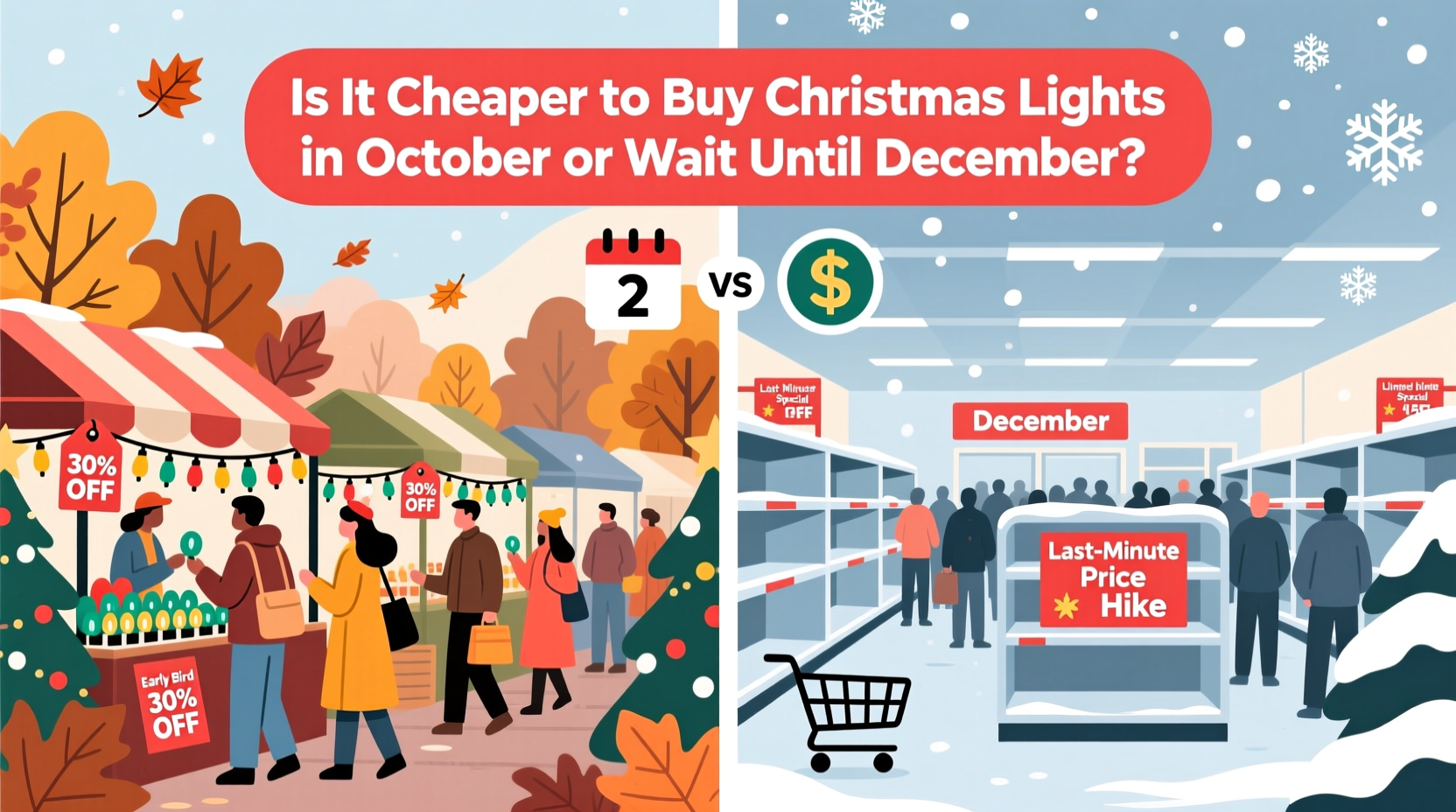
Retailers follow a predictable rhythm when stocking and pricing seasonal goods. Christmas lights typically appear on shelves as early as September, with full displays by mid-October. At this stage, prices are often at their peak because supply is fresh, selection is broad, and demand has not yet surged.
By late November through early December, stores begin discounting older stock and pushing promotions to clear inventory before January. This creates the illusion that waiting delivers better deals. However, there’s a trade-off: limited availability, fewer styles, and potential stockouts of popular items.
Consider this: A 2023 analysis by Retail Insights Weekly found that LED string lights saw an average price drop of 22% between October 1 and December 15 across major U.S. retailers. But during that same period, 68% of specialty items (like icicle lights or color-changing sets) were either discontinued or sold out completely.
“Retailers want to turn inventory quickly after the holidays. The deeper discounts come late—but only if anything remains.” — Marcus Tran, Seasonal Merchandising Analyst at RetailEdge Consulting
October Advantages: Selection, Planning, and Early Sales
Purchasing Christmas lights in October offers several strategic benefits beyond just price:
- Wider selection: Stores carry full inventories, including rare designs like commercial-grade strands, musical sync kits, and themed sets (e.g., snowflake projectors).
- Better online availability: E-commerce platforms haven't yet experienced shipping delays due to holiday volume, meaning faster delivery and fewer backorders.
- Time to test and troubleshoot: Installing lights weeks in advance allows you to identify faulty bulbs, plan layouts, and even return defective products without last-minute stress.
- Early-bird promotions: Some retailers offer “pre-holiday” discounts in October to incentivize early spending, particularly on energy-efficient models.
For example, Home Depot and Lowe’s have historically launched “Deck the Halls” events in mid-October, featuring 10–15% off select lighting bundles. Similarly, Amazon’s “Holiday Launch” promotions often include lightning deals on smart outdoor lights from brands like Govee and Philips Hue.
Tip: Set price alerts on October listings using tools like CamelCamelCamel or Honey. If prices drop later, many retailers will honor price adjustments within 30 days.December Realities: Deep Discounts vs. Limited Stock
Waiting until December can yield significant savings—but only under specific conditions. Most brick-and-mortar stores initiate clearance pricing starting December 10–15, especially on non-perishable décor. Online retailers may delay discounts until after Christmas.
A 2022 study by the National Retail Federation showed that unsold Christmas lights dropped an additional 30–50% in price between December 26 and January 5. However, shopping during this window defeats the purpose for most decorators who need lights *before* the holidays.
Moreover, late-season buyers face practical challenges:
- Shipment delays due to carrier congestion
- Fewer customer service hours for returns or exchanges
- Inability to test installations before gatherings or neighborhood light tours
If your goal is strictly cost minimization—and you don’t mind decorating on December 23—then yes, December can offer lower sticker prices. But if reliability, variety, and peace of mind matter, early purchase wins.
Price Comparison: October vs. December (2023 Data)
| Product | Avg. Price (Oct 15) | Avg. Price (Dec 10) | Savings | Availability (Dec) |
|---|---|---|---|---|
| 25-ft LED Warm White String | $12.99 | $9.49 | 27% | High |
| Smart Color-Changing Lights (WiFi) | $49.99 | $39.99 | 20% | Low |
| Icicle Lights (Double Drop) | $24.99 | $18.99 | 24% | Medium |
| Patio Lantern String Set | $34.99 | $29.99 | 14% | Low |
While all categories saw reductions by December, high-tech and specialty items were both less discounted and harder to find. Basic white or multicolor strings remained widely available, making them safer bets for last-minute shoppers.
Real Example: The Johnson Family’s Lighting Strategy
The Johnsons in suburban Denver maintain a nationally recognized Christmas light display attracting thousands each year. For over a decade, they’ve followed a hybrid purchasing model:
- September–October: Buy core components—main power cords, controllers, and base-layer strings—during early sales.
- November: Monitor prices and add complementary pieces as needed.
- Post-Christmas: Purchase next year’s planned upgrades at steep discounts (e.g., new animation modules).
Last year, they spent $850 in October on 120 strands and two smart hubs. By January, they bought another $400 worth of identical items for half the price—but used those for 2024. Their strategy balances immediate needs with long-term savings.
“We’re not just decorating a house—we’re running a small electrical grid. Buying piecemeal in December would risk missing connectors or incompatible voltages. October gives us control.” — Lisa Johnson, Display Coordinator
Step-by-Step Guide: When to Buy Christmas Lights for Maximum Value
Follow this timeline to optimize both cost and convenience:
- August–September: Assess your current setup. Make a list of what you need: length, color, brightness, smart features, and durability requirements.
- Early October: Begin monitoring prices at major retailers (Target, Walmart, Home Depot, Amazon). Sign up for newsletters to catch exclusive promo codes.
- Mid-October: Purchase essential items while selection is strong. Focus on foundational pieces you’ll use every year.
- Late November: Re-evaluate remaining needs. Look for “early Black Friday” deals online.
- December 1–15: Check clearance sections in-store and online. Only buy if you're certain about compatibility and timing.
- December 26–January 10: Buy next year’s lights at rock-bottom prices. Store properly and label everything.
Checklist: Smart Christmas Light Shopping
- ✅ Audit existing lights for damage or outdated styles
- ✅ Measure areas to be lit (roofline, trees, walkways)
- ✅ Decide between plug-in vs. solar, standard vs. smart
- ✅ Research energy usage (LED uses up to 80% less power)
- ✅ Compare prices across 3+ retailers monthly from October onward
- ✅ Prioritize durable, weatherproof ratings (look for IP44 or higher)
- ✅ Buy connectors, clips, and timers at the same time
- ✅ Consider post-holiday purchases for future years
Frequently Asked Questions
Can I return Christmas lights bought in October if I change my mind?
Most major retailers allow returns on unopened lighting until early January. Walmart and Target typically extend return windows during the holidays. Always keep receipts and packaging. Some online sellers (like Amazon) permit returns up to 30 days post-purchase, even after use, if the item is functional.
Do stores restock Christmas lights in December?
Rarely. Once a model sells out, it usually won’t be replenished until the following year. Stores focus on moving remaining inventory rather than restocking. Specialty or premium lines are most likely to disappear early.
Are post-Christmas deals worth waiting for?
Only if you're planning ahead. After December 25, retailers slash prices by 40–70% to clear space. These are ideal for building next year’s display. However, colors and styles may be limited, and you’ll need secure storage for 11 months.
Conclusion: Timing Matters—But So Does Strategy
So, is it cheaper to buy Christmas lights in October or wait until December? The short answer: You’ll often pay slightly more in October, but gain far more in value.
October offers breadth of choice, reliable inventory, and ample time to install and refine your display. December brings modest discounts on basics—but risks shortages, rushed decisions, and compromised aesthetics. The smartest approach combines both: invest in essentials early, then capitalize on post-holiday markdowns for future use.
Ultimately, the best deal isn’t just the lowest price—it’s the combination of cost, quality, availability, and peace of mind. By planning ahead and shopping strategically, you can illuminate your home beautifully without burning through your budget.
💬 What’s your Christmas light buying strategy? Share your tips, favorite finds, or lessons learned in the comments below—help fellow decorators shine brighter this season!








