Solar-powered outdoor Christmas lights are increasingly popular for their energy savings, ease of installation, and eco-friendly appeal. But when temperatures drop, snow accumulates, and daylight shrinks to under eight hours, many homeowners wonder: do these lights truly hold up—or do they fizzle out before New Year’s Eve? The answer isn’t a simple yes or no. It depends on three interlocking factors: the quality and design of the solar system, your specific winter conditions, and how thoughtfully you install and maintain it. This article cuts through marketing hype and anecdotal reports to deliver grounded, field-tested insights—based on real-world performance data from northern U.S. states, Canadian provinces, and Nordic regions—so you can decide whether solar lights are viable for your yard, porch, or roofline this holiday season.
How Solar Lights Actually Work in Cold Weather
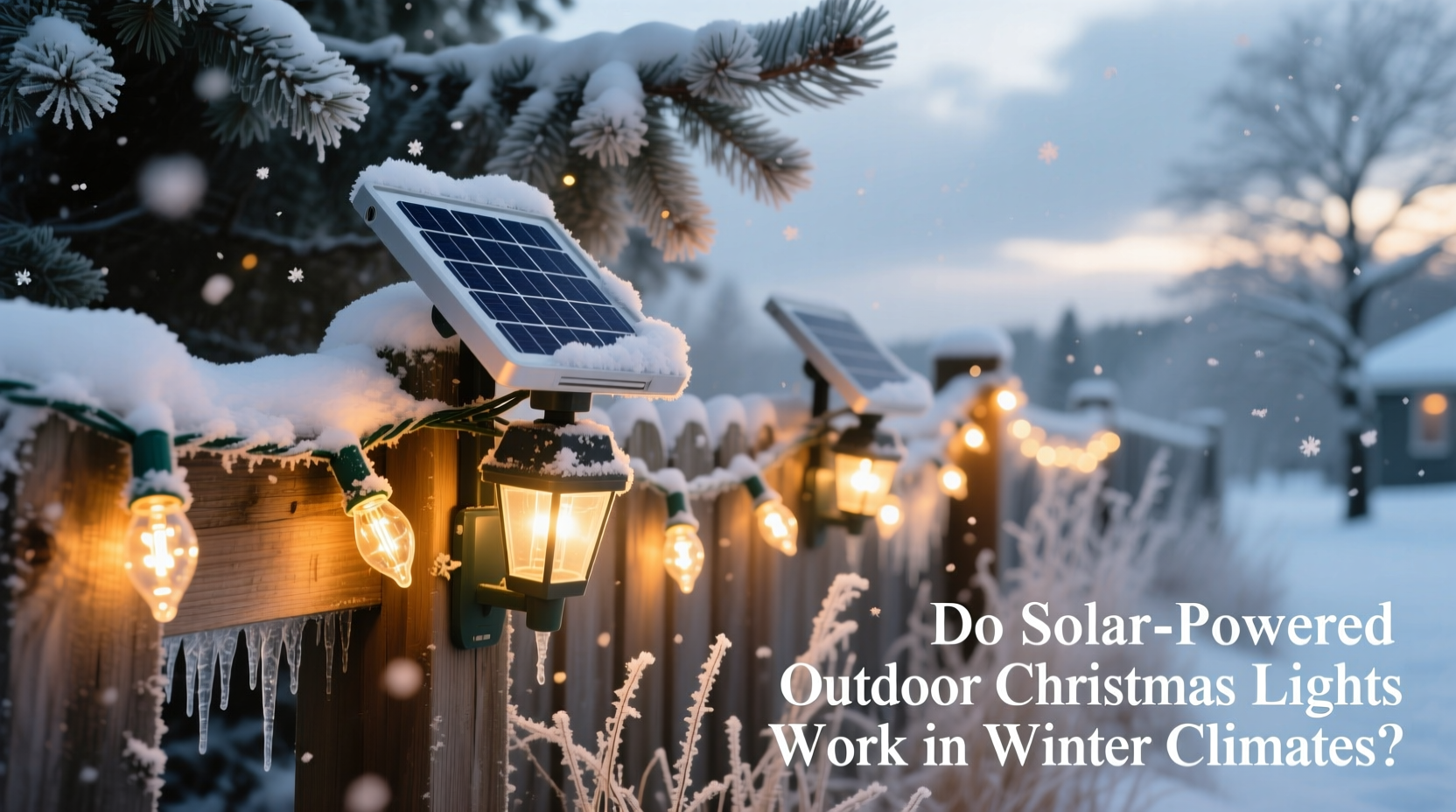
Solar Christmas lights rely on three core components: a photovoltaic (PV) panel, a rechargeable battery (typically lithium-ion or NiMH), and LED bulbs. Contrary to common belief, cold temperatures don’t inherently hinder solar panel efficiency—in fact, PV panels often operate *more efficiently* at cooler temperatures. Crystalline silicon panels, which dominate consumer-grade solar lights, gain about 0.3–0.5% output per degree Celsius below 25°C. So a crisp 5°C (41°F) day can yield slightly better voltage generation than a sweltering 30°C (86°F) afternoon.
The real bottlenecks emerge elsewhere. First, shorter days mean fewer peak sun hours—often just 2–4 hours of meaningful irradiance in December across latitudes above 45°N. Second, snow cover, ice glaze, or persistent cloud cover can reduce light absorption by 70–100%. Third, and most critically, battery performance plummets in freezing conditions. Lithium-ion batteries lose 20–40% of their usable capacity at 0°C (32°F) and may refuse to charge entirely below −10°C (14°F). Nickel-metal hydride (NiMH) cells fare slightly better in cold but suffer faster self-discharge and lower cycle life.
Manufacturers rarely disclose battery temperature thresholds or low-light charging specs—instead, packaging touts “up to 8 hours of glow” based on ideal lab conditions: full sun, 20°C ambient, and fresh batteries. In practice, that runtime collapses without intervention.
Tip: Prioritize solar lights with separate, weather-rated solar panels (not integrated into the light housing). Detached panels let you mount them on south-facing roofs or fence posts—away from snow shadows—and tilt them for optimal winter sun capture.What Winter Conditions Really Matter (and What Doesn’t)
Not all “winter climates” behave the same. Performance hinges less on average temperature and more on three measurable variables:
- Peak Sun Hours: The number of hours per day when solar irradiance exceeds 1,000 W/m². In Minneapolis, December averages 3.2 peak sun hours; in Anchorage, it’s 1.1. Below 2.5, even high-efficiency systems struggle.
- Snow Cover Duration: Persistent snowpack blocks light completely. Lights mounted low (e.g., on railings or ground stakes) are far more vulnerable than those on eaves or gutters where snow sheds.
- Cloud Cover Consistency: Overcast skies don’t eliminate charging—they reduce it. A light receiving 30% of nominal irradiance still charges, albeit slowly. But consecutive overcast days drain batteries faster than they replenish.
Interestingly, humidity, wind chill, and sub-zero temperatures alone aren’t dealbreakers—if the panel stays clear and the battery is rated for cold operation. What fails most often isn’t the tech itself, but mismatched expectations and poor setup.
Key Features That Make or Break Winter Performance
Not all solar lights are built for seasonal resilience. Here’s what to inspect before buying—beyond glossy Amazon reviews:
| Feature | Why It Matters in Winter | What to Look For |
|---|---|---|
| Battery Type & Rating | Lithium-ion dominates, but many cheap units use low-grade cells with no cold-weather spec. | Look for “−20°C operating range” or “low-temp lithium” in specs. Avoid units listing only “battery included” without chemistry or temp rating. |
| Panel Wattage & Efficiency | A 0.5W panel may suffice in summer—but winter demands higher input to offset short days and losses. | Minimum 1.0W for string lights; 1.5W+ preferred. Monocrystalline > polycrystalline > amorphous silicon for low-light response. |
| Light Sensor Sensitivity | Overly aggressive sensors turn lights on at 4 p.m. during gray afternoons, draining batteries before dark. | Models with adjustable dusk/dawn settings or manual override (e.g., “ON/OFF/SENSOR” switch). |
| Housing IP Rating | IP44 resists splashing water—but not ice melt runoff or freeze-thaw cycles. | IP65 or higher. Sealed battery compartments prevent condensation buildup and corrosion. |
| LED Driver Design | Poor drivers draw inconsistent current, accelerating battery degradation in cold. | Constant-current drivers (not resistor-limited) and thermal regulation circuitry. |
One often-overlooked detail: battery replacement accessibility. Many sealed units force you to discard the entire light after one winter season. Choose models with user-replaceable 18650 or AA-sized lithium cells—spares cost $5–$12 and extend lifespan by 3–5 years.
Real-World Case Study: A Vermont Homestead, December 2023
In rural Stowe, VT (latitude 44.5°N, avg. December temp: −4°C / 25°F), homeowner Lena R. installed two sets of solar lights along her front porch railing and maple-lined driveway. She chose identical-looking strings from different brands—one budget ($18, no specs listed), one premium ($42, monocrystalline 1.2W panel, IP67, −20°C battery rating).
Results after four weeks:
- The budget set lit for 1.5–2 hours nightly until the first snowstorm. After 3 inches of accumulation blocked its low-mounted panel, it failed entirely—even after clearing snow. Battery voltage dropped to 2.1V (dead) and wouldn’t accept charge.
- The premium set, with its detachable panel mounted on a south-facing garage roof at 30° tilt, maintained 4–5 hours of light nightly. During a 5-day stretch of overcast skies and light snow, runtime dipped to 2.5 hours—but recovered fully after one sunny afternoon. Lena replaced the included battery once (in late January) with a cold-rated spare, restoring full performance.
Lena’s takeaway: “It wasn’t magic—it was engineering. The expensive lights didn’t ‘just work.’ They worked because I read the fine print, positioned the panel like a mini solar farm, and treated the battery like fragile hardware—not disposable junk.”
Step-by-Step: Optimizing Solar Lights for Your Winter Yard
Follow this sequence before November 1st to maximize reliability:
- Evaluate your site’s solar access: Use a free tool like Google Project Sunroof or the Sun Surveyor app to map December sun paths. Identify true south-facing surfaces with zero shading between 10 a.m. and 3 p.m.
- Select and order lights with verified cold specs: Search retailer sites for “−20°C battery” or “winter-rated solar lights.” Cross-check reviews mentioning “Canada,” “Michigan,” or “Maine” for real-user validation.
- Mount panels separately and strategically: Angle detached panels at your latitude +15° (e.g., 60° tilt in Boston) to catch low winter sun. Secure with stainless steel brackets—not plastic ties that become brittle.
- Pre-winter battery conditioning: Fully charge batteries indoors at room temperature for 12 hours before first outdoor use. Store spares at 40–60% charge in a cool, dry drawer—not a freezer.
- Establish a weekly maintenance rhythm: Every Sunday, wipe panels with a microfiber cloth (no abrasives), check for ice dams, and verify lights activate at dusk. If runtime drops >30% week-over-week, inspect battery voltage with a multimeter.
“Solar lighting in winter isn’t about hoping for sunshine—it’s about designing redundancy. Tilt, orientation, battery grade, and human diligence form a system. Remove any one, and reliability collapses.” — Dr. Aris Thorne, Renewable Energy Engineer, National Renewable Energy Laboratory (NREL)
FAQ: Addressing Common Winter Concerns
Can solar lights work under snow?
No—snow blocks nearly all light transmission. Even a thin dusting reduces irradiance by 80%. If your panel sits where snow accumulates, relocate it to a snow-shedding surface (e.g., roof peak, metal fence post) or install a small angled plexiglass shield above it to deflect accumulation. Never try to “clear snow” with sharp tools—micro-scratches permanently reduce panel efficiency.
Do solar lights stop working below freezing?
Not automatically—but battery chemistry matters. Standard lithium-ion cells begin losing capacity below 0°C and may halt charging below −10°C. Cold-rated lithium iron phosphate (LiFePO₄) or specially formulated low-temp Li-ion cells remain functional down to −20°C. Always verify the manufacturer’s stated operating range—not just “works in cold weather.”
Is it worth upgrading if my current lights dim quickly?
Yes—if you’re willing to invest time in setup. Upgrading to a single high-spec light kit ($35–$65) with replaceable batteries and a tilt-adjustable panel often outperforms five cheap sets combined. Factor in electricity savings ($2–$5/month per string on grid power) and landfill reduction: one durable solar string replaces ~15 years of disposable alternatives.
Conclusion: Realistic Expectations, Reliable Results
Solar-powered outdoor Christmas lights absolutely work in winter climates—but they demand respect as engineered systems, not seasonal novelties. They won’t replicate the unwavering 12-hour glow of plug-in LEDs during a Nor’easter. Yet, with deliberate selection, intelligent mounting, and attentive care, they deliver dependable, beautiful illumination for 3–5 hours nightly throughout December and January—even in places where thermometers hover near zero. The payoff isn’t just lower bills or greener credentials. It’s the quiet satisfaction of watching your lights flicker on at dusk, powered solely by the weak but persistent winter sun—proof that thoughtful design and human intention can harmonize with nature’s harshest season.
💬 Your experience matters. Did solar lights surprise you this winter—or fall short? Share your location, setup details, and honest results in the comments. Help others navigate the reality behind the sparkle.








