Walking into a home that smells like fresh linen, warm vanilla, or blooming lavender can feel instantly comforting. Scented candles are a staple in modern households, marketed not only for ambiance but also for their supposed ability to “clean�� the air. But do they truly purify indoor air, or are they simply covering up unwanted odors with more pleasant ones? The answer lies in understanding the chemistry of scent, combustion byproducts, and how our senses interpret air quality.
While many brands promote their candles as natural air purifiers—especially those infused with essential oils—the reality is more nuanced. True air purification involves removing pollutants like volatile organic compounds (VOCs), mold spores, bacteria, and particulate matter. Most scented candles don’t achieve this. Instead, they often introduce new compounds into the air, some of which may be harmful when burned regularly indoors.
The Science of Smell vs. Air Quality
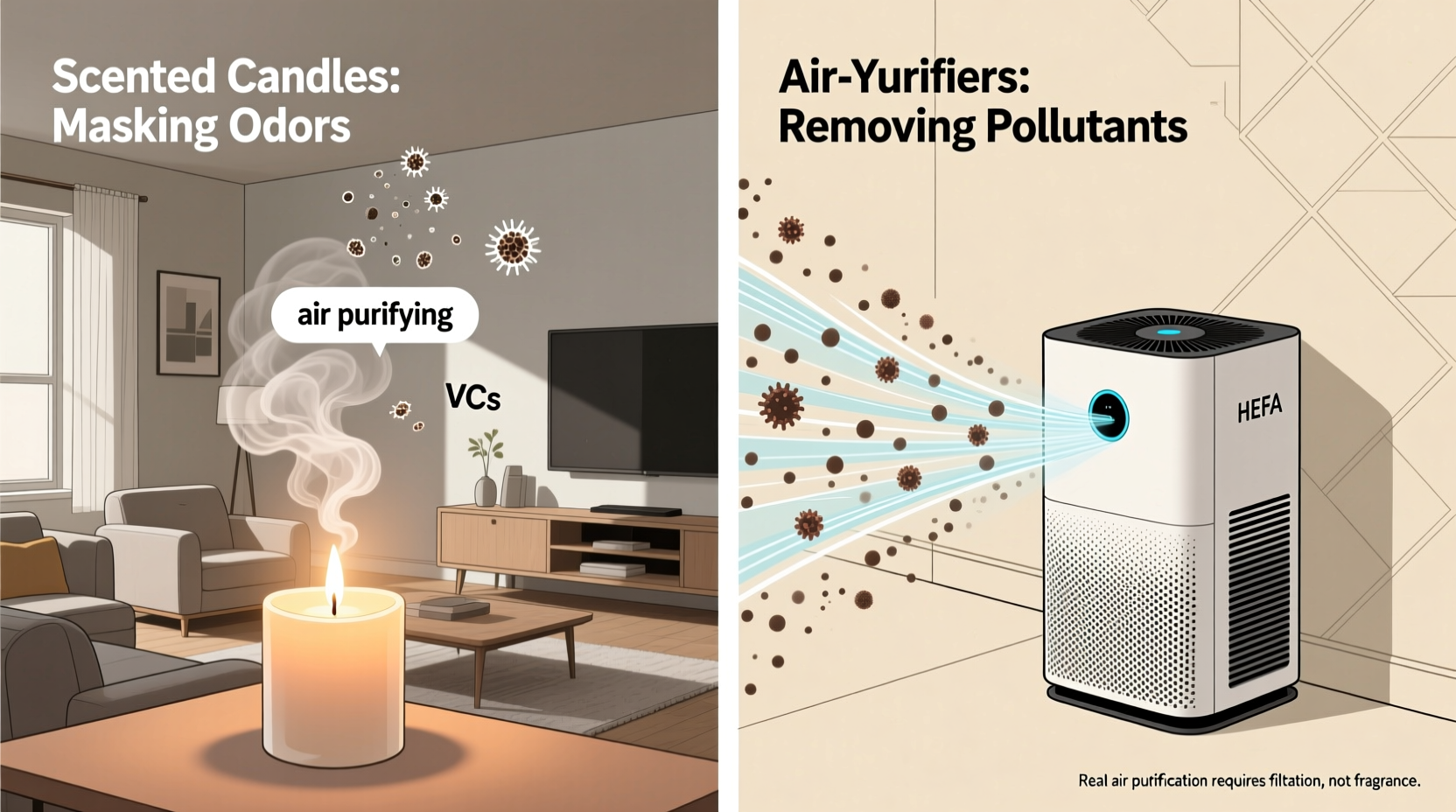
Human perception plays a powerful role in how we judge air cleanliness. If a room smells fresh, we assume it’s clean—even if invisible pollutants remain. This cognitive bias allows scented products to create an illusion of purity without altering the actual chemical composition of the air.
Scented candles work through olfactory masking: they release fragrance molecules that compete with or overpower existing odors. For example, lighting a eucalyptus candle in a kitchen after cooking fish doesn’t eliminate fish particles from the air—it simply floods your nose with stronger, more desirable aromas.
True air purification requires physical or chemical removal of contaminants. Devices like HEPA filters capture airborne particles, while activated carbon filters adsorb gases and VOCs. Ultraviolet (UV) light systems can neutralize microbes. Candles, even those made with essential oils, lack these mechanisms.
Tip: Don’t rely on smell alone to assess air quality. A room can smell pleasant but still contain allergens, dust, or harmful chemicals.What Happens When You Burn a Scented Candle?
Burning any candle involves combustion—a chemical reaction between wax and oxygen that produces heat, light, water vapor, carbon dioxide, and soot. The type of wax, wick, and added fragrance determines what else gets released.
- Paraffin wax: Derived from petroleum, it’s the most common base in commercial candles. When burned, paraffin can emit benzene and toluene—known carcinogens—and fine particulate matter (PM2.5).
- Fragrance oils: Many synthetic fragrances contain phthalates, which are endocrine disruptors linked to hormonal imbalances.
- Wicks: Older or low-quality candles may use metal-core wicks containing lead or zinc, which release toxic fumes when burned (though banned in many countries today).
- Essential oils: While derived from plants, they aren’t automatically safe. Some, like cinnamon or clove oil, can irritate lungs when heated and dispersed into the air.
A 2001 study by South Carolina State University found that burning paraffin candles significantly increased indoor levels of toluene and benzene. Even soy or beeswax candles, often touted as cleaner alternatives, produce some soot and emissions—though generally at lower levels.
“Candles contribute to indoor air pollution. What people perceive as ‘fresh air’ from a lavender candle may actually be a mix of fragrance chemicals and combustion byproducts.” — Dr. Richard Corsi, Environmental Engineer and Indoor Air Quality Expert
Can Any Candles Actually Purify the Air?
The short answer: not in any meaningful or measurable way. However, certain ingredients have properties that *may* offer marginal benefits under specific conditions.
Beeswax candles are frequently claimed to “clean” the air by releasing negative ions during burning. These ions could theoretically attach to positively charged particles like dust, pollen, or dander, causing them to fall out of the air. While ionization is a real phenomenon used in some air purifiers, there’s no scientific evidence that beeswax candles produce enough negative ions to impact indoor air quality.
Likewise, candles infused with essential oils like tea tree, eucalyptus, or thyme have antimicrobial properties in concentrated lab settings. But diffusing trace amounts via candle flame does not replicate those effects. The heat from a flame often degrades delicate plant compounds before they can exert any germ-fighting action.
In contrast, true air-purifying strategies involve source control (removing pollutants), ventilation (bringing in fresh air), and filtration (capturing contaminants). Candles do none of these effectively.
Table: Common Candle Types and Their Impact on Air Quality
| Candle Type | Air-Purifying Claims | Reality Check | Emissions Risk |
|---|---|---|---|
| Paraffin with Synthetic Fragrance | None (odor masking only) | High VOC and soot emissions | High |
| Soy Wax with Essential Oils | Marketed as “natural” and “clean” | Lower soot, but fragrance degradation limits benefits | Medium |
| Beeswax (Unscented) | Claimed to release negative ions | No peer-reviewed proof of air cleaning effect | Low |
| Gel or Hybrid Candles | Strong scent throw | Higher burn temperature increases VOC release | High |
Health Implications of Regular Candle Use
For individuals with asthma, allergies, or chemical sensitivities, frequent candle burning can worsen respiratory symptoms. The fine particles and VOCs produced during combustion can inflame airways, trigger coughing, and reduce lung function over time.
A 2018 review published in Environmental Health Perspectives highlighted that indoor combustion sources—including candles, incense, and gas stoves—are significant contributors to household air pollution. In poorly ventilated spaces, these exposures accumulate and may increase long-term health risks, including cardiovascular issues.
Children and elderly individuals are particularly vulnerable due to developing or compromised respiratory systems. Homes that burn candles daily—especially in bedrooms or small bathrooms—may unknowingly create hazardous microenvironments.
Tip: Limit candle burning to 1–2 hours at a time, ensure proper room ventilation, and always trim wicks to ¼ inch to reduce soot.Real Example: The Aromatherapy Misconception
Jenna, a yoga instructor in Portland, believed her nightly ritual of burning lavender-scented soy candles was improving both relaxation and air quality in her bedroom. She chose candles labeled “100% essential oils” and avoided synthetic fragrances. After experiencing persistent sinus congestion and headaches, she consulted an environmental health specialist.
An indoor air test revealed elevated levels of limonene and linalool—compounds found in citrus and lavender oils—that had reacted with ozone in her home to form formaldehyde, a known irritant and carcinogen. The very candles meant to soothe her were contributing to her symptoms. Switching to an essential oil diffuser used only during waking hours and installing a small HEPA filter resolved her issues within weeks.
This case illustrates how well-intentioned choices can backfire without understanding the full picture of indoor air chemistry.
Healthier Alternatives to Scented Candles
If your goal is genuinely cleaner air—not just a temporary scent cover-up—consider these proven methods:
- Ventilation: Open windows regularly to exchange stale indoor air with fresh outdoor air. Cross-ventilation works best, especially after cooking or cleaning.
- HEPA Air Purifiers: These remove 99.97% of particles as small as 0.3 microns, including dust, pollen, pet dander, and mold spores.
- Activated Carbon Filters: Ideal for absorbing odors, smoke, and VOCs from paints, cleaners, or off-gassing furniture.
- Natural Diffusers: Use ultrasonic diffusers with diluted essential oils for controlled aromatic benefits—without combustion.
- Houseplants: While their impact is modest, certain plants like spider plants and peace lilies can absorb trace amounts of pollutants.
For ambiance without risk, opt for flameless LED candles. They mimic flickering light safely and don’t emit any pollutants. Many models even come with optional scent pods that can be turned on or off independently.
Checklist: Safer Scent Practices at Home
- ☑ Choose candles made from beeswax or 100% soy with cotton or paper wicks
- ☑ Avoid candles with \"fragrance\" listed generically—this often hides phthalates
- ☑ Burn candles in well-ventilated areas, never in sealed rooms
- ☑ Limit burn time to under two hours
- ☑ Keep candles away from drafts to prevent uneven burning and excess soot
- ☑ Consider switching to electric diffusers or reed diffusers for continuous scent
- ☑ Use air quality monitors to track VOC and PM2.5 levels in real time
FAQ
Do essential oil candles kill germs in the air?
No. While some essential oils have antimicrobial properties in laboratory settings, the concentration released by a burning candle is far too low to disinfect the air. Heat from the flame also degrades active compounds before they can act.
Are soy candles safer than paraffin?
Generally, yes. Soy wax burns cleaner and produces less soot than paraffin. However, many “soy” candles are blended with paraffin or contain synthetic fragrances that still emit VOCs. Always check ingredient transparency.
Can I make my own air-purifying candle at home?
No DIY candle will purify air. Even homemade versions using beeswax and pure essential oils still involve combustion, which introduces particulates and potential irritants. For purification, rely on mechanical filtration instead.
Conclusion: Rethinking the Role of Scent in Clean Spaces
Scented candles don’t purify air—they mask odors, sometimes at the cost of introducing new pollutants. The comforting aroma of a vanilla bourbon candle might evoke warmth and cleanliness, but it doesn’t reduce allergens, eliminate bacteria, or improve respiratory health. Real air quality improvement requires tools that physically remove or neutralize contaminants, not just cover them up.
That doesn’t mean you must give up candles entirely. Used mindfully—with clean materials, limited duration, and proper ventilation—they can still enhance mood and atmosphere. But they should complement, not replace, genuine air-cleaning practices like filtering, cleaning, and airing out your space.
As consumers become more aware of indoor environmental health, demand for transparent labeling and non-toxic alternatives grows. By shifting focus from scent-based illusions to science-backed solutions, we can create homes that aren’t just fragrant—but truly healthy.
🚀 Ready to breathe easier? Audit your home’s air routine today: swap one scented candle for a HEPA filter, open a window for 10 minutes, or test your indoor air quality. Small changes lead to lasting wellness.








