
Choosing a new hairstyle often comes down to more than just aesthetics—maintenance plays a crucial role in long-term satisfaction. Two of the most popular styles in recent years are curtain bangs and the wolf cut. While both offer versatility and modern appeal, they differ significantly in upkeep. For those balancing style with practicality, understanding the day-to-day demands of each can make all the difference. This guide breaks down the care requirements, styling routines, and real-world manageability of curtain bangs versus the wolf cut to help you decide which option aligns better with a lower-maintenance lifestyle.
Understanding Curtain Bangs
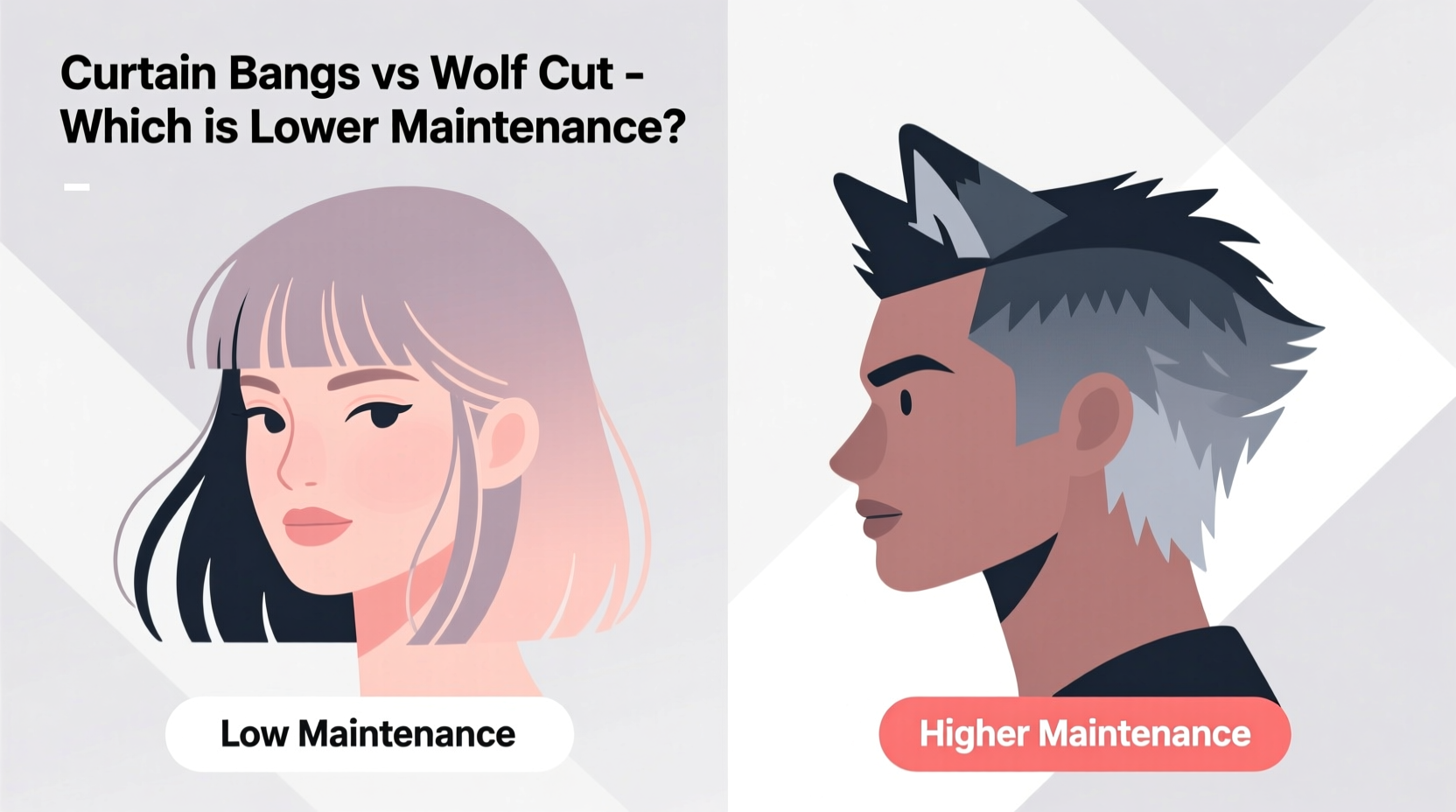
Curtain bangs are soft, face-framing strands that part in the middle and drape to either side of the forehead, resembling theater curtains. They work across various hair lengths and textures, making them accessible to many. Typically grown out from longer layers, they blend seamlessly into the rest of the hair, offering a flattering, low-commitment fringe alternative.
Their popularity stems from their adaptability—they can be styled straight, wavy, or tucked behind the ears when needed. However, this flexibility doesn’t automatically mean low maintenance. The key challenge lies in regular shaping and consistent styling to maintain the intended shape and avoid a messy or uneven appearance.
Tip: Blow-dry curtain bangs with a round brush for a polished finish, or use a flat iron sparingly to smooth frizz.Growth and Trimming Needs
Curtain bangs grow out faster than full fringes due to their length, but they require frequent trims every 4–6 weeks to preserve their shape. Without regular upkeep, they can become too long, lose definition, or start to resemble awkward side-swept bangs rather than the soft, parted look they’re known for.
Hair grows about half an inch per month, so even small changes can disrupt the balance between the bangs and the rest of the style. Those with fast-growing hair may find themselves visiting salons more often than expected, adding both time and cost to maintenance.
The Wolf Cut: A Layered, Textured Approach
The wolf cut is a hybrid of the shag and mullet, characterized by heavily layered, choppy ends, volume at the crown, and shorter layers around the face. It’s designed to embrace texture, movement, and effortless volume. Unlike sleek, structured cuts, the wolf cut thrives on lived-in, slightly tousled appearances, making it inherently more forgiving in terms of daily styling.
Originally rooted in punk and rock aesthetics, the modern wolf cut has evolved into a mainstream favorite, especially among those with wavy or curly hair. Its strength lies in its ability to look intentionally undone—bedhead chic, elevated. Because it relies on natural texture rather than precision, it adapts well to varying levels of effort.
“Textured cuts like the wolf cut are trending because they prioritize personality over perfection. They’re meant to grow out naturally and evolve between trims.” — Jordan Lee, Celebrity Stylist and Texture Specialist
Styling Flexibility and Tolerance for Neglect
One of the wolf cut’s biggest advantages is its resilience to skipping wash days or skipping styling altogether. On second- or third-day hair, the layers add dimension and volume that many seek through products and tools. Air-drying is not only acceptable—it’s often encouraged.
While some opt to enhance waves with mousse or sea salt spray, these are enhancements, not necessities. In contrast to styles requiring flat irons or constant touch-ups, the wolf cut embraces imperfection, reducing the pressure to “get it right” every morning.
Maintenance Comparison: Daily, Weekly, and Long-Term
To determine which style is truly lower maintenance, it’s essential to evaluate three key areas: daily styling, washing frequency, and salon upkeep. Below is a detailed comparison.
| Aspect | Curtain Bangs | Wolf Cut |
|---|---|---|
| Daily Styling Time | 5–10 minutes (blow-dry or flat iron required) | 2–5 minutes (often air-dried or lightly scrunched) |
| Washing Frequency | Every 2–3 days (greasy roots affect bang appearance) | Every 3–4 days (texture hides oil better) |
| Salon Visits | Every 4–6 weeks (for shaping) | Every 8–10 weeks (to refresh layers) |
| Heat Styling Required? | Frequently (to maintain shape) | Rarely (natural texture is desired) |
| Growth Tolerance | Moderate (can be pinned back if too long) | High (layers grow out naturally) |
| Product Use | Light hold spray or serum (to prevent flyaways) | Texture spray or mousse (optional) |
From this comparison, the wolf cut clearly requires less daily intervention. Curtain bangs demand consistent heat styling to stay neat, while the wolf cut rewards minimal effort with intentional volume and movement. Over time, this adds up to fewer hours spent in front of the mirror and less dependency on tools.
Real-Life Scenario: Two Weeks with Each Style
Consider Sarah, a 29-year-old marketing professional with shoulder-length, wavy hair. She decided to test both styles over two consecutive months to assess real-world maintenance.
In the first month, she grew out curtain bangs. Her routine included blow-drying her bangs every morning using a round brush, applying anti-frizz serum, and touching up with a flat iron during lunch if humidity caused puffiness. By day five, she noticed her bangs were absorbing oil faster than the rest of her hair, forcing her to wash more frequently. After six weeks, she visited her stylist to trim the bangs, which had started to cover her eyebrows and lose their shape.
In the second month, she transitioned to a wolf cut. Her stylist removed weight, added interior layers, and texturized the ends. Her new routine? Wash every three days, scrunch in a dollop of sea salt spray, and let air dry. On busy mornings, she simply flipped her hair over, shook it out, and went. Even after two months without a trim, the cut still looked intentional—just “lived-in,” as her stylist put it.
Sarah concluded that while she loved the softness of curtain bangs, the wolf cut fit her lifestyle far better. “I didn’t have to think about my hair as much,” she said. “It looked good whether I tried or not.”
Tip: If you're short on time, choose a cut that works with your natural texture—not against it.Step-by-Step Guide to Maintaining Low-Effort Hair
Whether you lean toward curtain bangs or the wolf cut, adopting smart habits can reduce maintenance. Follow this timeline to keep your style looking fresh with minimal effort:
- Week 1: Consult a Skilled Stylist
Discuss your hair type, lifestyle, and styling habits. A good cut starts with honest communication. - Week 2–4: Establish a Washing Routine
Use sulfate-free shampoo and conditioner suited to your texture. Avoid over-washing to preserve natural oils. - Month 1: Minimize Heat Tools
Air-dry when possible. If using heat, apply a heat protectant and keep temperatures moderate. - Month 2: Assess Growth and Shape
Take weekly selfies to track how your cut evolves. Note when layers start to clump or bangs lose form. - Month 3: Schedule a Refresh Trim
Even low-maintenance cuts benefit from occasional shaping. Book a light layer cleanup or bang adjustment.
This approach ensures your hairstyle stays functional and stylish without becoming a chore.
Checklist: Is Your Hairstyle Truly Low-Maintenance?
Before committing to any cut, ask yourself the following:
- ✅ Can I style it in under 5 minutes on a rushed morning?
- ✅ Does it look acceptable on second- or third-day hair?
- ✅ Do I need multiple products or tools to make it work?
- ✅ Can I go 8+ weeks without a trim without major shape loss?
- ✅ Does it complement my natural texture rather than fight it?
- ✅ Will it still look good if I skip a wash or styling session?
If you answered “yes” to most of these, you’re likely choosing a genuinely low-maintenance style. The wolf cut typically scores higher here, especially for those with wavy, curly, or thick hair. Curtain bangs, while beautiful, often require more yeses in the “no” column.
Frequently Asked Questions
Can curtain bangs work for oily hair?
Possibly, but with caveats. Oily roots can make curtain bangs appear greasy faster than the rest of the hair, requiring more frequent washing or dry shampoo use. Consider shorter, thinner bangs or a textured fringe to reduce surface area and visibility of oil.
Do wolf cuts work on straight hair?
Yes, but styling may require more effort to create the illusion of texture. A stylist can add point-cut layers and subtle razoring to break up heaviness. Using volumizing mousse or dry shampoo at the roots helps mimic the natural lift associated with wavy hair.
Which style is easier to grow out?
The wolf cut wins again. Its layered structure grows out organically, transitioning smoothly into a long, textured lob. Curtain bangs, however, can become awkwardly long and may require pinning or hiding until they’re trimmed or fully grown out—which can take several months.
Final Verdict: Which Is Lower Maintenance?
When comparing curtain bangs and the wolf cut, the wolf cut emerges as the clear winner in terms of low maintenance. It demands less daily styling, tolerates longer gaps between washes, and grows out gracefully. Its foundation in texture and volume means it looks best when slightly imperfect—a rare quality in today’s high-definition beauty standards.
Curtain bangs, while undeniably flattering and versatile, come with hidden labor. They require precise drying, frequent trims, and ongoing attention to frizz and oil. They suit those who enjoy a morning ritual or have the time to maintain a polished look. But for someone seeking a “set it and forget it” approach, they fall short.
The ideal choice depends on your relationship with haircare. If you value efficiency, embrace natural texture, and dislike heat tools, the wolf cut aligns with a truly low-maintenance lifestyle. If you love styling your hair and don’t mind a few extra minutes each day, curtain bangs can be a rewarding addition—just be prepared for the upkeep.
💬 Ready to simplify your routine? Share your experience with curtain bangs or the wolf cut in the comments. Which one worked better for your lifestyle?








