
Every year, millions of tons of clothing end up in landfills, where synthetic fibers can take hundreds of years to decompose. The fashion industry is one of the largest polluters globally, and consumer habits play a significant role in this environmental burden. But “throwing away” clothes doesn’t have to mean contributing to waste. With thoughtful planning and creativity, you can responsibly retire garments from your wardrobe while minimizing harm to the planet.
From donation and upcycling to textile recycling and community sharing, there are numerous sustainable alternatives to tossing clothes in the trash. These methods not only reduce environmental impact but also support social causes, foster creativity, and sometimes even generate income. The key is intentionality: knowing what to do with each piece based on its condition, material, and potential for renewal.
Assess Your Clothing Before Disposal
Not all clothes are ready for the same fate. Before deciding how to part with an item, evaluate its condition honestly. A simple triage system helps determine the best next step:
- Wearable and clean? It may be suitable for donation or resale.
- Slightly damaged? Consider repairing or repurposing it.
- Stained, torn, or worn out? Look into textile recycling programs.
- Unique or vintage? It might have value to collectors or artists.
Donate Thoughtfully to Maximize Impact
Donation remains one of the most accessible ways to extend a garment’s life. However, not all donated clothes reach those in need. Overloaded donation centers often discard up to 60% of unsellable items, which then end up in landfills or exported to developing countries, overwhelming local markets.
To ensure your donations make a real difference:
- Choose reputable organizations that prioritize reuse or resale (e.g., Goodwill, Salvation Army, Dress for Success).
- Clean and mend items before donating—dirty or broken clothes are typically rejected.
- Research specialized programs: Some shelters accept professional attire for job seekers; pet rescues use old T-shirts as cleaning rags.
- Avoid “wish-cycling”—donating non-textile items like shoes with missing pairs or heavily stained bedding.
“Only about 15% of textiles are recycled in the U.S. Donating wearable clothes is still one of the highest-impact actions individuals can take.” — Dr. Lisa Mastny, Sustainable Fashion Researcher, World Resources Institute
Repurpose and Upcycle with Creativity
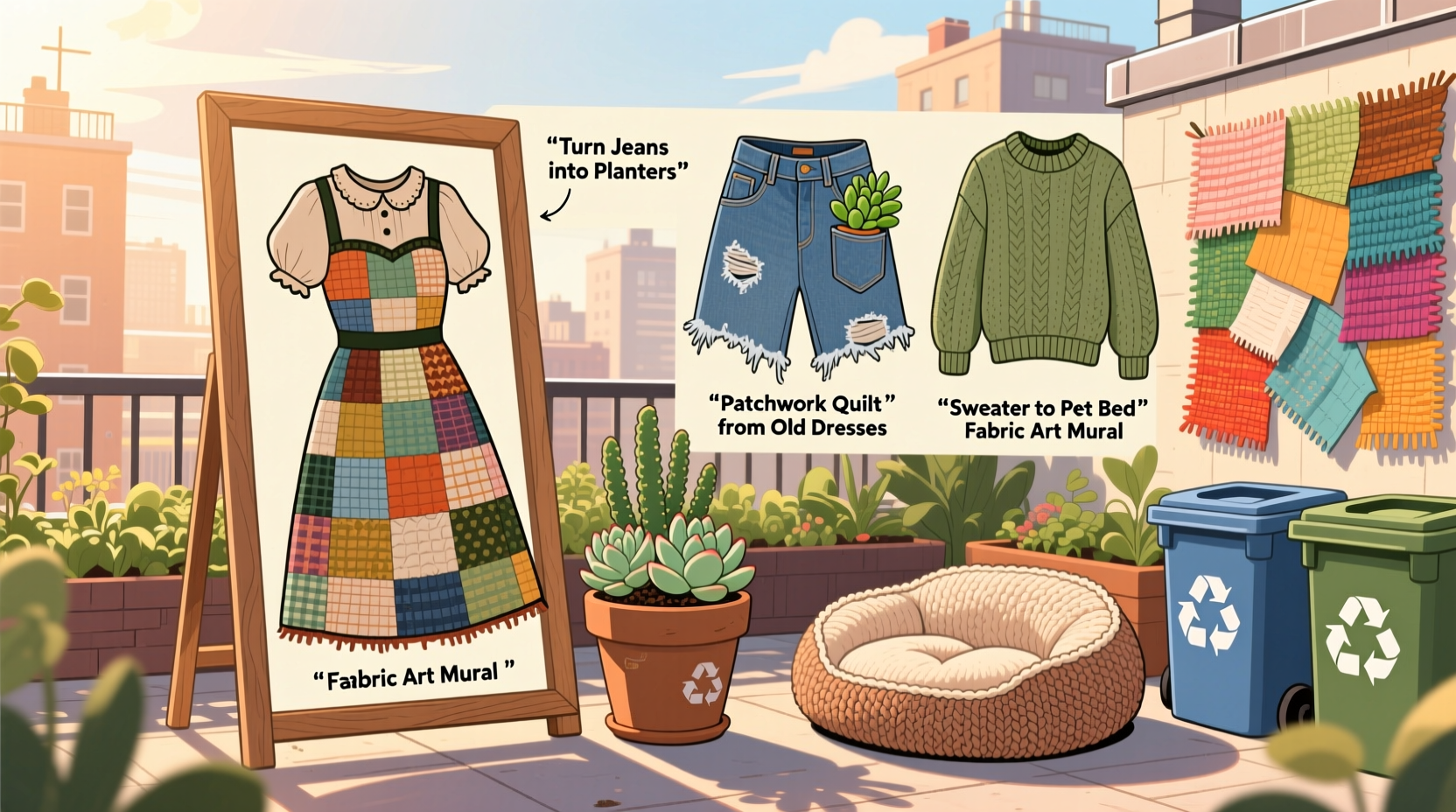
When clothes are no longer wearable as-is, they don’t lose all utility. Fabric retains value long after a garment’s lifespan ends. Upcycling transforms old textiles into new functional or decorative items, reducing demand for virgin materials.
Popular upcycling ideas include:
- Turning jeans into tote bags or aprons
- Using flannel shirts as quilt patches
- Cutting soft knits into reusable cleaning cloths
- Transforming dresses into pet beds or stuffed toys
This approach encourages hands-on creativity and is especially rewarding for crafters, parents, and DIY enthusiasts. Even minimal sewing skills open up possibilities—no machine required for braided rugs or fabric scrap garlands.
Tip: Keep a “fabric scrap bin” under your worktable. Collect usable remnants for future projects like patchwork, embroidery backings, or stuffing.Recycle Through Specialized Textile Programs
For clothes too damaged for donation or upcycling, textile recycling offers a responsible exit. Unlike curbside paper or plastic recycling, textile recycling requires specific facilities equipped to handle mixed fibers, dyes, and blended materials.
Many brands and municipalities now offer take-back programs:
- H&M, Patagonia, and Levi’s accept old garments (any brand) in-store for recycling.
- Retold Recycling and For Days provide mail-in recycling kits with closed-loop systems.
- Cities like San Francisco and Seattle include textile collection in municipal waste programs.
The process typically involves sorting by fiber type, shredding, and reprocessing into insulation, carpet padding, or new yarns. While challenges remain—especially with blended fabrics—these programs are advancing rapidly thanks to innovation in mechanical and chemical recycling.
Textile Recycling Options at a Glance
| Program | How It Works | Accepted Items | Limitations |
|---|---|---|---|
| H&M Garment Collecting | Drop off any textile in-store | All clothing, shoes, linens | No hazardous materials (e.g., oil-soaked rags) |
| Retold Recycling | Purchase a kit, fill, and mail back | Any textile waste, including rags | Requires upfront cost (~$25 per box) |
| Municipal Collection | Curbside or drop-off bins | Clean textiles only | Not available in all regions |
Participate in Circular Fashion Systems
Beyond individual disposal methods, joining circular fashion initiatives amplifies impact. These models keep clothing in use longer through shared ownership, resale, and repair services.
Effective participation includes:
- Selling quality used clothes on platforms like Poshmark, ThredUp, or Depop.
- Hosting or attending clothing swaps with friends, schools, or community groups.
- Supporting brands with take-back guarantees and repair programs.
- Advocating for right-to-repair legislation in fashion.
A mini case study illustrates the ripple effect:
Real Example: The Neighborhood Swap That Sparked a Movement
In Portland, Oregon, a group of neighbors started a seasonal clothing swap in a community center. What began as a casual exchange among ten families grew into a city-supported initiative hosting 500+ participants annually. Last year, the event diverted over 2,000 garments from landfills and raised funds for a local youth mentorship program by reselling unsuitable items to a textile recycler. Participants reported buying 30% fewer new clothes and feeling more connected to sustainable choices.
Step-by-Step Guide: How to Responsibly Retire Clothes
Follow this six-step process whenever clearing out your closet:
- Empty your wardrobe completely and sort items into four piles: Keep, Donate, Repair/Repurpose, Recycle.
- Clean everything—wash, dry, and press garments to meet donation standards.
- Mend what’s fixable: Sew buttons, patch holes, or hem frays to increase usability.
- Photograph and list resale items on secondhand apps; set fair prices.
- Contact local recyclers for pickup options or locate drop-off points.
- Track your impact: Note how many bags were diverted from landfill—this reinforces sustainable habits.
FAQ
Can I recycle socks and underwear?
Yes, but only through specialized textile recycling programs. Most donation centers reject them for hygiene reasons, but recyclers accept them as fiber sources. Ensure they’re clean and free of excessive stains.
What happens to clothes that can’t be reused or recycled?
Non-recyclable textiles may be converted into energy via waste-to-energy plants, though this is less sustainable than material recovery. The goal is to minimize this outcome by prioritizing reuse and design for recyclability.
Is selling secondhand better than donating?
Both have value. Selling extends economic life and incentivizes mindful consumption. Donating supports social equity. Ideally, sell what has market value and donate what serves a community need.
Final Checklist: Responsible Clothing Disposal
- ☐ Sorted clothes by condition
- ☐ Cleaned and repaired wearable items
- ☐ Researched local donation and recycling options
- ☐ Listed resale items online
- ☐ Contacted textile recycler for drop-off/pickup
- ☐ Planned a clothing swap or community event
Take Action Today
Disposing of clothes without waste isn’t just about avoiding the trash bin—it’s about redefining what “end of life” means for a garment. Every T-shirt, pair of jeans, or sweater holds latent value, whether as wearable fashion, raw material, or creative inspiration. By adopting these practices, you contribute to a culture of care, resourcefulness, and environmental responsibility.
💬 Start small: Pick one drawer this week and apply these methods. Share your experience, favorite upcycling project, or local recycler in the comments—help others build a waste-free wardrobe!