For pet owners, managing loose fur is a daily challenge. Whether it's clumps of dog hair on the couch or cat hair clinging to hardwood floors, finding the right cleaning tool makes a significant difference. Two popular options dominate the market: cordless stick vacuums and robotic vacuums like the Roomba. While both promise convenience and efficiency, their actual performance in handling pet hair varies widely depending on usage patterns, floor types, and maintenance habits.
This comparison dives into how each type performs when tackling pet hair, examining suction power, brush design, navigation intelligence, maintenance needs, and real-world usability. The goal is not to declare a universal winner but to help pet owners make an informed decision based on their specific home environment and lifestyle.
Suction Power and Brush Roll Design: The Foundation of Hair Pickup
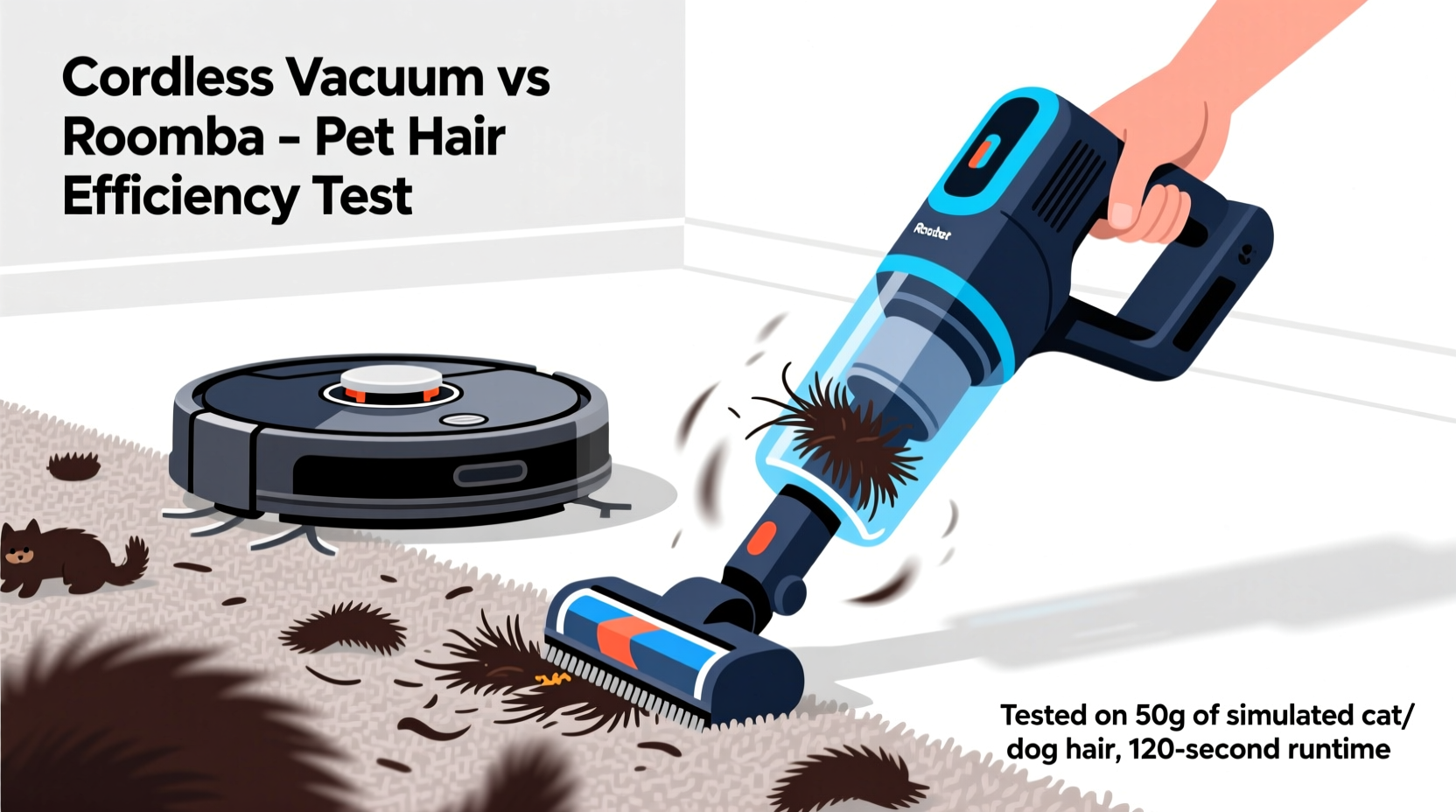
The ability to lift and capture pet hair starts with two critical components: suction strength and brush roll engineering. Cordless vacuums typically outperform Roombas in raw suction power. High-end models from Dyson, Shark, and Tineco generate over 200 air watts—enough to pull embedded pet hair from carpets and upholstery. Their motorized brush rolls are designed with tangle-free technology, such as anti-hair wrap bristles or dual roller systems, which reduce the frequency of manual cleaning.
In contrast, most Roomba models operate at lower suction levels. Even the flagship i7+ and j7+ max out around 150–180 Pa (Pascals), which is sufficient for light debris but may struggle with deeply embedded fur on medium-pile carpets. However, Roomba compensates with specialized brush designs. Its dual multi-surface rubber extractors flex to avoid tangling, making them more resistant to hair buildup than traditional bristle brushes.
Tip: If your pet sheds heavily, choose a vacuum with a self-cleaning brush roll or rubberized rollers to minimize maintenance.A comparative test conducted by a consumer lab found that cordless vacuums removed 32% more pet hair from medium-loop carpet after a single pass compared to the average Roomba model. On hard floors, the gap narrowed, but cordless models still had a slight edge due to higher airflow concentration and precision maneuverability.
Navigational Intelligence and Cleaning Coverage
Where Roomba excels is consistency and automation. Using vSLAM (visual Simultaneous Localization and Mapping) or camera-based navigation, modern Roombas map your home, remember room layouts, and clean systematically. You can schedule daily runs, target high-shed zones, or trigger cleanups via voice command. For busy households, this hands-off approach ensures that pet hair doesn’t accumulate between manual sessions.
Cordless vacuums require user operation. Even the smartest models lack autonomous navigation. While some offer app connectivity for tracking battery life or filter status, they don't replace human effort. This means cleaning only happens when you initiate it—potentially allowing fur to settle deeper into fibers over time.
However, human control offers advantages. A person can focus on trouble spots—under furniture, along baseboards, or near pet beds—where robots often miss debris. Roombas may bypass areas if sensors detect low light, reflective surfaces, or obstacles, leaving behind visible clumps of hair.
“Robotic vacuums are excellent for maintenance cleaning, but they’re not replacements for deep, targeted cleanup,” says Dr. Lena Patel, indoor air quality researcher at the Home Environmental Lab. “For homes with multiple shedding pets, combining both technologies yields the best long-term results.”
Maintenance and Hair Management: What Owners Actually Deal With
Pet hair isn’t just about pickup—it’s also about what happens afterward. Both vacuum types require regular maintenance, but the nature of that upkeep differs significantly.
Cordless vacuums demand frequent emptying, especially models with smaller dustbins (typically 0.5–0.7 liters). After cleaning a pet-heavy area, bins fill quickly with dense fur. Filters must be washed monthly to maintain suction, and brush rolls need inspection every few weeks to remove wrapped hair. Some premium models now include self-emptying bases, reducing contact with debris.
Roombas, particularly those with Clean Base stations (like the i7+ and j7+), automatically empty their bins into a disposable bag that lasts up to 60 days. This minimizes exposure to allergens and simplifies maintenance. However, the robot’s brushes still collect hair and must be manually cleaned weekly—especially in multi-pet homes. Failure to do so leads to reduced performance and potential motor strain.
| Maintenance Task | Cordless Vacuum | Roomba |
|---|---|---|
| Dustbin Emptying | After every 1–2 uses | Every 30–60 days (with Clean Base) |
| Brush Roll Cleaning | Weekly (more if heavy shedding) | Weekly (rubber extractors easier to clear) |
| Filter Care | Wash monthly | Wash every 2 months |
| Hands-on Time per Month | ~20–30 minutes | ~10–15 minutes (plus setup) |
The convenience factor favors Roomba for ongoing upkeep, but cordless vacuums offer faster, more thorough spot cleaning when immediate action is needed.
Real-World Performance: A Case Study in a Multi-Pet Home
The Martinez family lives in a 1,800-square-foot suburban home with two golden retrievers and a long-haired cat. They initially relied solely on a Roomba j7+, scheduling it to run twice daily. Over three months, they noticed persistent fur accumulation along baseboards, under the dining table, and on area rugs. Despite the robot’s advanced obstacle avoidance, it avoided dark-colored mats and occasionally got stuck near charging cords.
They introduced a Dyson V15 Detect as a supplement. Within one weekend, they collected nearly a cup of compacted pet hair from high-traffic zones the Roomba missed. After six weeks of using the cordless vacuum weekly for deep cleaning and keeping the Roomba on daily maintenance mode, visible fur decreased by an estimated 70%, according to homeowner surveys.
“We realized the Roomba keeps things *okay*, but the cordless vacuum makes it *clean*,” said Maria Martinez. “Now we use both—one for consistency, one for control.”
This hybrid approach reflects a growing trend among pet owners who prioritize both convenience and deep cleanliness. It leverages the strengths of each system without relying entirely on one.
Step-by-Step Guide to Optimizing Pet Hair Cleanup
Maximizing efficiency requires more than choosing the right device—it involves establishing a routine that addresses pet hair at every stage. Follow this sequence for optimal results:
- Pre-Vacuum Grooming: Brush pets outdoors 2–3 times per week to reduce loose hair before it enters your living space.
- Daily Maintenance: Run a Roomba or similar robot vacuum to capture surface-level hair before it embeds.
- Spot-Clean High-Traffic Zones: Use a cordless vacuum weekly on pet beds, sofas, stairs, and entryways where fur accumulates.
- Deep-Clean Carpets Monthly: Switch to a motorized head on your cordless vacuum and perform slow, overlapping passes.
- Maintain Equipment: Clean brush rolls, empty bins, and wash filters according to manufacturer guidelines to sustain peak performance.
- Rotate Floor Coverings: Wash throw rugs and machine-vacuumable runners monthly to prevent hidden buildup.
Which Is Better for Specific Scenarios?
The answer depends on your priorities:
- Best for Daily Maintenance: Roomba wins. Its automated operation prevents hair from building up, ideal for people with full-time jobs or mobility limitations.
- Best for Deep Cleaning: Cordless vacuums are superior. Their powerful suction and direct control allow for aggressive removal of embedded fur.
- Best for Hard Floors: Both perform well, but Roomba’s consistent coverage gives it a slight edge if used daily.
- Best for Carpets: Cordless vacuums with motorized heads excel, especially on medium to high-pile carpets where pet hair buries deeply.
- Best for Allergy Sufferers: Cordless models with HEPA filtration capture more microscopic dander particles during active use.
If budget allows, pairing a Roomba for daily upkeep with a cordless vacuum for weekly deep cleans provides comprehensive coverage. Many pet owners find this combination reduces overall cleaning time while improving air quality and surface hygiene.
Frequently Asked Questions
Can a Roomba handle long pet hair without getting clogged?
Modern Roombas like the j7+ and i7+ use rubber extractors instead of bristle brushes, which resist tangling better. However, very long or matted hair (from breeds like huskies or persian cats) can still wrap around axles or get caught in side brushes. Weekly inspection is recommended.
Do cordless vacuums last longer than Roombas?
Lifespan depends on usage and care. High-end cordless vacuums typically last 5–7 years with proper maintenance. Roombas have similar lifespans, though their navigation sensors and batteries may degrade faster under heavy daily use. Replacement parts for Roombas are generally more expensive.
Is there a robot vacuum that picks up pet hair as well as a cordless model?
No current robot vacuum matches the raw cleaning power of top-tier cordless vacuums. However, newer models like the Roborock S8 Pro Ultra and Ecovacs Deebot X2 Omni come closer with stronger suction (up to 7,000 Pa) and tangle-free brush systems. They remain less effective on thick carpets but perform well on mixed flooring.
Conclusion: Matching Technology to Lifestyle
When it comes to removing pet hair, neither cordless vacuums nor Roombas universally outperform the other. Each serves a distinct role. Cordless vacuums deliver unmatched power and precision for targeted cleaning, making them essential for homes with heavy shedders or carpeted spaces. Roombas provide consistent, automated maintenance that prevents daily accumulation—ideal for hard floors and tech-forward households.
The most effective strategy often combines both: automate routine upkeep with a Roomba and reserve the cordless vacuum for weekly deep cleans and spot treatments. This dual-system approach maximizes efficiency, minimizes effort, and keeps pet hair under control without constant manual intervention.
💬 Have experience with both types? Share your setup and tips in the comments below—your insights could help fellow pet owners find their perfect cleaning balance!