When it comes to modern home cleaning, two technologies dominate the conversation: cordless stick vacuums and robot vacuums. Both promise convenience, but they deliver it in fundamentally different ways. The real question isn’t just about suction power or battery life—it’s about time. How much of your day does each device truly save? And more importantly, which one reduces the mental and physical burden of keeping your floors clean?
The answer depends on your lifestyle, home layout, cleaning habits, and expectations. A robot vacuum might run daily without you lifting a finger, but is it doing enough? A cordless vacuum offers powerful, targeted cleaning, but requires active participation. To determine which actually saves more time, we need to look beyond marketing claims and examine real-world usage patterns, maintenance demands, and long-term efficiency.
How Time Is Measured in Cleaning
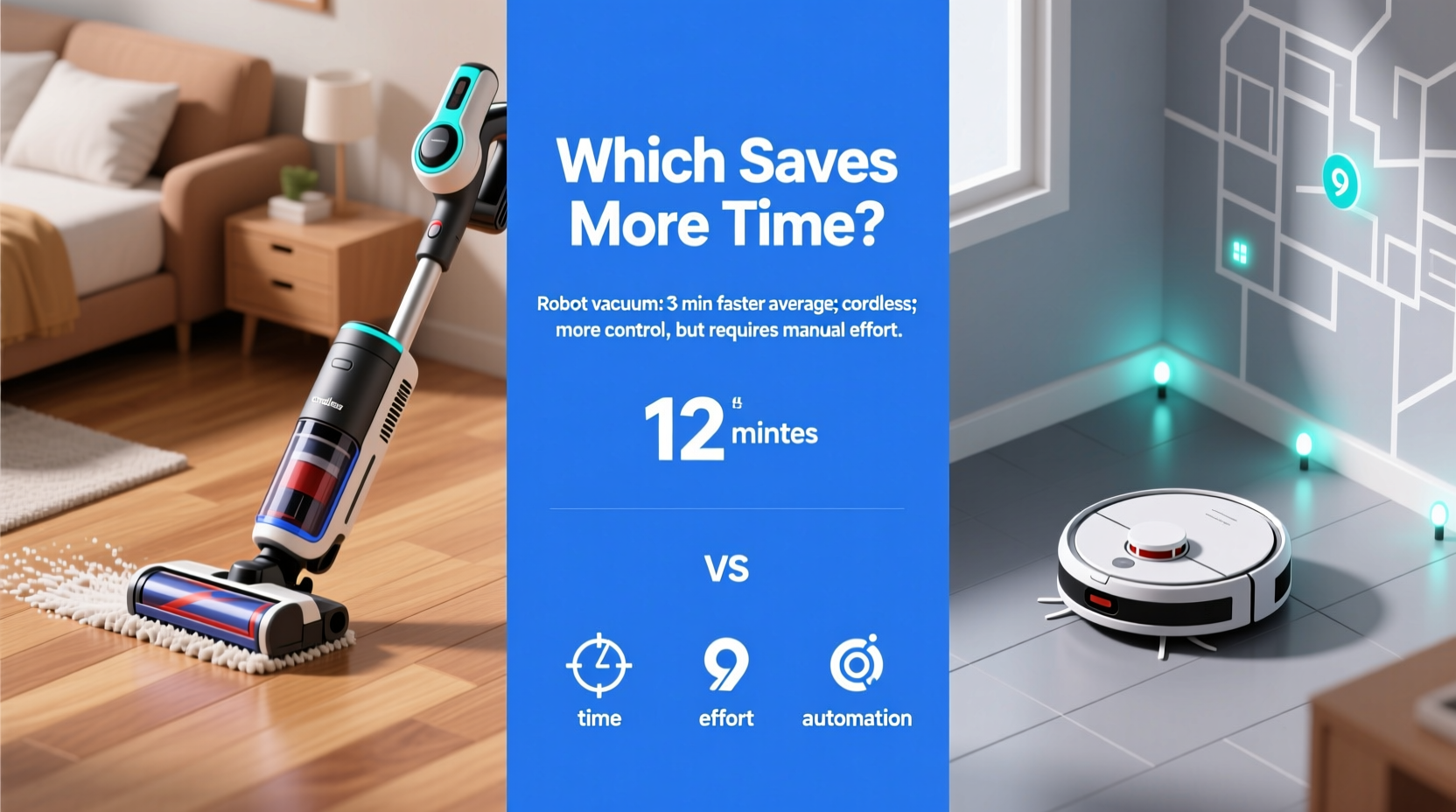
Time saved isn’t just about how long a vacuum runs. It includes setup, operation, cleanup, storage, and frequency. For example, a device that takes five minutes daily may seem efficient, but if it needs constant monitoring, emptying, and troubleshooting, those minutes add up—and so does cognitive load.
True time savings come from reducing both effort and decision fatigue. A system that integrates seamlessly into your routine, cleans effectively with minimal oversight, and prevents future messes is ultimately more valuable than one that merely operates quickly.
Tip: When evaluating time savings, consider not just active cleaning time, but also charging, maintenance, and re-cleaning due to poor performance.Cordless Vacuums: Power and Precision at Your Command
Cordless stick vacuums have revolutionized quick cleanups. Lightweight, portable, and often featuring strong suction, they allow users to spot-clean spills, tackle pet hair, or do a full-home sweep in under 15 minutes. Brands like Dyson, Tineco, and Shark dominate this space with models that offer multi-surface versatility and washable filters.
Their strength lies in immediacy and control. You see the mess, grab the vacuum, and deal with it—no scheduling, no virtual boundaries to set. This makes them ideal for households with unpredictable messes or high-traffic areas that need rapid response.
However, time costs accumulate. Each use requires retrieval from storage, charging between uses (typically 3–4 hours), emptying the dustbin, and occasional filter washing. If used multiple times per week, these tasks become recurring chores. Over a year, that could amount to dozens of hours spent managing the device itself—not just cleaning.
“Cordless vacuums excel in responsiveness, but their time savings are limited by user dependency. They shift labor rather than eliminate it.” — Dr. Lena Patel, Home Efficiency Researcher at MIT Sustainable Design Lab
Robot Vacuums: The Set-and-Forget Approach
Robot vacuums like those from iRobot, Roborock, and Ecovacs operate autonomously. Once configured, they can clean on a schedule—daily, every other day, or weekly—without any input. Many models return to their dock to recharge, empty their bins automatically via self-emptying stations, and even map multi-floor homes for targeted cleaning.
Their biggest advantage is consistency. Instead of waiting for visible dirt or a weekend deep clean, robot vacuums maintain baseline cleanliness. This prevents debris from embedding into carpets or spreading across floors, reducing the need for intensive cleaning sessions later.
Initial setup does require time: mapping rooms, setting no-go zones, clearing obstacles, and learning app controls. But after that, daily operation is nearly invisible. Some users report forgetting their robot exists—until they notice how consistently clean their floors stay.
Still, limitations exist. Lower-end models struggle with edges, thresholds, and thick carpets. Even advanced robots may miss spots or require rescue if tangled in cords or stuck under furniture. And while self-emptying bases reduce maintenance, they’re an added expense and still require monthly bin disposal and brush cleaning.
Direct Comparison: Time Investment Over One Year
| Task | Cordless Vacuum (Weekly Use) | Robot Vacuum (Daily Auto-Clean) |
|---|---|---|
| Active Cleaning Time | 60 minutes/month (10 mins x 2x/week) | 5 minutes/month (monitoring/check-ins) |
| Charging Management | 30 minutes/month (plugging in, checking status) | 5 minutes/month (rare intervention) |
| Dustbin Emptying | 8 times/month | 1–2 times/month (with auto-empty) or 30x (without) |
| Maintenance (Brushes, Filters) | 2 hours/year | 3 hours/year (more complex components) |
| Total Estimated Time Spent | ~17 hours/year | ~9 hours/year (with auto-empty base) |
This table assumes moderate use in a 1,500 sq ft home. The robot vacuum pulls ahead in total time saved—especially when equipped with a self-emptying dock. However, if the robot lacks automation features, manual emptying every few days can erase its advantage.
Real-World Example: The Martinez Family
The Martinez family lives in a two-story suburban home with two kids, a dog, and hardwood floors throughout. Before buying a robot vacuum, they relied on a high-end cordless model for weekly cleanings. Every Saturday morning, one parent would spend 20–30 minutes vacuuming main living areas. Crumbs from breakfast, tracked-in dirt, and pet hair made floors visibly dusty by midweek.
They purchased a mid-tier robot vacuum with scheduled cleaning and a self-emptying base. After a one-hour setup session, they programmed it to run Monday through Friday at 11 a.m., when the house was empty. Within three weeks, they noticed fewer allergens, less pet odor, and no more weekend vacuuming marathons.
Over six months, the father estimated he’d saved over 40 hours of active cleaning time. While the robot occasionally needed resetting after getting stuck near a rug fringe, the net gain was undeniable. “It’s not perfect,” he said, “but it handles 80% of the work so I only deal with the 20% that matters.”
Tip: Pair a robot vacuum with a cordless model for best results—one for daily maintenance, the other for deep or spot cleaning.Step-by-Step: Optimizing Your Vacuum Strategy for Maximum Time Savings
Maximizing time efficiency doesn’t mean choosing one device over the other—it means using them strategically. Follow this sequence to build a low-effort, high-impact cleaning system:
- Assess your floor types and traffic patterns. Identify high-dirt zones (entryways, kitchens) and surfaces (carpet, tile).
- Choose a primary cleaner based on lifestyle. Renters, busy parents, or remote workers benefit most from robot autonomy.
- Invest in key automation features. Prioritize models with self-emptying docks, app scheduling, and smart mapping.
- Set up routines during low-occupancy hours. Schedule robot runs when no one is home to avoid interruptions.
- Use cordless vacuum selectively. Reserve it for post-renovation cleanup, pet accidents, or monthly carpet refreshes.
- Schedule quarterly maintenance. Clean sensors, brushes, and filters on both devices to prevent downtime.
This hybrid approach leverages the strengths of both technologies: the robot handles routine upkeep, while the cordless vacuum acts as a precision tool for exceptions.
Common Misconceptions About Time Savings
- Myth: Robot vacuums clean as thoroughly as cordless models. Reality: Most robots lack the suction power and brushroll design to deep-clean carpets or remove embedded debris.
- Myth: Cordless vacuums are faster because they’re handheld. Reality: Speed depends on coverage area. A robot may take longer per session but eliminates repeated short cleanups.
- Myth: Once set up, robots require zero attention. Reality: Hair tangles, full bins, and software glitches still demand occasional intervention.
Frequently Asked Questions
Can a robot vacuum replace a cordless vacuum completely?
For most households, no. Robot vacuums maintain cleanliness but often lack the power for deep cleaning, edge suction, or handling large spills. A cordless vacuum remains essential for thorough monthly cleaning or emergencies.
Which saves more time for people who work from home?
Robot vacuums typically save more time, especially when scheduled during video calls or focused work blocks. Their quiet operation (on lower settings) allows background cleaning without disruption. Cordless models require stopping work to use.
Do self-emptying bases really make a difference in time savings?
Yes—dramatically. Without one, you may need to empty the robot every 2–3 days, adding up to 30+ extra interactions per month. With a self-emptying base, that drops to once every 60 days, cutting maintenance time by over 80%.
Final Recommendation: Match the Tool to Your Definition of \"Saved Time\"
If “saved time” means reducing active involvement and maintaining consistent cleanliness with minimal effort, a robot vacuum—especially one with automation features—is the superior choice. It integrates into your life passively, preventing messes before they become problems.
If “saved time” means quickly eliminating visible dirt or responding instantly to spills, a cordless vacuum wins. It’s immediate, powerful, and gives you full control over where and how hard to clean.
For most people seeking genuine time reduction, the robot vacuum delivers better long-term efficiency. But the smartest solution is often both: a robot for daily upkeep and a cordless model for touch-ups. Together, they minimize both effort and frequency of cleaning, transforming floor maintenance from a chore into a seamless background process.
💬 Ready to reclaim hours every year? Evaluate your current cleaning routine, consider investing in automation, and start building a system that works for you—not the other way around.








