For pet owners, managing fur-covered floors is a daily battle. Whether it’s clumps of dog hair on the sofa or a fine layer of cat dander across hardwood, keeping a home clean requires more than occasional sweeping. As technology advances, two types of vacuums dominate the conversation: traditional corded upright or canister models, and modern robot vacuums. But when it comes to tackling pet hair and achieving deep cleaning results, which actually delivers better value and performance?
The answer isn’t as straightforward as “newer is better.” Each type has strengths shaped by design, power source, automation level, and intended use. This article breaks down the key differences with real-world insights, expert opinions, and practical advice to help you decide which vacuum truly earns its place in a pet-friendly home.
Suction Power and Deep Cleaning Capability
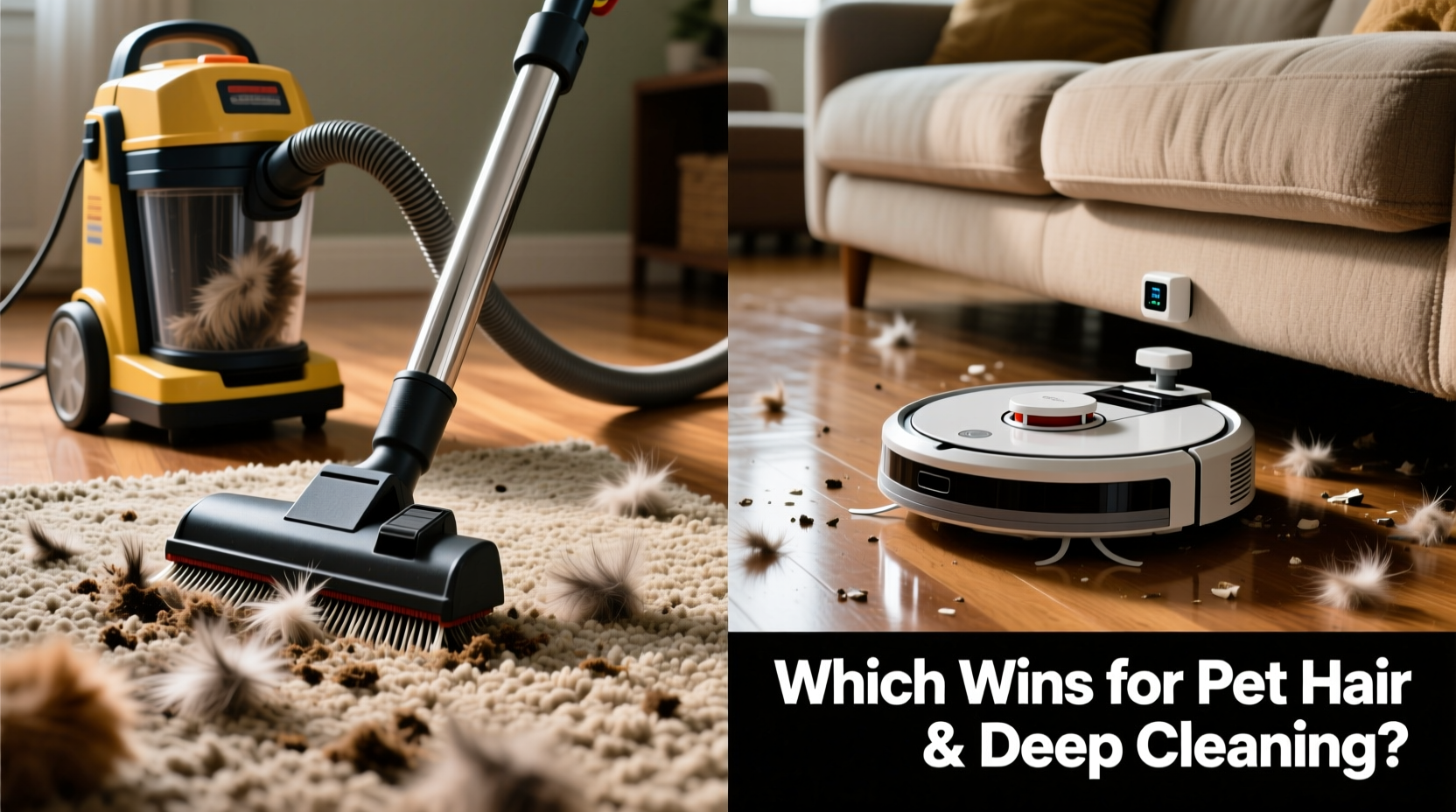
When dealing with embedded pet hair—especially in carpets or high-pile rugs—suction strength is non-negotiable. Corded vacuums, powered directly from an electrical outlet, typically offer higher wattage and stronger airflow. Most mid-to-high-end corded models generate between 1000–2000 watts of power, translating into robust suction that lifts deeply embedded debris, dust mites, and tangled fur from carpet fibers.
In contrast, robot vacuums operate on battery power and are engineered for compactness and quiet operation, often sacrificing raw power. While premium robot models like the Roborock S8 or iRobot j9+ have improved significantly, their peak suction rarely exceeds 4000 Pa (Pascals), whereas high-end corded vacuums can reach over 15,000 Pa on turbo settings. The difference becomes evident during deep-cleaning sessions where pet hair has accumulated over weeks.
Tip: If your home includes wall-to-wall carpeting or thick area rugs, a corded vacuum with motorized brush rolls will outperform even the most advanced robot in deep-pile cleaning.Moreover, many corded vacuums come with specialized attachments such as crevice tools, upholstery brushes, and turbo-powered pet tools designed specifically for furniture and stairs. Robot vacuums lack this versatility—they focus primarily on floor-level cleaning and cannot effectively clean above-floor surfaces without human intervention.
Daily Maintenance and Pet Hair Management
While corded vacuums excel in deep cleaning, they fall short in consistency. Most people don’t deep-clean every day. Enter the robot vacuum: its greatest advantage lies in automation. Set a schedule, and it runs daily—often while you're at work or asleep—removing surface-level pet hair before it settles deep into flooring.
This frequent maintenance prevents buildup, reduces allergens, and keeps homes visibly cleaner. For households with heavy shedders (like Huskies or Maine Coons), daily robotic runs can reduce weekly cleanup time by up to 60%, according to a 2023 survey conducted by *HomeTech Insights*.
However, robot vacuums require regular upkeep. Their brushes easily tangle with long pet hair, requiring weekly detangling. Dustbins need emptying after each run, and filters must be cleaned monthly. Neglect these tasks, and performance plummets—sometimes leading to complete shutdowns due to clogs.
Corded vacuums, though used less frequently, demand attention too. Bagless models need filter rinsing and bin emptying; bagged versions require periodic replacement. But because they’re used intentionally rather than automatically, users tend to maintain them more thoroughly per session.
“Daily low-level cleaning from a robot complements—but doesn’t replace—the thoroughness of a corded vacuum.” — Dr. Lena Patel, Indoor Air Quality Researcher at CleanAir Labs
Comparative Performance: A Real-World Scenario
Consider Sarah, a dog owner in Denver with two Golden Retrievers. Her house features a mix of hardwood, tile, and medium-pile carpeting. She initially relied solely on a top-tier robot vacuum (iRobot Roomba j7+) programmed to run daily. After three months, she noticed lingering odors near baseboards and visible fur accumulation along edges and under furniture.
Upon inspection, she found that while the robot handled open areas well, it missed corners, struggled with static cling on dark floors, and couldn’t extract hair packed beneath radiators. When she ran her old Dyson Ball Animal 2—a corded model—over the same spaces, it pulled out enough fur to fill a small cup, despite the robot’s daily passes.
Sarah now uses both: the robot maintains cleanliness between weekly deep cleans with the corded unit. Her experience reflects a growing trend among pet owners—hybrid usage maximizes benefits from both technologies.
Feature Comparison: Corded vs Robot Vacuums
| Feature | Corded Vacuum | Robot Vacuum |
|---|---|---|
| Suction Power | High (1000–2000+ watts) | Moderate (up to 4000 Pa) |
| Battery/Runtime | Unlimited (plugged in) | Limited (60–120 mins avg.) |
| Floor Type Coverage | All (carpet, hardwood, tile) | Most (struggles with thresholds) |
| Pet Hair Tangle Resistance | Good (tangle-free brush rolls available) | Fair (brushes prone to wrapping) |
| Automation | None | Full (scheduling, self-emptying bins) |
| Edge & Corner Cleaning | Excellent (with proper nozzles) | Variable (depends on navigation) |
| Stair/Furniture Cleaning | Yes (portable hose attachments) | No |
| Maintenance Frequency | Per-use or weekly | Daily/weekly (empty bin, clear brushes) |
| Average Price Range | $150–$700 | $300–$1,200+ |
Choosing Based on Your Lifestyle
The ideal choice depends not just on technical specs but on how you live. Here’s a step-by-step guide to help determine which vacuum suits your needs:
- Assess your flooring: Homes with mostly hard floors benefit more from robot vacuums, which glide efficiently and detect debris well. Carpet-heavy homes need the deeper agitation only corded models provide.
- Evaluate pet shedding levels: Light shedders may find robots sufficient. Heavy shedders will eventually need manual extraction.
- Consider time availability: Busy professionals who value convenience lean toward robots. Those willing to invest 30–60 minutes weekly for superior results choose corded.
- Check storage space: Corded vacuums require closet or utility room space. Robots occupy minimal footprint and some dock discreetly against walls.
- Budget for long-term costs: Robots often cost more upfront. Self-emptying bases add $200–$300. Replacement brushes, batteries, and filters increase ongoing expenses.
Expert Recommendations and Common Pitfalls
Industry experts agree: relying solely on a robot vacuum for pet hair management is risky. “Robots are excellent for maintenance,” says Marcus Tran, lead engineer at VacuumLab Testing Facility, “but they lack the mechanical force needed to dislodge years of compacted debris. Think of them like electric toothbrushes—great for daily care, but you still need professional cleaning twice a year.”
One common mistake pet owners make is assuming newer robots eliminate the need for traditional vacuums. Marketing emphasizes AI navigation, app control, and self-emptying bins, but rarely highlights limitations in actual dirt removal. Another issue is improper maintenance—failing to clean side brushes or neglecting filter care leads to diminished suction within months.
Conversely, some dismiss robot vacuums entirely, viewing them as gimmicks. Yet data shows homes using scheduled robots report 40% fewer airborne allergens and noticeably cleaner kitchens and entryways—areas where pet paws track in outdoor debris daily.
Hybrid Approach: Best of Both Worlds
The most effective strategy for pet owners combines both systems:
- Use a robot vacuum daily to capture loose fur, dander, and tracked-in dirt.
- Run a powerful corded vacuum weekly or biweekly to deep-clean carpets, stairs, and upholstery.
- Supplement with handheld tools for car interiors, window sills, and furniture.
This layered approach ensures consistent surface cleanliness and periodic deep sanitation—critical for allergy sufferers and multi-pet households. Brands like Shark and Dyson now offer corded models with detachable handheld units, enhancing flexibility. Meanwhile, robot brands like Ecovacs and Roborock offer models with mopping functions, adding another dimension to automated upkeep.
FAQ: Common Questions Answered
Can robot vacuums handle long pet hair?
Some can, but with caveats. Models with tangle-free rubber brushes (e.g., Roomba Combo j9+, Roborock Qrevo) perform better. However, all robots require regular brush cleaning—weekly at minimum—to prevent clogs and maintain performance.
Do corded vacuums damage hardwood floors?
Not if used correctly. Most modern corded vacuums have adjustable height settings or soft roller heads designed for hard surfaces. Avoid using beater bars on bare wood, and opt for models labeled “safe for hard floors.”
Is a self-emptying robot worth the extra cost?
For pet owners, yes—if budget allows. Self-emptying bases hold up to 60 days of debris, reducing contact with pet hair and dander. This is particularly beneficial for allergy-prone individuals. However, the base still requires quarterly cleaning to prevent mold and odor buildup.
Final Verdict: Which One Truly Wins?
There is no single winner. For deep cleaning and maximum pet hair removal, **the corded vacuum is unmatched**. Its sustained power, versatile attachments, and aggressive brush action deliver results robots simply can’t replicate. It remains the gold standard for thorough home sanitation.
But for daily upkeep, convenience, and consistent surface hygiene, **robot vacuums win hands-down**. They automate the mundane, reduce allergen load, and keep homes looking tidier with zero effort.
In practice, the true champion is a combination of both. Think of the robot as your first line of defense—handling daily messes and preventing buildup—and the corded vacuum as your seasonal deep cleaner, restoring freshness to neglected areas. Together, they form a comprehensive solution tailored to the realities of pet ownership.
💬 Ready to optimize your pet-friendly cleaning routine? Start by testing a robot for daily runs, then bring out your corded vacuum once a week. Track the difference in air quality, visible fur, and overall effort. Share your experience—your insight could help another pet parent make a smarter choice.