Gift-giving during the holidays often defaults to abundance: wrapped boxes stacked high, novelty items with short lifespans, and experiences that leave behind digital fatigue or physical residue. For the minimalist—who values silence over noise, substance over spectacle, and intention over impulse—this tradition can feel alienating. They don’t reject generosity; they reject *dissonance*. A gift that contradicts their values—clutter disguised as care—doesn’t land as love. It lands as cognitive friction.
What works instead isn’t austerity—it’s alignment. The most resonant gifts for minimalists are those that deepen connection without demanding space, that carry weight through story rather than size, and that honor slowness in a world racing toward more. This isn’t about giving less. It’s about giving *with greater fidelity* to who the person is—not who we wish they’d be, or what we assume they need.
Why Minimalists Reject Conventional Gifts (and What They’re Really Asking For)
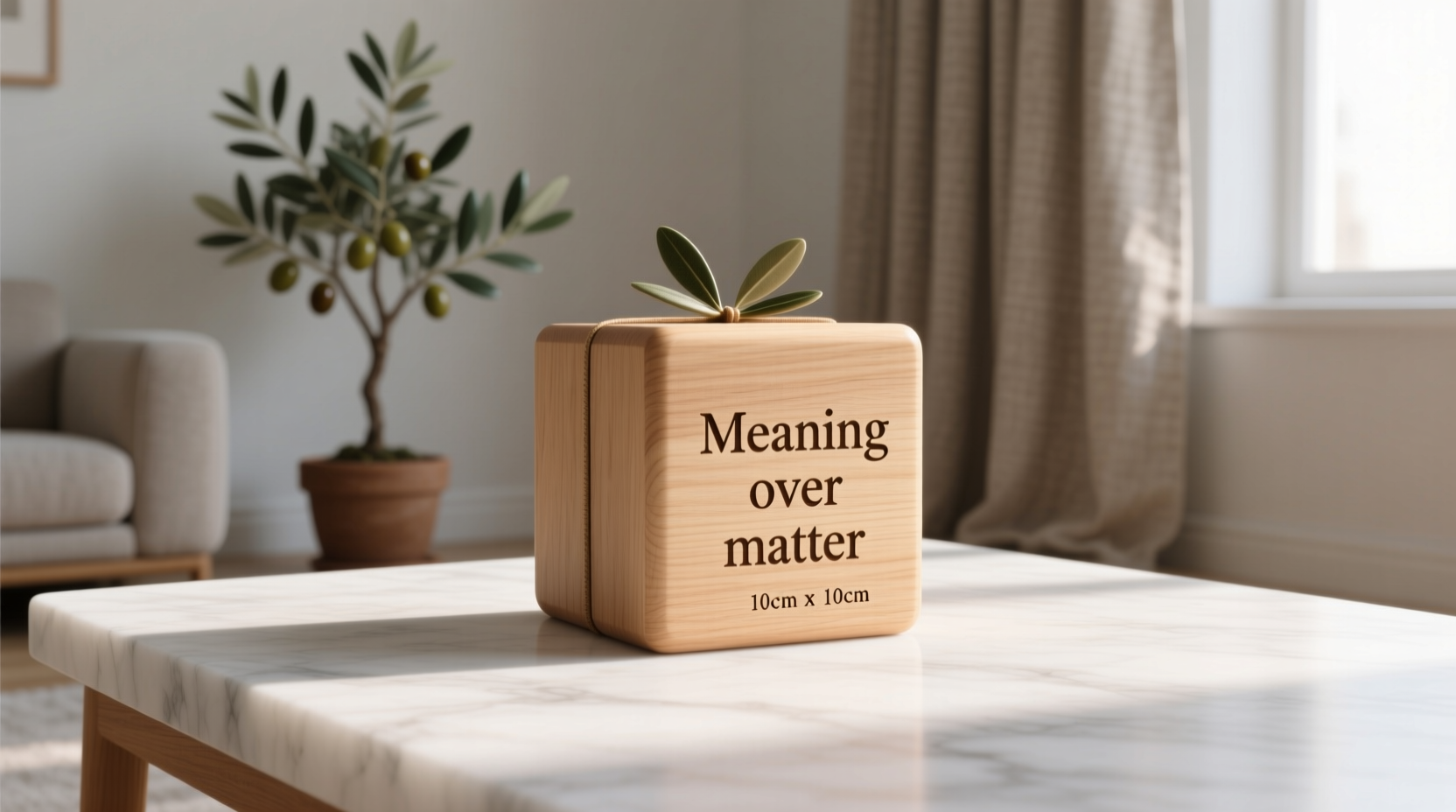
Minimalism isn’t a style choice; it’s an operating system. It prioritizes agency over accumulation, attention over distraction, and sustainability over disposability. When a minimalist declines a decorative candle, a novelty mug, or a gadget subscription box, it’s rarely personal. It’s functional self-preservation.
Clutter isn’t just physical. Psychologists distinguish between *object clutter* (excess possessions) and *cognitive clutter* (mental load from managing, maintaining, or justifying those possessions). A gift that introduces either type—even if beautifully packaged—adds friction to a life deliberately streamlined. As designer and author Jay Shetty observes: “Clarity begins where excess ends. Every object we keep asks for attention. Every gift we accept makes a silent contract about how we’ll spend our finite energy.”
So what replaces the traditional gift? Not emptiness—but presence. Not objects, but openings: for reflection, for ritual, for shared memory, or for quiet growth. The best gifts mirror the recipient’s inner architecture: simple in form, rich in resonance.
7 Meaning-First, Clutter-Free Gift Categories (With Real Examples)
These categories prioritize emotional utility over material volume—and all avoid disposable packaging, single-use components, or forced maintenance.
- Time-anchored experiences: Not “a weekend getaway” (which may require packing, planning, and post-trip recovery), but something deeply local and unhurried—a sunrise walk at a nearby nature reserve with hand-roasted coffee and ceramic mugs you both keep; a monthly letter exchange using archival paper and wax seals; or reserved seats at a small, independent bookstore’s quiet reading hour.
- Objects with embedded narrative: A handmade ceramic cup thrown by a local potter whose studio you’ve visited together—or one sourced from a fair-trade cooperative, accompanied by a note naming the artisan and describing the glaze technique. The object matters less than the lineage it carries.
- Subscriptions to absence: A year of “no delivery” service—a curated pause from e-commerce notifications, algorithmic recommendations, and inbox overload. Includes a printed guide on digital detox rituals and a physical journal titled *What I Noticed When I Stopped Scrolling*.
- Legacy tools: Not another smart device, but a beautifully weighted brass ruler engraved with a meaningful date; a Japanese shinwa pencil set with cedar casing; or a linen-bound notebook with 100 pages of unlined, cotton-fiber paper—designed for writing, sketching, or leaving blank. These support practice, not performance.
- Repair-as-ritual kits: A leather repair kit with beeswax polish, saddle stitch needles, and linen thread—paired with an invitation to spend an afternoon restoring a worn wallet or belt together. The gift isn’t the kit; it’s the permission to value endurance over replacement.
- Sound-based presence: A custom vinyl record pressed with field recordings from a place meaningful to them (e.g., rain on their childhood porch roof, waves at a beach they visited yearly), or a hand-tuned singing bowl with instructions for daily breathwork. Sound occupies no shelf space—but reshapes interior space.
- Donations made visible: A contribution to a cause they champion—accompanied not by a certificate, but by a handwritten letter from someone directly impacted (facilitated ethically through the nonprofit), plus a small, natural object from that community (e.g., a smoothed river stone from a restored watershed, or a sprig of native sage).
A Real Example: How Maya Gave Her Brother a Gift That Lived Quietly in His Life
Maya’s brother Leo lives in a 450-square-foot apartment with exposed brick, a single bookshelf, and zero decor beyond two framed black-and-white photos. He’d declined every gift for three years—politely but firmly—saying, “I’m full.”
This year, Maya didn’t buy anything. Instead, she spent three months collecting fragments: voice notes from his favorite aunt recalling his childhood curiosity about stars; scanned pages from his 1998 astronomy club newsletter; coordinates of the observatory he visited at age 12; and a small vial of meteorite dust (ethically sourced, under 1g) from a museum’s educational collection.
She bound these into a slim, cloth-covered folio titled Where Your Wonder Began. No plastic, no ribbon, no branding. Just cotton thread, uncoated paper, and reverence. She gave it to him on Christmas morning—not as a surprise, but as a quiet offering: “This isn’t for your shelf. It’s for your remembering.”
He kept it on his desk—not displayed, but accessible. He opened it once a week, sometimes just to hold the vial. Six months later, he told Maya: “It’s the only thing I unwrapped that didn’t make me want to tidy up afterward.”
What to Avoid: A Practical Do/Don’t Table
| Category | Do | Don’t |
|---|---|---|
| Gifting Language | Use phrases like “I noticed how much you value stillness” or “This connects to something you’ve spoken about.” | Say “It’s so unique!” (implies scarcity-driven consumption) or “You’ll love this—it’s everywhere right now!” (validates trend-chasing) |
| Packaging | Folded kraft paper tied with jute twine; reusable linen drawstring bag; or a vintage tin repurposed as container. | Glitter-coated boxes, plastic ribbons, foil-stamped tissue, or branded gift bags designed for one-time use. |
| Physical Form | Single, well-made item with clear purpose and heirloom potential (e.g., forged iron spoon, walnut cutting board, analog watch with sapphire crystal). | Multi-piece sets (“Gourmet Coffee Lover Bundle”), novelty items with blinking lights, or anything requiring batteries, apps, or firmware updates. |
| Experience-Based Gifts | A reserved bench at a botanical garden with a laminated seasonal guide; a private 90-minute session with a master bookbinder; or a quarterly “silence subscription”—a postcard mailed on the solstice/equinox with one original haiku and a local wildflower seed packet. | Vouchers for escape rooms, cooking classes with take-home kits, or “adventure boxes” filled with disposable gear. |
| Personalization | Engraving a line from a poem they love; stitching their initials in invisible thread on a wool blanket’s hem; or selecting a specific wood grain that mirrors the grain in their favorite chair. | Adding their name to mass-produced merchandise; printing quotes on mugs they’ll never use; or commissioning generic art (“mountain sunset in gold foil”). |
Step-by-Step: Crafting a Meaningful Gift in 5 Intentional Moves
- Listen backward: Review texts, voice messages, or past conversations—not for what they asked for, but for recurring nouns: “stillness,” “map,” “light,” “threshold,” “return.” These are your thematic anchors.
- Identify a non-transactional need: Does their calendar overflow but their journal stay empty? Do they admire craftsmanship but own only factory-made tools? Are they seeking continuity in a season of change? Name the quiet hunger—not the surface want.
- Source with stewardship: Choose makers who disclose materials, labor conditions, and lifespan. Prioritize local artisans, cooperatives, or certified B Corps. If buying secondhand, verify condition and origin—not just price.
- Design the reveal as ritual: Hand-deliver if possible. Place the gift on a clean surface with nothing else present. Offer no explanation first—let them hold it, turn it, sit with its weight before you share the why.
- Release attachment to use: Their engagement with the gift is theirs alone. It may sit untouched for weeks—or become central to their routine. Your role ends at offering. Its meaning unfolds in their time, not yours.
“The most generous gift isn’t what you give. It’s the space you create for someone to receive it exactly as they are—unhurried, unburdened, and wholly seen.” — Dr. Lena Torres, Clinical Psychologist & Author of The Generosity of Rest
FAQ: Addressing Common Concerns
“Won’t they think I didn’t try hard enough if it’s not ‘big’ or expensive?”
Minimalists often perceive extravagance as avoidance—of clarity, of boundaries, of genuine attention. A thoughtfully composed folio or a single repaired object communicates deeper effort than a $200 gadget. What signals care is specificity: naming their values, honoring their rhythms, and resisting the cultural script that equates cost with commitment.
“What if they already have everything they need?”
That’s not a barrier—it’s the invitation. Gifts for people who “have everything” aren’t about filling gaps. They’re about honoring continuities: the persistence of their curiosity, the consistency of their ethics, the quiet resilience of their daily practice. Focus on deepening what already exists—not adding to the inventory.
“Is it okay to give consumables like tea or chocolate?”
Yes—if they align with their actual habits and values. Skip novelty blends unless you know they’re a dedicated tea practitioner. Instead, choose single-origin matcha from a farmer co-op with transparent sourcing, served in a reusable bamboo caddy you keep. Or ethically harvested wild-harvested honey in a glass jar you’ll refill next year. The key is *continuity*, not consumption.
Conclusion: The Quiet Power of Aligned Giving
Choosing a Christmas gift for a minimalist isn’t a constraint—it’s a distillation. It strips away the performative layers of holiday commerce and returns us to the core of generosity: seeing someone clearly, holding space for their integrity, and offering something that harmonizes with their inner rhythm rather than disrupting it.
There is profound respect in refusing to add to someone’s cognitive load. There is tenderness in gifting silence instead of noise, durability instead of disposability, and meaning instead of momentum. When you give this way, you’re not just selecting an object or experience—you’re affirming a worldview. You’re saying: *Your boundaries are sacred. Your attention is precious. Your life, as it is, is enough.*
Start small this season. Choose one person whose values you truly understand—not the one you wish to convert. Listen deeper than you speak. Source slower than you ship. And when you hand over your gift, do so without expectation of how it will be used, displayed, or even acknowledged. Its worth isn’t in the response—it’s in the fidelity of your intention.
💬 Your turn: Share one gift you’ve given—or received—that lived quietly but meaningfully in someone’s life. What made it resonate? Leave your story in the comments—we’ll read every one.








