In a world where fashion trends change weekly and fast fashion makes new outfits accessible at unprecedented speed, many people find themselves overwhelmed by choice. The closet bulges with clothes, yet mornings begin with the familiar lament: “I have nothing to wear.” This paradox lies at the heart of a growing cultural shift — one that pits the minimalist capsule wardrobe against the expressive maximalist aesthetic. While both styles have merit, evidence suggests that simplifying your wardrobe may not only streamline your routine but also elevate your mood and sense of well-being.
Happiness isn’t just about what we own; it’s about how our possessions shape our daily lives. When clothing becomes a source of decision fatigue, clutter, or guilt over unused items, it ceases to serve us. By contrast, a curated collection of versatile, meaningful pieces can foster clarity, confidence, and calm. This article explores the psychological, practical, and emotional differences between capsule wardrobes and maximalist fashion, and why choosing less might actually help you feel more.
The Rise of the Capsule Wardrobe
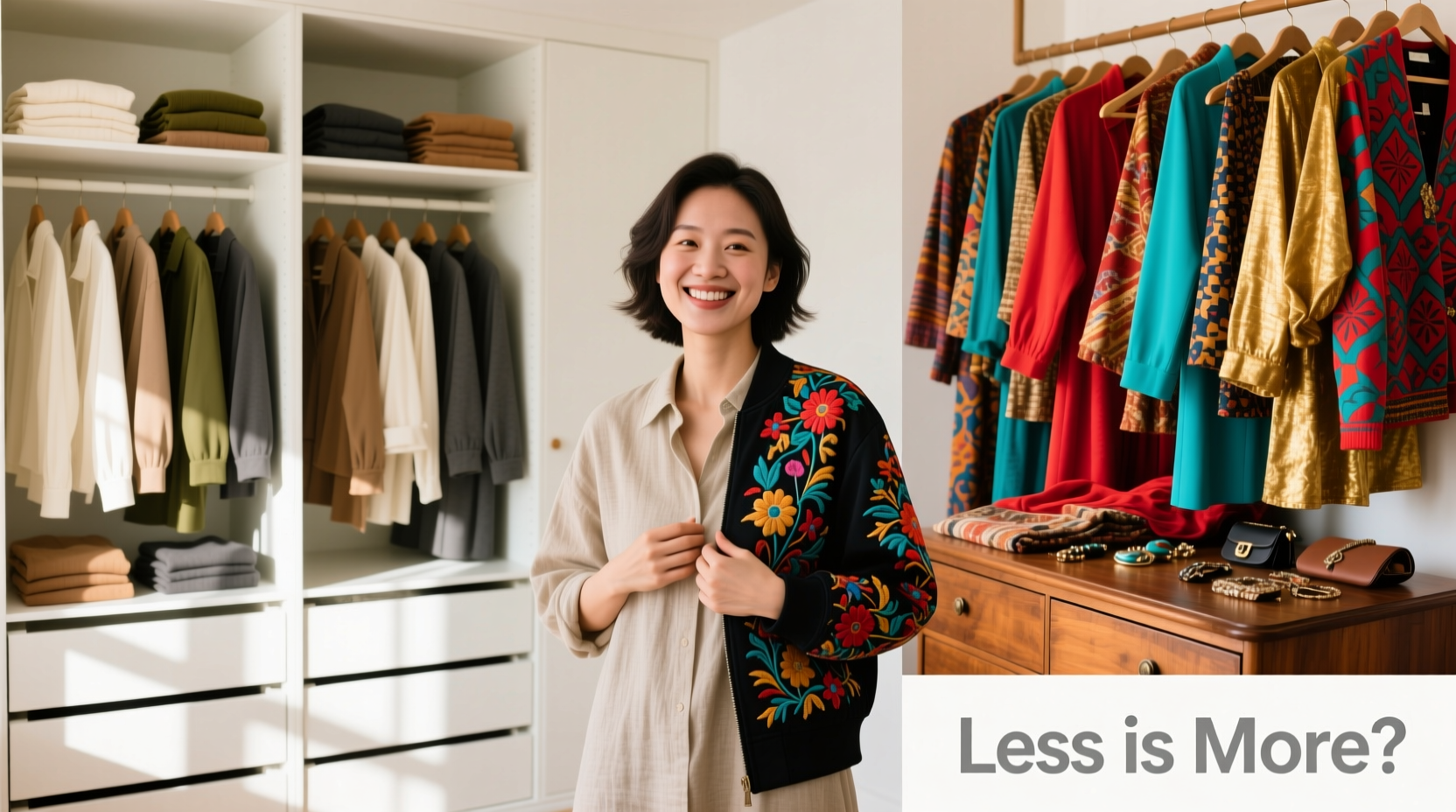
The term \"capsule wardrobe\" was popularized in the 1970s by London boutique owner Susie Faux and later embraced by designer Donna Karan, who introduced her iconic “Seven Easy Pieces” concept. A capsule wardrobe typically consists of 30–40 high-quality, interchangeable garments that reflect a person’s lifestyle and personal style. These pieces are chosen for versatility, durability, and timeless appeal — think tailored blazers, neutral-toned trousers, classic tees, and a few statement accessories.
What began as a fashion-forward idea has evolved into a lifestyle movement rooted in intentionality. Advocates argue that reducing wardrobe size eliminates excess, reduces environmental impact, and frees up mental energy. Unlike seasonal shopping sprees driven by trend-chasing, building a capsule encourages thoughtful consumption. Each item earns its place through utility and emotional resonance.
Tip: Start small — create a mini capsule for work or weekends before overhauling your entire closet.Maximalism: More Is More
On the opposite end of the spectrum is maximalism — a bold, expressive approach to fashion defined by layering, color, pattern mixing, and abundant choices. Maximalists celebrate individuality, creativity, and self-expression through clothing. Their closets often burst with unique finds, vintage treasures, and one-of-a-kind pieces collected over years.
This style thrives on spontaneity and joy. For many, putting on an outfit is an act of performance, a way to communicate identity or shift mood. A sequined jacket worn to the grocery store? Perfectly valid. Neon socks paired with floral pants? Celebrated. Maximalism resists minimalism’s constraints, arguing that rules around simplicity can feel restrictive or even elitist.
Yet, despite its vibrancy, maximalism comes with trade-offs. The sheer volume of options can lead to decision paralysis. It’s common for maximalists to overlook beloved pieces buried under layers of rarely worn garments. Maintenance increases too — delicate fabrics, intricate designs, and frequent washing cycles demand more time and care.
“Clothing should be joyful, but when joy requires constant curation and cleaning, it stops being freeing.” — Dr. Lena Torres, Behavioral Psychologist specializing in consumer habits
Capsule vs. Maximalist: A Practical Comparison
| Aspect | Capsule Wardrobe | Maximalist Style |
|---|---|---|
| Number of Items | 30–50 core pieces | 100+ frequently rotated items |
| Style Focus | Timeless, functional, cohesive | Bold, eclectic, expressive |
| Morning Routine | Faster decisions, less stress | Longer selection, creative exploration |
| Storage Needs | Compact, organized space | Larger closets, extra storage bins |
| Environmental Impact | Lower consumption, longer garment life | Higher turnover, potential waste |
| Mental Load | Reduced decision fatigue | Potential overwhelm from excess |
This comparison isn’t about declaring one style superior. Instead, it highlights how each impacts daily life. Capsule wardrobes prioritize ease and sustainability; maximalist wardrobes emphasize freedom and flair. But when evaluating long-term happiness, research increasingly supports the benefits of simplicity.
The Psychology of Owning Fewer Clothes
Why might wearing fewer clothes make someone happier? The answer lies in cognitive science. Psychologists have long studied the phenomenon of “choice overload,” where an abundance of options leads to anxiety, dissatisfaction, and indecision. A 2004 study published in the Journal of Consumer Research found that participants offered six jam varieties were more likely to make a purchase than those presented with 24 options — and they reported greater satisfaction afterward.
The same principle applies to dressing. Every morning, we face micro-decisions: shoes, shirts, layers, accessories. Multiply that by seven days a week, and the cumulative effect is significant. Reducing wardrobe complexity doesn’t stifle creativity — it redirects mental energy toward more meaningful pursuits.
Additionally, clutter has been linked to elevated cortisol levels, the hormone associated with stress. A 2019 UCLA study on middle-class American families revealed that mothers who described their homes as cluttered had higher cortisol throughout the day. While the study focused on general household mess, clothing is often the largest contributor to visual chaos in bedrooms and closets.
By contrast, a streamlined wardrobe promotes order. Seeing every item clearly, knowing where everything belongs, and trusting that combinations work reduces friction. This sense of control fosters emotional stability and daily confidence.
A Real-Life Shift: From Chaos to Clarity
Consider Sarah, a 34-year-old graphic designer based in Portland. For years, she embraced maximalist fashion — collecting vintage dresses, bold prints, and limited-edition sneakers. Her closet overflowed, with stacks of clothes on chairs and drawers crammed shut. Despite loving fashion, getting dressed felt like a chore. She’d spend 20 minutes each morning pulling out options, only to settle on the same black jeans and sweater.
After reading about capsule wardrobes, Sarah decided to experiment. Over one weekend, she culled her wardrobe down to 38 pieces: five tops, four bottoms, two dresses, a coat, a blazer, and a rotating set of shoes and accessories. Everything mixed and matched. Within a week, she noticed changes. Mornings became quicker and calmer. She stopped dreading laundry because folding took five minutes. Most surprisingly, she felt more confident — not because she looked different, but because she wasn’t battling her environment.
Sarah didn’t abandon her love of expression. Instead, she channeled it into styling: scarves, jewelry, and intentional layering brought variety without clutter. “I thought I needed more to feel seen,” she said. “But now I realize I feel more like myself when I’m not fighting my closet.”
How to Build a Sustainable Capsule (Even If You Love Color)
Building a capsule doesn’t mean sacrificing personality. The key is balance: anchor your wardrobe in neutrals and textures, then add pops of color and pattern through accessories or seasonal swaps. Follow this step-by-step process to create a functional, joyful capsule.
- Assess Your Lifestyle: What do you do most days? Work from home? Commute? Attend meetings? Dress for kids’ activities? List your top three daily contexts.
- Inventory Current Wardrobe: Pull everything out. Try on each piece. Keep only what fits, flatters, and feels good to wear.
- Define a Color Palette: Choose 2–3 neutral bases (e.g., navy, beige, gray) and 2–3 accent colors (e.g., rust, emerald, mustard). Ensure all colors coordinate.
- Select Core Pieces: Aim for mix-and-match essentials — e.g., a white button-down, dark wash jeans, a black blazer, a midi skirt, a turtleneck.
- Add Seasonal Layers: Include weather-appropriate items like a trench coat, wool sweater, or linen shirt. Rotate these twice a year.
- Limit Accessories: Pick 3–5 versatile bags, 2–3 pairs of shoes, and a handful of jewelry pieces that enhance multiple outfits.
- Set a Review Schedule: Reassess every 3–6 months. Remove worn-out items and consider one intentional addition if needed.
Can Maximalists Benefit from Minimalist Habits?
Absolutely. You don’t have to choose sides. Many maximalists adopt minimalist practices behind the scenes — organizing by color, using drawer dividers, or rotating seasonal displays — to manage abundance without chaos. The goal isn’t to eliminate self-expression but to make it sustainable.
One effective hybrid model is the “curated maximalism” approach: maintain a larger wardrobe, but rotate it in and out of storage in curated batches. For example, keep 40–50 items accessible at a time, stored neatly, while storing the rest in labeled bins. Every season, swap in new combinations. This gives the thrill of novelty without daily overwhelm.
The underlying principle remains the same: intentionality. Whether you own 40 or 140 pieces, what matters is whether your clothes serve you — not whether they merely exist.
FAQ: Common Questions About Capsule Wardrobes
Isn’t a capsule wardrobe boring?
Not if it reflects your true style. Boredom often stems from wearing clothes that don’t align with your identity. A well-designed capsule includes pieces you genuinely love and feel great in. With smart accessorizing, the same blazer and jeans can look entirely different across three seasons.
Can I still shop for fun if I have a capsule?
Yes — but differently. Instead of impulse buys, shopping becomes purposeful. You ask: “Does this complement my existing pieces?” “Will I wear this at least 30 times?” This shift turns shopping into a rewarding hunt for quality, rather than a fleeting dopamine hit.
What if my job requires varied outfits?
Many professionals successfully use capsule wardrobes. The trick is versatility. A silk blouse works for client meetings and evenings out. Dark trousers pair with sneakers or heels. Build around adaptable fabrics and cuts, and focus on subtle changes in styling to signal context shifts.
Action Plan: Start Your Journey Toward Wardrobe Wellness
Regardless of your preferred aesthetic, the path to wardrobe-related happiness begins with awareness. Use this checklist to assess and improve your relationship with clothing.
- ✅ Spend 15 minutes observing your current routine: How long does dressing take? Do you feel stressed or inspired?
- ✅ Empty your closet and sort items into three piles: Keep, Donate, Maybe.
- ✅ Identify your five most-worn, most-loved items. What do they have in common? Fit? Color? Fabric? Use these insights to guide future choices.
- ✅ Define a realistic capsule size based on your lifestyle (e.g., 30 pieces for remote work, 45 for office commutes).
- ✅ Organize remaining clothes with clear visibility — use matching hangers, shelf dividers, or labeled bins.
- ✅ Commit to a 30-day challenge: Wear only your selected capsule. Track how you feel each morning.
“We don’t need more clothes. We need more meaning in what we wear.” — Orsola de Castro, Fashion Activist and Co-Founder of Extinction Rebellion Fashion
Conclusion: Choose Intention, Not Just Inventory
The debate between capsule wardrobes and maximalist style isn’t truly about quantity — it’s about quality of experience. Owning fewer clothes doesn’t guarantee happiness, but owning the right clothes with clarity and purpose can significantly improve your daily life. It reduces noise, conserves energy, and creates space — both physically and mentally — for what truly matters.
You don’t have to burn your sequins or sell your sneakers. But consider this: What if your wardrobe could support you instead of weigh you down? What if getting dressed became a moment of ease, not exhaustion? Happiness often hides in the small repetitions of life — and how we start our mornings shapes how we move through the world.
🚀 Ready to simplify your mornings and deepen your connection to your clothes? Begin today: open your closet, remove five items you haven’t worn in six months, and notice how the space breathes. Share your journey in the comments — your story might inspire someone else to unburden theirs.








