In a world of fast fashion and overflowing closets, the idea of owning just 20 clothing items may seem extreme. Yet, for thousands embracing minimalism, it’s not only possible—it’s liberating. A capsule wardrobe isn’t about deprivation; it’s about intentionality. By curating a small collection of high-quality, versatile pieces, you reduce decision fatigue, save money, and always feel put together. This guide walks you through building a fully functional 20-item capsule wardrobe—complete with a step-by-step checklist, real-life example, and expert insights.
Why Limit Yourself to 20 Items?
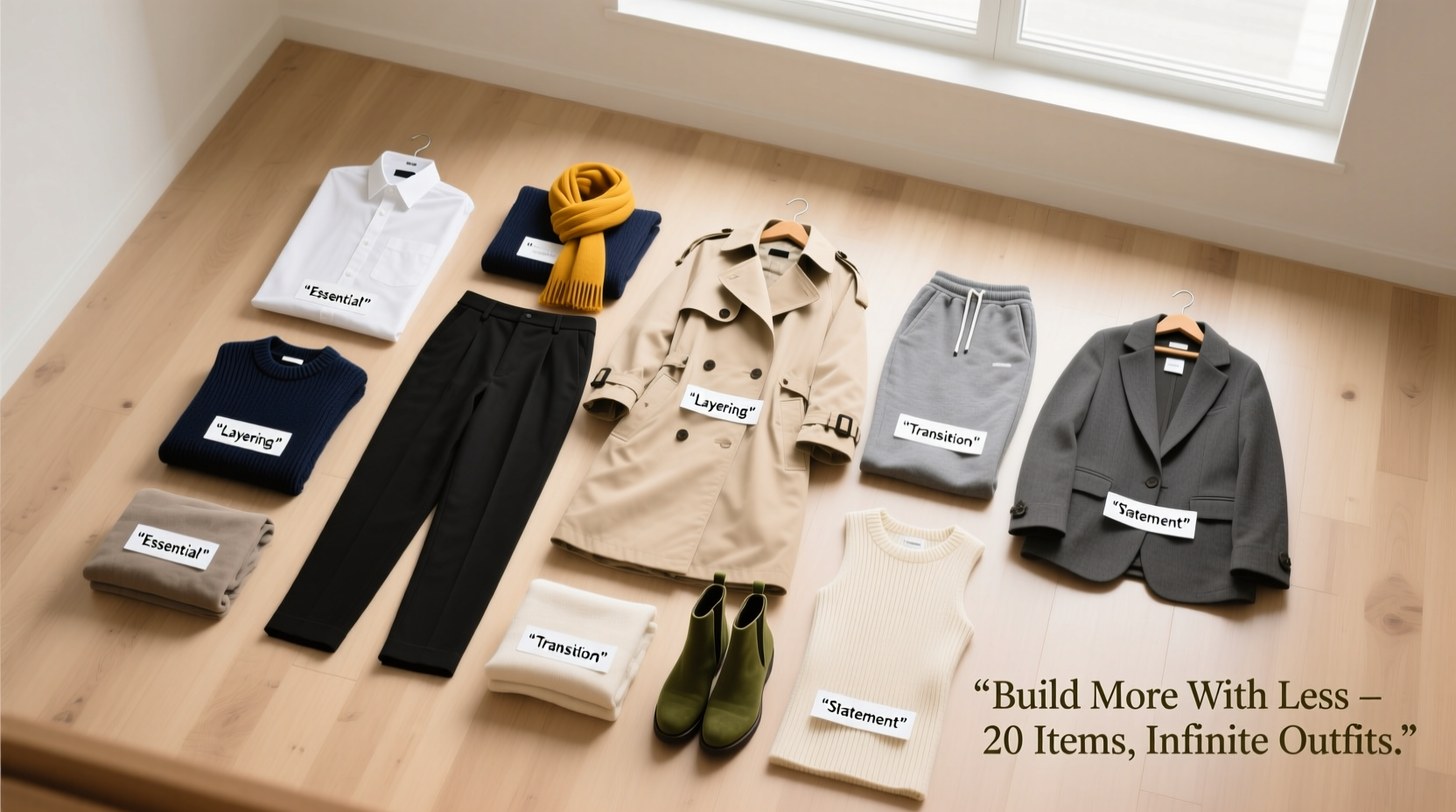
The number 20 is not arbitrary. It strikes a balance between variety and simplicity. With 20 well-chosen pieces, you can create dozens of outfits suitable for work, weekends, and even semi-formal events. The goal is to eliminate redundancy—no more “I have nothing to wear” moments despite a packed closet.
A minimalist approach forces you to evaluate what you truly wear versus what merely takes up space. According to a study by the Cornell University Fashion & Apparel Design program, the average person wears only 20% of their wardrobe 80% of the time. A 20-item limit aligns perfectly with that statistic, allowing you to focus on quality, fit, and compatibility.
“Minimalism in fashion isn’t about having less for the sake of it. It’s about making room for more of what matters—confidence, clarity, and comfort.” — Sarah Thornton, Sociologist and Author of *The Sociology of Style*
Step-by-Step Guide to Building Your 20-Item Capsule Wardrobe
Building a capsule wardrobe takes planning, honesty, and a few strategic decisions. Follow this six-phase timeline to transition smoothly into a streamlined closet.
- Phase 1: Audit Your Current Wardrobe (Week 1)
Remove everything from your closet. Try on each piece. Keep only what fits well, feels comfortable, and reflects your current lifestyle. Donate or sell the rest. - Phase 2: Define Your Personal Style (Week 2)
Identify your go-to colors, silhouettes, and fabrics. Use Pinterest or a physical mood board to visualize your ideal aesthetic. Are you leaning toward minimalist chic, professional elegance, or relaxed casual? - Phase 3: Establish a Color Palette (Week 2)
Choose a cohesive color scheme—typically 1–2 neutrals (black, navy, beige) and 2–3 accent colors. This ensures every item mixes and matches effortlessly. - Phase 4: Select Core Pieces (Week 3)
Begin assembling your 20 items based on versatility and necessity. Prioritize timeless staples over trend-driven pieces. - Phase 5: Fill Gaps Strategically (Week 4)
Purchase missing essentials mindfully. Avoid impulse buys. Stick to your list and budget. - Phase 6: Maintain and Rotate (Ongoing)
Reassess every 3–6 months. Swap out seasonal items like a winter coat or sandals, but keep the core structure intact.
Capsule Wardrobe Checklist: The 20 Essential Items
Your 20 items should cover all aspects of daily life—work, leisure, and occasional outings. Below is a balanced checklist suitable for temperate climates and urban lifestyles. Adjust slightly based on your region or profession.
| Category | Items | Notes |
|---|---|---|
| Top Basics (5) | White T-shirt, Black T-shirt, Striped Breton top, Button-down shirt (white), Roll-neck sweater | All should be neutral and layerable |
| Bottoms (4) | Dark jeans, Black trousers, Chinos (beige), Midi skirt (navy) | Versatile cuts; avoid overly trendy styles |
| Dresses/Jumpsuits (2) | LBD (Little Black Dress), Linen jumpsuit | One formal, one casual |
| Outerwear (3) | Trench coat, Blazer, Denim jacket | Mix of structured and casual layers |
| Shoes (4) | White sneakers, Black ankle boots, Loafers, Sandals | Comfort + style; all in neutral tones |
| Accessories (2) | Silk scarf, Leather tote bag | Elevate any outfit without adding bulk |
This distribution ensures coverage across occasions while maintaining cohesion. Each piece should pair with at least three others. For example, the white button-down works with jeans, trousers, the skirt, and under the blazer.
Tip: Invest in natural fabrics like cotton, wool, and linen—they age better and breathe easier than synthetics.Real-Life Example: How Maya Built Her 20-Piece Wardrobe
Maya, a 34-year-old project manager in Portland, spent years cycling through fast-fashion trends. Her closet held 80+ items, yet she felt perpetually underdressed. After reading about capsule wardrobes, she decided to try the 20-item challenge.
She started by removing everything and sorting items into “keep,” “maybe,” and “discard.” Only 12 pieces made the cut: a black blazer, dark jeans, a white blouse, a turtleneck, and a few shoes. She then identified gaps—she lacked a proper coat and had no summer-appropriate dress.
Over two weeks, she purchased three high-quality additions: a camel trench coat, a navy wrap dress, and beige chinos. She kept her favorite leather tote and added a silk scarf for visual interest. The final count: 20 items.
Three months later, Maya reports spending 70% less on clothes, getting ready faster, and feeling more confident. “I’m not choosing between 10 black tops—I have one perfect one,” she says. “It’s surprisingly freeing.”
Do’s and Don’ts of Capsule Wardrobe Building
Avoid common pitfalls that derail even the best intentions. Use this table as a quick reference when selecting or replacing items.
| Do’s | Don’ts |
|---|---|
| Choose items that can be dressed up or down | Keep pieces that only work for one occasion |
| Ensure every item coordinates with at least 3 others | Add something just because it’s on sale |
| Opt for classic silhouettes over trendy cuts | Select garments that require special care unless you’re committed to it |
| Include one statement piece (e.g., patterned scarf) | Overload on variations of the same item (e.g., five similar tees) |
| Test mix-and-match potential before buying | Ignore fit—ill-fitting clothes ruin an outfit, no matter the quality |
“The most stylish women I know don’t have the biggest closets. They have the clearest edit.” — Emily Schuman, Stylist and Founder of Cupcakes and Cashmere
Frequently Asked Questions
Can I include workout clothes in my 20 items?
It depends on your lifestyle. If you work from home or exercise daily, consider including 1–2 activewear pieces. However, many prefer to keep gym clothes separate to preserve the capsule’s formal-cohesive nature. If included, choose sleek, neutral-toned leggings and a matching top that can double as casual wear.
What about seasonal changes? Can I swap items?
Absolutely. The 20-item rule is designed to be flexible. You can rotate in seasonal pieces—like a puffer jacket in winter or a linen shirt in summer—as long as only 20 are active at once. Store off-season items properly to maintain quality.
How do I handle special events like weddings or interviews?
Your capsule should cover 90% of your needs. For rare occasions, maintain a small “occasion drawer” outside the 20-item system. Rent, borrow, or keep one dressy outfit separately. The goal is daily functionality—not eliminating all extras.
Final Tips for Long-Term Success
A capsule wardrobe is not a one-time project. It’s a lifestyle shift that requires maintenance and mindfulness. Here are four strategies to keep it working for you:
- Adopt a one-in, one-out rule. Every time you add a new piece, remove one. This prevents gradual clutter creep.
- Track your wear frequency. Use a simple app or journal to note what you wear weekly. If an item hasn’t been worn in 60 days, reconsider its place.
- Wash clothes properly. Follow care labels, air out instead of washing when possible, and store folded knits to preserve shape.
- Reassess your lifestyle annually. A job change, move, or new hobby may require wardrobe adjustments. Let your capsule evolve with you.
Conclusion: Start Simple, Stay Stylish
Building a functional capsule wardrobe with only 20 items is not about restriction—it’s about liberation. Liberation from indecision, from clutter, from the endless cycle of shopping and discarding. When you own fewer, better things, getting dressed becomes effortless, sustainable, and even joyful.
You don’t need to be a fashion influencer or live in a tiny apartment to benefit from this approach. Whether you're a busy parent, a remote worker, or a student, a curated closet saves time, reduces stress, and sharpens your personal style.
🚀 Ready to simplify your style? Pull out your closet contents this weekend, use the 20-item checklist, and build a wardrobe that works for you—not against you. Share your journey or ask questions in the comments below.