As more homeowners seek sustainable holiday lighting solutions, solar-powered Christmas lights have grown in popularity. But a common concern arises in regions where sunshine is scarce during winter: can solar chargers actually deliver enough energy to power outdoor Christmas lights when skies are frequently overcast? The short answer is yes — but with important caveats. Success depends on equipment quality, light efficiency, weather patterns, and smart system design. This article explores the feasibility, limitations, and best practices for using solar chargers in cloudy climates, backed by real-world insights and expert recommendations.
How Solar Chargers Work in Winter Conditions
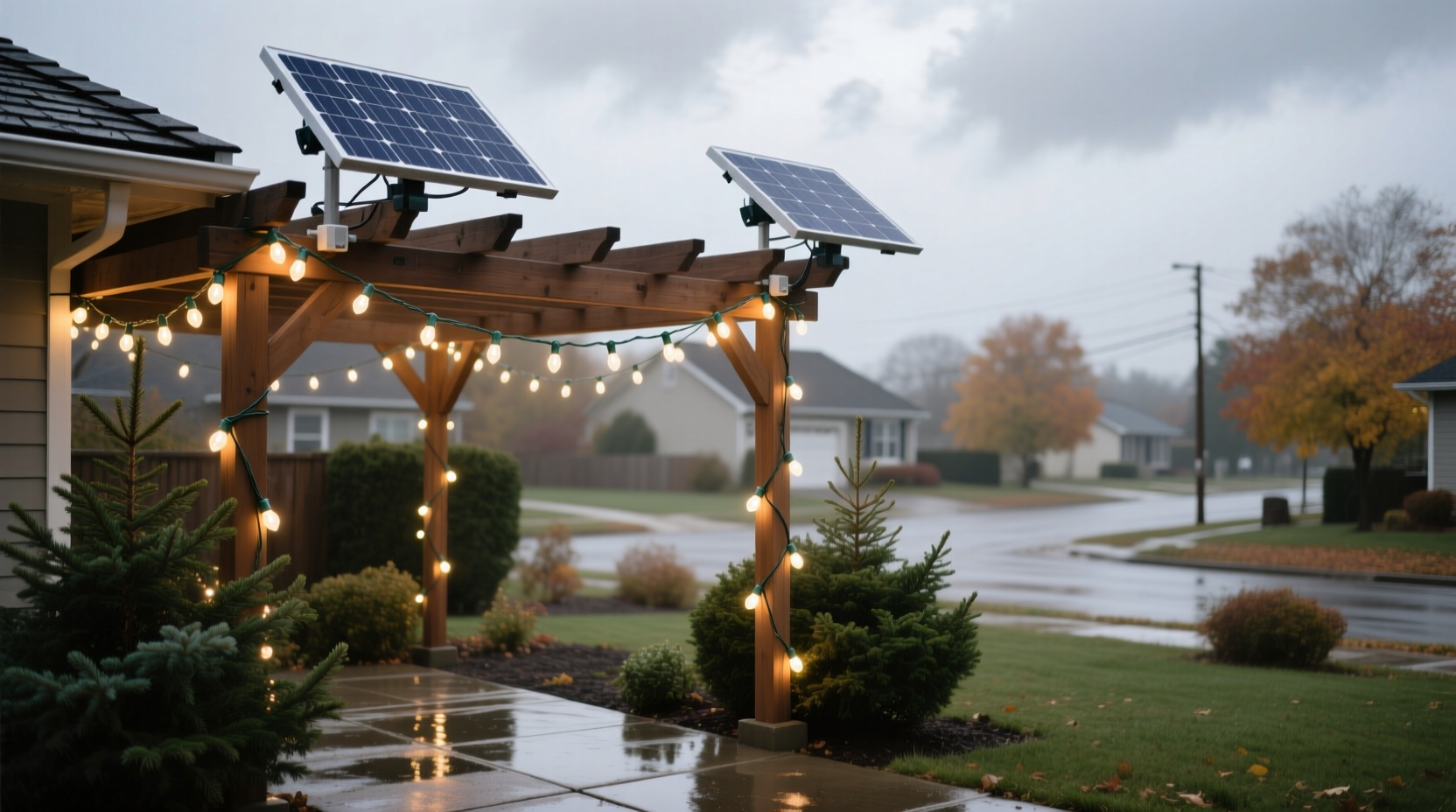
Solar chargers convert sunlight into electrical energy through photovoltaic (PV) cells. While peak efficiency occurs under direct sunlight, modern solar panels can still generate power from diffuse daylight — the kind that filters through cloud cover. However, output drops significantly depending on cloud thickness and daylight duration.
In northern latitudes or maritime climates like the Pacific Northwest, UK, or Scandinavia, December daylight may last only 6–8 hours, with much of it under gray skies. During such conditions, a typical solar panel might produce just 10% to 25% of its rated capacity. For example, a 20-watt solar panel receiving full sun generates about 100 watt-hours per day. Under heavy overcast, that could fall to 20–30 watt-hours — barely enough to power even modest LED string lights for a few hours at night.
Still, advancements in low-light solar technology and ultra-efficient LEDs have made solar-powered holiday lighting more viable than ever — even in less-than-ideal conditions.
Tip: Position your solar panel to face true south (in the Northern Hemisphere) and tilt it at an angle equal to your latitude plus 15 degrees to maximize winter sun exposure.Matching Solar Output to Light Demand
The key to success lies in aligning your lighting load with available solar input. Most outdoor Christmas lights today use LED bulbs, which consume far less power than traditional incandescent models. A standard 100-light LED string typically uses 4–6 watts and runs for 6–8 hours per night, requiring 24–48 watt-hours daily.
To sustain this with solar power in a cloudy climate, your system must reliably charge a battery during limited daylight. This requires three components: a sufficiently sized solar panel, a high-capacity rechargeable battery, and efficient lights.
“Even under overcast skies, modern monocrystalline solar panels can harvest usable energy if properly oriented and kept free of snow. Pair them with low-consumption LEDs, and solar holiday lighting becomes feasible across much of temperate Europe and North America.” — Dr. Lena Torres, Renewable Energy Engineer, University of British Columbia
Essential Components of a Reliable Solar Lighting System
- Solar Panel: Monocrystalline panels offer the highest efficiency in low-light conditions. Look for models labeled “low-light optimized” or “winter-ready.”
- Battery Storage: Lithium-ion or LiFePO4 batteries provide better discharge rates and longer lifespans than older NiMH types. Capacity should exceed nightly usage by at least 50% to account for multi-day cloud cover.
- LED Lights: Choose lights rated under 0.5 watts per bulb. Warm white LEDs (2700K–3000K) often draw slightly more power than cool white but are preferred for ambiance.
- Charge Controller: A built-in MPPT (Maximum Power Point Tracking) controller improves energy harvesting by up to 30% in variable light.
Practical Strategies for Cloudy Climate Performance
Success in overcast environments isn’t guaranteed by hardware alone. Smart planning and operational habits make the difference between flickering lights and a steady holiday glow.
1. Optimize Panel Placement
Mount the solar panel where it receives the maximum possible daylight — ideally on a roof, fence post, or pole free from shadows cast by trees or buildings. Even partial shading can cut output by half. Avoid placing panels near reflective snow unless they’re designed to handle glare, as snow can cause hotspots or reduce efficiency due to reflected diffuse light.
2. Use Multiple Panels or Supplemental Charging
In persistently cloudy areas, consider connecting two smaller panels in parallel or using a larger single panel (e.g., 30–50 watts) to increase daily yield. Some systems allow USB or AC charging backup, letting you top off the battery during prolonged dark spells.
3. Reduce Runtime and Brightness
Most solar light controllers let you set timers (e.g., 4, 6, or 8 hours) or activate dusk-to-dawn modes. Shorter runtimes preserve battery life. Alternatively, use brightness dimming features if available. Running lights at 50% brightness can double runtime without sacrificing visual appeal.
4. Maintain Clean Surfaces
Snow, dirt, and frost block sunlight. Wipe panels gently with a soft cloth after storms. If snow accumulates, brush it off with a non-abrasive tool. Never use sharp objects or harsh chemicals.
Tip: Install panels at a steeper tilt in winter to encourage snow shedding and improve low-angle sun capture.Step-by-Step Guide: Setting Up Solar Christmas Lights in a Cloudy Region
- Evaluate Your Location: Track average December sunlight hours and cloud cover frequency using tools like PVWatts Calculator or local weather stations.
- Select Efficient Lights: Choose LED strings with total consumption under 6 watts per 100 bulbs. Prefer models with memory wire or remote controls powered separately.
- Choose a High-Capacity Solar Charger: Pick a system with at least 30 watts of monocrystalline solar input and a 10,000mAh+ lithium battery.
- Install the Panel Early: Mount the panel by late November to test performance before peak demand. Ensure it faces south (north in Southern Hemisphere) and is angled optimally.
- Test Before Decorating: Run a full charge-discharge cycle to confirm the lights stay on for your desired duration.
- Monitor and Adjust: Check performance weekly. If lights dim early, shorten runtime or clean the panel.
- Have a Backup Plan: Keep a spare charged power bank or access to grid power in case of extended overcast periods.
Real-World Example: Solar Lights in Coastal Ireland
In County Kerry, Ireland — known for its frequent rain and overcast skies — homeowner Aoife Ní Mhaoláin decided to switch her front garden lighting to solar for the 2023 holiday season. Her location averages just 1.8 hours of bright sunshine per day in December.
Aoife invested in a dual-panel solar setup (2 x 20W monocrystalline) connected to a central 12,000mAh LiFePO4 battery hub. She powered three strands of warm-white micro-LED lights (totaling 14 watts) set to run for six hours each night.
During a week of continuous cloud cover, the lights remained functional but dimmed slightly in the final hour. By reducing runtime to five hours and clearing morning frost from the panels, she maintained consistent performance throughout the season. On rare sunny days, the system fully recharged within nine hours despite short daylight.
Her experience shows that while solar isn’t foolproof in such climates, careful planning enables reliable results.
Do’s and Don’ts: Solar Christmas Lighting in Overcast Areas
| Do | Don't |
|---|---|
| Use high-efficiency monocrystalline solar panels | Use thin-film or amorphous panels in low-light zones |
| Pair lights with large-capacity lithium batteries | Rely on small integrated solar stakes for long light runs |
| Install panels at optimal tilt and orientation | Place panels under eaves or tree cover |
| Clean panels weekly during winter | Ignore snow or grime buildup |
| Limit runtime to match solar input | Expect 12-hour operation in Seattle in December |
FAQ: Solar Christmas Lights in Cloudy Climates
Can solar lights charge on cloudy days?
Yes, but at reduced efficiency. Modern solar panels generate 10% to 25% of their rated output under heavy clouds. Light diffuses through the atmosphere and still reaches the cells, though charging takes longer.
What happens if it’s cloudy for several days in a row?
Most solar systems include battery buffers designed to last 1–3 nights. Beyond that, lights may dim or shut off. Systems with hybrid charging (solar + USB/AC) offer resilience during prolonged overcast periods.
Are there solar Christmas lights specifically for cold, cloudy regions?
While no lights are marketed exclusively for “cloudy climates,” look for models emphasizing “all-weather performance,” “low-light charging,” or “extended battery life.” Brands like Renogy, Jackery, and EcoFlow offer robust outdoor solar solutions suitable for winter use.
Expert Tips for Maximizing Reliability
- Pre-charge batteries: Fully charge all units indoors before first deployment to ensure immediate operation.
- Use modular systems: Instead of one long chain, power multiple short strands from separate solar hubs to isolate failures.
- Track performance: Note daily on/off times and weather to identify patterns and adjust settings accordingly.
- Consider hybrid setups: Some solar string lights allow plugging into a wall outlet when needed — giving you the best of both worlds.
“In renewable energy, reliability isn’t about perfect conditions — it’s about designing for imperfection. A well-planned solar lighting system anticipates cloudy days and builds in margins.” — Mark Chen, Off-Grid Systems Designer, SolarEdge Technologies
Conclusion: A Sustainable Sparkle, Even in the Gray
Using solar chargers to power outdoor Christmas lights in cloudy climates is not only possible — it’s increasingly practical. While you won’t achieve the same consistency as in sun-drenched regions, strategic choices in equipment, placement, and usage can deliver beautiful, eco-friendly holiday displays without relying on the grid.
The key is managing expectations and designing for resilience. Prioritize efficiency, oversize your solar input, maintain your gear, and be ready to adapt. With these steps, even residents of Glasgow, Portland, or Reykjavik can enjoy twinkling, solar-powered nights during the festive season.
🚀 Ready to go solar this holiday season? Start by auditing your current lights, measuring your yard’s sun exposure, and investing in one high-quality solar setup. Share your journey or ask questions in the comments — let’s build a greener Christmas together.