Hanging Christmas lights can transform a home into a winter wonderland, but choosing the right method to secure them—especially heavier strands—is critical. Many homeowners turn to Command hooks for their convenience and damage-free removal, but when it comes to supporting the weight of dense or extended light strands, questions arise: Can they handle the load? Will they stay put through wind, rain, or temperature changes? This article dives deep into the structural capabilities of Command hooks, the risks involved with using them for heavy-duty lighting, and what alternatives offer more reliable support.
Understanding Command Hook Weight Limits
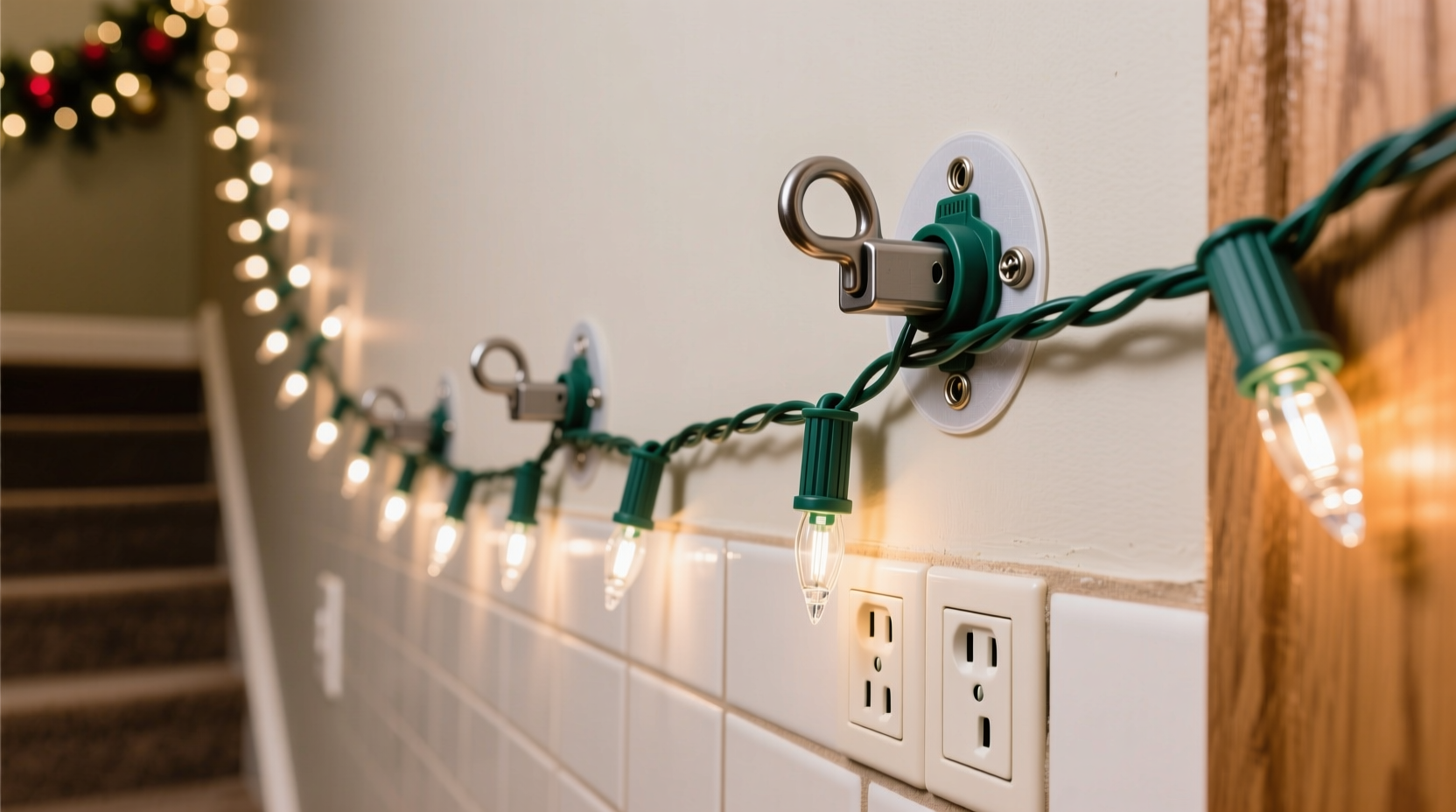
Command hooks are designed for lightweight items such as towels, keys, or picture frames. Their adhesive backing bonds securely to clean, smooth surfaces like painted drywall, tile, glass, and wood. However, their load-bearing capacity varies significantly by size and style. For example:
| Hook Type | Maximum Weight Capacity | Best Use Case |
|---|---|---|
| Small Clear Hook | 1 pound (0.45 kg) | Keys, lightweight ornaments |
| Medium Decorative Hook | 2–3 pounds (0.9–1.4 kg) | Wreaths, garlands |
| Jumbo Hook | 7.5 pounds (3.4 kg) | Larger decorations, bundled cords |
| Metal Wire Hook | Up to 4 pounds (1.8 kg) | Outdoor use in mild conditions |
Most standard Christmas light strands—especially incandescent or commercial-grade LED sets—can weigh between 1.5 to 5 pounds per 100-light section, particularly when multiple strands are linked. When draped along eaves, windows, or across large wall areas, the cumulative strain increases due to gravity, sagging, and environmental stressors. If the total weight exceeds the hook’s rated limit, even slightly, failure is likely over time.
Tip: Always check the packaging of your Command hook for exact weight specifications—and never exceed the stated limit, even if the item seems stable at first.When Command Hooks Fail: Real-World Risks
A decorative disaster isn’t just inconvenient—it can be dangerous. A falling strand of Christmas lights may short-circuit, especially if exposed to moisture, creating fire hazards or tripping risks. More importantly, repeated stress on the adhesive bond can cause the hook to pull away from the wall, potentially taking paint or drywall paper with it despite the product’s “damage-free” claims.
The risk escalates in seasonal climates. Temperature fluctuations cause materials to expand and contract. Cold weather stiffens adhesives, reducing their flexibility and grip. In humid environments, condensation weakens the bond over time. Outdoor installations face additional challenges from wind, which adds lateral force that peel-style adhesives aren’t engineered to resist.
“Adhesive hooks rely on consistent surface contact. Any movement—even slight swaying from wind—creates micro-shifts that degrade the bond over days or weeks.” — Daniel Reeves, Structural Adhesive Engineer
While some users report success hanging moderate light strings with jumbo Command hooks, these anecdotes often overlook long-term performance. A hook that holds firm in December may fail in January under accumulated stress, leading to unexpected detachment.
Step-by-Step Guide: Safer Alternatives for Heavy Light Strands
If your Christmas light display includes longer runs, icicle lights, or commercial-grade strands, consider this proven sequence for secure installation without risking wall damage or electrical hazards.
- Assess Total Weight: Add up the weight of all connected strands. Check manufacturer specs—many list weight per 25 or 100 lights. Include clips, connectors, and extension cords.
- Evaluate Surface Type: Smooth stucco, brick, vinyl siding, and rough plaster don’t provide ideal bonding surfaces for adhesive hooks. Painted drywall indoors fares better but still has limitations.
- Choose the Right Support System:
- For outdoor walls: Use plastic gutter clips, shingle tabs, or siding hooks specifically designed for Christmas lights.
- For indoor walls: Consider removable adhesive strips with higher shear strength (like 3M Dual Lock) or low-profile mounting brackets.
- For long horizontal runs: Install a thin aluminum track or wire line supported by discreet screws every 18–24 inches.
- Use Proper Spacing: Distribute weight evenly. Place supports every 12–18 inches for heavy strands to prevent sagging.
- Test Before Finalizing: Hang the full strand and observe for 48 hours. Look for signs of drooping, peeling, or shifting—especially after temperature changes.
Mini Case Study: The Front Porch Display That Almost Went Dark
In suburban Denver, homeowner Lisa Tran decorated her two-story colonial with 12 interconnected strands of LED Christmas lights totaling nearly 1,200 bulbs. Wanting to avoid drilling holes, she used six jumbo Command hooks rated for 7.5 pounds each, spaced along the second-floor fascia. Initially, the setup held well. But after a week of freeze-thaw cycles and nighttime winds exceeding 20 mph, three hooks detached overnight.
The falling lights tangled in bushes and one end landed near an exterior outlet. Though no fire occurred, the incident prompted Lisa to reevaluate her approach. She replaced the Command hooks with plastic shingle clips—designed to slide under roof shingles and grip light wires—which have remained secure through three subsequent winters. “I saved $20 by skipping the right tools,” she said, “but nearly cost myself a lot more in repairs or worse.”
Do’s and Don’ts: Using Hooks for Holiday Lighting
| Do | Don't |
|---|---|
| Use jumbo or outdoor-rated Command products for moderate loads | Exceed the listed weight limit, even by a few ounces |
| Clean the wall surface thoroughly before applying | Install in extreme cold (<32°F/0°C); wait until temps rise |
| Pair hooks with lighter LED mini-lights instead of older C7/C9 bulbs | Use on textured, dirty, or greasy walls |
| Combine adhesive hooks with support lines for long spans | Rely solely on adhesive for multi-strand connections |
| Inspect weekly during the season for loosening | Leave installed beyond recommended removal window (max 6 months) |
Expert Recommendations for Damage-Free Hanging
Not all no-drill solutions are created equal. While Command hooks remain popular, professionals in holiday lighting design often recommend hybrid systems that balance safety and surface protection.
“For clients who insist on zero-damage installations, we use a combination of high-tack adhesive pads and tension-based suspension lines. It’s not about eliminating hardware—it’s about redistributing force so no single point bears too much load.” — Marcus Lin, Professional Holiday Lighting Designer
One emerging solution is magnetic mounting systems for metal gutters or railings. Another is reusable silicone clamps that grip edges without adhesives. These options bypass wall contact entirely, making them ideal for renters or historic homes with preservation rules.
For interior applications, consider crown molding or baseboard corners as anchor points. Small, clear plastic clips can be temporarily glued or taped in place and removed easily post-holiday. The key is matching the mounting method to both the decoration’s weight and the wall’s integrity.
Frequently Asked Questions
Can I use multiple Command hooks to split the weight of one light strand?
Yes, but only if each hook is independently rated to support its portion of the load. For example, a 6-pound strand should only be hung with at least two jumbo hooks (each supporting ≤3.4 kg / ~7.5 lbs). However, uneven weight distribution—such as sagging in the center—can overload central hooks, so spacing and tension matter.
Are there any Command products designed for outdoor Christmas lights?
Yes. 3M manufactures Command Outdoor Products, including large hooks and clip packs rated for sun, rain, and temperatures from -20°F to 125°F (-29°C to 52°C). These use UV-resistant adhesives and thicker backing. They’re among the most reliable adhesive options—but still limited to 7.5 pounds max. Always follow the 1-hour cure time rule before loading.
What happens if a Command hook pulls off paint?
Despite marketing claims, paint lifting can occur—especially with older, chalky, or poorly adhered finishes. If this happens, gently smooth loose edges with a fine brush and touch up with matching paint. To minimize risk, apply hooks to fully cured paint (at least 30 days old) and avoid high-gloss or latex varieties that don’t bond well with adhesives.
Final Checklist: Is Your Setup Safe?
- ✅ Weigh your complete light strand(s), including connectors and extensions
- ✅ Confirm your Command hook model’s maximum load rating
- ✅ Clean the wall with rubbing alcohol and let dry completely
- ✅ Apply in temperatures between 50°F and 100°F (10°C–38°C)
- ✅ Wait one hour before hanging lights
- ✅ Space hooks every 12–18 inches for heavy or long runs
- ✅ Inspect weekly for gaps, tilting, or separation
- ✅ Remove within six months to prevent adhesive degradation
Conclusion: Prioritize Safety Over Convenience
Command hooks have revolutionized temporary decor hanging, offering a simple, damage-free option for countless household uses. However, when it comes to heavy Christmas light strands on walls, their limitations must be respected. Exceeding weight ratings—even marginally—or using them in suboptimal conditions invites failure that could lead to damaged property, wasted effort, or safety risks.
The holidays are about joy, not emergency repairs. Take the extra time to assess your lighting needs, choose the appropriate mounting system, and install with care. Whether you opt for specialized clips, tension lines, or carefully placed fasteners, your display will shine brighter knowing it’s built to last through the season.
💬 Have a holiday decorating tip or a Command hook success story? Share your experience in the comments and help others light up safely!








