
Each holiday season, millions of cut Christmas trees are brought into homes, enjoyed for a few weeks, then discarded. But what if you could enjoy a living symbol of the season—one that returns year after year? The answer is yes: you can grow your own mini Christmas tree in a pot and reuse it annually. With proper selection, care, and seasonal planning, a potted evergreen can become a cherished tradition, reducing waste and deepening your connection to nature.
Unlike traditional cut trees, a potted mini Christmas tree has roots and remains alive. This means it can be displayed indoors during the holidays and then moved outdoors to continue growing. While it requires more attention than a cut tree, the long-term benefits—environmental, emotional, and even financial—are significant. Let’s explore how to make this sustainable holiday vision a reality.
Choosing the Right Tree Species
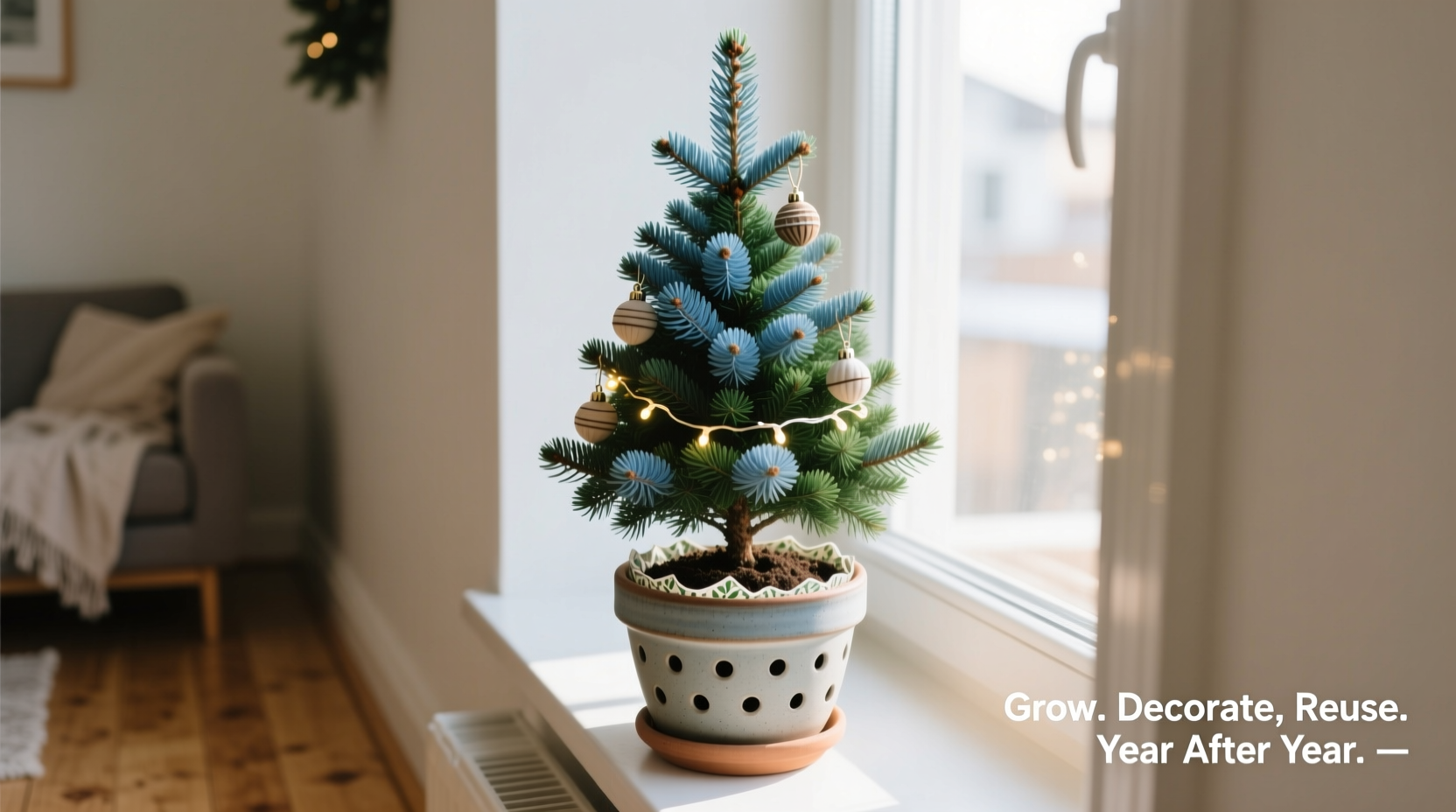
Not all evergreens thrive as potted mini Christmas trees. The key is selecting a species that adapts well to container life, tolerates indoor conditions temporarily, and suits your local climate when planted outdoors. Some popular and reliable choices include:
- Nordmann Fir (Abies nordmanniana): Known for its lush, soft needles and excellent needle retention, this species handles indoor warmth better than most firs.
- Blue Spruce (Picea pungens): Compact varieties like ‘Baby Blue’ or ‘Montgomery’ grow slowly and maintain a classic conical shape ideal for pots.
- Dwarf Alberta Spruce (Picea glauca 'Conica'): Naturally slow-growing and dense, this is one of the most popular choices for container cultivation.
- Eastern White Pine (Pinus strobus): A softer-needled pine that adapts reasonably well to containers if given enough root space.
Avoid species with aggressive growth habits or poor tolerance to temperature shifts, such as Scotch Pine or Norway Spruce, unless you live in a cold climate where they’re native and can be quickly reintegrated into outdoor conditions.
Tip: Always buy from a nursery that labels the tree as “container-grown” rather than “balled and burlapped,” which may have been dug from the ground and suffer greater transplant shock.Caring for Your Potted Tree Year-Round
The success of reusing a mini Christmas tree hinges on consistent care beyond the holiday display. Trees in pots are more vulnerable than those in the ground—they dry out faster, face temperature extremes at the root level, and require careful feeding.
Light and Temperature Needs
During the growing season (spring through fall), place your potted tree in full sun to partial shade, depending on the species. Most evergreens prefer at least 6 hours of direct sunlight daily. In summer, elevated container temperatures can damage roots, so avoid placing pots on hot surfaces like concrete patios. Elevate them on feet or stands to improve airflow.
In winter, once the holidays end, transition the tree to outdoor dormancy. Evergreens need a cold period to remain healthy. Do not keep them in heated garages or sunrooms all winter—that disrupts their natural cycle.
Watering Strategy
Container trees dry out faster than in-ground ones. Check soil moisture every 2–3 days during active growth. Water deeply when the top inch of soil feels dry. Avoid letting the pot sit in standing water, which leads to root rot.
During dormancy, reduce watering but don’t let the soil go completely bone-dry. Even in cold months, roots need minimal moisture. A good rule: water monthly if there’s no snow cover or rainfall.
Fertilization
Feed your tree once a year in early spring with a slow-release, balanced fertilizer (e.g., 10-10-10). Over-fertilizing causes weak growth and salt buildup in the soil. Organic options like compost tea or fish emulsion can also support steady development without burning tender roots.
“Potted evergreens are like long-term houseplants—they demand seasonal awareness. Neglect them in summer, and they won’t survive the next winter.” — Dr. Lena Whitmore, Arborist & Urban Forestry SpecialistStep-by-Step Guide: Reusing Your Mini Christmas Tree Annually
Reusing a potted Christmas tree isn’t just about bringing it inside for December. It’s a year-round commitment with specific phases. Follow this timeline to ensure longevity:
Tip: Never leave your potted tree indoors for more than 10 days. Extended warmth tricks it into breaking dormancy, making it vulnerable to cold shock when returned outside.
- Spring (March–May): Repot if Needed
Check root health. If roots circle tightly or emerge from drainage holes, repot into a container one size larger using well-draining potting mix with added pine bark.- Summer (June–August): Outdoor Growth Phase
Keep the tree outside in a sheltered spot. Rotate occasionally for even sun exposure. Monitor for pests like spider mites or aphids.- Fall (September–November): Prepare for Indoors
Gradually acclimate the tree to lower light by moving it to partial shade. Begin reducing water slightly to prepare for dormancy.- Winter (December): Indoor Display (Max 7–10 Days)
Bring inside only for the holiday week. Keep away from heat sources, limit lights to 4–6 hours daily, and mist foliage to combat dry air.- Post-Holiday (January): Reacclimate and Plant or Store
If planting permanently, do so before the ground freezes. Otherwise, store in an unheated garage or against a north-facing wall, mulching the pot heavily.Planting vs. Keeping in a Pot Long-Term
You have two options after the holiday season: plant the tree in your yard or keep it in the pot indefinitely. Each has pros and cons.
Option Pros Cons Plant in Yard Long-term growth potential; becomes landscape feature; reduced maintenance over time Limited by space and climate; requires proper site prep; not all species thrive in all soils Keep in Pot Portable; ideal for small yards or renters; easier to control environment Requires annual repotting; higher risk of drought and root stress; shorter lifespan without meticulous care If planting, choose a location with adequate future spacing—most dwarf spruces still reach 6–10 feet tall over decades. Dig a hole twice as wide as the root ball but no deeper. Backfill with native soil, water thoroughly, and mulch around the base (but not touching the trunk).
If keeping in a pot, plan to repot every 2–3 years. Trim circling roots gently and refresh the soil to prevent compaction and nutrient depletion.
Mini Case Study: The Thompson Family’s Living Tree Tradition
The Thompsons of Portland, Oregon, began growing a potted Nordmann fir in 2018 after learning about the environmental cost of cut trees. They selected a 3-foot-tall container-grown specimen from a local nursery and followed a strict seasonal routine.
Each summer, the tree lived on their shaded deck, receiving weekly watering and one spring feeding. In December, it spent exactly eight days indoors, decorated with LED lights and fabric ornaments. After New Year’s, it was placed in an unheated garden shed with burlap-wrapped sides to protect from wind.
By 2023, the tree had grown to nearly 5 feet and was permanently planted in their backyard. “It’s more than a decoration,” says Sarah Thompson. “It’s a marker of our family’s growth. Our kids measure their height against it every year.”
Their experience shows that with discipline and care, a potted Christmas tree can evolve from a holiday centerpiece into a lasting legacy.
Common Mistakes to Avoid
Many well-intentioned attempts to reuse potted Christmas trees fail—not because the idea is flawed, but due to preventable errors. Steer clear of these pitfalls:
- Leaving the tree indoors too long: More than 10 days indoors risks metabolic confusion and dehydration.
- Overwatering during dormancy: Cold, soggy soil invites fungal rot and root death.
- Using decorative pots without drainage: Always use a functional pot with holes, even if it’s inside a decorative sleeve.
- Skipping acclimation periods: Sudden shifts between hot indoors and freezing outdoors cause shock.
- Ignoring pest checks: Scale insects and spider mites often hide in branch crotches—inspect monthly.
FAQ
Can I keep my potted Christmas tree indoors all year?
No. Evergreen trees require a cold dormant period to survive. Indoor heating prevents this dormancy, leading to weakened health and eventual death. They are not houseplants in the traditional sense.
How long can a potted Christmas tree live?
With proper care, a container-grown mini Christmas tree can live 5–15 years or more. Dwarf Alberta Spruce, for example, can survive over a decade in pots if repotted regularly and protected from extreme conditions.
What should I do if my tree starts dropping needles indoors?
Slight needle drop can occur due to low humidity or heat exposure. Mist the foliage daily and keep the tree away from radiators. However, heavy shedding suggests stress—return it outdoors immediately, even if ahead of schedule.
Essential Checklist for Success
To ensure your mini Christmas tree thrives year after year, follow this actionable checklist:
- ✅ Choose a cold-hardy, container-suitable species (e.g., Dwarf Alberta Spruce).
- ✅ Buy from a nursery—avoid roadside lots selling dug-up trees.
- ✅ Use a pot with drainage and quality soil mix (peat-free preferred).
- ✅ Limit indoor display to 7–10 days max during the holidays.
- ✅ Place in a cool room (<70°F) with indirect light and humidify if needed.
- ✅ Transition gradually to and from indoor conditions.
- ✅ Water consistently in summer; reduce in winter.
- ✅ Fertilize once per year in early spring.
- ✅ Repot every 2–3 years or when roots outgrow the container.
- ✅ Plan for permanent planting or long-term container care.
Conclusion: A Living Legacy for the Holidays
Growing your own mini Christmas tree in a pot and reusing it yearly is not only possible—it’s a meaningful shift toward sustainable celebration. It replaces a disposable tradition with a living ritual that grows alongside your family. Each year, as you bring the same tree indoors, you’re not just decorating; you’re honoring continuity, resilience, and care.
The effort required is modest compared to the reward: a healthier planet, a unique centerpiece, and a story that evolves with every ring added to its trunk. Whether you eventually plant it in your yard or keep it in a pot for years to come, your living tree becomes more than greenery—it becomes memory.
💬 Ready to start your own living Christmas tree tradition? Share your plans, ask questions, or tell us about your past experiences in the comments below. Let’s grow greener holidays—together.