After weeks of twinkling lights and festive cheer, the holiday season winds down—and with it comes the inevitable task of taking down the Christmas tree. For many households, that means dragging a dried-out evergreen to the curb. But before you treat your tree like seasonal waste, consider this: a real Christmas tree is 100% biodegradable and an excellent candidate for composting. With the right preparation and knowledge of local resources, your post-holiday tree can become nutrient-rich soil instead of landfill clutter.
Composting a real Christmas tree isn’t just eco-friendly—it supports sustainable gardening, reduces methane emissions from landfills, and closes the loop on seasonal consumption. Whether you have backyard compost or rely on municipal programs, there are practical ways to recycle your tree responsibly. This guide walks you through the full process, from preparation to final use in your garden.
Why Compost a Real Christmas Tree?
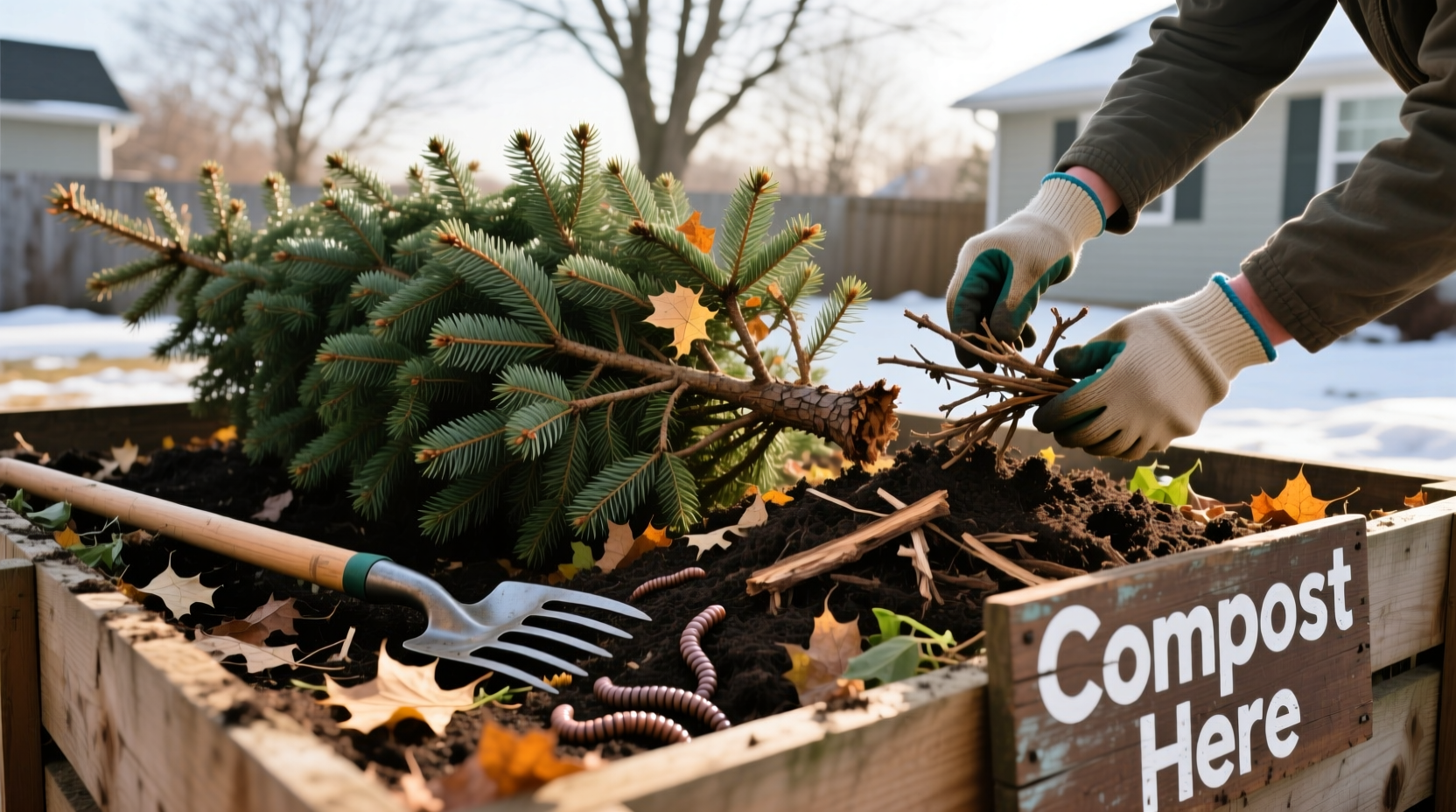
Real Christmas trees—typically species like Fraser fir, balsam fir, Douglas fir, or pine—are grown as a renewable crop. Unlike artificial trees made from plastic and metal, which can take centuries to decompose, natural trees break down efficiently under the right conditions. When composted properly, they return organic matter to the earth, enriching soil structure and supporting plant growth.
In contrast, when trees end up in landfills, they decompose anaerobically (without oxygen), producing methane—a greenhouse gas more potent than carbon dioxide. According to the U.S. Environmental Protection Agency (EPA), diverting yard waste like Christmas trees from landfills helps reduce harmful emissions and conserves valuable space.
Tip: Remove all non-biodegradable materials—tinsel, ornaments, stands, and plastic netting—before composting. Even small traces can contaminate compost.How to Prepare Your Tree for Composting
Not every tree is ready for compost straight from the living room. Proper preparation ensures faster decomposition and prevents contamination. Follow these steps before dropping off or processing your tree:
- Remove all decorations: Take off lights, tinsel, garlands, ornaments, and any wire or plastic ties. These materials don’t break down and can harm composting equipment or soil health.
- Cut off the stand: Most tree stands are made of metal or plastic. Recycle them separately if possible.
- Check for flocking: Some trees are sprayed with artificial snow (flocking), which often contains chemicals and adhesives. Flocked trees should not be composted at home and may not be accepted by municipal programs.
- Break down large trees: If you're composting at home, cut the trunk into smaller pieces using a handsaw or chainsaw. Smaller branches can go in whole, but thick trunks will take years to decompose unless chipped.
If you’re relying on a city collection program, check whether whole trees are accepted. Many municipalities require trees to be free of stands and bags but allow them to remain uncut for curbside pickup during designated weeks.
Municipal Drop-Off and Curbside Programs
Most cities across the U.S., Canada, and parts of Europe offer seasonal Christmas tree recycling programs. These services collect trees and process them through industrial composting facilities or chip them for mulch used in public parks and trails.
To find a program near you:
- Visit your city or county’s official website and search “Christmas tree recycling.”
- Call your local waste management provider.
- Check with nearby parks departments—they often host drop-off events.
Many communities schedule special pickup days in early January. Trees are typically collected between January 2 and 15, though dates vary by region. In some areas, like New York City, residents can bring trees to designated drop-off sites such as Union Square or Central Park, where they’re turned into mulch for urban gardens.
“Cities like Portland and San Francisco have diverted over 90% of holiday trees from landfills through coordinated composting efforts. It’s one of the easiest wins in seasonal sustainability.” — Dr. Lena Torres, Urban Sustainability Coordinator, Pacific Northwest Regional Waste Authority
What Happens at Industrial Composting Facilities?
Once collected, trees are fed into industrial wood chippers, shredded into small wood chips, and mixed with green waste like food scraps and grass clippings. The resulting blend undergoes controlled aerobic decomposition, reaching high internal temperatures that kill pathogens and accelerate breakdown.
Within three to six months, the material transforms into dark, crumbly compost suitable for landscaping, erosion control, and agricultural use. Some cities even offer free mulch to residents in spring—a direct benefit of responsible holiday cleanup.
Backyard Composting: Is It Possible?
You can compost a Christmas tree at home, but success depends on your setup and effort. Coniferous wood is high in lignin—a complex organic polymer that resists decay—so it breaks down slower than leafy greens or kitchen scraps.
To speed up decomposition:
- Chip or shred the tree as finely as possible. A rented chipper can handle larger loads.
- Mix wood chips with nitrogen-rich “green” materials like vegetable scraps, coffee grounds, or fresh grass clippings.
- Aim for a carbon-to-nitrogen ratio of about 30:1. Since pine needles and wood are high in carbon, balance them with ample green waste.
- Turn the pile regularly to introduce oxygen and maintain heat.
Pine needles themselves can be composted but should be used in moderation. They are acidic and decompose slowly, so mix no more than 10% pine material into your pile to avoid lowering pH too much.
| Do | Don’t |
|---|---|
| Remove all non-organic materials | Leave tinsel or lights attached |
| Chip wood for faster breakdown | Add large logs without shredding |
| Mix with green compost materials | Compost only wood without nitrogen sources |
| Use finished compost as garden mulch | Apply unfinished compost directly to plants |
Alternative Uses for Tree Parts
If full composting feels overwhelming, repurpose parts of your tree creatively:
- Garden habitat: Lay branches at the base of shrubs or vegetable beds to deter pests and suppress weeds.
- Fire starters: Small dry twigs make effective kindling (but never burn flocked or painted trees indoors).
- DIY crafts: Pine cones and sturdy branches can be used in wreaths or centerpieces next year.
- Aquatic habitat: Some conservation groups sink cleaned trees into lakes to create fish shelters—check with local wildlife agencies.
Step-by-Step Guide: From Tree Stand to Soil
Follow this timeline to ensure your Christmas tree gets a second life:
- January 1–3: Remove all ornaments, lights, and tinsel. Discard in proper waste streams.
- January 4: Check your city’s recycling schedule. Note drop-off locations or curbside pickup dates.
- January 5: Cut tree into manageable sections if required. Place in a reusable mesh bag or tie securely.
- January 6–10: Transport to designated site or place at curb on specified day. Do not bag in plastic.
- Spring (March–May): Pick up free mulch from your municipality if offered.
- Summer onward: Use composted mulch in garden beds, around trees, or in potted plants.
Mini Case Study: Seattle’s Zero-Waste Holiday Initiative
In Seattle, Washington, the Department of Transportation launched a “Recycle Your Tree” campaign in 2018 to boost compost participation. The city set up over 20 drop-off locations and partnered with nonprofit EarthCorps to process trees into mulch for reforestation projects.
One resident, Maria Chen, participated for the first time in 2023 after learning her neighborhood park would receive recycled mulch. She removed decorations, cut her six-foot Douglas fir into two pieces, and biked it to a nearby collection point. Within weeks, she spotted signs in her local park reading: “Mulched with love from your holiday trees.”
The program collected over 7,000 trees in its first month, diverting an estimated 180 tons of organic waste from landfills. Today, it serves as a model for other mid-sized cities aiming to scale seasonal composting.
Frequently Asked Questions
Can I compost a tree that had fake snow (flocking)?
No. Flocking is typically made from chemical binders, adhesive, and sometimes fire retardants that don’t break down safely in compost. These trees should be disposed of as regular waste unless your municipality specifies otherwise.
Are artificial trees compostable?
No. Artificial trees are made from PVC, metal, and synthetic fibers that do not decompose. They are not recyclable in most curbside programs and should be donated if reusable or disposed of responsibly. Consider keeping them for 10+ years to offset their environmental impact.
How long does it take for a Christmas tree to compost?
In industrial facilities, chipped trees fully decompose in 3–6 months when mixed with other organics. In backyard piles, untreated logs can take 2–5 years. Shredded wood chips mixed into active compost may break down in 6–12 months.
Expert Insight: The Bigger Picture
Composting your Christmas tree is more than a gardening hack—it’s a small act with ripple effects. As climate awareness grows, consumers are rethinking seasonal consumption habits. Choosing a real tree from a local farm and composting it afterward creates a closed-loop system that supports rural economies and soil health.
“Every ton of yard waste we compost instead of landfilling saves the equivalent of 200 pounds of CO₂ emissions. Multiply that by thousands of households, and you’ve got meaningful change.” — Dr. Rajiv Mehta, Climate Scientist, Institute for Sustainable Cities
Conclusion: Turn Tradition Into Transformation
Your Christmas tree doesn’t need to mark the end of the holiday season with a trip to the dump. With minimal effort, it can transition from centerpiece to soil builder, feeding future gardens and reducing environmental strain. Whether through municipal recycling or backyard composting, giving your tree a second life aligns tradition with sustainability.
Start today: locate your nearest drop-off site, gather your tools, and share this practice with neighbors. Small actions, repeated widely, reshape systems. Let your tree’s final role be one of renewal—not waste.
💬 Did you compost your tree this year? Share your experience, tips, or photos with your community. Inspire others to close the loop and grow greener traditions together.








