For decades, houseplants have been celebrated not just for their beauty but for their supposed ability to cleanse indoor air. From NASA studies to viral social media posts, claims about plants removing toxins like formaldehyde and benzene are everywhere. But how much of this is supported by science? And how much is wishful thinking amplified by marketing? The truth lies in a nuanced balance between real benefits and exaggerated expectations.
Indoor air pollution is a legitimate concern. Modern homes and offices are tightly sealed for energy efficiency, often trapping volatile organic compounds (VOCs), carbon dioxide, and other pollutants. While ventilation and mechanical air filtration remain the most effective solutions, many turn to greenery as a natural alternative. Understanding what indoor plants can—and cannot—do is essential for making informed decisions about health, wellness, and home design.
The Origin of the Air-Purifying Plant Myth
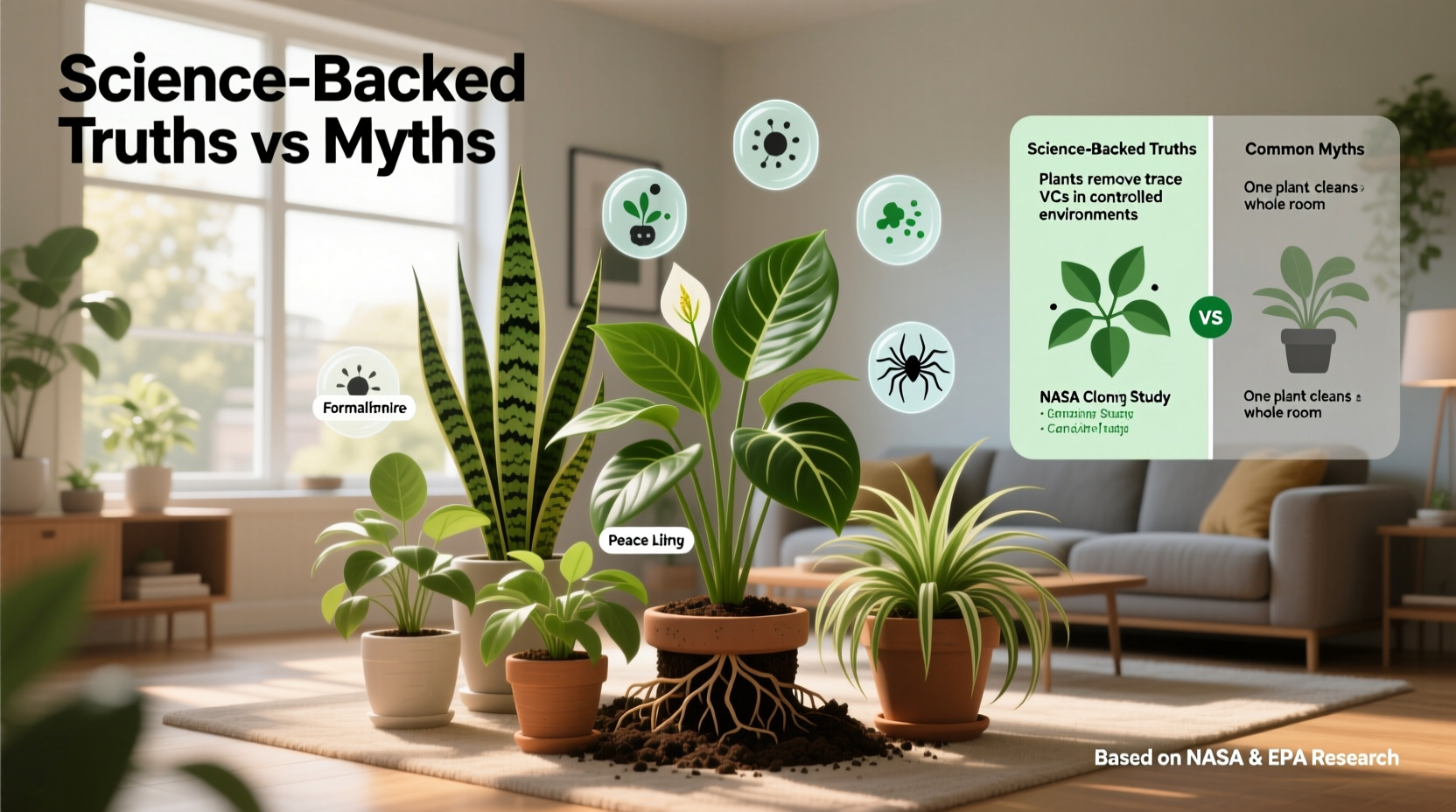
The idea that houseplants can purify indoor air largely stems from a 1989 NASA study conducted to explore ways to maintain air quality in space stations. Researchers tested various plants in sealed chambers contaminated with common VOCs such as benzene, formaldehyde, and trichloroethylene. They found that certain plants, including peace lilies, spider plants, and snake plants, could reduce these pollutants over time through processes involving both the plant and its root-soil system.
This research was groundbreaking in controlled environments—but it had limitations. The test chambers were small, sealed, and lacked airflow—conditions vastly different from typical living rooms or offices. In these closed systems, plants showed measurable absorption of pollutants. However, translating those results to real-world settings requires careful consideration.
“While plants do absorb some airborne chemicals, the rate at which they do so in a typical room is negligible compared to the dilution provided by normal ventilation.” — Dr. Michael Winkler, Environmental Health Scientist, University of Colorado
Despite these caveats, the media and horticultural industry widely promoted the “NASA Clean Air Study” as proof that a few houseplants could detoxify an entire home. This led to a surge in popularity for so-called “air-purifying” plants, often without context about scale or practicality.
What Science Actually Says About Plants and Air Quality
More recent studies have re-evaluated the role of indoor plants in air purification. A comprehensive 2019 review published in the Journal of Exposure Sciences & Environmental Epidemiology analyzed nearly 200 studies on indoor plants and air quality. The conclusion? While plants do remove trace amounts of VOCs in laboratory settings, their impact in actual buildings is minimal.
The key issue is **scale**. To match the air-cleaning capacity of a single air exchange per hour—the minimum recommended ventilation rate in homes—you would need an unrealistic number of plants. One estimate suggests you’d need 10 to 1,000 plants per square meter of floor space to achieve noticeable improvements in air quality. That’s not just impractical—it’s impossible in most homes.
However, dismissing plants entirely would be premature. Research confirms that plants contribute to air quality through several mechanisms:
- Photosynthesis: During daylight, plants absorb carbon dioxide and release oxygen, slightly improving oxygen levels.
- Transpiration: Plants release moisture into the air, which can help regulate humidity—especially beneficial in dry climates or heated winter interiors.
- Microbial activity: Soil microbes around plant roots can break down certain pollutants more effectively than the plant itself.
- Particulate settling: Foliage can trap dust and allergens, though this requires regular cleaning of leaves.
In short, plants play a supportive role in indoor air quality, but they should not be relied upon as primary air purifiers.
Tip: Place plants near natural light sources and wipe leaves monthly to maximize dust capture and photosynthetic efficiency.Do’s and Don’ts: Using Plants Realistically for Better Air
To benefit from indoor plants without falling for myths, follow evidence-based practices. The goal isn’t to \"filter\" air like a HEPA machine, but to enhance overall indoor environmental quality in combination with other strategies.
| Do | Don't |
|---|---|
| Use plants to improve humidity and psychological well-being | Expect them to replace air purifiers or ventilation systems |
| Choose low-maintenance, hardy species suited to your lighting conditions | Overcrowd rooms with plants hoping for air purification effects |
| Clean plant leaves regularly to prevent dust buildup | Ignore soil mold or overwatering, which can worsen air quality |
| Combine plants with proper ventilation and source control of pollutants | Place toxic plants where pets or children can access them |
| Treat plants as part of a holistic healthy home strategy | Rely solely on plants in homes with high VOC exposure (e.g., new construction, off-gassing furniture) |
Top Plants with Measurable (But Limited) Air Benefits
While no plant will transform your indoor air alone, some have shown stronger performance in controlled tests. These species are worth considering—not because they’ll eliminate toxins, but because they’re resilient, attractive, and contribute modestly to air quality when combined with good ventilation.
- Snake Plant (Sansevieria trifasciata): Known for releasing oxygen at night and tolerating low light and infrequent watering.
- Spider Plant (Chlorophytum comosum): Safe for pets, easy to grow, and effective in absorbing formaldehyde in lab conditions.
- Peace Lily (Spathiphyllum spp.): Removes multiple VOCs and increases humidity, but toxic if ingested.
- Areca Palm (Dypsis lutescens): High transpiration rate makes it excellent for humidifying dry air.
- Boston Fern (Nephrolepis exaltata): Efficient at trapping airborne particles and adding moisture.
These plants thrive best in bright, indirect light and require consistent care. Their real value lies not in dramatic air cleansing, but in contributing to a biophilic environment—one that supports mental clarity, reduced stress, and improved focus.
Mini Case Study: Office Wellness Initiative
A mid-sized tech company in Portland implemented a wellness program introducing 50 indoor plants across its open-plan office. Employees reported feeling more relaxed and focused, and absenteeism due to headaches and fatigue dropped by 15% over six months. However, air quality testing showed only a 3% reduction in VOC levels—far below what mechanical ventilation achieved.
The real benefit wasn’t chemical purification, but psychological. Workers felt more connected to nature, took more breaks near green spaces, and reported higher job satisfaction. The plants became conversation starters and symbols of care, not air filters. This case illustrates that while the physiological impact of plants on air may be small, the psychological and behavioral effects are significant.
Step-by-Step Guide to Maximizing Indoor Plant Benefits
If you want to get the most out of your indoor plants—without believing the hype—follow this realistic, science-aligned approach:
- Assess Your Space: Determine light availability, humidity, and room size. Choose plants that match your environment rather than chasing trends.
- Prioritize Ventilation First: Open windows regularly, use exhaust fans, and consider an air purifier with activated carbon and HEPA filters for pollutant removal.
- Select 3–5 High-Performing Plants: Start small. One snake plant in the bedroom, a spider plant in the home office, and a peace lily in the bathroom can enhance ambiance and provide minor air benefits.
- Maintain Proper Care: Water appropriately, clean leaves monthly, and repot when root-bound. Healthy plants function better ecologically.
- Monitor Humidity and Airflow: Use a hygrometer to ensure humidity stays between 40–60%. Stagnant air reduces any air-cleaning potential plants might offer.
- Evaluate Holistically: Track how you feel—more alert, less stuffy, calmer—rather than expecting measurable toxin reductions.
Frequently Asked Questions
Can one plant clean the air in a room?
No single plant has enough surface area or metabolic rate to significantly clean the air in even a small room. Multiple plants in optimal conditions may have a minor effect, but mechanical ventilation remains far more effective.
Are there risks to relying on plants for air purification?
Yes. Overwatering can lead to mold growth in soil, which releases spores and worsens indoor air quality. Additionally, neglecting proper ventilation while believing plants are \"cleaning\" the air can expose occupants to accumulating pollutants.
Do plants help with allergies?
Not directly. While plants can trap dust on leaves, they don’t remove allergens like pollen or pet dander from the air. In fact, overwatered plants or those with flowering blooms may increase mold or airborne particles. For allergy sufferers, air purifiers and regular cleaning are more reliable solutions.
Expert Insight: Balancing Hype and Reality
The emotional appeal of plants as natural healers is powerful—and not entirely unfounded. Biophilic design, the practice of incorporating nature into built environments, is backed by extensive research showing benefits for mental health, productivity, and recovery rates.
“We shouldn’t oversell plants as air purifiers, but we also shouldn’t undersell their role in creating healthier, more human-centered spaces. The air quality benefit is marginal, but the psychological benefit is substantial.” — Dr. Laura Schelhas, Environmental Psychologist, Harvard T.H. Chan School of Public Health
This dual perspective is crucial. Plants are not substitutes for engineering controls like HVAC systems or air purifiers. But they are valuable components of a broader strategy to create spaces that support well-being.
Conclusion: Embrace Plants for What They Truly Offer
Indoor plants do interact with the air—they absorb CO₂, release oxygen, increase humidity, and, under ideal conditions, reduce trace VOCs. But the claim that they “purify” indoor air in a meaningful way is more myth than reality. Relying on them for air quality improvement without proper ventilation or filtration is ineffective and potentially risky.
Instead, appreciate plants for their real strengths: enhancing mood, reducing stress, boosting creativity, and connecting us to nature in increasingly urbanized lives. Use them as part of a layered approach to indoor health—alongside open windows, air purifiers, non-toxic materials, and good cleaning habits.
🚀 Ready to build a healthier home? Start with one resilient plant, open a window daily, and share your journey toward balanced indoor living. Your mind—and body—will thank you.








