
As the holiday season approaches, homes come alive with festive decorations—especially twinkling Christmas lights. While these glowing displays bring joy to humans, many pet owners notice their cats reacting oddly: stalking the flickering bulbs, batting at strands, or even hiding in fear. What causes this behavior? Are cats truly \"sensing\" something beyond human perception, or is there a more grounded explanation? The answer lies in feline biology, instinct, and sensory sensitivity. Understanding how cats perceive light—and why blinking bulbs unsettle them—can help pet owners create a safer, calmer environment during the holidays.
The Feline Visual System: Built for Movement
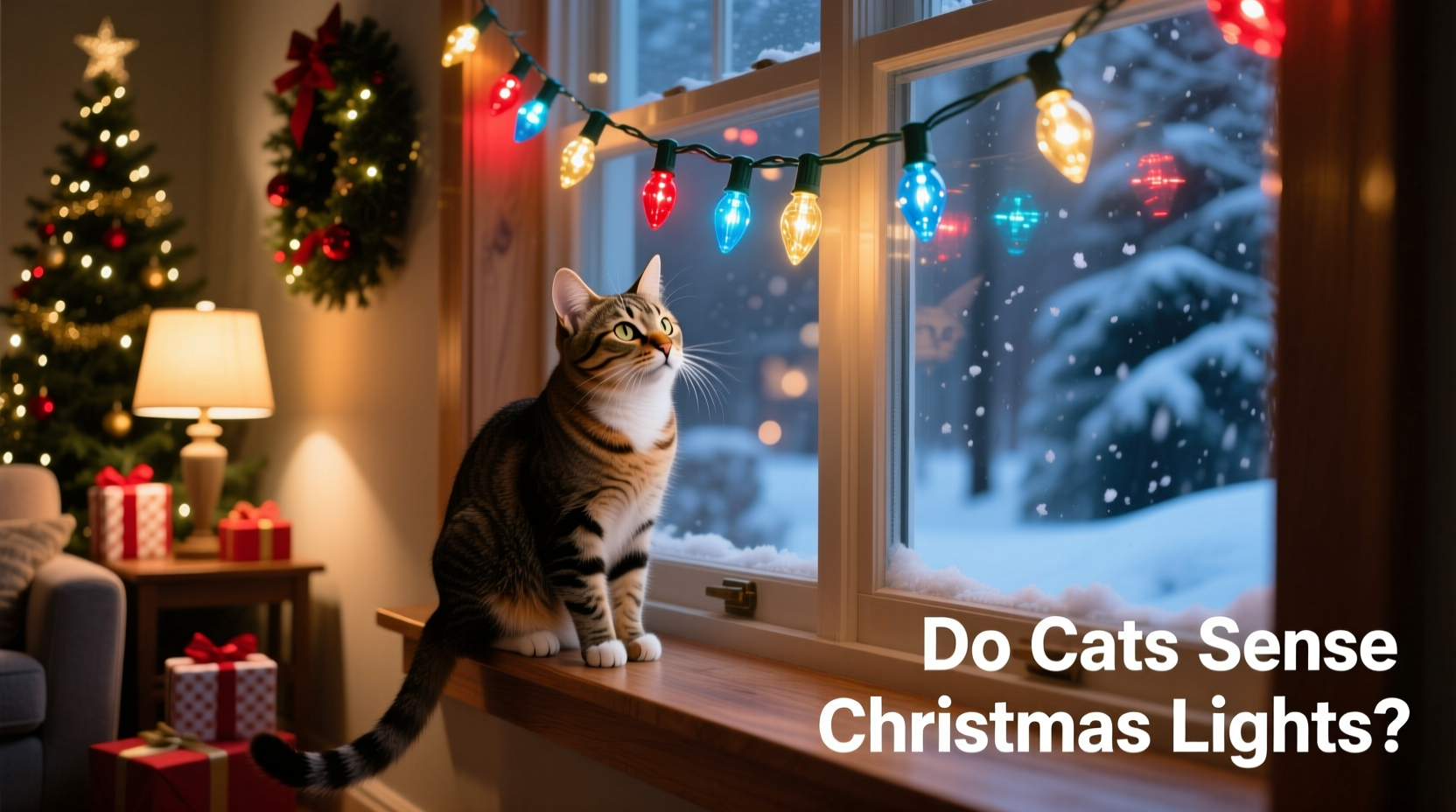
Cats are predators by evolution, and their eyes have evolved to detect the slightest motion—critical for hunting prey in low-light conditions. Their retinas contain a high concentration of rod cells, which are sensitive to dim light and movement, far surpassing human capability in these areas. However, they have fewer cone cells, responsible for color vision and detail clarity. This means cats don’t see colors as vividly as we do, but they excel at detecting shifts in brightness and motion, especially in near-darkness.
Blinking Christmas lights, particularly older incandescent strands that flicker at 50–60 Hz, appear very differently to cats than to humans. While our brains smooth over the rapid on-off cycle into a continuous glow, cats may perceive each flicker distinctly due to their higher flicker fusion threshold—the rate at which intermittent light appears constant. For cats, blinking lights may look like erratic, darting movements resembling insects or small animals, triggering their predatory instincts.
“Cats don’t just see the world in slow motion—they experience time differently. A blinking light isn’t just pretty decoration; it’s a moving target.” — Dr. Lydia Chang, Veterinary Neurologist
Why Blinking Lights Trigger Strange Behavior
The erratic nature of blinking holiday lights can confuse or overstimulate cats. Here’s how different behaviors manifest and what they mean:
- Stalking and Pouncing: Your cat may crouch, twitch its tail, and lunge at the lights. This mimics natural hunting sequences triggered by perceived prey-like motion.
- Swatting or Batting: Cats use their paws to test objects. If the light “moves” when touched (by shifting), it reinforces the illusion of life.
- Hissing or Avoidance: Some cats react fearfully, interpreting unpredictable flashing as a threat. Sudden changes in lighting can signal danger in the wild.
- Overgrooming or Hiding: Chronic exposure to stimulating lights may elevate stress hormones, leading to displacement behaviors like excessive licking or withdrawal.
In multi-cat households, blinking lights can also disrupt social dynamics. One cat may monopolize the “prey,” causing tension, while others become hyper-vigilant or anxious.
Tip: Use steady-glow LED lights instead of blinking ones to reduce visual stimulation and minimize predatory reactions.Do Cats \"Sense\" More Than Light?
While no scientific evidence suggests cats possess supernatural abilities, their senses operate on a different plane than ours. Beyond vision, several factors contribute to their reaction to Christmas lights:
Electromagnetic Fields (EMFs)
Some researchers speculate that pets may be sensitive to electromagnetic fields emitted by electrical devices, including light strings. Though unproven in cats specifically, studies on other animals suggest possible behavioral effects from EMF exposure. Holiday lights, especially older or poorly insulated sets, emit low-level electromagnetic radiation. While harmless to humans, it’s plausible that cats—whose nervous systems are finely tuned—might detect subtle energy changes.
Auditory Perception
Many people overlook sound, but some light sets emit faint buzzing or humming from transformers or aging bulbs. Cats hear frequencies up to 64 kHz, compared to humans’ 20 kHz limit. A barely audible hum to us could be loud and irritating to a cat, contributing to avoidance or agitation.
Scent of Materials
New plastic cords, rubber insulation, or dust burned off during first use can release odors imperceptible to humans but strong to a cat’s nose—up to 14 times more sensitive than ours. Unfamiliar scents near the floor or baseboards may trigger investigative or defensive behavior.
Step-by-Step Guide to Cat-Friendly Holiday Lighting
Enjoy festive decor without stressing your pet. Follow this timeline to prepare your home safely:
- Week 1: Assess Your Current Setup
Inspect old light strands for frayed wires, overheating, or buzzing sounds. Replace any damaged sets. - Week 2: Choose Cat-Safe Lights
Opt for cool-burning LEDs with steady illumination. Avoid strobe or random-flash modes. - Week 3: Install Strategically
Keep lights high on the tree or along upper mantels. Use cord covers or conceal wiring behind furniture. - Week 4: Introduce Gradually
Turn on lights when your cat is present but calm. Monitor reactions for 15 minutes. Reward relaxed behavior with treats. - Ongoing: Supervise and Adjust
If your cat shows signs of obsession or anxiety, reduce usage time or switch to battery-operated flameless candles.
Real-Life Example: Luna and the Twinkling Tree
Maria, a cat owner in Portland, noticed her 3-year-old tabby, Luna, became increasingly agitated every evening when the living room Christmas tree was lit. Luna would stare intently, vocalize loudly, and attempt to climb the tree, knocking ornaments down. Concerned about safety, Maria consulted her veterinarian, who suggested switching from multicolor blinking lights to warm-white steady LEDs.
She also wrapped the tree’s base in aluminum foil—a texture Luna disliked stepping on—and used a timer to limit lighting to two hours per night. Within days, Luna’s fixation decreased. By pairing light exposure with mealtime (a positive association), Maria helped Luna view the tree as part of the household rhythm, not a source of stress.
This case illustrates how small environmental adjustments, informed by feline behavior, can resolve seemingly odd reactions.
Do's and Don'ts: Holiday Lights and Cats
| Do | Don't |
|---|---|
| Use LED lights (cooler, energy-efficient, less flicker) | Use old incandescent strands that overheat or flicker intensely |
| Secure cords with clips or conduit to prevent chewing | Leave loose cords accessible on the floor |
| Supervise initial exposure to new lights | Leave blinking lights on overnight unattended |
| Provide alternative enrichment (toys, perches) | Allow obsessive light-chasing without redirection |
| Use timers to maintain routine lighting periods | Randomly turn lights on/off, creating unpredictability |
Frequently Asked Questions
Can Christmas lights hurt my cat’s eyes?
No direct evidence suggests standard holiday lights cause eye damage in cats. However, prolonged exposure to intense or flickering light may lead to visual fatigue or stress, especially in cats with pre-existing neurological conditions. Moderation and proper placement reduce risks.
Why does my cat only react to certain colors of lights?
Cats see best in blue-violet and green-yellow ranges but struggle with reds and pinks. Blinking blue or white LEDs may appear brighter and more dynamic, increasing their likelihood to trigger attention. Red lights may seem dimmer and less stimulating.
Is it safe to leave Christmas lights on when I’m not home?
It’s not recommended, especially if your cat is indoors unsupervised. Faulty wiring poses fire risks, and curious cats may chew cords, risking electrocution. Use timers to limit operation and always inspect lights before use.
Expert Tips for a Calm, Festive Home
Creating harmony between holiday cheer and feline well-being requires awareness and planning. Consider these final recommendations:
- Use motion-activated lighting sparingly. While convenient, sudden activation can startle cats, especially at night.
- Offer elevated viewing spots. Cats feel secure when observing from above. Place a perch nearby so they can watch lights without feeling compelled to interact.
- Rotate toys during the holidays. Introduce puzzle feeders or wand toys to redirect predatory energy away from lights.
- Monitor for signs of chronic stress. Excessive meowing, loss of appetite, or litter box avoidance may indicate environmental distress.
Conclusion: Celebrate Safely with Your Feline Companion
Cats don’t sense Christmas lights in a mystical way—but they do experience them more intensely than we do. Their evolutionary wiring makes blinking bulbs appear as elusive prey, unpredictable threats, or sensory overload. Recognizing this difference empowers pet owners to adapt traditions without sacrificing festivity.
By choosing steady LED lights, managing exposure, securing cords, and providing alternative outlets for instinctual behaviors, you can protect your cat’s well-being while enjoying the season’s sparkle. Remember: a calm cat is a happy participant in family life, not a victim of holiday hazards.
💬 Have a story about your cat and holiday lights? Share your experience or tips in the comments—your insight could help another pet owner navigate the season with confidence.








