For gardeners seeking both functionality and visual appeal in their tomato cultivation, spiral tomato plants—often trained along twisting stakes or grown as part of a spiraling support system—represent a unique fusion of horticultural efficiency and aesthetic design. While tomatoes are naturally vining plants that require vertical support, the use of spiral structures introduces a dynamic method of guiding growth upward in a controlled, space-saving form. Choosing the right support is not merely about appearance; it directly impacts plant health, fruit quality, ease of maintenance, and harvest yield. With countless options available—from store-bought spiral cages to DIY metal coils—understanding which supports perform best under real growing conditions is essential for home gardeners aiming to optimize their tomato production.
Definition & Overview
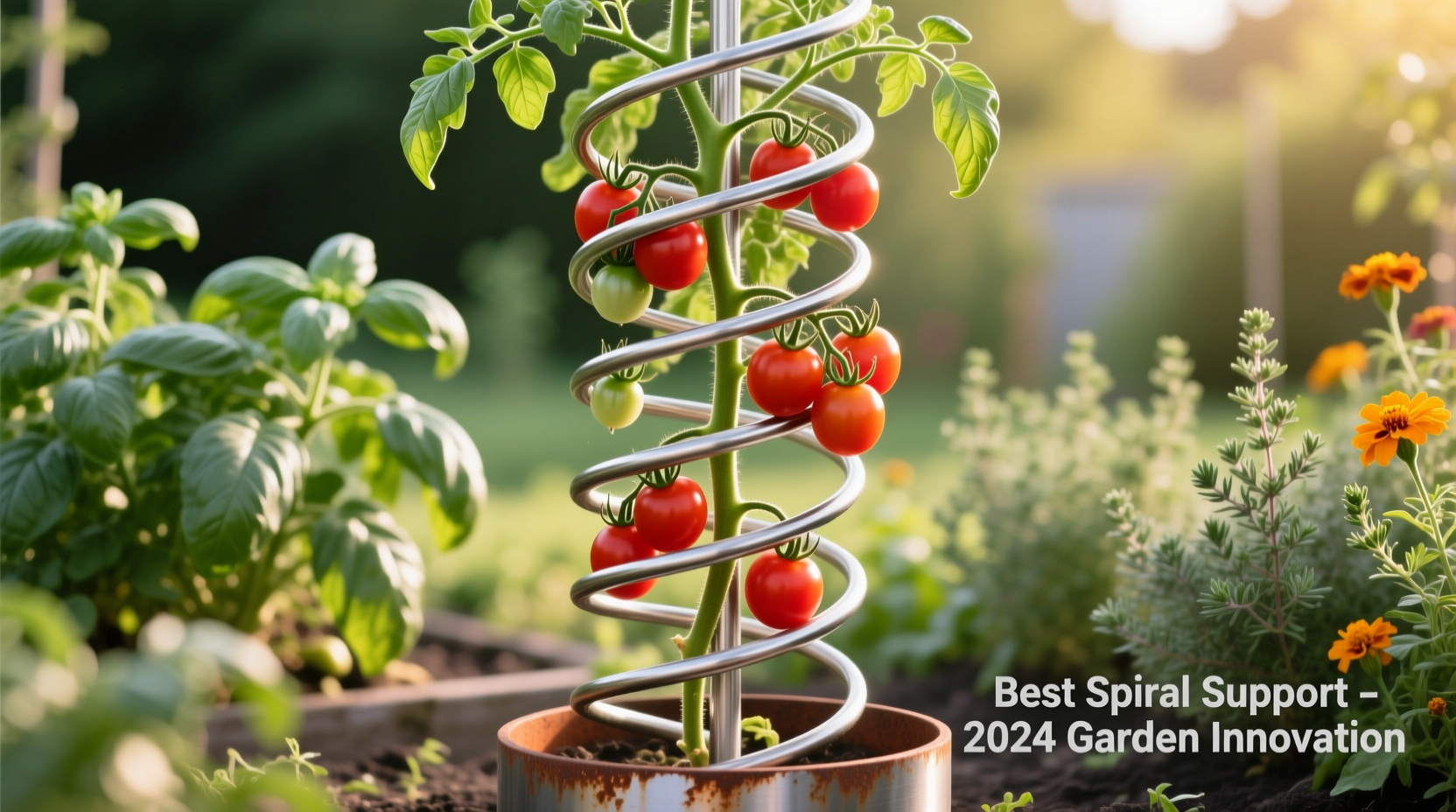
Spiral tomato plant supports refer to any vertical, helical-shaped structure designed to guide tomato vines upward in a coiled pattern. Unlike traditional straight stakes or square cages, spiral supports encourage a continuous winding motion, mimicking natural twining behavior while minimizing lateral sprawl. These systems can be standalone metal rods with a corkscrew shape, wire frames shaped into ascending loops, or custom-built arbors incorporating spiral geometry.
The concept leverages the indeterminate growth habit of most tomato varieties—plants that grow continuously throughout the season unless pruned. By directing this growth along a spiral path, gardeners achieve several advantages: improved sunlight exposure across all sides of the plant, enhanced airflow to reduce fungal diseases, and easier access for pruning and harvesting. Additionally, spiral designs often serve as garden focal points, blending utility with ornamental landscaping.
While not a botanical classification, “spiral tomato plants” describe a training technique rather than a specific cultivar. Any indeterminate tomato variety—such as 'Brandywine', 'Sungold', or 'Cherokee Purple'—can be adapted to spiral support when managed properly from early growth stages.
Key Characteristics of Effective Spiral Supports
An ideal spiral support must balance structural integrity, longevity, usability, and compatibility with tomato plant physiology. The following table outlines the critical attributes to evaluate when selecting or building a spiral support system:
| Characteristic | Description |
|---|---|
| Material Durability | Must resist rust, UV degradation, and bending under vine weight (especially when laden with fruit). Galvanized steel, powder-coated iron, or marine-grade aluminum are preferred. |
| Spiral Diameter | Ideal range: 12–18 inches. Too narrow restricts growth; too wide reduces guiding effectiveness. |
| Height | Minimum 5 feet; optimal between 6–7 feet to accommodate full-season growth of indeterminate types. |
| Pitch (Spacing Between Coils) | 6–8 inches between loops allows sufficient room for stems and fruit without overcrowding. |
| Base Stability | Requires deep ground penetration (at least 12 inches) or anchoring mechanism to prevent toppling in wind. |
| Surface Texture | Smooth but slightly textured surface helps stems cling without causing abrasion or girdling. |
| Portability & Storage | Lightweight models offer seasonal flexibility; heavier ones provide permanence and sturdiness. |
Practical Usage: How to Train Tomatoes on Spiral Supports
Successfully growing tomatoes on spiral supports requires an understanding of plant development timing and proper training techniques. Begin by installing the support at planting time to avoid root disturbance later. Position the spiral so that its leading edge faces east or south to maximize morning sun exposure on new growth.
As the main stem reaches 8–10 inches tall, gently guide it around the first loop of the spiral. Use soft plant ties only if necessary during the initial phase—most healthy seedlings will begin to coil naturally once contact is made with the support. Continue checking every 5–7 days during peak growth (late spring through midsummer), nudging new growth onto the next ascending coil.
For best results:
- Select one primary leader stem and remove suckers below the first flower cluster to concentrate energy upward.
- Avoid forcing brittle stems; wait until they exhibit natural flexibility before guiding.
- Keep fruit clusters suspended—not resting on the coil—to prevent rot and pest access.
- Prune lower leaves that touch the soil to minimize splash-borne pathogens like early blight.
In commercial high-tunnel operations, some growers adapt spiral principles using tensioned trellis wires arranged in helical patterns overhead, allowing crops to ascend in a controlled spiral via drop strings. This method increases per-acre yield by up to 30% compared to flat-wire systems due to more uniform light distribution.
Pro Tip: Rotate the direction of your spiral based on hemisphere. In the Northern Hemisphere, clockwise spirals may align better with prevailing sunlight angles; in the Southern Hemisphere, consider counterclockwise orientation for even exposure.
Variants & Types of Spiral Supports
Different configurations of spiral supports cater to varying garden scales, climates, and design preferences. Below are the most common types used by home and market gardeners:
1. Solid Metal Spiral Stakes
Made from thick-gauge steel or iron, these resemble giant corkscrews driven directly into the ground. Brands like \"Tomato Spiral\" or \"VegTrug Twist\" offer pre-formed versions ranging from 48 to 72 inches tall. They’re excellent for single-plant support and require no assembly. Their downside lies in limited adjustability—if the pitch doesn’t match your plant’s growth rate, manual intervention increases.
2. Wire Frame Spirals
Constructed from flexible yet rigid wire bent into concentric rings connected vertically. These often stand independently like cages but follow a helical path. Easier to mass-produce and ship flat-to-box, they suit raised beds and container gardens. Some models include crossbars for additional stability.
3. DIY Spiral Arbors
Custom-built from rebar, PVC, or black iron pipe, these allow complete control over dimensions and aesthetics. Gardeners weld or thread pipes into spirals mounted atop posts, creating permanent features suitable for patios or edible landscapes. These can double as pergolas when scaled up.
4. Modular Spiral Trellises
Used in larger gardens or small farms, these consist of interconnected panels forming a continuous spiral wall. Plants are trained along the outer and inner curves, maximizing vertical growing space. Often made from recycled materials such as bicycle rims or fence mesh.
5. Living Spiral Supports
An innovative approach involves planting companion species—like pole beans or cucumbers—with faster germination rates inside a central core, forming a living lattice. Tomatoes are then planted around the perimeter and guided outward along a physical spiral frame. This polyculture boosts biodiversity and microclimate regulation.
Each variant serves distinct purposes:
- Backyard container growers: Opt for compact wire frame spirals (18\" diameter, 5' height).
- Raised bed gardeners: Choose solid metal stakes with anti-rust coating.
- Landscape-integrated designs: Build DIY metal or wooden spirals matching garden theme.
- High-yield producers: Implement modular trellis walls in greenhouse rows.
Comparison with Similar Support Systems
While spiral supports offer unique benefits, they compete with other established tomato training methods. Understanding how they differ ensures informed decision-making.
| Support Type | Spiral Advantage | When to Choose Alternative |
|---|---|---|
| Traditional Stake | Spiral provides automatic guidance; less tying needed. Better air circulation. | Use stake for determinate (bush) types or short-season climates. |
| Cage (Classic Cone) | Spiral promotes vertical growth vs. outward sprawl. Reduces lower leaf disease. | Cages work better for patio tomatoes or heavy-fruited heirlooms needing broad base support. |
| Trellis Netting | Spiral eliminates need for netting clips or string weaving. | Netting suits row cropping and mechanical harvesting. |
| Florida Weave | Spiral individualizes support—no shared load risk. Ideal for uneven terrain. | Weave is cost-effective for long rows of evenly spaced plants. |
| Hog Wire Panels | Spiral uses less material and occupies smaller footprint. | Hog wire excels for supporting multiple branches simultaneously. |
“The spiral method isn’t just visually striking—it forces us to rethink how we interact with plant architecture. Instead of fighting against lateral branching, we’re working *with* the vine’s instinct to climb and twist.” — Dr. Elena Torres, Urban Horticulture Specialist, Cornell Cooperative Extension
Practical Tips & FAQs
Can I convert a regular tomato cage into a spiral?
Yes, though it requires tools and caution. Using pliers and heat-treated wire cutters, dismantle a standard cage and reshape the longest strand into a continuous helix. Reinforce the base with a rebar spike for stability. Note: this works best with square or rectangular cages made of thicker gauge wire.
Do spiral supports work for all tomato varieties?
They are most effective with indeterminate varieties that grow continuously. Determinate (bush) types typically stop growing after setting fruit and won’t benefit from extended spiral guidance. Dwarf or micro-tomato breeds also lack the vigor needed for sustained coiling.
How do I prevent stem damage on sharp bends?
Always ensure coil edges are smoothly finished. Wrap abrasive sections with foam tubing or old garden hose segments. Alternatively, select supports marketed as “vine-safe” or those with rounded weld joints.
Are spiral supports suitable for windy areas?
Only if deeply anchored. In regions with frequent gusts above 20 mph, drive the support at least 14 inches into the ground or secure with guy wires. Consider pairing with a secondary stake on the windward side for extra reinforcement.
What’s the best way to clean and store them?
At season’s end, remove all plant debris and rinse with water. For metal units, scrub lightly with vinegar solution to remove mineral deposits. Allow to dry completely before storing indoors to prevent rust. Avoid stacking heavy items on top to maintain shape.
Can children help train spiral tomatoes?
Absolutely—and it’s a valuable educational opportunity. The intuitive winding motion appeals to young gardeners. Supervise initial training to prevent over-handling, but let kids take ownership of weekly guiding tasks. It teaches patience, observation, and responsibility.
Do spiral supports increase yield?
Not directly—but indirectly, yes. By improving light penetration and reducing disease pressure, plants remain productive longer. A study conducted by the University of Massachusetts Extension found that well-supported indeterminate tomatoes produced 18–22% more marketable fruit over the season compared to unsupported controls. Spiral systems ranked second only to vertical string trellising in yield efficiency.
Checklist: Installing Your Spiral Support
✅ Install at time of transplanting
✅ Drive at least 12 inches into soil
✅ Orient toward morning sun
✅ Guide first shoot gently onto lowest coil
✅ Inspect weekly during active growth
✅ Prune lower leaves touching ground
✅ Harvest frequently to reduce weight stress
Summary & Key Takeaways
Spiral supports represent a sophisticated evolution in tomato plant management, merging structural engineering with biological insight. When selected and used correctly, they enhance plant health, simplify maintenance, and elevate the visual appeal of vegetable gardens. Their greatest strength lies in promoting continuous, organized vertical growth—critical for indeterminate tomato varieties that can reach heights of 8 to 10 feet in a single season.
The best supports combine durable materials, appropriate scale, and thoughtful design. Solid metal spirals excel in permanence and ease of use, while modular or DIY versions allow customization. Though not universally applicable—particularly for bush-type tomatoes—they outperform many conventional systems in disease prevention, space efficiency, and labor reduction.
Gardeners should view spiral training not as a novelty, but as a strategic choice aligned with sustainable, high-yield practices. Whether cultivating a single cherry tomato in a balcony pot or managing dozens of vines in a backyard plot, adopting spiral support can transform tomato growing from a routine chore into a rewarding interaction with plant movement and form.
Final Thought: The next time you plan your summer vegetable layout, consider placing a spiral support where it catches both sunlight and attention. What begins as a simple metal coil becomes, over weeks of careful tending, a living sculpture bearing fruit—a testament to the harmony between human ingenuity and nature’s upward reach.









