Pet ownership brings joy, companionship, and a little extra mess—especially when it comes to pet hair. Whether you have a shedding cat or a double-coated dog, loose fur tends to embed itself into upholstery, loveseats, and even hard-to-reach crevices of your furniture. While lint rollers and specialized vacuums are effective, not everyone has them on hand—or wants to invest in yet another cleaning gadget. The good news is that removing pet hair from furniture doesn’t require expensive tools. With common household items and a few clever techniques, you can restore your furniture to a fur-free state efficiently and affordably.
Why Pet Hair Clings So Stubbornly
Pet hair, especially from cats and dogs with undercoats, carries a natural static charge that causes it to cling tightly to fabric fibers. This static attraction is stronger on synthetic materials like polyester or microfiber, which are common in modern furniture. Additionally, pet dander and oils from skin can act as a mild adhesive, making hair harder to dislodge through casual brushing or dusting.
Understanding this helps explain why simply wiping or blowing won’t suffice. Effective removal requires disrupting the static bond and physically lifting or collecting the hair. The methods below focus on doing exactly that—without relying on specialty products.
Tip: Work in one direction when using damp cloths or rubber gloves to maximize hair collection and avoid spreading it.1. Use Damp Hands or a Damp Cloth
One of the simplest and most accessible methods involves moisture. A slightly damp hand or cloth neutralizes the static charge that holds pet hair to fabric. As a result, the hair clumps together and becomes easier to pick up.
To use this method:
- Lightly wet your hands or a clean cotton cloth—just enough to feel damp, not dripping.
- Run your hand or the cloth over the affected area in smooth, overlapping strokes.
- As the hair gathers, collect it into a ball and dispose of it in the trash.
This works exceptionally well on couches, armchairs, and car seats. For larger areas, a reusable microfiber cloth dampened with water can cover more surface quickly. Avoid soaking the fabric, as excess moisture may lead to mold or fabric damage over time.
2. Rubber Gloves for Deep Lifting
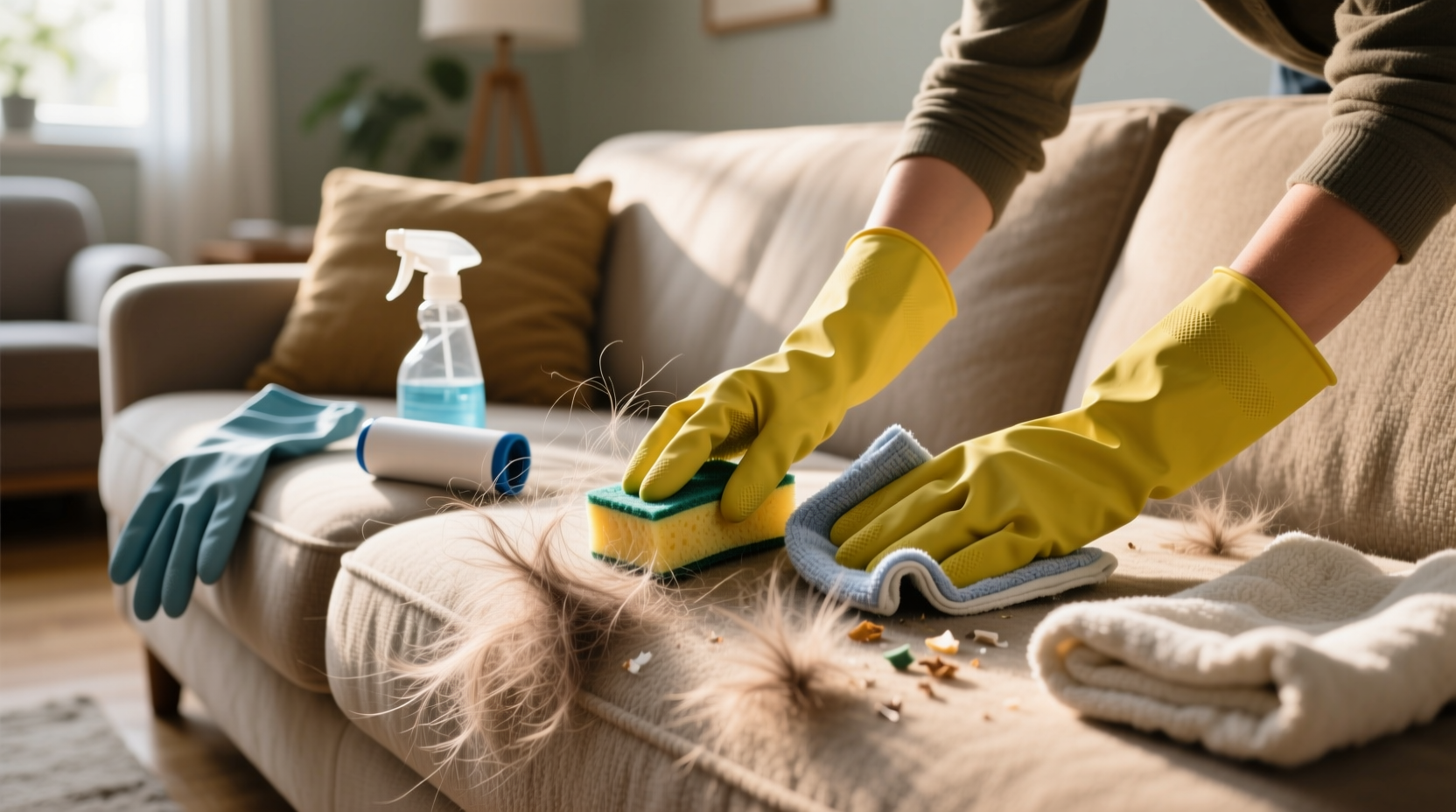
Household rubber gloves—like those used for dishwashing—can be surprisingly effective at removing embedded pet hair. The rubber creates friction against fabric, generating a slight tackiness that pulls hair out of fibers.
Step-by-step guide:
- Put on a pair of clean rubber gloves (latex or nitrile work well).
- Dampen the palms slightly with water.
- Use sweeping motions across the furniture surface, applying light pressure.
- As hair accumulates, gather it into a small pile and discard.
This technique excels on textured fabrics where hair gets trapped deep within the weave. It’s also ideal for quick daily touch-ups between deeper cleanings. After use, rinse the gloves and hang them to dry for reuse.
“Rubber gloves mimic the effect of commercial pet hair removers but cost a fraction and are already in most homes.” — Dr. Lena Patel, Home Hygiene Researcher, Urban Living Institute
3. Dryer Sheets for Static Neutralization
Dryer sheets are designed to reduce static in laundry, making them perfect for combating the clingy nature of pet hair. Their anti-static coating loosens hair from fabric surfaces, allowing it to be wiped or gathered easily.
How to apply:
- Take a used or new dryer sheet and gently rub it over the furniture in broad strokes.
- Follow up with a damp cloth or your hand to collect the now-loose hair.
- For delicate fabrics, test on a small, hidden area first to ensure no residue transfer.
Bonus: Many dryer sheets leave behind a faint fresh scent, offering a dual benefit of cleanliness and freshness. Keep a few in your cleaning caddy for quick access during routine maintenance.
Tip: Reuse old dryer sheets instead of discarding them immediately—they retain enough residue to be effective for multiple uses.4. Bread Bag Method: The Sticky Surface Hack
An unusual but highly effective trick involves repurposing plastic grocery bags—specifically bread bags. These thin, slightly tacky bags generate just enough adhesion to lift pet hair without damaging fabric.
Instructions:
- Turn a clean bread bag inside out (optional, but reduces slippage).
- Place your hand inside the bag so it fits like a glove.
- Press and glide the bag-covered hand across the furniture surface.
- Discard the bag once full or reuse if still functional.
This method works best on flat, tightly woven fabrics. The slight electrostatic pull of the plastic grabs hair clusters effectively. It's especially useful for renters or travelers who need a tool-free solution on the go.
5. Squeegee Technique for Upholstery
A window squeegee—commonly found in bathrooms or garages—is an underrated tool for pet hair removal. The rubber blade collects hair efficiently when dragged across fabric.
Process:
- Ensure the squeegee is clean and free of soap residue.
- Hold it at a slight angle and push it firmly across the furniture in one direction.
- After each pass, wipe collected hair off the blade into a trash can.
- Repeat until the surface is clear.
This method is particularly effective on long-haired pets whose fur tangles easily. It’s also fast for large surfaces like sectional sofas. Store the squeegee in your cleaning supplies after rinsing and drying.
Comparison of Methods: Effectiveness and Accessibility
| Method | Best For | Time Required | Reusability | Notes |
|---|---|---|---|---|
| Damp Cloth | Small spots, daily upkeep | 5–10 minutes | High (cloth washable) | Avoid oversaturation |
| Rubber Gloves | Textured fabrics, deep cleaning | 10–15 minutes | Very high | Requires light moisture |
| Dryer Sheets | Quick refresh, light shedding | 3–5 minutes | Low (single-use) | Cheap and widely available |
| Bread Bags | On-the-go cleaning | 5 minutes | Low to medium | Eco-friendly if reused |
| Squeegee | Large furniture, heavy shedding | 10–20 minutes | Very high | Most efficient for big areas |
Real-Life Example: Managing Shedding in a Multi-Pet Home
Sarah Thompson, a pet owner in Portland, shares her experience: “I have two golden retrievers and a Persian cat—all heavy shedders. My beige sofa used to look permanently gray. I didn’t want to buy a pet hair vacuum, so I started experimenting. I found that using rubber gloves every other day kept the worst at bay. On weekends, I do a full sweep with a squeegee. Between that and weekly damp cloth wipes, my furniture stays presentable. It takes less than 20 minutes total per week, and I’m not spending money on gadgets.”
Sarah’s approach highlights how combining simple methods can yield professional-level results. Consistency, not complexity, was the key to her success.
Checklist: Weekly Pet Hair Removal Routine Without Tools
- ✅ Inspect high-use furniture for visible hair buildup.
- ✅ Use rubber gloves or a damp cloth for quick daily touch-ups.
- ✅ Apply a dryer sheet for static-prone areas once per week.
- ✅ Perform a deep clean using a squeegee or bread bag method every 7–10 days.
- ✅ Vacuum only when necessary—focus on corners and cushions.
- ✅ Wash removable covers according to manufacturer instructions.
Following this checklist ensures that pet hair never becomes overwhelming. Prevention is far easier than remediation.
Frequently Asked Questions
Can I use baby wipes to remove pet hair?
Baby wipes can help loosen hair due to their moisture and slight grip, but they may leave behind residue or chemicals unsuitable for some fabrics. If used, follow up with a dry cloth to absorb any leftover moisture. They’re better suited for small areas or leather surfaces than fabric upholstery.
Does water damage furniture when using damp methods?
Minimal dampness will not damage most furniture if applied correctly. Always use a lightly moistened cloth or hand, never soak the fabric. Allow treated areas to air dry completely before use. For delicate materials like silk or untreated cotton, avoid moisture-based methods altogether and opt for dry alternatives like dryer sheets or squeegees.
How often should I clean pet hair from furniture?
For homes with shedding pets, light cleaning every 2–3 days prevents accumulation. A thorough session once a week maintains appearance and hygiene. High-traffic areas may require more frequent attention, especially during seasonal shedding periods like spring and fall.
Prevention Tips to Reduce Future Buildup
While removal is essential, minimizing the amount of hair that reaches your furniture in the first place makes maintenance easier.
- Brush pets regularly: Even 5 minutes a day removes loose hair before it lands on your couch.
- Use washable throws: Drape machine-washable blankets over favorite pet spots and launder them weekly.
- Encourage alternative resting places: Provide cozy pet beds near sunny windows or heat sources to redirect lounging behavior.
- Improve indoor air quality: Air purifiers with HEPA filters capture airborne pet hair and dander, reducing surface deposition.
These habits reduce the workload and extend the life of your furniture by minimizing abrasion from embedded hair.
Conclusion: Simplicity Works Best
Removing pet hair from furniture doesn’t require a closet full of cleaning gadgets. Often, the most effective solutions are already in your kitchen drawer or laundry room. From rubber gloves to bread bags, everyday items can outperform expensive tools when used correctly. The real secret lies in consistency and understanding the science behind static and fabric interaction.
💬 Ready to reclaim your couch? Pick one method from this guide and try it today. Share your results or favorite hack in the comments—your tip might help another pet owner win the daily battle against fur!








