
Studying at night is a necessity for many students, professionals, and lifelong learners. However, poor lighting can turn a productive session into a strain-filled ordeal. Prolonged exposure to harsh or flickering light sources contributes significantly to eye fatigue, headaches, and disrupted sleep cycles. Choosing the right desk lamp isn't just about brightness—it's about creating a visual environment that supports focus, comfort, and long-term eye health. The ideal lamp for night studying balances color temperature, brightness control, glare reduction, and circadian rhythm considerations to minimize eye strain without sacrificing performance.
Understanding Eye Fatigue and Lighting
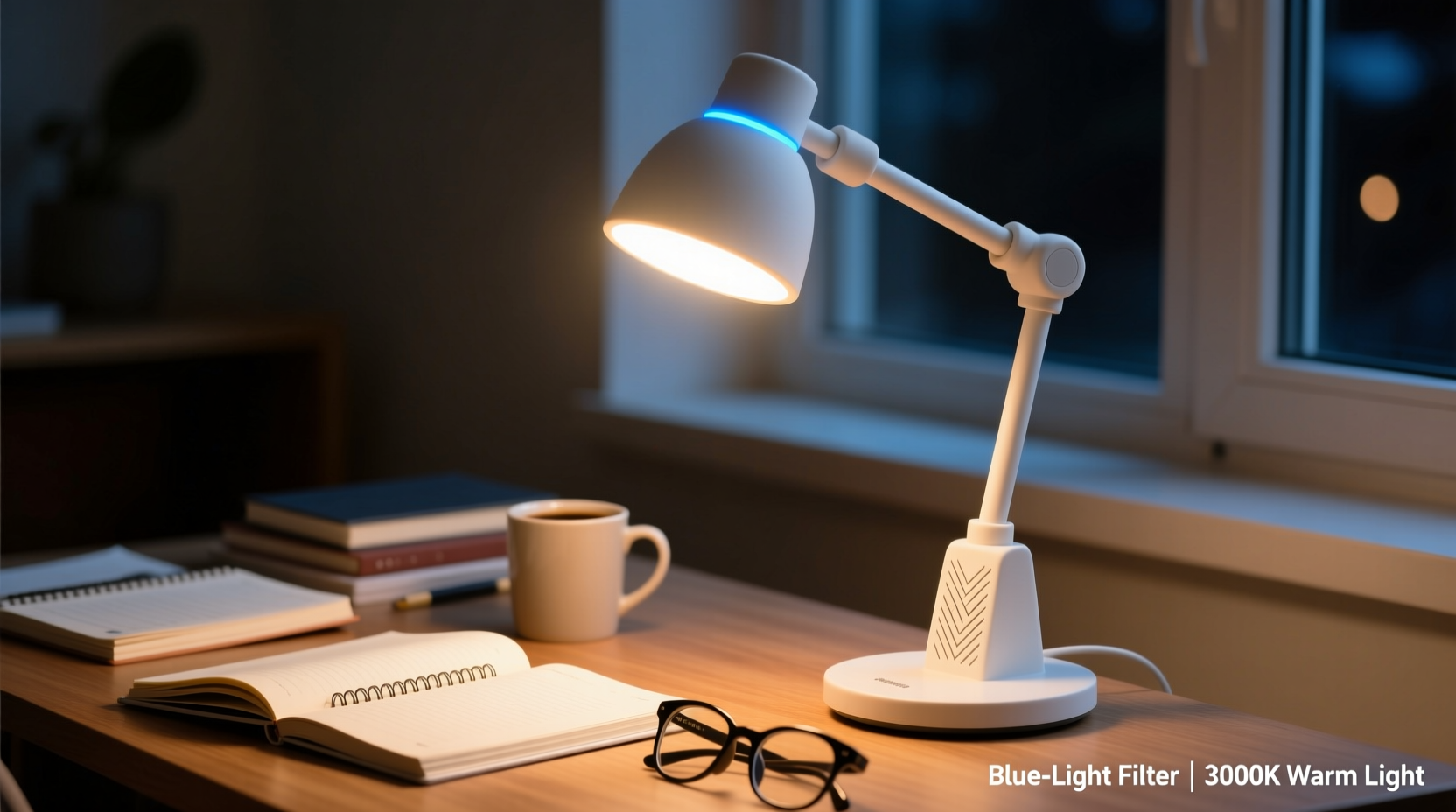
Eye fatigue, also known as eye strain, occurs when your eyes work harder than usual to focus on tasks—especially in suboptimal lighting. Symptoms include dryness, blurred vision, headaches, and difficulty concentrating. Night studying amplifies these risks because natural daylight, which regulates our biological rhythms and supports visual clarity, is absent.
The human eye responds differently to various wavelengths of light. Blue-enriched white light (above 5000K) mimics midday sunlight and enhances alertness but can suppress melatonin production, making it harder to fall asleep after late-night sessions. On the other hand, warm light (below 3000K) feels cozy but may lack the clarity needed for reading dense text. The solution lies in balance: adjustable lamps that allow users to shift from cooler tones during active study phases to warmer ones as bedtime approaches.
“Poor lighting forces the ciliary muscles in the eye to constantly adjust, leading to micro-fatigue that accumulates over time.” — Dr. Lena Park, Optometrist and Vision Health Researcher
Key Features of an Eye-Friendly Desk Lamp
Not all desk lamps are created equal. To reduce eye fatigue during nighttime study, look for specific technical and ergonomic characteristics:
- Adjustable Color Temperature: Lamps with a range between 2700K (warm white) and 5000K (cool daylight) let you match lighting to task and time of day.
- Dimmable Brightness: The ability to fine-tune lumens ensures you're not overwhelmed by excessive brightness in a dark room.
- Flicker-Free Operation: LED drivers should be constant-current to prevent imperceptible flickering that causes neural stress.
- Glare Control: Diffused shades, indirect lighting designs, or adjustable arms help direct light precisely where it’s needed—on the page, not in your eyes.
- CRI (Color Rendering Index) >90: High CRI means colors appear more natural, reducing contrast strain when reading printed materials or diagrams.
- Flexible Positioning: Articulating arms or rotating heads ensure optimal angles regardless of desk setup.
- Smart Features (Optional): Auto-dimming based on ambient light, timers, or app integration enhance usability.
Top Recommended Lamps for Night Studying
Based on performance reviews, optometric recommendations, and user feedback, the following models stand out for their ability to reduce eye fatigue while supporting effective study habits.
| Lamp Model | Color Temp Range | Brightness Control | CRI | Special Features |
|---|---|---|---|---|
| BenQ WiT MindDuo | 2700K–5700K | Fully dimmable | 95+ | Dual sensors, auto-brightness, wide illumination |
| Lumiy Lightblade 1500 | 3000K–5000K | Precise dimming | 98 | Glare-free blade design, minimal shadow |
| Xiaomi Mi LED Desk Lamp 1S | 2700K–6500K | Touch dimmer + app control | 90 | Affordable, smart home integration |
| Philips SmartSleep Wake-Up Light | 2200K–6000K | Gradual dimming/simulation | 92 | Dawn simulation, circadian support |
| TaoTronics TT-DL16 | 3000K–6000K | Five-level dimming | 95 | USB charging port, memory function |
The BenQ WiT MindDuo leads the category with its intelligent dual-sensor system that adjusts output based on ambient conditions and usage duration. Its broad, shadow-free beam covers both books and laptops evenly—a rare feature among standard lamps. Meanwhile, the Lumiy Lightblade uses a horizontal light guide to flood the desk surface uniformly, eliminating hotspots and reflections common with downward-pointing LEDs.
Real Example: A Student’s Transformation
Sophie, a third-year medical student at McGill University, used to study nightly under a basic LED clip lamp. After two hours, she regularly experienced migraines and struggled to retain information. She upgraded to the BenQ WiT MindDuo after reading about its adaptive lighting technology. Within a week, she noticed fewer headaches and improved concentration. “I can now study for three hours straight without feeling drained,” she said. “The light feels like it’s working with me, not against me.”
How to Set Up Your Study Lighting for Minimal Eye Strain
Selecting the right lamp is only half the battle. Proper placement and usage habits are equally important. Follow this step-by-step guide to optimize your nighttime study environment.
- Assess Your Environment: Turn off overhead lights and observe how much natural or ambient light remains. This helps determine how much supplemental lighting you need.
- Position the Lamp Correctly: Place it on the front-left corner of your desk if you’re right-handed (or front-right if left-handed) to prevent hand shadows.
- Angle the Light: Aim the beam across your work surface at a 45-degree angle, avoiding direct line-of-sight to the bulb.
- Start Cool, Transition Warm: Begin your study session with a color temperature around 4000K–5000K for alertness. As bedtime nears (within 60–90 minutes), lower it to 2700K–3000K.
- Use Dimming Wisely: Adjust brightness until text appears crisp but not glowing. A good rule: you should see the page clearly without noticing the lamp itself.
- Pair with Ambient Lighting: Never study in complete darkness. Use a low-lumen floor lamp or wall sconce to reduce contrast between screen/page and surroundings.
- Take Visual Breaks: Every 20 minutes, look at something 20 feet away for 20 seconds (the 20-20-20 rule).
Common Mistakes That Increase Eye Fatigue
Even with a high-quality lamp, poor habits can undermine its benefits. Avoid these frequent errors:
- Using a lamp that’s too bright: Excessive lumens cause pupil constriction and discomfort, especially in dark rooms.
- Ignoring color temperature shifts: Staying on cool white late into the night disrupts melatonin and delays sleep onset.
- Placing the lamp behind you: This creates backlighting and screen glare, forcing your eyes to work harder.
- Using outdated or flickering bulbs: Low-quality LEDs or aging CFLs often flicker at frequencies imperceptible to the conscious mind but still fatiguing.
- Forgetting ambient light: High contrast between a brightly lit desk and a dark room strains peripheral vision adaptation.
“The biggest mistake people make is treating lighting as static. Your eyes need dynamic support throughout the evening.” — Dr. Arjun Mehta, Circadian Rhythm Specialist
Checklist: Choosing & Using Your Ideal Study Lamp
Before purchasing or adjusting your current setup, go through this practical checklist:
- ✅ Does the lamp offer adjustable color temperature (ideally 2700K–5000K)?
- ✅ Is brightness fully dimmable via touch, dial, or app?
- ✅ Does it have a CRI rating above 90?
- ✅ Is the light source flicker-free and PWM-free?
- ✅ Can the arm or head be adjusted for precise direction?
- ✅ Is the beam wide and even, covering both book and keyboard?
- ✅ Is there minimal blue light emission at lowest setting?
- ✅ Is the base stable and cord managed to prevent tripping?
- ✅ Are there additional features like timers or motion sensors?
- ✅ Is ambient lighting present in the room to reduce contrast?
Frequently Asked Questions
Can a desk lamp really reduce eye fatigue?
Yes. Studies show that well-designed task lighting with proper color temperature, brightness control, and glare reduction significantly lowers ocular discomfort. A 2021 Journal of Environmental Psychology study found that participants using adjustable LED lamps reported 43% less eye strain compared to those using fixed-output bulbs.
Is warm or cool light better for studying at night?
It depends on timing. Cool light (4000K–5000K) improves alertness and cognitive processing early in the evening. However, as bedtime approaches, warm light (2700K–3000K) supports melatonin release and reduces sleep disruption. The best lamps allow transition between both.
Do I need a smart lamp for effective studying?
Not necessarily. While smart features like scheduling and app control add convenience, they aren’t essential. What matters most is consistent access to flicker-free, high-CRI, and adjustable lighting. Many non-smart lamps excel in these core areas.
Conclusion: Illuminate Smarter, Study Better
The right desk lamp does more than light up a page—it protects your vision, sharpens your focus, and respects your body’s natural rhythms. Investing in a high-performance, eye-friendly lamp like the BenQ WiT MindDuo or Lumiy Lightblade pays dividends in comfort, productivity, and long-term eye health. Combine quality hardware with smart usage habits: adjust color temperature as the night progresses, avoid stark contrasts, and take regular visual breaks. Small changes in lighting can yield significant improvements in how you feel and perform.
🚀 Ready to transform your study experience? Evaluate your current lamp using the checklist above—and share your favorite eye-friendly lighting tips in the comments below.








