The moment you walk into a room with a freshly cut pine tree, the crisp, resinous aroma fills your lungs—earthy, sharp, and unmistakably festive. It’s one of the most evocative sensory experiences of the holiday season. But what if you opt for an artificial tree? Can it replicate that same deep, woodsy fragrance? The debate between artificial and real Christmas trees often centers on convenience, environmental impact, and aesthetics—but when it comes to scent, the answer isn’t as straightforward as you might think.
Scent plays a powerful role in memory and emotion. For many, the smell of a real evergreen is synonymous with childhood holidays, family gatherings, and warmth. Yet modern artificial trees come with claims of “scent-infused needles” or “built-in pine fragrance.” Are these innovations convincing, or just marketing gimmicks? To determine which tree truly delivers a superior olfactory experience at home, we need to examine how scent works, how each tree type produces (or mimics) it, and what science and user experience tell us.
The Science Behind the Christmas Tree Smell
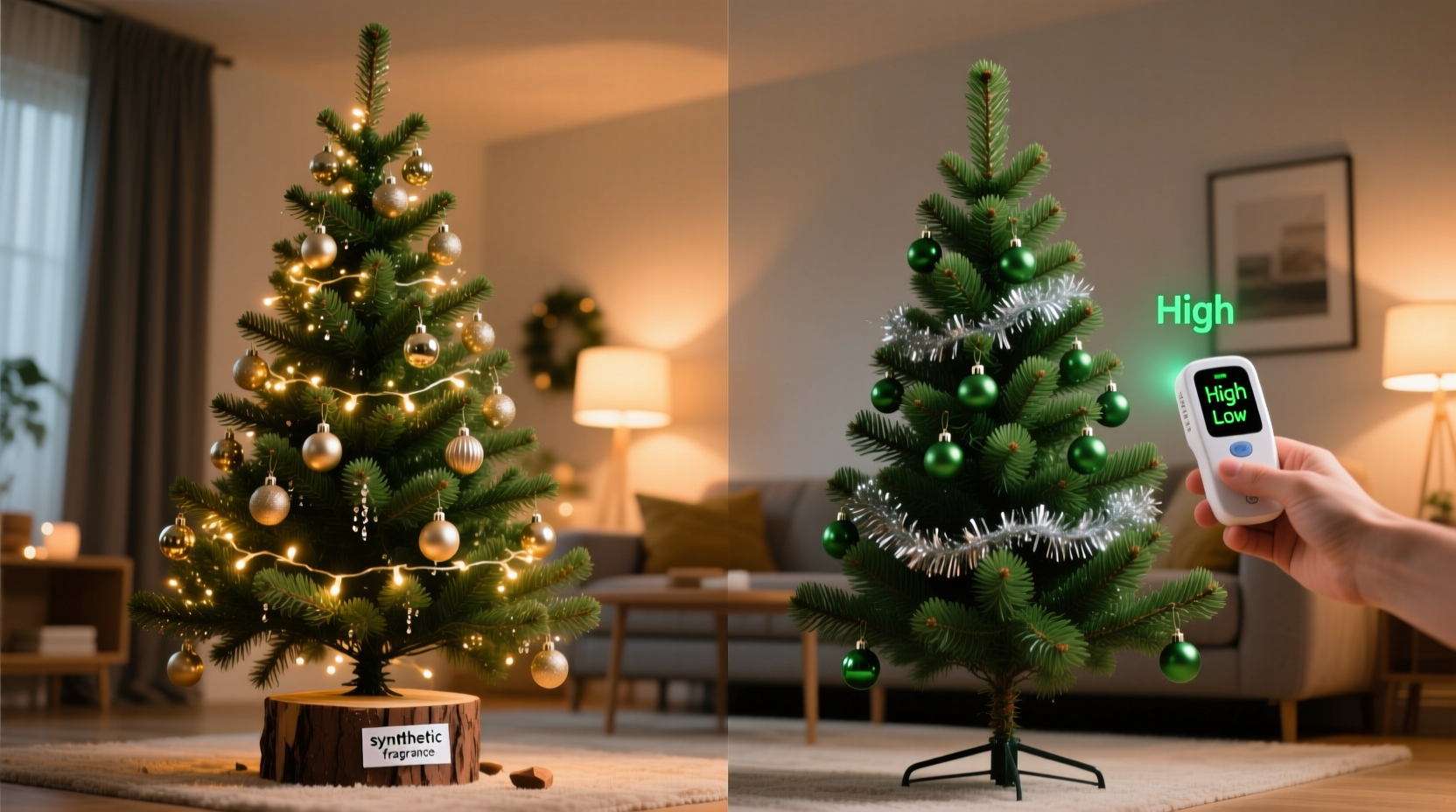
The distinctive scent of a real Christmas tree comes from volatile organic compounds (VOCs) released by the tree’s needles and bark. These include pinene, limonene, and camphene—molecules responsible for the sharp, citrusy, and balsamic notes associated with conifers like fir, spruce, and pine.
When a tree is cut, it continues to respire. As moisture escapes and cellular structures break down slightly, more VOCs are released. This means the scent intensifies during the first few days after setup, peaks around day three to five, and gradually fades over the next two to three weeks. Factors like room temperature, airflow, and hydration levels influence how strong and long-lasting the aroma remains.
In contrast, artificial trees—typically made from PVC or PE plastic—emit no natural scent. Any fragrance must be artificially introduced, either through added sprays, infused plastics, or external diffusers. These synthetic scents are designed to mimic the real thing but operate differently on a chemical and perceptual level.
“Natural tree scent is dynamic—it changes throughout the day and responds to environmental conditions. Artificial fragrances tend to be static and can become overwhelming or cloying.” — Dr. Lena Peterson, Environmental Olfaction Researcher, University of Vermont
Real Trees: Authentic Aroma, But With Trade-Offs
There’s no substitute for the authentic, complex bouquet of a real evergreen. Whether it’s the bright tang of a Fraser fir, the sweet earthiness of a Balsam fir, or the citrus-tinged freshness of a Douglas fir, each species offers a unique olfactory profile. Once set up in water, a healthy tree steadily releases its essential oils, creating a subtle yet pervasive ambient scent.
The fragrance evolves naturally. In the morning, cooler temperatures may mute the aroma; in the afternoon, sunlight warming the needles can trigger a stronger burst of scent. This variability mirrors the way nature behaves and contributes to the immersive, nostalgic feeling of having a real tree.
However, real trees come with drawbacks:
- Allergies: Some people react to mold spores or pollen on real trees, leading to respiratory discomfort.
- Needle drop: As the tree dries, it sheds needles, requiring frequent cleaning.
- Limited lifespan: Most real trees last 3–4 weeks before drying out completely and becoming a fire hazard.
- Environmental cost: While many are sustainably farmed, transportation and disposal contribute to carbon emissions unless composted.
Artificial Trees: Scent Innovation and Limitations
Manufacturers have responded to consumer demand for a “realistic” experience by introducing scented artificial trees. Some models feature plastic needles infused with microcapsules of pine-scented oil that rupture when touched. Others rely on built-in diffusers or recommend pairing the tree with commercial sprays.
While these solutions aim to recreate the holiday aroma, they fall short in key ways:
- Uniformity: Unlike real trees, artificial scents don’t fluctuate naturally. They either remain faint or become overpowering, especially in small rooms.
- Chemical undertones: Many users report that artificial pine smells “too clean,” “plastic-like,” or medicinal—missing the organic depth of real evergreens.
- Short-lived effect: Infused scents typically fade within days. Reapplication of sprays is needed, which can lead to residue on ornaments or furniture.
- No emotional resonance: Because the brain associates scent with memory, a synthetic version lacks the subconscious trigger of authenticity.
That said, advancements in encapsulation technology are improving. Some premium brands now use time-release fragrance beads embedded in the trunk or branches, offering a more consistent, gradual emission. Still, none match the complexity of a living tree’s natural chemistry.
Comparative Analysis: Scent Performance at Home
| Feature | Real Christmas Tree | Artificial Christmas Tree |
|---|---|---|
| Natural Scent Production | Yes – continuous release of VOCs | No – requires external fragrance |
| Scent Authenticity | High – complex, evolving aroma | Low to Moderate – often flat or artificial |
| Scent Longevity | 2–4 weeks (peaks early) | Hours to days (unless re-sprayed) |
| User Control Over Intensity | Limited – depends on environment | High – adjustable via sprays/diffusers |
| Allergy Risk | Moderate – mold, sap, pollen | Low – unless sensitive to synthetic fragrances |
| Emotional Impact | Strong – tied to tradition and memory | Weak to Moderate – varies by individual |
The data shows that while artificial trees offer more control, they lack the organic richness and psychological depth of real trees. However, for households with allergies, pets, or limited storage space, the trade-off may be worth it—even if it means sacrificing some sensory authenticity.
Enhancing the Experience: Tips for Maximizing Scent at Home
Whether you choose real or artificial, there are ways to improve the olfactory experience of your Christmas tree.
For Real Trees:
- Choose high-scent species like Balsam fir or Scotch pine.
- Buy locally and cut fresh—older trees lose potency.
- Place the tree away from heat sources to slow drying and prolong scent.
- Add natural boosters: hang orange slices, cinnamon sticks, or clove-studded pomanders nearby.
For Artificial Trees:
- Use high-quality essential oil sprays with real pine, spruce, or fir oil.
- Avoid aerosol air fresheners—they can leave oily residues.
- Place a small diffuser near the base with 5–6 drops of conifer essential oil.
- Store the tree with cedar blocks or lavender sachets to prevent mustiness.
Mini Case Study: The Johnson Family’s Holiday Experiment
The Johnsons, a family of four in Portland, Oregon, decided to test the scent difference firsthand. In 2022, they used a pre-lit artificial tree with “scent-infused tips.” Despite following instructions, they found the fragrance barely noticeable after two days. “It smelled like air freshener samples from a mall,” said 14-year-old Mia. “Not cozy at all.”
The following year, they switched to a locally grown Noble fir. Within hours of setup, the house was filled with a rich, woodsy aroma. “I cried when I walked in,” said mother Rachel Johnson. “It reminded me of my grandmother’s house when I was little.”
They acknowledged the extra effort—watering daily, vacuuming needles—but agreed the sensory payoff was worth it. “We’ll never go back to artificial for the holidays,” she said. “The smell is part of the magic.”
Step-by-Step Guide: Choosing the Right Tree for Your Scent Preferences
- Assess your priorities: Do you value authenticity and tradition, or convenience and reuse?
- Consider health factors: Check for allergies to mold, sap, or synthetic fragrances.
- Research tree species: Balsam fir = strongest scent; Douglas fir = sweet citrus; White pine = mild, soft aroma.
- Test artificial options: Visit stores to smell pre-scented models before buying.
- Plan for maintenance: Real trees need daily watering; artificial ones need proper storage to avoid stale odors.
- Supplement wisely: Use natural scent enhancers regardless of tree type to deepen the atmosphere.
- Evaluate yearly: After the holidays, reflect: Did the scent meet expectations? Would you change anything next year?
Frequently Asked Questions
Can I make my artificial tree smell like a real one?
Yes, but not permanently. Use essential oil diffusers, DIY sprays, or place fresh greenery (like pine boughs or cedar garlands) around the base. Avoid spraying oils directly on plastic, as this can degrade materials over time.
Why does my real tree stop smelling after a week?
As the tree dehydrates, its ability to emit VOCs decreases. Keeping the water reservoir full and avoiding heat sources can extend scent life. Cutting a fresh inch off the trunk upon arrival also helps with water uptake.
Are scented artificial trees safe for pets?
Some synthetic fragrances contain chemicals toxic to cats and dogs if ingested or inhaled in large amounts. Look for pet-safe essential oil alternatives and avoid trees with strong chemical odors. Always monitor pets around new products.
Conclusion: Which Tree Actually Smells Better?
The evidence is clear: real Christmas trees produce a richer, more authentic, and emotionally resonant scent than any artificial alternative currently available. Their natural fragrance is dynamic, complex, and deeply tied to human memory and seasonal joy. No amount of infused plastic or synthetic spray can fully replicate the biochemical symphony of a living evergreen.
That doesn’t mean artificial trees have no place in the modern home. For those prioritizing convenience, longevity, or managing health concerns, they remain a practical choice. With thoughtful enhancements—like natural diffusers or complementary greenery—the gap in scent experience can be narrowed, though never fully closed.
Ultimately, the “better” smell depends on what you’re seeking. If nostalgia, authenticity, and sensory immersion matter, a real tree is unmatched. If consistency, reusability, and low maintenance are paramount, an artificial tree—augmented wisely—can still deliver a pleasant holiday atmosphere.
💬 What does Christmas smell like to you? Share your favorite tree memories, scent hacks, or traditions in the comments—let’s keep the conversation growing!