Vintage bubble machines evoke nostalgia for decades past—especially during the holiday season when their swirling soapy orbs once danced under twinkling Christmas lights. Today, many collectors and decorators are revisiting these retro devices to add whimsy to seasonal displays. But as modern LED Christmas lights dominate the market, a pressing question arises: Can you safely integrate a vintage bubble machine into a setup powered by today’s lighting technology? The answer isn’t simply yes or no—it depends on several technical, electrical, and environmental factors that must be carefully evaluated.
While the charm of combining old-world charm with modern efficiency is undeniable, doing so without proper precautions risks equipment failure, fire hazards, or damage to both the bubble machine and lighting system. This article explores the compatibility between vintage bubble machines and contemporary Christmas lights, offering practical guidance for safe, festive integration.
Understanding Vintage Bubble Machines
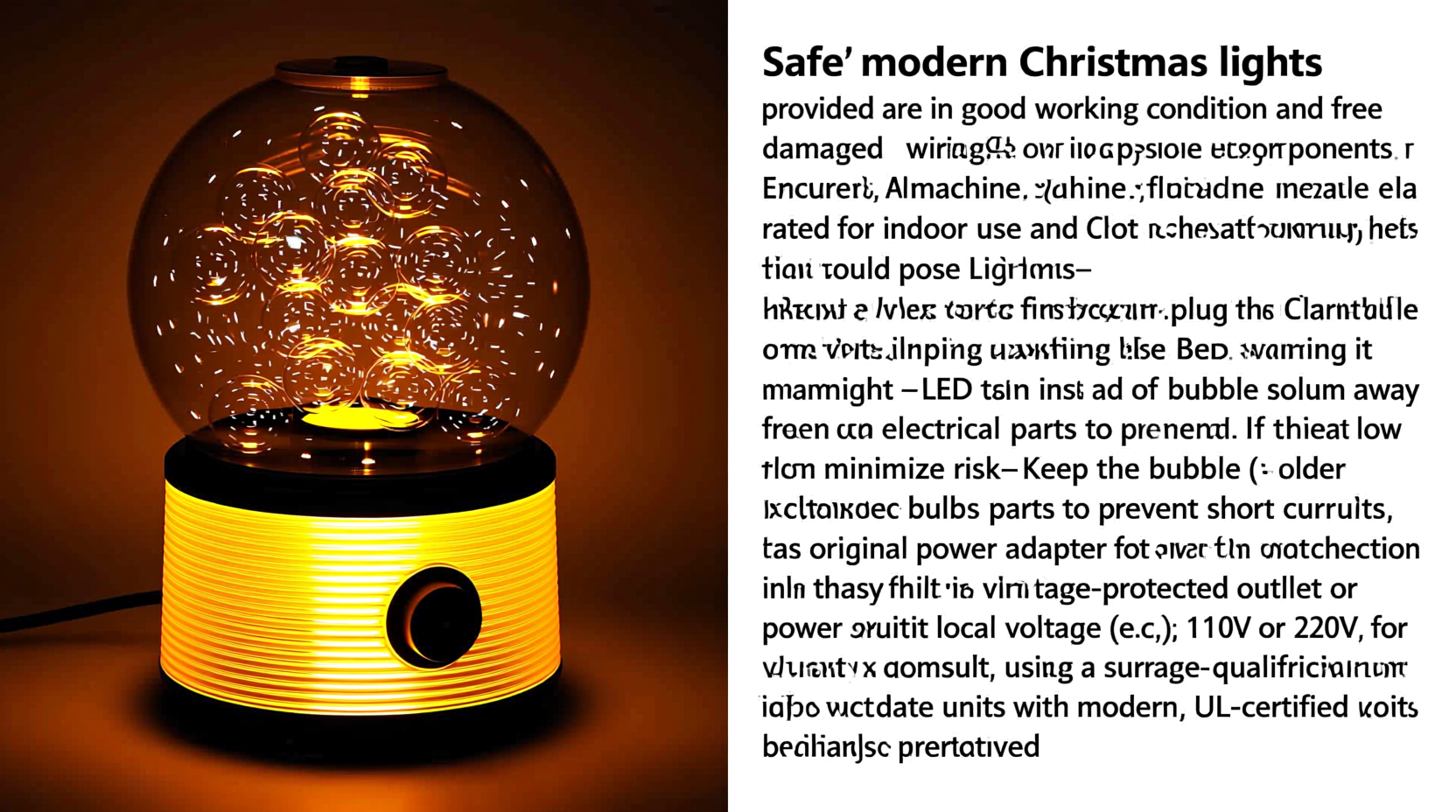
Bubble machines from the 1970s through the early 1990s were designed primarily for indoor use in homes, parties, and promotional events. Most operated on standard 120V AC household current but featured simple motor-driven fans and heating elements to generate bubbles from liquid reservoirs. They typically included basic switches, low-voltage motors, and exposed wiring encased in plastic housings that may have degraded over time.
Unlike today’s sealed, energy-efficient units, vintage models often lack surge protection, thermal cutoffs, or grounding mechanisms. Their internal components—wiring, capacitors, and solder points—are prone to corrosion, brittleness, and insulation breakdown after decades of storage. Even if a unit appears functional, its ability to handle variable loads or operate alongside modern electronics is uncertain.
Tip: Never assume a vintage appliance is safe just because it powers on. Internal wear may not be visible but can still pose serious risks.Modern Christmas Lights: Efficiency Meets Sensitivity
Today’s Christmas lights—particularly LED varieties—are engineered for low power consumption, long life, and precise voltage regulation. Most operate at 12–24 volts DC when using adapters or controllers, though plug-in strings still connect to 120V outlets. These systems often include microcontrollers, dimming circuits, and synchronization features that make them sensitive to fluctuations in current, grounding issues, or electromagnetic interference (EMI).
When connected to the same circuit as older appliances like bubble machines, modern lights may flicker, reset, or fail prematurely due to voltage drops or noise generated by aging motors and unshielded wiring. In some cases, back-feeding from a malfunctioning vintage device could damage light controllers or even trip GFCI outlets.
Key Differences Between Old and New Electrical Behavior
| Feature | Vintage Bubble Machines | Modern Christmas Lights |
|---|---|---|
| Power Draw | High (50–100W), inconsistent | Low (2–10W per string) |
| Voltage Tolerance | Low; designed for stable input | Moderate to high with regulators |
| Grounding | Often ungrounded (2-prong plugs) | Frequently grounded (3-prong) or double-insulated |
| EMI Emission | High (brushed motors, loose wiring) | Low (filtered drivers) |
| Lifespan Expectancy | 10–15 years (original design) | 25,000+ hours (LEDs) |
���Mixing vintage appliances with modern low-voltage lighting requires careful circuit management. A single ungrounded motor can induce enough noise to disrupt smart lighting sequences.” — Dr. Alan Reyes, Electrical Systems Engineer, Holiday Tech Labs
Safety Risks of Combining Old and New Devices
The primary concern when pairing a vintage bubble machine with modern Christmas lights is electrical incompatibility. Several interrelated risks emerge:
- Overloaded circuits: Older bubble machines draw more power than most LED light strings. Plugging both into the same outlet strip can exceed capacity, especially if other decorations are involved.
- Ground faults: Many vintage units lack proper grounding. If moisture from the bubble solution leaks onto internal components, it could electrify the casing, posing shock hazards.
- Electromagnetic interference (EMI): Unshielded motors in bubble machines emit radio-frequency noise that can interfere with digital controllers used in programmable light shows.
- Heat buildup: Outdated insulation and worn bearings increase friction and heat output. When placed near flammable materials (like tinsel or dry trees), this creates a fire risk.
- Moisture exposure: Bubbles produce humidity and residue. If mist contacts nearby light sockets or extension cords, it may cause short circuits or corrosion.
These dangers are compounded when devices share an extension cord or power strip not rated for mixed loads. A common scenario involves plugging everything into a single indoor-rated strip outdoors, which violates basic electrical codes and increases failure likelihood.
Step-by-Step Guide to Safe Integration
If you're determined to blend vintage charm with modern lighting, follow this structured approach to minimize risk:
- Inspect the bubble machine thoroughly. Look for cracked casings, frayed wires, rust, or mineral deposits inside the reservoir. Smell for mustiness or burnt insulation. If any red flags appear, do not proceed.
- Test independently on a GFCI-protected outlet. Plug only the bubble machine into a ground-fault circuit interrupter (GFCI) outlet. Run it for 15 minutes. Check for overheating, strange noises, or tripped breakers.
- Measure actual power draw. Use a watt-meter to determine how much electricity the machine consumes. Compare this to your outlet strip’s maximum load (usually labeled on the back).
- Use separate circuits for lights and machine. Ideally, power the bubble machine from one wall outlet and the lights from another on a different breaker. Avoid daisy-chaining power strips.
- Elevate and isolate the bubble unit. Place it on a non-conductive stand away from water contact with cords or light strands. Use a splash guard or tray underneath to catch overflow.
- Monitor operation continuously. Never leave the setup unattended while running, especially overnight or during parties where distractions occur.
- Limit runtime. Operate the machine in 20–30 minute intervals to prevent motor burnout and reduce heat accumulation.
Real Example: A Collector’s Holiday Display Gone Wrong
In 2022, Mark T., a vintage toy collector in Ohio, attempted to recreate his childhood living room display using a 1978 bubble machine inherited from his parents. He paired it with a new set of Wi-Fi-controlled LED icicle lights hung along the mantle. Both were plugged into a six-outlet power strip behind the TV stand.
Initially, the setup worked well. However, after two hours of continuous operation, the lights began flashing erratically. Within minutes, the entire string went dark. Upon inspection, Mark found the bubble machine’s motor housing was hot to the touch, and the power strip had tripped. Further testing revealed that the motor’s brush assembly was arcing internally, causing voltage spikes that damaged the LED controller’s IC chip.
Though no fire occurred, the incident cost Mark $80 in replacement lights and prompted him to reevaluate his holiday wiring practices. He now uses dedicated circuits, keeps vintage devices elevated and monitored, and avoids combining motorized antiques with digital lighting systems.
Checklist for Safe Operation
Before connecting your vintage bubble machine to any holiday lighting setup, verify the following:
- ✅ Unit has been cleaned and inspected for damage
- ✅ Power cord is intact with no exposed wires
- ✅ Operates smoothly without grinding or smoke
- ✅ Plugged into a GFCI outlet or protected circuit
- ✅ Located at least 3 feet away from light strings and control boxes
- ✅ Not sharing a power strip with sensitive electronics
- ✅ Used only indoors or under covered, dry areas if outside
- ✅ Supervised during operation and turned off when unattended
Frequently Asked Questions
Can I use a surge protector with a vintage bubble machine?
Yes, but choose one with high joule ratings and individual circuit protection. Note that surge protectors won’t compensate for internal component degradation in old appliances. They offer limited defense against catastrophic failure.
Will bubble residue damage my LED lights?
Possibly. Soapy mist can leave conductive films on connectors and sockets. Over time, this may lead to corrosion or short circuits, especially in outdoor settings. Regularly wipe down light ends and avoid direct spray toward wiring.
Is there a safer alternative to using a real vintage unit?
Absolutely. Modern bubble machines designed for holiday use are widely available. They feature sealed motors, lower power draw, and built-in timers. Some even sync with music or lighting systems, providing nostalgic effects without the risks.
Final Recommendations and Conclusion
While the idea of blending a vintage bubble machine with modern Christmas lights is appealing, the practical challenges and safety concerns are significant. These older devices were never intended to coexist with today’s sensitive electronic ecosystems. Even minor electrical anomalies can compromise performance, shorten lifespans, or create hazardous conditions.
If preserving authenticity matters, consider displaying the vintage unit unplugged as a decorative centerpiece. For active use, opt for a reproduction model that mimics the retro aesthetic but meets current safety standards. Alternatively, run the original machine briefly and separately from your main light display—never on shared circuits.
The holidays should be joyful, not risky. By respecting the limitations of aging technology and prioritizing electrical safety, you can enjoy nostalgic flair without compromising peace of mind.
🚀 Ready to upgrade your holiday setup? Share your experiences with vintage decor and modern lighting in the comments below. Let’s build a safer, smarter way to celebrate!