
For decades, Christmas villages have been a cherished holiday tradition—miniature towns filled with glowing buildings, snow-dusted rooftops, and whimsical scenes that bring warmth and nostalgia. Traditionally, these displays were entirely manual: lights plugged in individually, trains wound by hand, and decorations adjusted piece by piece. But in recent years, smart Christmas villages have emerged, offering Wi-Fi connectivity, app control, voice integration, and automated lighting sequences. The question now facing many enthusiasts is whether these high-tech upgrades justify their premium price tags.
The answer isn’t straightforward. It depends on your priorities: convenience, customization, budget, and how deeply you engage with your holiday display. To help you make an informed decision, we’ll explore the differences between smart and manual Christmas villages across several key areas—cost, setup, functionality, longevity, and emotional value.
Cost Comparison: Upfront Investment vs. Long-Term Value
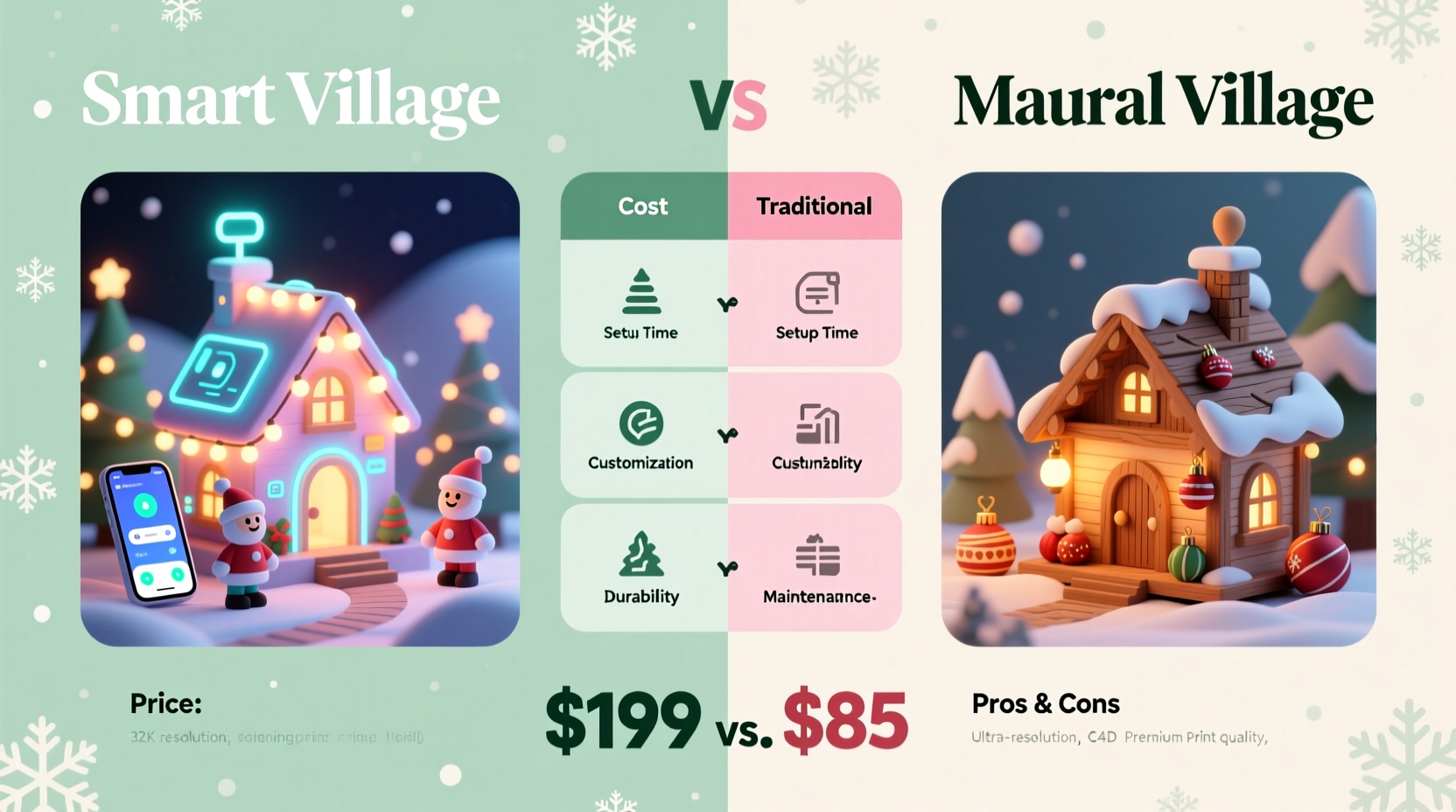
Smart Christmas villages typically cost 50% to 100% more than their manual counterparts. A basic manual village building might retail for $40–$70, while a comparable smart version—with app-controlled lighting, sound effects, and motion—can range from $90 to $150 or more. Entire starter kits with multiple smart buildings often exceed $300, whereas a full manual set can be assembled for under $150.
But cost isn’t just about purchase price. Consider long-term value:
- Labor savings: Smart systems reduce setup time and daily maintenance.
- Energy efficiency: Many smart models use LED lighting with programmable timers, reducing electricity use.
- Durability: Higher-end smart units are often built with better materials to support electronics.
Setup and Maintenance: Time, Effort, and Technical Skill
Manual Christmas villages require hands-on effort. Each building must be plugged into an outlet or power strip, often leading to a web of cords behind the display. Adjusting lighting means physically turning switches or unplugging units. If one building flickers, troubleshooting usually involves checking connections, bulbs, and fuses.
Smart villages streamline this process significantly. With a single app, you can:
- Turn all buildings on or off simultaneously
- Schedule lighting times based on sunset/sunrise
- Sync animations (e.g., train movements, rotating carousels)
- Control brightness and color temperature remotely
However, smart systems introduce new challenges:
- Wi-Fi dependency: A spotty network can disrupt control or cause devices to go offline.
- App compatibility: Some brands use proprietary apps that may not be updated regularly.
- Learning curve: Older users or tech-averse individuals may find setup frustrating.
“While smart villages save time during the season, they demand more upfront configuration. You’re trading physical labor for digital setup.” — Daniel Reyes, Home Automation Consultant
Feature Breakdown: What You Gain (and Lose) with Smart Technology
To evaluate whether smart villages are worth it, let’s examine what additional features they offer—and how useful they really are.
| Feature | Smart Village | Manual Village |
|---|---|---|
| Remote Control | Yes, via smartphone or voice assistant | No – requires physical access |
| Automation & Scheduling | Full scheduling with geofencing options | Limited to plug-in timers |
| Lighting Effects | Dimming, color shifts, dynamic sequences | Fixed brightness, static colors |
| Motion Integration | Motorized parts synced with lighting | Some mechanical movement, no sync |
| Expandability | Brand-specific ecosystems; limited cross-compatibility | Universal plug types; easy mixing |
| Troubleshooting | App alerts, diagnostics (if supported) | Visual inspection required |
One standout advantage of smart villages is ambiance control. Imagine walking into your living room and saying, “Hey Google, turn on the Christmas village,” and watching the entire scene come alive—lights warming up gradually, music starting softly, trains beginning their journey. This level of immersion enhances the festive experience, especially during evening gatherings.
On the flip side, manual setups offer simplicity. There’s no need to worry about firmware updates, app crashes, or Bluetooth pairing failures. When the power goes out, a manual village comes back online instantly when restored. A smart system might take minutes—or longer—to reconnect.
Real-World Example: The Thompson Family’s Holiday Display Evolution
The Thompsons of Columbus, Ohio, have displayed a Christmas village for 18 years. Initially, they used a mix of thrift-store finds and seasonal purchases—manual buildings powered by extension cords and basic timers. Setting up the display took two full days each November, and managing daily on/off cycles was a chore.
In 2021, they invested $420 in a smart village starter kit featuring five Wi-Fi-enabled buildings, including a church with chimes, a toy shop with animated windows, and a moving trolley. They connected the system to Google Home and programmed a “Holiday Evening” routine that activates at sunset.
According to Sarah Thompson, “The first year paid for itself in saved time. We used to argue about who would remember to turn the lights on. Now, it just happens. The kids love watching the app light up the whole town from their tablets.”
Still, they kept two original manual pieces as sentimental anchors—one was her grandmother’s first village house. “There’s something special about plugging in that old bakery,” she said. “It reminds us where we started.”
Their hybrid approach highlights a growing trend: blending smart convenience with nostalgic authenticity.
Step-by-Step Guide: Choosing the Right System for Your Needs
Deciding between smart and manual doesn’t have to be all-or-nothing. Follow this timeline to assess what works best for your situation.
- Week 1: Assess Your Current Setup
Take inventory of existing pieces. Are they functional? Do they hold emotional value? Can they integrate with smart components? - Week 2: Define Your Goals
Ask: Do I want less daily management? Am I willing to learn new technology? Is ambiance more important than cost? - Week 3: Research Compatible Brands
Look for brands like Department 56 (with its SmartVillage line), Lemax, or Kurt Adler, which offer both manual and smart versions. Check app reviews and update history. - Week 4: Start Small with a Hybrid Test
Purchase one smart building and integrate it with your current display. Use a smart plug to control manual pieces remotely and test automation potential. - Week 5: Evaluate and Expand
After the season, reflect: Did the smart features enhance enjoyment? Was setup easier? Did reliability meet expectations? Decide whether to expand into a full smart ecosystem or stick with manual.
Longevity and Future-Proofing
One concern with smart Christmas villages is obsolescence. Unlike manual setups that can last decades with minimal care, smart systems depend on software support. If a manufacturer discontinues an app or stops issuing updates, your once-cutting-edge village could become a non-functional paperweight.
Consider these longevity factors:
- Brand reputation: Established names like Department 56 have maintained backward compatibility across generations.
- Hardware independence: Some smart buildings default to standard plug-in operation if Wi-Fi fails.
- Repairability: Manual units are easier to fix—replace a bulb, rewire a connection. Smart units often require professional servicing or full replacement.
Still, advancements in open protocols like Matter (for smart home devices) may improve cross-brand compatibility in the future, potentially extending the lifespan of today’s smart holiday products.
Frequently Asked Questions
Can I mix smart and manual Christmas village pieces?
Yes, absolutely. Many collectors create hybrid displays. Use smart plugs or Wi-Fi timers to control manual buildings remotely, and group them visually with smart pieces for a cohesive look.
Do smart Christmas villages use more electricity?
No—most smart models use energy-efficient LEDs and allow precise scheduling, which often results in lower overall consumption compared to manual setups left on for extended periods.
What happens if my Wi-Fi goes down?
It depends on the brand. Some smart buildings revert to standalone mode with basic lighting. Others may remain off until connectivity is restored. Always check product specifications for offline behavior.
Final Checklist Before You Buy
Before committing to a smart Christmas village, run through this checklist:
- ✅ Do I already own compatible manual pieces I’d like to keep?
- ✅ Is my home Wi-Fi reliable in the display area?
- ✅ Does the brand offer long-term app support and firmware updates?
- ✅ Can I control the system via voice assistants (Google, Alexa)?
- ✅ Are replacement parts available for motors, lights, or controllers?
- ✅ Does the price align with my expected usage (occasional vs. nightly viewing)?
Conclusion: Balancing Innovation and Tradition
Smart Christmas villages aren’t inherently “better” than manual ones—they’re different tools serving different needs. For tech-savvy families, busy professionals, or those seeking immersive holiday experiences, the convenience and ambiance of smart systems can justify the higher cost. The ability to automate, schedule, and control your display remotely adds a modern elegance to a timeless tradition.
Yet, for purists, budget-conscious decorators, or those who cherish the ritual of hands-on setup, manual villages remain deeply rewarding. There’s joy in the tactile process of arranging each piece, plugging in the wires, and watching the lights flicker to life—a small ceremony repeated each season.
The wisest approach may lie in balance. Begin with a core of meaningful manual pieces, then selectively incorporate smart elements where they add genuine value. This way, you preserve tradition while embracing innovation—without overspending or overcomplicating.
💬 Have you upgraded to a smart Christmas village—or stuck with manual? Share your experience, tips, or favorite brands in the comments. Your insights could help others find their perfect holiday balance.








