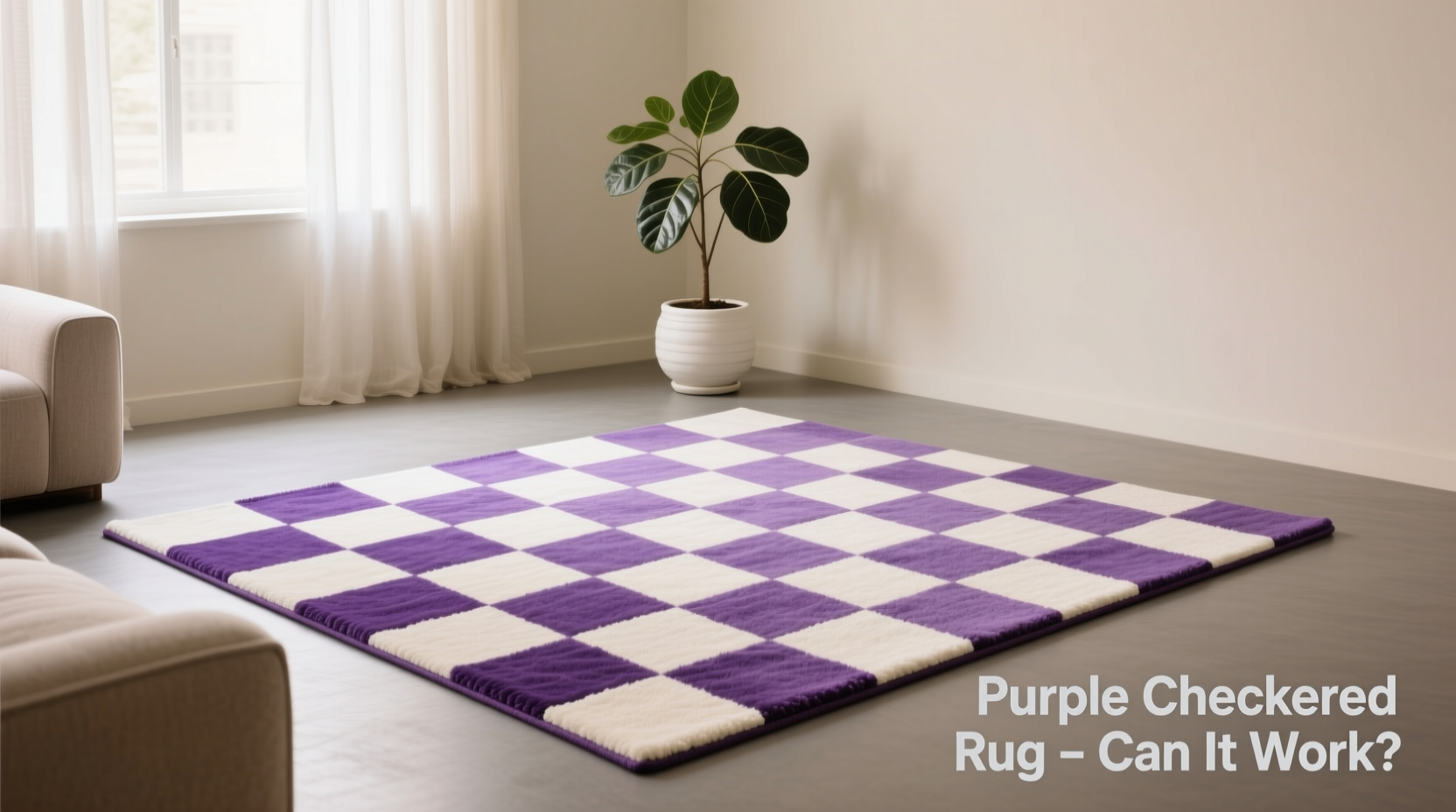
Neutral interiors are beloved for their timeless elegance, calming atmosphere, and design flexibility. Beiges, grays, whites, and soft taupes create a serene backdrop that allows furniture, art, and lighting to shine. But when you fall in love with a bold accent—like a purple checkered rug—it’s natural to hesitate. Will that pop of color disrupt the harmony? Or can it actually elevate your space?
The truth is, a purple checkered rug doesn’t have to clash with a neutral aesthetic. In fact, when used intentionally, it can become the focal point that brings depth, personality, and visual interest to an otherwise understated room. The key lies in understanding color theory, proportion, and context.
Understanding Color Harmony in Neutral Spaces
Neutrals are not devoid of color—they’re simply low in saturation and high in versatility. A well-designed neutral palette often includes subtle undertones: warm beiges with yellow or red bases, cool grays with blue or green hints, and off-whites with creamy or grayish casts. These undertones play a crucial role in how other colors interact within the space.
Purple exists on the cooler end of the spectrum, but its effect depends on its shade. Muted lavender or dusty plum will behave very differently from electric violet or deep eggplant. When paired with neutrals, softer purples tend to blend seamlessly, while bolder ones create contrast.
Checkered patterns add another layer. The alternating squares introduce rhythm and geometry, which can either energize a room or compete with existing lines—depending on scale and placement.
“Contrast isn’t the enemy of cohesion; imbalance is. A single bold element can anchor a neutral room if it’s grounded by repetition and intention.” — Lena Torres, Interior Design Consultant
How to Make a Purple Checkered Rug Work with Neutrals
Success hinges on thoughtful integration. Here’s how to ensure your rug enhances rather than overwhelms:
1. Match Undertones for Seamless Blending
Examine the undertones in both your rug and your existing decor. If your walls and furniture lean warm (beiges, creams, honey-toned woods), opt for a purple with red or mauve undertones. If your space is cooler (grays, charcoals, white oak), go for a bluish or lavender-based purple. This alignment prevents jarring contrasts.
2. Control the Scale of the Pattern
A large-scale checkered pattern can dominate a small room, while a tiny checker may get lost in a spacious loft. Aim for a medium-sized check—around 4 to 6 inches per square—that reads clearly without overwhelming. In open-concept spaces, position the rug under a defined seating area to give it purpose and containment.
3. Use the 60-30-10 Rule
This classic design principle allocates 60% of the room to the dominant color (your neutrals), 30% to a secondary color (perhaps upholstery or curtains), and 10% to an accent (your purple rug). Even if the rug covers floor space, its visual weight should feel like 10%. You can reinforce this by echoing the purple in small accessories—throw pillows, vases, or artwork—to distribute the color evenly.
Tip: Test your rug in natural and artificial light before committing. Purple can shift dramatically under warm bulbs versus daylight.Checklist: Pre-Installation Evaluation
- ✔️ Confirm the rug’s purple aligns with your space’s undertones
- ✔️ Measure the room and ensure the rug fits proportionally
- ✔️ Hold up fabric swatches or photos of the rug against your walls and furniture
- ✔️ Plan at least one additional use of purple elsewhere in the room
- ✔️ Ensure traffic flow won’t be disrupted by the pattern or texture
Mini Case Study: The Brooklyn Loft Transformation
Jessica, a graphic designer in Brooklyn, renovated her downtown loft with a monochromatic palette of warm grays and oat tones. She wanted serenity but feared sterility. During a trip to Istanbul, she fell for a handwoven purple-and-cream checkered rug. Skeptical but inspired, she brought it home.
Her designer advised placing the rug under the living area’s sectional, anchoring it with two charcoal-gray ottomans. They added a lavender-toned abstract painting above the sofa and introduced velvet throw pillows in a matching plum. The result? The rug became a conversation starter—not a clash. The repeated purple elements created rhythm, and the checkered pattern subtly echoed the grid of city windows outside.
“It didn’t overpower,” Jessica said. “It gave the room a heartbeat.”
Do’s and Don’ts: Purple Rugs in Neutral Rooms
| Do | Don’t |
|---|---|
| Choose a rug with cream or gray checks to maintain neutrality | Pair a bright purple rug with clashing colored accents |
| Use natural fiber rugs (wool, cotton) for texture without glare | Place a high-gloss, synthetic rug in a matte, organic space |
| Layer the rug over a larger neutral base rug for soft transition | Center a bold rug in a cluttered, busy layout |
| Repeat the purple in at least two other small elements | Introduce the rug as the only colorful item in the room |
Step-by-Step Guide to Styling Your Purple Checkered Rug
- Assess your current palette: Take photos of your room at different times of day. Note dominant undertones.
- Select the right shade of purple: Opt for muted, earthy purples (magenta, lilac, heather) over neon or primary hues.
- Determine ideal placement: Under a seating group, beside a bed, or in a reading nook—anchor it to functional zones.
- Balance with texture: Pair the rug with linen, wool, or wood finishes to soften the visual impact.
- Add complementary accents: Introduce purple in books, candles, or botanical prints to unify the scheme.
- Step back and evaluate: Live with the setup for 48 hours. Adjust accessories if the rug feels too loud.
Frequently Asked Questions
Will a purple checkered rug make my neutral room feel chaotic?
Not if it’s balanced. Chaos comes from dissonance, not color. As long as the purple complements your undertones and is echoed elsewhere, it will feel intentional, not random. Limit competing patterns elsewhere—avoid striped sofas or floral drapes if the rug is already geometric.
Can I use a purple rug in a minimalist neutral space?
Yes—minimalism isn’t about avoiding color, but about intentionality. A single bold rug can serve as the sole decorative statement in a minimalist room. Just keep surrounding elements simple, clean-lined, and uncluttered to let the rug breathe.
What furniture colors work best with a purple checkered rug?
Natural wood tones, black metal, gray upholstery, and cream fabrics all pair beautifully. Avoid furniture with strong competing colors unless they’re deliberately coordinated. For example, olive green can work with deep plum, but lime green will clash with lavender.
Conclusion: Embrace Contrast with Confidence
A purple checkered rug doesn’t have to disrupt your neutral aesthetic—it can redefine it. When chosen with care and styled with purpose, it becomes more than a floor covering; it becomes a statement of character. Neutrals provide the canvas, but bold accents like this rug supply the soul.
Design isn’t about avoiding risk—it’s about making informed choices that reflect who you are. If the rug speaks to you, there’s likely a way to make it work. Start small, test combinations, and trust your instincts. After all, the most memorable interiors aren’t those without color, but those where every hue has a reason to be there.
💬 Loved this guide? Share your own rug styling wins or challenges in the comments—we’d love to hear how you’re blending bold and neutral in your space!








