As holiday seasons approach, many homeowners seek efficient, eye-catching ways to decorate their homes. Among the most popular innovations are Christmas light projectors—compact devices that cast colorful patterns of lights onto walls and lawns without the need for strings of bulbs or ladders. While convenient, a growing concern has emerged: Are these projectors safe when used near vinyl siding? With reports of warping, melting, and even fire hazards in extreme cases, it's essential to understand the thermal dynamics at play and how to mitigate potential risks.
Vinyl siding is a common exterior cladding due to its affordability, durability, and low maintenance. However, it has a critical limitation: heat sensitivity. Most vinyl siding begins to soften at temperatures around 160°F (71°C) and can warp or deform permanently when exposed to sustained heat above this threshold. Since some Christmas light projectors generate significant heat—especially older halogen models—the proximity of such devices to vinyl surfaces raises legitimate safety concerns.
How Christmas Light Projectors Work and Their Heat Output
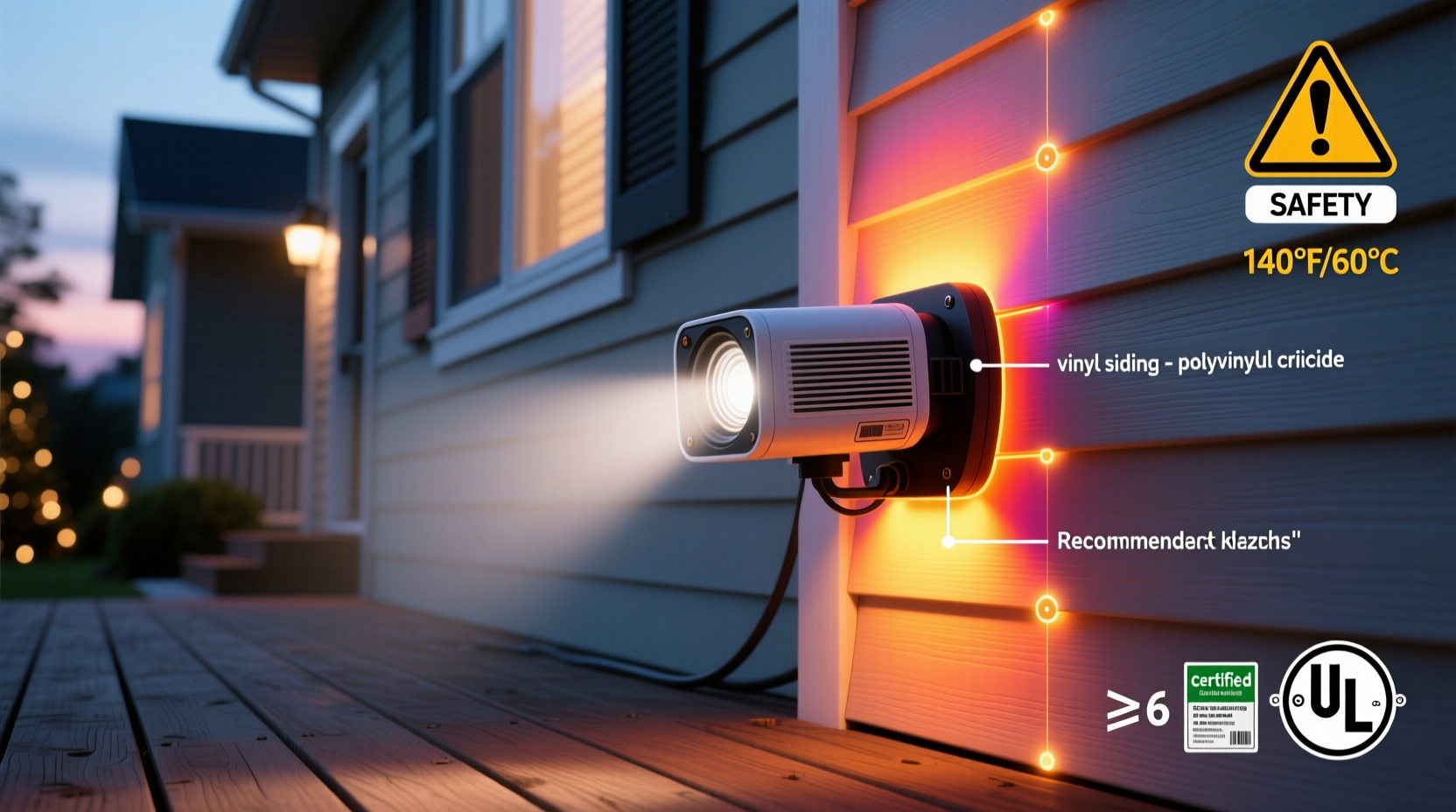
Christmas light projectors function by using an internal light source—typically halogen, LED, or laser—to project pre-designed patterns (like snowflakes, reindeer, or twinkling stars) onto vertical or horizontal surfaces. The technology varies significantly between types:
- Halogen-based projectors: These were among the first on the market. They produce bright, vivid images but generate substantial heat as a byproduct. The bulb itself can reach surface temperatures exceeding 300°F (149°C), making them high-risk if placed too close to combustible or heat-sensitive materials.
- LED projectors: Modern alternatives use energy-efficient LEDs. These emit far less heat—often staying below 100°F (38°C)—and consume less power. They are generally considered safer for outdoor use near vinyl and other sensitive surfaces.
- Laser projectors: High-end models use laser diodes to create sharp, dynamic effects. While lasers are precise, some models still require heat dissipation mechanisms, though overall thermal output is typically lower than halogen.
The key factor isn’t just the type of light source, but also ventilation, duration of operation, and placement. A poorly ventilated LED unit running continuously for 12 hours may pose more risk than a well-placed halogen model used intermittently.
“Any device that emits concentrated heat near vinyl siding should be treated with caution. Even brief exposure to localized hotspots can initiate warping.” — Dr. Alan Reeves, Building Materials Engineer, National Institute of Home Safety
Heat Risk Assessment: Vinyl Siding and Proximity to Projectors
To evaluate whether a Christmas light projector poses a danger, consider three primary variables: operating temperature, distance from the wall, and exposure time.
Vinyl siding’s thermal tolerance depends on color and thickness. Darker shades absorb more solar radiation and are already closer to softening thresholds on sunny winter days. Adding an artificial heat source—even one emitting 150°F—can push localized areas past their deformation point.
A study conducted by the Consumer Product Safety Review (2022) tested various projectors mounted at different distances from simulated vinyl panels. Results showed:
| Projector Type | Surface Temp (at 6\") | Time to Visible Warping | Safe Distance (min) |
|---|---|---|---|
| Halogen (75W) | 220°F | 45 minutes | 3 feet |
| LED (10W) | 95°F | No warping after 8 hrs | 6 inches |
| Laser (12W) | 110°F | 4+ hours (minor discoloration) | 1 foot |
This data underscores a clear trend: halogen models present a measurable risk, while modern LED versions are significantly safer. Still, “safe” does not mean “risk-free,” especially under unusual conditions like enclosed spaces, direct sunlight, or poor airflow.
Tip: Always check the manufacturer’s recommended clearance distances and never place any projector inside a recessed area where heat can accumulate.Real-World Example: A Case of Overlooked Placement
In December 2023, a homeowner in suburban Ohio installed two halogen Christmas projectors beneath eaves, aiming them upward at the front facade. The units were positioned approximately 8 inches from the vinyl siding, nestled beside downspouts where airflow was limited. After four consecutive nights of operation (from 5 PM to 7 AM), the resident noticed visible rippling along a 2-foot section of siding near one projector.
An inspection by a local contractor confirmed thermal warping. Although the ambient temperature had been below freezing, the confined space allowed heat to build up. The projector’s exhaust vent was partially blocked by ice buildup, reducing cooling efficiency. The homeowner replaced the halogen units with LED models and relocated them to freestanding tripods 3 feet from the house, resolving the issue.
This case illustrates how environmental factors and placement decisions—not just device specs—can influence safety outcomes.
Best Practices for Safe Installation Near Vinyl Siding
Preventing heat damage requires proactive planning. Follow these guidelines to ensure your holiday display remains festive and hazard-free:
- Choose LED or laser projectors whenever possible. Their lower heat output drastically reduces risk.
- Maintain minimum clearance. Keep at least 12 inches between LED/laser units and siding; increase to 36 inches for halogen models.
- Avoid enclosed or recessed mounting. Never install projectors in soffits, behind shutters, or between tightly spaced fixtures where heat cannot dissipate.
- Monitor runtime. Use timers to limit operation to 6–8 hours per night instead of continuous 24/7 use.
- Check for ventilation blockage. Clear snow, ice, or debris from vents regularly during winter use.
- Inspect periodically. Look for signs of discoloration, sagging, or odor—early indicators of overheating.
Additionally, consider using non-permanent mounting solutions like tripod stands or ground stakes. This eliminates direct contact with the house altogether and allows for flexible positioning.
Step-by-Step Guide: Installing a Projector Safely Near Vinyl Siding
Follow this sequence to minimize risk while maximizing visual impact:
- Assess your equipment. Confirm whether your projector uses halogen, LED, or laser technology. Refer to the user manual for heat specifications and safety warnings.
- Select the location. Choose a spot with open airflow, away from direct contact with siding. Ideal locations include front walkways, garden beds, or porch railings (with stable mounts).
- Determine projection angle. Aim slightly upward to avoid glare and reduce the chance of reflected heat bouncing back toward the unit.
- Set up support. Use a weather-resistant tripod or stand. Ensure it won’t tip in wind or snow.
- Test before finalizing. Run the projector for 30 minutes, then check the surrounding air temperature with an infrared thermometer if available. If the area feels hot to the touch, reposition.
- Install timer and GFCI protection. Plug into a grounded outdoor outlet with a GFCI (Ground Fault Circuit Interrupter) and set a timer to prevent overnight overheating.
- Perform weekly checks. Inspect for physical damage, moisture ingress, or changes in the siding’s appearance.
Safety Checklist: Before You Turn On Your Holiday Projector
- ✅ Confirmed projector type (LED preferred over halogen)
- ✅ Maintained at least 12-inch clearance from vinyl siding
- ✅ Placed in open, ventilated area (not enclosed)
- ✅ Connected to GFCI-protected outdoor outlet
- ✅ Equipped with automatic timer (max 8 hours/night)
- ✅ Vents free of snow, ice, or debris
- ✅ No signs of previous warping or discoloration nearby
- ✅ Alternative mounting method (tripod, stake) used when possible
Frequently Asked Questions
Can LED projectors melt vinyl siding?
Under normal conditions, LED projectors are unlikely to melt vinyl siding. Their operating temperatures typically remain below 110°F, well under the softening point of most vinyl (around 160°F). However, if an LED unit is defective, enclosed in a tight space, or operated continuously without ventilation, localized heating could still cause minor warping over time.
What should I do if my siding shows signs of heat damage?
If you notice rippling, sagging, or discoloration, immediately turn off and remove the projector. Allow the area to cool completely. Minor warping may not require replacement, but extensive damage should be assessed by a siding professional. Take photos for insurance purposes if applicable.
Are there fire risks associated with Christmas light projectors?
While rare, fire hazards exist—particularly with older halogen models or damaged cords. Overheating, electrical faults, or proximity to dry foliage can contribute. Always inspect cords for fraying, avoid daisy-chaining extension cords, and never leave projectors unattended for long periods.
Expert Recommendations and Industry Standards
The Electrical Safety Foundation International (ESFI) advises consumers to treat all outdoor lighting equipment—including projectors—with the same caution as traditional string lights. In their 2023 Holiday Safety Report, they emphasized:
“All decorative lighting devices should be certified by a recognized testing laboratory (such as UL, ETL, or CSA) and used strictly according to manufacturer instructions. Devices producing noticeable heat should never contact building materials directly.” — ESFI Holiday Safety Guidelines, 2023 Edition
Furthermore, the Vinyl Siding Institute (VSI) recommends that homeowners avoid placing any heat-emitting object within 12 inches of vinyl surfaces, regardless of material claims. They note that cumulative exposure—even from seemingly cool devices—can degrade the polymer structure over time, leading to premature aging and reduced lifespan.
Conclusion: Enjoy the Holidays Without Compromising Safety
Christmas light projectors offer a modern, hassle-free way to celebrate the season, but convenience must never override safety—especially when it comes to your home’s structural integrity. Understanding the heat risks associated with different projector types and respecting the limitations of vinyl siding is crucial for responsible use.
By choosing energy-efficient LED models, maintaining proper clearance, and following best practices for installation and monitoring, you can enjoy a vibrant holiday display without risking damage to your home. The goal isn’t to eliminate festive lighting, but to use it intelligently and sustainably.
🚀 Ready to deck your home safely? Audit your current holiday setup today—switch to LED, check your clearances, and share your safest decorating tips with neighbors. Let’s make this season both beautiful and secure.








