For decades, sake sets have been more than functional tableware—they’re vessels of tradition, artistry, and personal expression. Today’s collectors navigate a compelling duality: the exuberant storytelling of anime-themed sets versus the serene precision of minimalist Japanese design. Neither category is inherently “superior,” but their divergent philosophies attract distinct collector psychologies, investment mindsets, and curatorial values. Understanding this contrast isn’t about choosing sides—it’s about recognizing how each design language communicates meaning, signals cultural fluency, and responds to shifting market dynamics in the global appreciation of Japanese craft.
The Collector’s Lens: Beyond Aesthetics
Collecting sake sets is rarely transactional. It’s an act of curation rooted in identity, memory, and intentionality. A collector may prioritize historical lineage (e.g., a set from a kiln operating since the Meiji era), material integrity (hand-thrown Tokoname-yaki clay or hand-blown Edo Kiriko glass), or narrative resonance (a limited-edition Naruto collaboration released for the 20th anniversary of the manga). What separates casual buyers from serious collectors is consistency of criteria—not just “what looks nice,” but “what aligns with my collecting thesis.” That thesis often crystallizes around one of two poles: expressive fandom or disciplined restraint.
Anime-themed sets speak directly to generational affinity. They bridge otaku culture with centuries-old ceramic traditions—think Raku-fired tokkuri shaped like Studio Ghibli’s Totoro, or porcelain ochoko cups featuring hand-painted frames from *Demon Slayer*’s Mugen Train arc. These pieces are emotionally charged, often tied to pivotal life moments: a first convention purchase, a graduation gift from a fellow fan, or a commemoration of a beloved series finale. Their value is amplified by scarcity, licensing authenticity, and artisan involvement—many are co-developed with studios and signed by character designers.
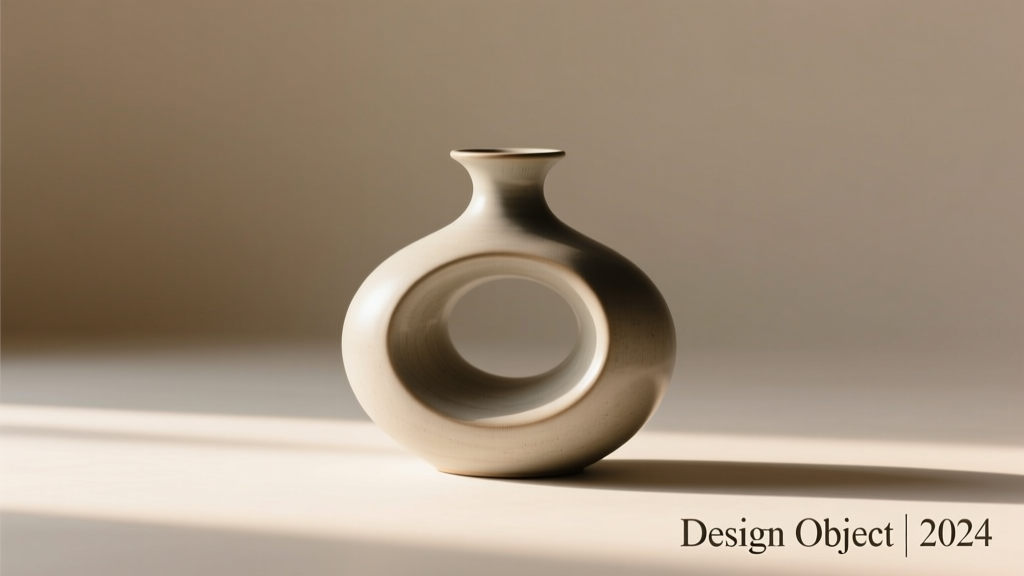
Minimalist sets, by contrast, operate on principles of wabi-sabi and ma (negative space). A single unglazed Bizen-yaki set may feature no decoration beyond subtle ash glaze pooling and wood-fired texture variations. Its appeal lies in quiet authority: the weight of the cup, the thermal retention of the tokkuri, the way light catches the curve of the saucer at dawn. Collectors here prize provenance over pop culture—knowing whether the piece was fired in a traditional noborigama kiln, or whether the potter apprenticed under a Living National Treasure. Value accrues through time, not trends.
Tip: Before acquiring any sake set—whether anime-themed or minimalist—verify its production origin. Authentic licensed anime sets include holographic seals and studio-issued certificates of authenticity. For minimalist pieces, request firing records or kiln stamps; reputable dealers provide documented provenance.Market Realities: Scarcity, Liquidity, and Longevity
The secondary market reveals stark contrasts. Anime-themed sets experience rapid initial appreciation, especially during peak fandom cycles. A 2023 *Jujutsu Kaisen* x Kiyomizu-yaki collaboration sold out in 92 seconds online; resale prices spiked 300% within six months. But volatility follows. When interest wanes—or when mass-produced variants flood the market—values can retreat sharply. Licensing agreements also expire: a set produced under a five-year contract may become “orphaned” if the studio doesn’t renew, limiting future authentication pathways.
Minimalist sets follow a flatter, longer growth curve. A 1978 Shoji Hamada-inspired Seto-yaki set appreciated steadily at 4–6% annually over 35 years—not flashy, but predictable. Their liquidity remains strong among institutional buyers (museums, cultural foundations) and seasoned private collectors who understand material aging. Unlike anime sets, which rely on visual immediacy, minimalist pieces deepen in resonance with time—the patina of repeated use, the subtle darkening of unglazed clay, the softening of edges from careful handling.
| Factor | Anime-Themed Sets | Minimalist Sets |
|---|---|---|
| Rarity Drivers | Limited editions, event exclusives, studio collaborations | Kiln-specific batches, master potter signatures, pre-industrial techniques |
| Average Holding Period | 1–5 years (speculative horizon) | 15–40+ years (heirloom horizon) |
| Authentication Complexity | High (requires license verification, serial tracking) | Moderate (relies on kiln marks, clay analysis, stylistic expertise) |
| Cultural Resilience | Dependent on franchise longevity & fanbase health | Rooted in 1,200+ years of ceramic philosophy |
| Insurance Valuation Stability | Fluctuates with fandom metrics (social media mentions, convention attendance) | Stable; benchmarked against auction house ceramics indices |
A Collector’s Journey: Two Real Paths
Case Study: Aya Tanaka, Tokyo-based Collector Since 2015
Aya began with anime sets—her first acquisition was a *My Hero Academia* x Kutani-yaki set purchased at Comiket 92. She valued the immediacy of connection: “Holding that cup felt like holding a piece of the story I’d followed since high school.” Over three years, she amassed 27 licensed sets. Then, at a Kyoto ceramics fair, she held a 1952 Mino-yaki set made by a third-generation potter. Its asymmetry, its whisper-thin rim, the way the glaze pooled like frozen ink—she felt something different: reverence. She sold half her anime collection and redirected funds toward minimalist acquisitions. Today, her collection includes only pieces made by designated Traditional Craft Artists or from UNESCO-recognized kilns. Her anime sets remain cherished—but they live on a shelf labeled “Origins,” not “Core Collection.”
This pivot isn’t rejection—it’s evolution. Aya’s journey mirrors a broader collector maturation: early enthusiasm for narrative-driven objects gives way to deeper engagement with material intelligence and cultural continuity. Not every collector follows this path, but many do. The most resilient collections often integrate both—using anime pieces as accessible entry points and minimalist works as anchors of enduring value.
Design Intelligence: What Makes Each Type Compelling
Anime-themed sets succeed when they transcend novelty. The strongest examples honor sake’s functional logic while embedding fandom meaningfully. Consider the *One Piece* Straw Hat Crew set: each ochoko cup is shaped like a crew member’s signature accessory (Nami’s Clima-Tact, Zoro’s sword sheath), yet all maintain identical volume (45ml) and lip curvature for optimal sipping. The tokkuri’s spout angle matches the original manga’s iconic pouring scenes. This isn’t decoration—it’s narrative engineering.
Minimalist sets achieve power through reduction. A 2021 Nagayo Sato set uses only two forms: a cylindrical tokkuri and a shallow, flared ochoko. No glaze—just raw Shigaraki clay, fired in a climbing kiln for 60 hours. The surface bears natural ash deposits and flame marks. Its brilliance lies in what’s omitted: no branding, no signature, no explanation needed. Its function is inseparable from its form—a direct lineage from 12th-century tea masters who believed beauty emerged only when utility was perfected.
“True minimalism in sake ware isn’t emptiness—it’s the courage to let the material speak without translation. Every imperfection in the clay tells you how the fire moved. That’s where the soul lives.” — Kenji Sato, Master Potter, Shigaraki Kiln Association (interview, *Ceramics Japan*, 2022)
Building a Cohesive Collection: A Practical Framework
Whether drawn to anime energy or minimalist stillness, thoughtful curation requires structure. Here’s a step-by-step framework used by senior collectors at the Japan Sake & Shochu Makers Association:
- Define Your Thesis (Month 1): Write one sentence: “I collect sake sets that…” Examples: “…bridge contemporary anime storytelling with Edo-period ceramic techniques” or “…embody the principle of ‘less is more’ through unglazed, wood-fired forms.”
- Establish Non-Negotiables (Month 2): Set hard criteria. E.g., “All anime sets must be licensed by the original studio and produced in Japan,” or “All minimalist sets must bear a kiln stamp from a recognized heritage kiln (Bizen, Shigaraki, Tokoname, etc.).”
- Map the Ecosystem (Month 3): Identify key players: for anime, track official studio stores, authorized retailers like Animate or Mandarake; for minimalist, research kiln associations, gallery partnerships (e.g., Tokyo’s Ginza Koyanagi), and auction houses specializing in Japanese ceramics (Bonhams, Christie’s Japan).
- Acquire Strategically (Ongoing): Prioritize pieces with dual significance—e.g., an anime set co-created by a Living National Treasure potter, or a minimalist set using a revived glaze technique from the Taisho era. These hybrids offer cross-category resonance.
- Document Rigorously (Ongoing): Maintain a digital ledger with photos, acquisition date, price, provenance documents, and notes on usage (e.g., “First used for New Year’s o-toso, 2024”). This builds institutional memory—and future valuation evidence.
Frequently Asked Questions
Can anime-themed sake sets appreciate in value like traditional ceramics?
Yes—but selectively. Licensed, studio-approved sets produced in limited runs (under 500 units) by established kilns (e.g., Kiyomizu-yaki, Kutani-yaki) show the strongest long-term appreciation. Mass-market anime sets sold in convenience stores or generic e-commerce sites rarely hold value beyond nostalgic resale.
Is it acceptable to mix anime and minimalist pieces in one collection?
Absolutely—if done intentionally. Many leading collectors create “dialogue displays”: placing a *Spirited Away*-themed tokkuri beside a 1960s unglazed Bizen ochoko to highlight how both express transformation (Chihiro’s journey / clay’s metamorphosis in fire). The key is thematic cohesion, not stylistic uniformity.
How do I verify if a minimalist sake set is genuinely artisan-made versus factory-produced?
Examine three elements: (1) Weight and balance—hand-thrown pieces have subtle irregularities in wall thickness; (2) Base markings—authentic pieces bear hand-carved or stamped kiln names, not printed labels; (3) Surface texture—factory glazes are uniformly glossy; artisan glazes show variation, pinholes, or intentional ash residue. When in doubt, consult the Japan Ceramic Society’s free authentication portal.
Conclusion: Curating Meaning, Not Just Objects
Anime-themed sake sets and minimalist designs represent two vital currents in Japan’s living craft tradition—one pulsing with the energy of youth culture, the other anchored in the wisdom of millennia. To collect either is to participate in a dialogue across time: with animators and potters, with fans and tea masters, with your past self and the legacy you wish to leave. The most resonant collections don’t shout their preferences—they invite quiet observation, reward patient study, and deepen with every season they’re used. Whether you’re drawn to the bold lines of a *Demon Slayer* ochoko or the silent gravity of a 1940s Raku cup, remember: the truest value lies not in market charts or social media likes, but in the intention behind your choice, the care in your handling, and the stories you choose to keep alive in your hands.
💬 Your collection tells a story—what chapter are you writing next? Share your most meaningful sake set acquisition, the reason it matters to you, and how it shaped your collecting journey in the comments below. Let’s build a community grounded in respect, curiosity, and shared appreciation for the craft.