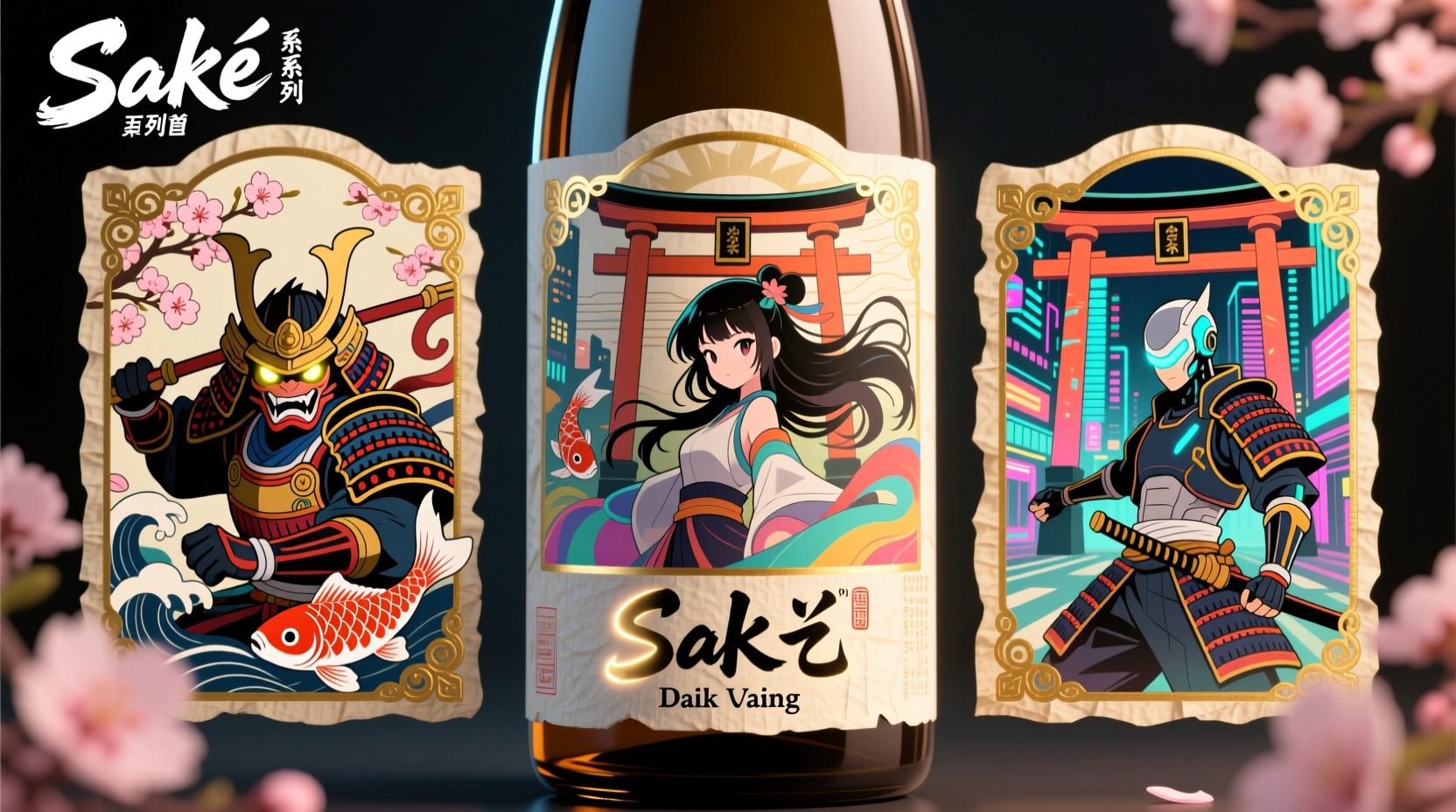
In recent years, a quiet but vibrant convergence has taken place in Japanese beverage culture: the marriage of centuries-old sake craftsmanship with the explosive visual language of anime. These are not novelty gimmicks or short-lived promotions—they are limited-edition, regionally brewed sakes housed in elegantly designed bottles bearing officially licensed artwork from iconic series like My Hero Academia, Demon Slayer, One Piece, and Studio Ghibli. Produced in collaboration between respected breweries (such as Kikusui, Dassai, and Hakutsuru) and anime studios, these bottles represent a new category of functional art—drinkable, display-worthy, and deeply rooted in both tradition and fandom. Unlike mass-produced merch, many of these releases feature hand-drawn label illustrations, seasonal brewing techniques, and even custom bottle shapes inspired by characters or themes. For collectors, they offer more than nostalgia; they reflect evolving consumer values—authenticity, craftsmanship, and narrative resonance.
The Cultural Bridge: How Sake and Anime Converge
Sake has long served as a vessel for Japanese identity—its production tied to rice cultivation, Shinto ritual, and regional pride. Anime, by contrast, emerged as a global ambassador of contemporary Japanese creativity, storytelling, and aesthetics. Their convergence is neither accidental nor superficial. It stems from shared values: meticulous attention to detail, reverence for seasonal cycles (sake’s tokubetsu junmai batches align with spring polishing or autumn brewing), and deep respect for lineage—whether through a brewery’s 150-year history or an anime studio’s generational storytelling legacy.
This synergy gained momentum after 2015, when breweries began responding to demographic shifts: younger domestic consumers were drinking less sake, while international fans sought culturally immersive experiences beyond merchandise. A turning point came in 2019, when Kikusui Brewery partnered with My Hero Academia for its “Hero Sake” line—featuring character-specific blends (e.g., Izuku Midoriya’s “Deku Spark,” a bright, crisp ginjo with yuzu notes) and labels printed on premium washi paper with gold-foil accents. The release sold out in under 72 hours in Japan and triggered similar collaborations across the industry.
“Anime-themed sake isn’t about ‘selling alcohol to kids’—it’s about inviting adults into a deeper relationship with both craft and story. When someone chooses a bottle labeled with Tanjiro Kamado holding a sake cup, they’re connecting with the discipline of the Demon Slayer Corps *and* the patience of a master toji.” — Hiroshi Tanaka, Senior Curator, Japan Sake & Shochu Makers Association
What Makes These Labels Collectible? Beyond Aesthetics
Collectibility arises from scarcity, intentionality, and verifiable provenance—not just visual appeal. Authentic anime-themed sake labels meet several criteria that distinguish them from unofficial prints or fan-made designs:
- Licensing transparency: Official releases bear the copyright symbol (©), studio logo (e.g., Aniplex, Toho, Studio Ghibli), and brewery seal—often embossed or UV-printed.
- Brewery attribution: Reputable producers include the toji (master brewer) name, rice variety (e.g., Yamada Nishiki), polishing ratio (e.g., 35%), and prefecture of origin (e.g., Niigata, Hyōgo).
- Production limits: Most official releases are capped at 3,000–10,000 bottles per variant, with serial-numbered certificates for premium editions.
- Label material integrity: Collectible editions use archival-grade paper, soy-based inks, and multi-layer printing to prevent fading—even under indirect light.
Authenticity Checklist: How to Verify a Genuine Release
With rising demand, counterfeit labels and repackaged bulk sake have entered secondary markets—especially on auction sites and social media resale groups. Use this verified checklist before purchasing:
| Action | Why It Matters | Red Flag |
|---|---|---|
| Check the brewery’s official website or press releases | Legitimate collaborations are announced months in advance with high-res images, tasting notes, and distribution details. | No mention on the brewery’s site—or only vague “anime edition” references without studio logos. |
| Scan the QR code on the bottle neck or box | Authentic releases link to verification pages hosted on the brewery’s domain (e.g., kikusui.co.jp/hero-sake-2023), often with batch numbers. | QR code redirects to third-party e-commerce sites or generic image galleries. |
| Examine the label’s texture and ink density | Genuine labels use spot varnish on character outlines and metallic foil for highlights—visible under angled light. | Flat, uniform print with no tactile variation; colors appear washed out or oversaturated. |
| Confirm alcohol percentage and ingredients list | Real sake must list rice, koji, water, and yeast. ABV falls between 13%–16% for most premium grades. | ABV over 18% (suggesting added spirits) or vague terms like “flavoring” instead of “yeast strain.” |
| Verify importer documentation (for overseas purchases) | Authorized U.S./EU importers (e.g., True Sake, Sake Social) provide batch traceability and customs clearance records. | No importer listed—or distributor name matches no registered entity in Japan’s National Tax Agency database. |
A Collector’s Journey: The “Ghibli Sake Project” Case Study
In 2021, Tokyo-based collector Aiko Sato launched what would become one of Japan’s most documented anime-sake initiatives: the “Ghibli Sake Project.” Frustrated by fragmented availability and inconsistent labeling standards, she partnered with three small-batch breweries—Kamoizumi (Hiroshima), Takara Shuzo (Kyoto), and Ozeki (Hyōgo)—to co-create a series honoring Studio Ghibli’s environmental ethos.
Each bottle featured original illustrations by Ghibli’s art director, Kazuo Oga, reimagined as seasonal motifs: Princess Mononoke’s forest spirits rendered in moss-green silk-screen ink for spring; Howl’s Moving Castle’s moving gears etched in silver foil for summer; and Nausicaä’s wind patterns translated into subtle embossed wave lines for autumn. Crucially, every label included QR-linked data on the rice farm’s sustainable practices—and each bottle was sealed with wax made from locally harvested beeswax.
Within two years, the project expanded to include tasting events where brewers discussed fermentation parallels with Ghibli’s animation timelines (e.g., “The same patience required to age sake for six months mirrors the frame-by-frame care in Spirited Away’s bathhouse sequence”). Aiko now curates a non-commercial archive—ghiblisake.org—cataloging over 217 official releases since 2015, complete with label condition ratings, market value trends, and brewery interviews.
Building a Meaningful Collection: A Step-by-Step Framework
Collecting anime-themed sake should prioritize intention over accumulation. Here’s a practical, values-driven framework:
- Define Your Narrative Anchor (Month 1): Choose one thematic thread—e.g., “Meiji-era revivalism” (bottles referencing historical anime like Rurouni Kenshin paired with Edo-period brewing methods) or “Regional Harmony” (matching anime settings with sake origins: Love Live!’s Ueno Park → Tokyo’s Asahishuzo Brewery).
- Establish Acquisition Criteria (Month 2): Set hard limits: maximum 3 bottles per year, minimum 40% polishing ratio, and exclusivity to releases with bilingual (Japanese/English) technical notes. Avoid impulse buys during conventions or flash sales.
- Create a Documentation System (Month 3): Log each bottle with photo (front/back/neck), purchase date/location, ABV, rice variety, toji name, and tasting notes—even if unopened. Use a shared spreadsheet or dedicated app like “Sake Journal.”
- Plan for Rotation & Ritual (Ongoing): Designate one bottle per quarter for ceremonial opening—paired with a themed meal (e.g., Demon Slayer’s “Mugen Train” sake with charcoal-grilled beef). Document the experience, then retire the empty bottle with its label intact.
- Engage Ethically (Year 2+): Attend brewery open houses (many now host English-speaking tours), support local izakayas that stock authentic releases, and contribute to the Japan Sake & Shochu Makers Association’s preservation fund—ensuring future generations inherit both the craft and the stories.
Frequently Asked Questions
Are anime-themed sake bottles safe to drink—or purely decorative?
All officially licensed releases are fully compliant with Japan’s Food Sanitation Act and undergo rigorous testing by the National Tax Agency’s Brewing Division. While some ultra-premium editions (e.g., Dassai’s “Ten” x One Piece collaboration) are marketed as collectibles due to price ($280+ USD), they remain legally classified as food products and are intended for consumption. However, aging sake beyond 2–3 years—even in ideal conditions—risks flavor degradation; most are best enjoyed within 12 months of bottling.
Can I import these bottles legally to my country?
Yes—with caveats. The U.S. allows personal imports of up to one liter per person duty-free if declared upon entry; Canada permits up to 1.14 liters; the EU allows up to 1 liter for travelers over 17. Always verify your country’s specific regulations via customs.gov or equivalent authority. Note: Bottles with alcohol content above 24% ABV face stricter rules. Importers must also ensure the label meets local language requirements (e.g., English ingredient lists in the U.S.).
Do limited editions increase in value over time?
Appreciation is rare and highly conditional. Only bottles with verifiable scarcity (<500 units), direct involvement of renowned toji (e.g., Tatsuro Yamamoto of Dassai), and cultural milestone status (e.g., the first Studio Ghibli collaboration in 2017) have shown modest growth—typically 15–25% over five years. Most releases hold stable value or depreciate slightly. Treat them as experiential assets, not financial instruments.
Conclusion: Where Tradition Meets Tomorrow
Anime-themed sake bottles are more than clever marketing—they are cultural artifacts that honor two pillars of Japanese expression: the quiet discipline of the brewery and the bold imagination of the animator. Each label tells a layered story—not just of a character or scene, but of rice fields in Niigata, yeast strains cultivated since the Taishō era, and the collaborative labor of dozens of artisans who rarely see their names in headlines. Collecting them thoughtfully invites us into a practice of mindful consumption: slowing down to read the label, learning the meaning behind a polishing ratio, understanding why a particular prefecture’s water yields a softer finish. In a world of disposable digital content, these bottles offer tangible continuity—between past and present, craft and fandom, stillness and motion. Start small. Choose one bottle that resonates—not because it’s rare, but because its story aligns with your own values. Open it with intention. Share it with someone who’ll listen to its history. Then let the empty vessel remind you that the most enduring collections aren’t measured in volume, but in meaning.
💬 Your turn: What anime-sake pairing would you create—and what story would its label tell? Share your vision in the comments. Let’s build a community that celebrates both the rice and the reel.








