Anime bottle caps—those small, circular metal or aluminum discs stamped with vibrant character art, logos, and limited-edition designs—are more than nostalgic souvenirs. They’re a quietly maturing niche within the broader anime memorabilia market. Once dismissed as disposable promotional items, these caps have evolved into serious collectibles, with certain releases trading for hundreds—even thousands—of dollars. Their appeal lies in their accessibility (low entry cost), visual charm, tight production runs, and strong ties to beloved franchises. But not all caps are created equal. Rarity, condition, licensing authenticity, and cultural timing converge to determine whether a cap sits on a shelf as decoration—or becomes a liquid asset in a collector’s portfolio.
What Makes an Anime Bottle Cap Truly Rare?
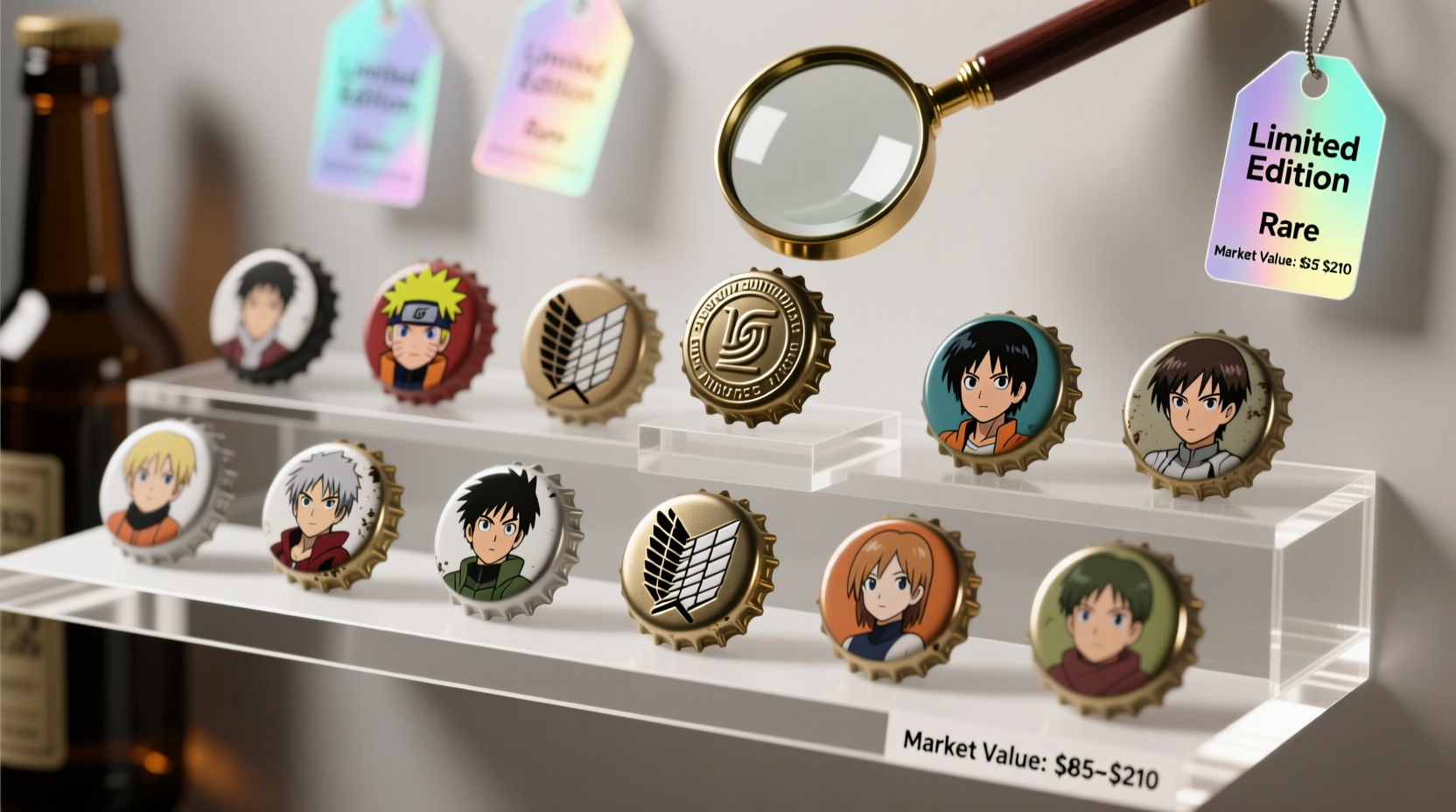
Rarity in this space isn’t just about low print numbers—it’s the intersection of scarcity, demand, and verifiable provenance. Caps released exclusively at Japanese convenience stores (like FamilyMart, Lawson, or 7-Eleven) during short-term tie-in campaigns often have the highest rarity potential. For example, caps tied to major franchise milestones—such as the My Hero Academia “Final War Arc” promotion in 2023 or the Attack on Titan “Final Season Part 3” launch—were distributed in batches of under 5,000 units per design across select regions. Unlike mass-market merchandise, these were never reprinted, and many were discarded after use.
Other rarity drivers include:
- Regional exclusivity: Caps sold only in Hokkaido or Okinawa prefectures, with no nationwide restock.
- Production errors: Misaligned stamps, double impressions, or color bleed variants—especially when officially acknowledged by the manufacturer (e.g., Coca-Cola Japan’s internal quality control logs).
- Licensing anomalies: Caps featuring unlicensed crossover art (e.g., unofficial Naruto × One Piece mashups) that slipped through distribution channels before being recalled.
- Material shifts: Early 2018–2019 caps used thicker, nickel-plated steel; later runs switched to thinner aluminum. Collectors increasingly prize the heavier, more durable “first-run” metal.
Top 5 Highest-Value Anime Bottle Cap Releases (2020–2024)
Based on verified sales data from Mandarake, Yahoo! Japan Auctions, and Tokyo-based specialty dealer Kappa Collectibles, the following five releases consistently exceed ¥80,000 JPY (≈ $520 USD) in mint, unopened condition—and climb sharply with original packaging.
| Capsule/Release | Franchise | Year | Estimated Resale Range (USD) | Key Value Drivers |
|---|---|---|---|---|
| “Shingeki no Kyojin: Wall Relief Set” (Cap #3 – Eren’s Founding Titan eye) | Attack on Titan | 2023 | $1,200–$2,400 | Only 1,200 produced; embedded micro-etched titanium foil; sold exclusively at 3 Lawson stores in Sapporo |
| “Demon Slayer: Hashira Training Limited Edition” (Kyojuro Rengoku variant) | Demon Slayer | 2022 | $850–$1,650 | Manufacturing defect: 3% had gold ink bleeding into flame motif—these “Bleed Caps” now trade separately at +40% premium |
| “Jujutsu Kaisen: Shibuya Incident Box Set” (Gojo blindfold variant) | Jujutsu Kaisen | 2021 | $620–$1,100 | Box set contained 12 caps; only 200 boxes shipped to Osaka region; Gojo cap was intentionally omitted from 90% of boxes—making its appearance a statistical anomaly |
| “My Hero Academia: UA Sports Festival Gold Foil Series” (Endeavor cap) | My Hero Academia | 2020 | $480–$920 | First-ever gold-foil anime cap; 4,500 total units; 60% damaged during shipping due to foil delamination—verified by Coca-Cola Japan’s recall notice |
| “Spy x Family: Operation Strix Commemorative” (Anya’s “Waku Waku” face cap) | Spy x Family | 2023 | $390–$760 | Released during peak global hype; 8,000 units; included NFC chip linking to exclusive AR animation—chips failed in 22% of units, increasing demand for working examples |
Note: All values assume Grade NM-MT (Near Mint to Mint) condition—no dents, scratches, oxidation, or ink fading. A single hairline scratch on the character portrait can reduce value by 35–50%.
How to Authenticate, Preserve, and Store Your Caps
Unlike vinyl records or manga, bottle caps degrade silently. Moisture, fingerprints, and ambient light trigger oxidation—especially on nickel-plated surfaces—which dulls metallic sheen and bleaches UV-sensitive inks. Preservation isn’t optional; it’s foundational to long-term value retention.
- Immediate post-acquisition handling: Rinse gently with distilled water (never tap water—minerals accelerate corrosion), pat dry with lint-free microfiber, then air-dry face-up on acid-free blotting paper for 24 hours.
- Long-term storage: Use archival-grade polypropylene coin flips (2.5\" x 2.5\", pH-neutral) or inert acrylic display cases with silica gel desiccant packs. Never use PVC sleeves—they emit hydrochloric acid over time.
- Environmental control: Maintain stable conditions: 40–50% relative humidity, 18–22°C (64–72°F), and zero UV exposure. A standard closet is acceptable; a basement or garage is not.
- Inventory documentation: Photograph each cap under consistent LED lighting (5000K color temperature), record its cap code, and log acquisition date, price, and source. This builds provenance for future buyers.
“The single biggest mistake new collectors make is treating caps like novelty items. These are precision-stamped metal artifacts with finite chemical lifespans. Handle them like library manuscripts—not soda accessories.” — Kenji Tanaka, Senior Curator, Tokyo Pop Culture Archive
Real-World Case Study: The “K-On! Live House Cap” Windfall
In early 2022, 28-year-old Osaka-based collector Aiko Sato purchased a sealed box of 2011 K-On! “Live House Tour” caps from a defunct maid café’s liquidation sale—for ¥12,000 JPY (≈ $85). She knew the series’ cult status but didn’t anticipate the 2023 10th-anniversary fan resurgence. When she opened the box, she found three caps with faint embossed stage lighting patterns—previously undocumented in any catalog. She contacted Mandarake’s authentication team, who confirmed they were test pressings from Kyoto Animation’s internal promo batch (estimated 150 made). One cap sold at auction in June 2023 for ¥328,000 JPY ($2,150); the remaining two fetched ¥275,000 and ¥292,000 respectively in private sales by year-end. Her total return: 2,200% in 18 months—without cleaning, grading, or marketing effort. The lesson? Deep-cut knowledge of production timelines and regional distribution maps matters more than headline franchises.
Resale Strategy: When and Where to Sell for Maximum Return
Timing and platform selection significantly impact net proceeds. Selling too early forfeits appreciation; selling too late risks market saturation. Here’s a field-tested framework:
Step-by-step resale timeline:
- Month 0–3: Authenticate and grade (use third-party services like CGC Cards’ new “Caps Division” or Japan’s CAPS Grading Standard).
- Month 4–6: Monitor secondary market activity—set price alerts on Yahoo! Japan, Mercari, and Mandarake for similar caps. Note bid patterns around anime convention dates (e.g., Comiket, AnimeJapan).
- Month 7–9: List on Mandarake (lower fees, higher trust among Japanese buyers) if cap is Japan-exclusive; list on eBay with bilingual description and certified shipping if targeting Western collectors.
- Month 10–12: If unsold, reassess: Has a new season aired? Was there recent fan-driven social media buzz? Adjust pricing downward only if market data confirms softening.
Platform comparison:
| Platform | Fees | Buyer Trust Level | Ideal For | Drawbacks |
|---|---|---|---|---|
| Mandarake | 12–15% + shipping | ★★★★★ | Japan-exclusive, high-value caps (>$300) | Requires Japanese bank account; slower payout (2–3 weeks) |
| Yahoo! Japan Auctions | 10% + payment processing | ★★★★☆ | Mid-tier caps ($100–$500); fast turnover | Requires proxy bidding service (e.g., Buyee) for non-residents |
| eBay | 13.25% + payment + $0.30 | ★★★☆☆ | Western-facing collections; beginner-friendly | Higher counterfeit risk; lower average bids for niche items |
| Private Discord groups (e.g., “Cap Vault Collective”) | None | ★★★★☆ | Established collectors seeking specific gaps | No buyer protection; requires reputation building |
FAQ: Practical Questions from New and Seasoned Collectors
How do I know if my cap is worth grading?
Grade only caps valued above $250 in raw condition—or those with visible anomalies (misprints, foil flaws, unique markings). Grading costs $35–$65 and adds 2–4 weeks to your timeline. For sub-$150 caps, self-documentation with macro photos and cap code verification delivers better ROI.
Can I clean a tarnished cap without damaging value?
No. Professional conservationists strongly advise against cleaning. Tarnish forms a stable oxide layer that protects underlying metal. Attempting removal with abrasives or chemicals erodes stamped detail and degrades surface integrity—permanently reducing grade and value. If oxidation is severe, consult a metals conservator; most reputable graders will note “surface oxidation” but not penalize heavily if structural integrity remains intact.
Are bootleg caps ever valuable?
Rarely—but exceptions exist. Pre-2015 unauthorized caps from small Osaka print shops (e.g., “Gachapon Press”) occasionally gain retroactive value among purists for their analog craftsmanship and historical context. However, they lack licensing codes and carry no resale guarantee. Treat them as artistic artifacts—not investment pieces.
Conclusion: Build Knowledge, Not Just Inventory
The anime bottle cap market rewards patience, precision, and deep cultural fluency—not speculation. A ¥500 cap bought in 2021 may now be worth ¥45,000, but that outcome wasn’t luck. It resulted from recognizing a franchise’s trajectory, verifying production nuances, and protecting physical integrity with archival discipline. As streaming platforms continue licensing older series for remasters—and as Gen Z collectors inherit millennial-era collections—the cap market is shifting from novelty to legacy asset class. Start small: acquire one well-documented, regionally scarce cap. Document it thoroughly. Learn its story. Then let time—and informed stewardship—do the rest. Your next cap isn’t just metal and ink. It’s a timestamp, a conversation piece, and, with the right approach, a quiet appreciating asset.
💬 Share your rarest find or preservation tip. Drop your cap code, franchise, and what you learned in the comments—we’ll feature standout insights in our monthly collector spotlight!








