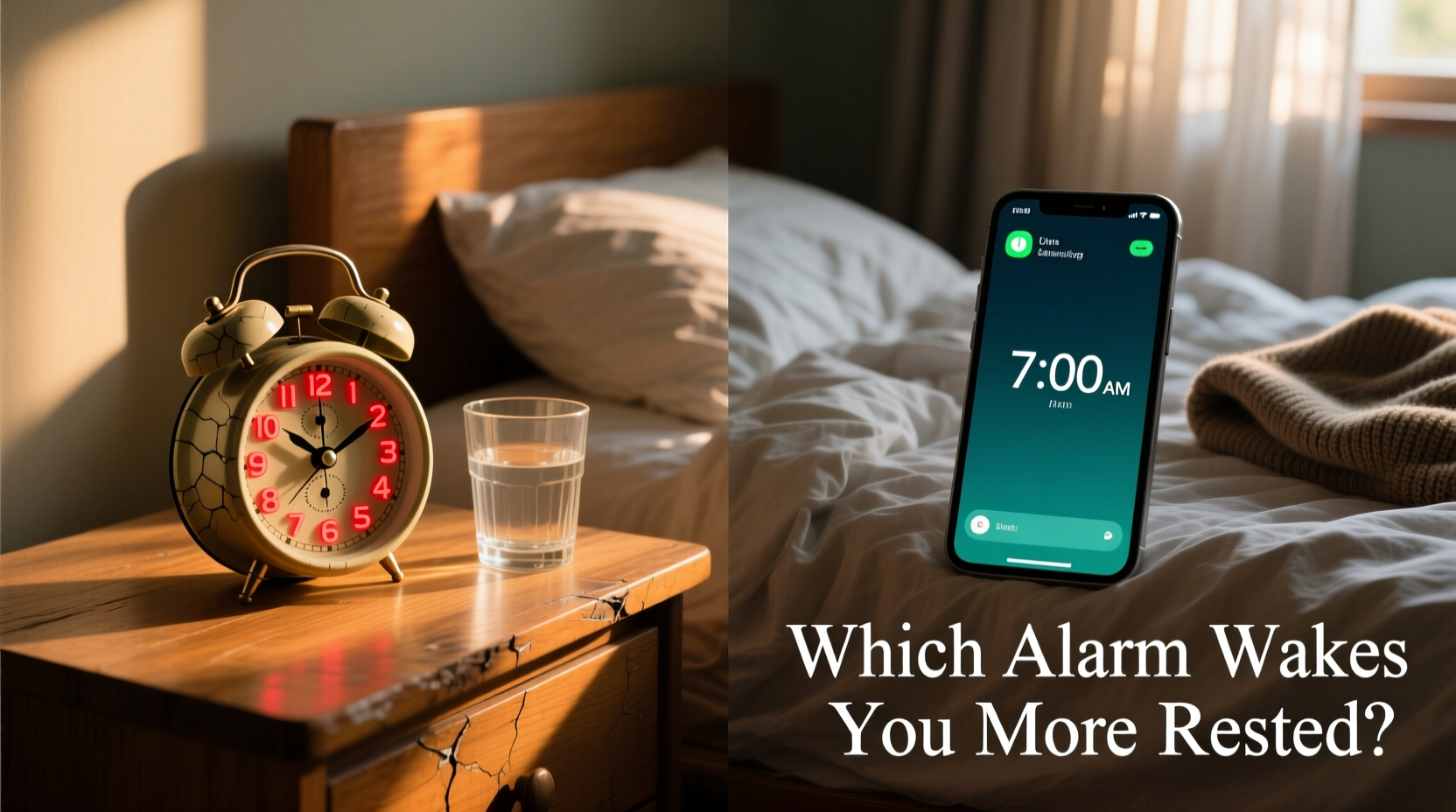
Waking up feeling refreshed is less about how many hours you sleep and more about how you wake. The device that pulls you from slumber—whether it's a traditional analog alarm clock or your ever-present smartphone—plays a surprisingly significant role in your morning alertness, mood, and cognitive performance. While smartphones offer convenience and multifunctionality, they may sabotage your sleep hygiene. Analog clocks, though seemingly outdated, support a cleaner, less disruptive wake-up experience. This article examines the physiological, psychological, and behavioral differences between analog and smartphone alarms, backed by sleep science, to help you choose the tool that truly supports restful mornings.
The Science of Waking Up: Why Your Alarm Matters
Sleep doesn’t end the moment your eyes open—it concludes with a neurological transition called sleep inertia, a groggy state where brain activity lags behind physical awakening. The severity and duration of sleep inertia depend heavily on when and how you’re awakened. Abrupt, loud alarms jolt the body from deep sleep, triggering a spike in cortisol and adrenaline. This stress response may get you out of bed quickly, but it leaves you tense, disoriented, and mentally sluggish for up to two hours.
According to Dr. Matthew Walker, neuroscientist and author of Why We Sleep, “Being startled awake by a blaring alarm disrupts the natural progression of sleep cycles and activates the fight-or-flight system. It’s like being ambushed every morning.” In contrast, gentler waking methods—such as gradual light exposure or softer sounds—allow the brain to transition more smoothly into wakefulness, reducing cortisol spikes and improving cognitive clarity.
Analog alarm clocks typically produce a consistent, mechanical ring or buzz that, while not gentle, lacks the digital complexity and sensory overload of smartphones. More importantly, they don’t come with notifications, apps, or screens that invite interaction. This simplicity aligns better with healthy sleep architecture, particularly during the final REM-rich stages of sleep when the brain consolidates memories and regulates emotions.
Smartphone Alarms: Convenience at a Cost
Smartphones dominate modern life, and using them as alarms seems logical. They’re always charged, within reach, and packed with features like snooze, multiple alarms, and even smart wake-up windows based on movement. However, their integration into bedtime routines often undermines sleep quality before the alarm even rings.
The primary issue lies in screen exposure. Blue light emitted by smartphone displays suppresses melatonin, the hormone responsible for regulating sleep onset. Even brief interaction with your phone upon waking—checking messages, weather, or social media—can trigger mental engagement that makes it harder to feel rested. A 2023 study published in Sleep Health found that individuals who used their phones immediately after waking reported higher levels of fatigue and lower concentration throughout the morning compared to those who delayed screen use by at least 30 minutes.
Additionally, the temptation to hit snooze repeatedly is amplified by smartphone design. Most default alarm apps allow endless snoozing with a single tap, encouraging fragmented wake-ups that prolong sleep inertia. Each time you fall back asleep—even for five minutes—you risk re-entering a new sleep cycle, only to be abruptly interrupted again, worsening grogginess.
Tip: If you must use a smartphone as an alarm, enable grayscale mode and disable all notifications overnight to reduce visual stimulation.Analog Clocks: Simplicity That Supports Sleep
Analog alarm clocks, especially non-digital models with a wind-up mechanism or basic electric buzzer, offer a minimalist alternative. Their key advantage is separation: they serve one purpose—waking you up—without inviting distraction. Once the alarm sounds, there’s no temptation to scroll, reply, or browse. You either turn it off or let it ring, forcing a decisive start to the day.
Many users report a psychological shift when switching to an analog clock. Without the glow of a screen, the bedroom becomes a true sleep sanctuary. The absence of notifications reduces nighttime anxiety and creates a clearer boundary between waking life and rest. Furthermore, placing the clock across the room encourages physical movement upon waking—getting out of bed to silence it—which signals the body to begin its daily rhythm.
Some high-end analog clocks incorporate sunrise simulation, gradually increasing light intensity to mimic dawn. These hybrid models leverage chronobiology, the study of biological rhythms, to align waking with natural circadian cues. Light-based waking has been shown to improve mood, energy, and alertness more effectively than sound alone.
“Light is the most powerful synchronizer of the human circadian clock. A sunrise alarm clock can help reset disrupted rhythms and promote a more natural, energized wake-up.” — Dr. Rebecca Robbins, Sleep Scientist, Harvard Medical School
Comparative Analysis: Key Differences at a Glance
| Feature | Analog Alarm Clock | Smartphone Alarm |
|---|---|---|
| Screen Exposure | No screen (or minimal LED) | High blue light emission |
| Melatonin Impact | None | Suppresses melatonin if viewed at night or upon waking |
| Distraction Risk | Very low | High (notifications, apps, internet access) |
| Snooze Function | Limited or none; requires physical effort to stop | Easy, repetitive snoozing encouraged |
| Sound Options | Limited (ring, buzz) | Wide variety (custom tones, nature sounds, music) |
| Circadian Support | High (especially with sunrise simulation) | Low to moderate (unless using specialized apps) |
| Battery/Charging Dependency | May require winding or plug-in | Requires nightly charging |
While smartphones offer customization and smart features, analog clocks excel in behavioral psychology: they enforce boundaries, minimize decision fatigue, and support a focused morning routine.
Real-World Example: A Week Without the Phone Alarm
Sarah, a 34-year-old graphic designer from Portland, struggled with chronic morning fatigue despite sleeping seven to eight hours nightly. She relied on her smartphone alarm, often checking emails or social media the moment she woke. Her mornings began with stress, not energy.
On her therapist’s recommendation, Sarah replaced her phone alarm with a sunrise-simulating analog clock. She placed her phone in another room to charge and committed to no screen use for the first 45 minutes of the day. Within three days, she noticed a difference: waking felt less abrupt, and her mind felt clearer. By day six, she was getting out of bed without hitting snooze—a first in years. After one week, her self-reported energy levels rose from 3/10 to 7/10. “I didn’t realize how much my phone was hijacking my mornings,” she said. “Now I actually look forward to waking up.”
How to Optimize Your Wake-Up Routine: A Step-by-Step Guide
Whether you choose an analog clock or keep using your smartphone, the goal is to wake up feeling rested, not reactive. Follow this sequence to build a healthier morning initiation:
- Choose the right alarm type: Prioritize devices that minimize screen exposure. Sunrise alarm clocks are ideal; basic analog models are a strong second choice.
- Position your alarm strategically: Place it far enough from the bed that you must stand to turn it off. This small action jumpstarts circulation and signals wakefulness.
- Use gradual light or sound: Opt for alarms that simulate sunrise or play soft, escalating tones rather than sudden beeps or vibrations.
- Limit snoozing: Allow only one snooze interval (maximum 9 minutes) or eliminate it entirely. Repeated snoozing fragments sleep and worsens inertia.
- Delay screen use: Wait at least 15–30 minutes before checking your phone. Use this time for hydration, stretching, or mindfulness.
- Sync with natural light: Open curtains or go outside shortly after waking. Natural daylight reinforces circadian alignment and boosts alertness.
- Consistency is key: Wake up at the same time every day, even on weekends, to stabilize your internal clock.
Checklist: Building a Restful Wake-Up Environment
- ✅ Remove smartphones and tablets from the bedroom
- ✅ Invest in a standalone alarm clock (preferably with sunrise simulation)
- ✅ Set the alarm volume to noticeable but not jarring
- ✅ Keep the bedroom cool, dark, and quiet
- ✅ Avoid caffeine and heavy meals within 4 hours of bedtime
- ✅ Establish a pre-sleep routine to signal winding down
- ✅ Wake at the same time daily, regardless of sleep duration the night before
Frequently Asked Questions
Can I use my smartphone as an alarm if I enable Do Not Disturb mode?
Yes, but with caveats. Enabling Do Not Disturb reduces interruptions, but the temptation to check the screen remains. The mere presence of the phone increases cognitive arousal. For optimal results, place the phone face-down and across the room—even better, leave it outside the bedroom.
Are vibrating alarms better than sound alarms?
Vibrating alarms, such as those in smartwatches, can be effective for heavy sleepers, but they may still cause abrupt awakening. Some studies suggest that vibration combined with gradual light produces the smoothest transition. However, relying on wearable tech introduces battery concerns and potential skin irritation with long-term use.
Do sunrise alarm clocks really work?
Yes. Multiple clinical trials have demonstrated that light-based alarms reduce sleep inertia, improve mood, and enhance morning alertness. One 2021 study in Chronobiology International showed that participants using dawn-simulating alarms reported 35% less grogginess and faster cognitive processing within 10 minutes of waking.
Conclusion: Choose the Alarm That Respects Your Sleep
The debate between analog alarm clocks and smartphone alarms isn’t just nostalgic—it’s rooted in biology. How you wake up shapes how you feel, think, and function for the rest of the day. While smartphones offer convenience, they often compromise sleep quality through light exposure, distraction, and poor alarm habits. Analog clocks, especially those incorporating natural light cues, support a gentler, more sustainable transition from sleep to wakefulness.
You don’t need to abandon technology entirely. But reintroducing intentionality into your wake-up routine—by choosing a dedicated alarm device, minimizing screen time, and aligning with your body’s natural rhythms—can transform your mornings. Start tonight: charge your phone outside the bedroom, set a real alarm clock, and give yourself the gift of a truly rested wake-up.
💬 What’s your wake-up routine? Have you tried switching from a smartphone to an analog alarm? Share your experience and tips in the comments below—your insight could help someone wake up feeling more rested tomorrow.