In the evolving world of anime collectibles, two paths now dominate how fans bring their favorite mobile suits into reality: traditional pre-made action figures and the rising trend of 3D printed Gunpla. For years, companies like Bandai have defined the hobby with high-quality, snap-fit model kits requiring no glue or paint. But with advances in 3D printing technology, more enthusiasts are turning to custom-printed models—especially for rare or discontinued mecha. The question remains: in a landscape where you can print a full-scale Zaku II at home, are pre-made models still worth the investment?
The answer isn't binary. Each option offers distinct advantages and trade-offs in terms of cost, customization, build time, durability, and emotional satisfaction. Whether you're a long-time collector or a newcomer drawn in by the latest Gundam series, understanding these differences is essential to making informed decisions about your collection.
Understanding the Two Worlds: Pre-Made Models vs. 3D Printed Builds
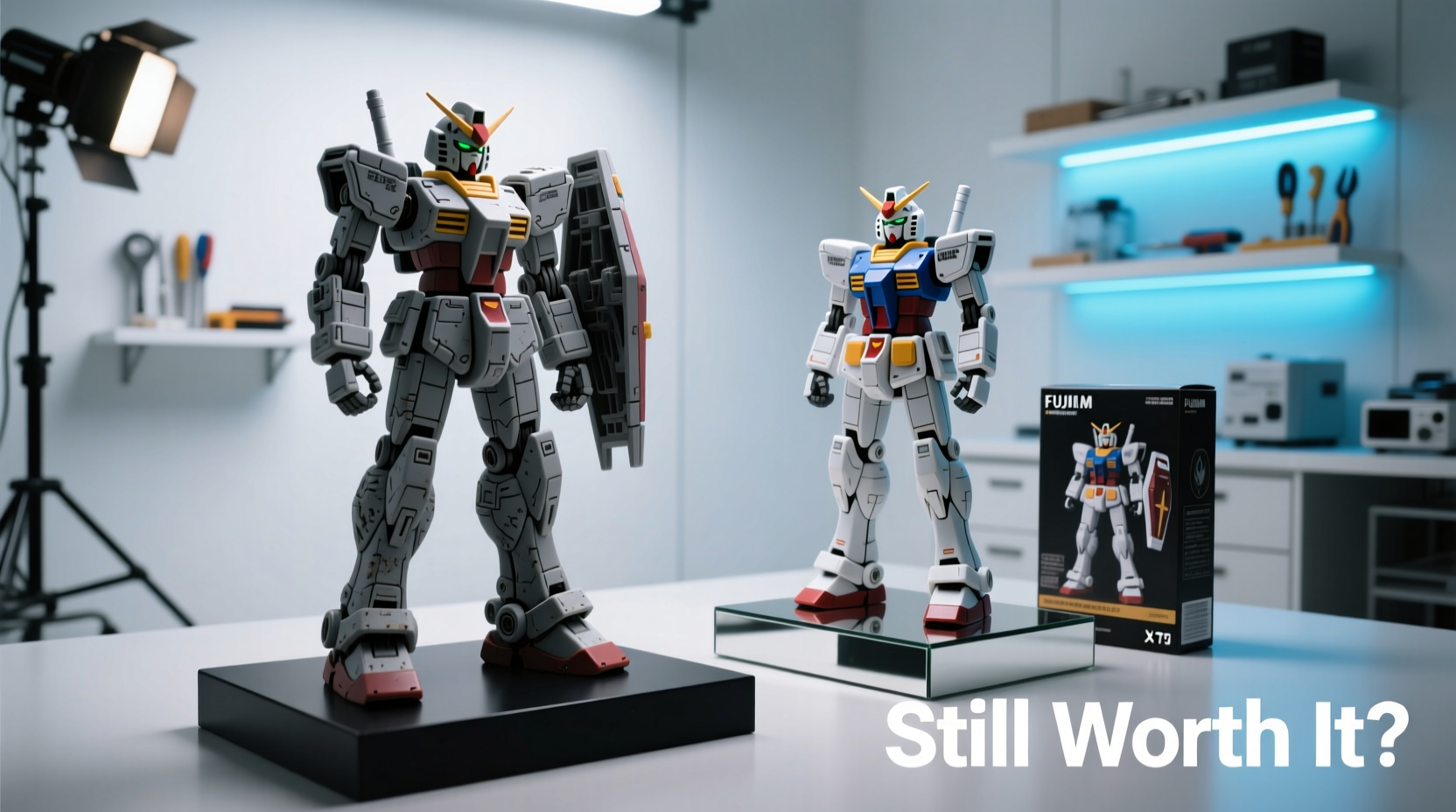
Pre-made action figures and model kits—particularly Bandai’s Gunpla line—are engineered for precision. These kits use injection-molded plastic parts designed to snap together seamlessly. They often include intricate details, color separation, and articulation straight out of the box. Grades range from Entry Grade (EG) to Master Grade (MG), each offering varying levels of complexity and realism.
On the other hand, 3D printed Gunpla typically refers to STL files downloaded from online marketplaces or fan communities and printed using resin or filament printers. These models are not mass-produced; they’re digital designs brought to life through personal or commercial printing. While some are reverse-engineered from official kits, others are original creations—like fantasy-colored variants, oversized versions, or even entirely new mobile suits not yet licensed.
The key difference lies in origin and accessibility. Pre-made models are curated consumer products. 3D printed builds are DIY projects rooted in maker culture. One celebrates convenience and consistency; the other champions creativity and control.
Cost Comparison: Upfront Price vs. Long-Term Investment
At first glance, pre-made kits appear more expensive. A High Grade (HG) Gundam kit might cost $20–$30, while an MG version can reach $70–$100. Limited editions or larger Perfect Grade (PG) models may exceed $200. However, this price includes research, design, tooling, packaging, and global distribution—all absorbed by the manufacturer.
3D printed models, meanwhile, shift the cost burden to the buyer. While individual STL files can be as low as $5–$15, the real expense comes from equipment and materials. A decent resin printer starts at $300, with ongoing costs for resin ($40–$60 per liter), isopropyl alcohol for cleaning, and replacement components like FEP films. Factor in electricity, failed prints, and post-processing tools, and the per-model cost can quickly surpass that of an off-the-shelf kit—even if the digital file was “cheap.”
“Printing one model might seem economical, but when you account for machine depreciation and material waste, many end up spending more than they would on premium Gunpla.” — Daniel Reyes, 3D Printing Hobbyist & Model EngineerTip: If you only plan to build a few models, buying pre-made kits is almost always more cost-effective than investing in a 3D printer.
Quality and Detail: Precision vs. Potential
Bandai’s manufacturing process allows for microscopic detail, multi-color molding, and near-perfect fit. Their molds are created using industrial-grade CAD and tested extensively before release. This ensures consistent quality across thousands of units.
3D printed models depend heavily on the user’s setup. A well-tuned printer with high-resolution settings can produce stunning results—sometimes exceeding stock kits in sheer scale and intricacy. But layer lines, warping, support marks, and resin inconsistencies are common challenges. Post-processing (sanding, priming, painting) is often required to achieve a professional finish.
| Aspect | Pre-Made Models | 3D Printed Models |
|---|---|---|
| Detail Accuracy | Factory-perfect, consistent | Varies by printer and settings |
| Color Separation | Yes, molded-in colors | Rarely; requires painting |
| Part Fit | Snap-fit, minimal gaps | May require sanding or glue |
| Durability | High (tested plastics) | Moderate (resin can be brittle) |
| Customization | Limited without modification | Nearly unlimited |
For collectors who value display-ready perfection, pre-made models win. For those who enjoy the craft of building and refining, 3D printing offers unmatched creative freedom.
Real Example: The Custom Zeta Plus Build
Tyler Chen, a mechanical engineering student and lifelong Gundam fan, wanted a customized Zeta Plus model in matte white with gold trim—colors not available in any official release. He purchased an STL file for $12, printed it over two nights on his Elegoo Mars 4, then spent 10 hours removing supports, sanding seams, and applying primer and metallic paint.
The final result was striking: a sleek, museum-quality piece that drew praise at his local anime convention. But Tyler admitted the total cost—including failed prints and extra resin—was around $90. A standard HG Zeta Plus retails for $28. “Was it worth it?” he said. “Absolutely—but not because it saved money. It was worth it because I made something unique that reflects my taste.”
This story illustrates a core truth: 3D printing isn’t about efficiency. It’s about expression.
Step-by-Step Guide: Choosing the Right Option for You
- Assess your goals: Are you collecting for display, or do you want to engage in the building process?
- Evaluate your budget: Can you afford a 3D printer and ongoing supplies, or should you stick to retail purchases?
- Consider space and time: Printing requires ventilation, storage for equipment, and patience for curing and post-processing.
- Test the waters: Buy a single STL file and commission a print from a local service before investing in hardware.
- Start simple: If building, begin with a basic HG kit to learn assembly techniques before attempting complex prints.
When Pre-Made Models Still Win
Despite the allure of customization, pre-made models remain superior in several areas. First, **accessibility**: anyone can walk into a store or order online and receive a ready-to-build kit within days. Second, **consistency**: every part fits as intended, reducing frustration. Third, **nostalgia and authenticity**: official kits carry the weight of canon design and brand trust.
Moreover, Bandai continues innovating. Recent releases include LED lighting, die-cast metal parts, and app-connected features. The PG Unicorn Ver. Kurenai, for example, integrates AR technology to simulate transformation sequences via smartphone. Such integrations are nearly impossible to replicate with 3D printed alternatives.
Tip: Combine both worlds—use 3D printed accessories (like weapons or bases) to enhance your official Gunpla builds.FAQ
Can 3D printed models match the durability of pre-made kits?
Generally, no. Resin is more brittle than polystyrene used in Gunpla. While strong enough for display, printed models are more prone to cracking under stress or accidental drops.
Are 3D printed Gunpla legal?
It depends. Printing fan-made or original designs is usually acceptable. However, reproducing copyrighted Bandai designs violates intellectual property laws, even if the file is shared freely. Always check licensing terms before printing.
Which is better for beginners?
Pre-made kits are far better for beginners. They require no special equipment, come with instructions, and teach fundamental modeling skills. 3D printing involves a steep learning curve in both software and hardware management.
Conclusion
The rise of 3D printing hasn’t made pre-made models obsolete—it’s simply expanded the possibilities. For casual collectors and purists who value authenticity, official Gunpla kits remain the gold standard. They offer unmatched quality, ease of access, and emotional connection to the franchise.
Yet for tinkerers, artists, and superfans eager to personalize their experience, 3D printing unlocks doors that were once closed. It allows for experimentation, large-scale builds, and one-of-a-kind tributes to beloved machines.
In the end, the choice isn’t about which method is “better.” It’s about which aligns with your passion. Whether you’re snapping together a $25 HG Strike or spending weeks perfecting a printed Sinanju, the joy lies in bringing these iconic mobile suits to life—your way.
💬 What’s your preference—pre-made models or 3D printed builds? Share your thoughts, tips, or build stories in the comments below and join the conversation among fellow Gundam enthusiasts!








