
Blood pressure measurement is a cornerstone of cardiovascular health assessment. It’s one of the first checks performed during a medical visit and plays a critical role in diagnosing hypertension, monitoring treatment, and preventing complications like stroke or heart disease. A common question patients have is: Why is the left arm typically used for blood pressure readings? Is there a difference in accuracy between the left and right arm? Understanding the reasoning behind arm selection and the clinical implications of inter-arm differences can empower individuals to take more accurate readings—especially when monitoring at home.
Anatomical Basis for Arm Selection
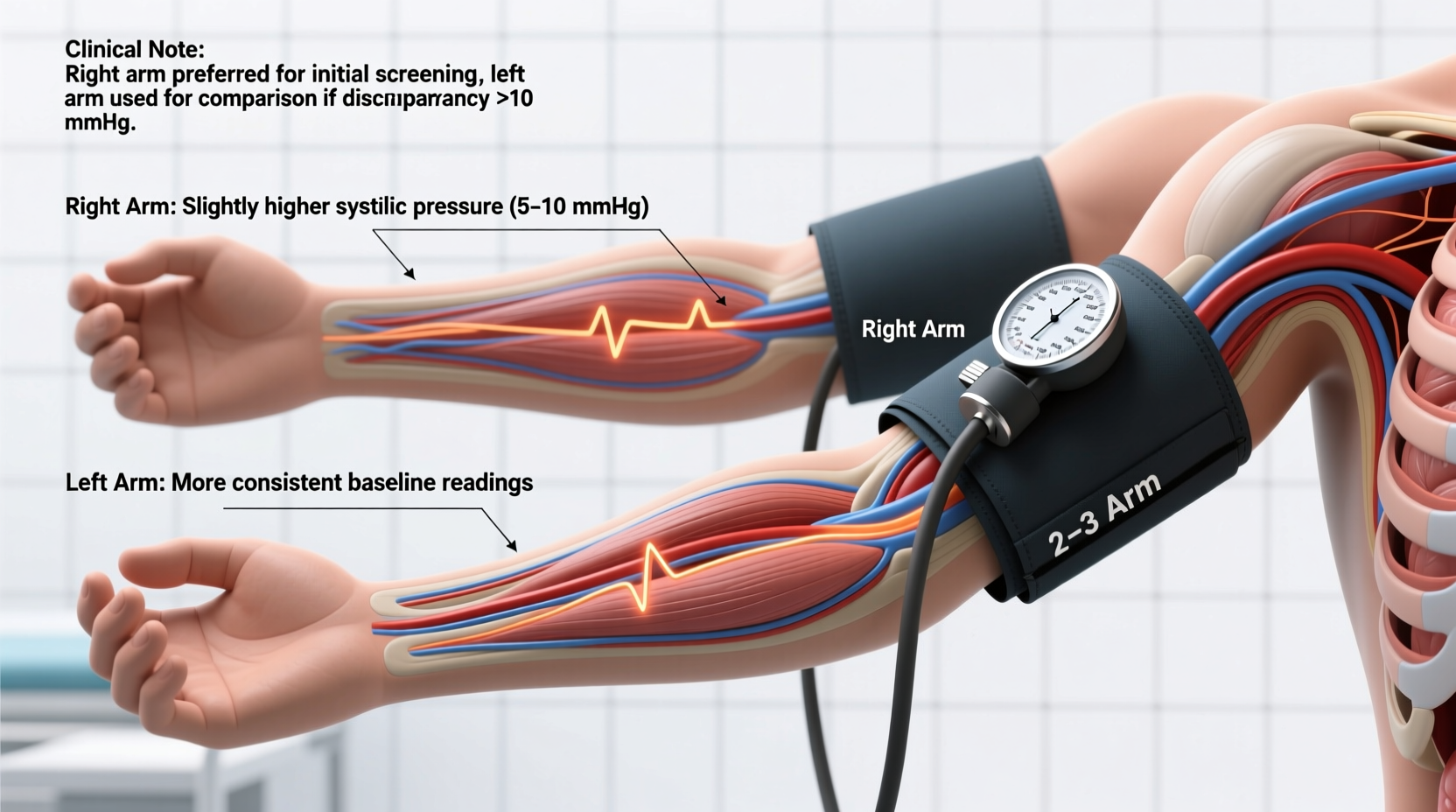
The human circulatory system is not perfectly symmetrical. The aorta, the main artery carrying oxygenated blood from the heart, arches to the left before descending through the chest and abdomen. As a result, the left subclavian artery (which supplies the left arm) branches off closer to the heart than the right subclavian artery. This slight anatomical variation means that blood pressure measured in the right arm may be marginally higher due to its position relative to the aortic arch.
In clinical practice, this small difference is usually negligible—but it exists. Studies show that systolic blood pressure in the right arm tends to be 5 to 10 mm Hg higher than in the left, though this varies by individual. Because of this consistency in directional difference, many healthcare providers standardize on using the left arm to reduce variability across visits.
Tip: Always use the same arm for consistent blood pressure tracking, especially if managing hypertension.Does Arm Choice Affect Accuracy?
The accuracy of a blood pressure reading depends less on which arm is used and more on consistency, proper technique, and equipment calibration. However, choosing the correct arm initially can improve long-term reliability. When starting regular monitoring, clinicians often measure both arms during the first visit. A persistent difference of more than 10 mm Hg in systolic pressure between arms may indicate underlying vascular issues, such as arterial blockage or peripheral artery disease (PAD).
A significant inter-arm discrepancy shouldn’t be ignored. According to the American Heart Association (AHA), a difference of 10 mm Hg or more warrants further evaluation, and a gap exceeding 15 mm Hg increases the risk of cardiovascular events.
“Measuring blood pressure in both arms is a simple, non-invasive way to detect potential vascular disease early.” — Dr. Richard Smith, Cardiovascular Epidemiologist, American Heart Association
Step-by-Step Guide to Proper Blood Pressure Measurement
To ensure accurate results regardless of arm choice, follow these evidence-based steps:
- Rest for 5 minutes before taking a reading. Sit quietly with your back supported and feet flat on the floor.
- Position the arm correctly: Place the upper arm at heart level, supported on a table or armrest.
- Use the correct cuff size: A cuff that’s too small can inflate readings; one that’s too large may underestimate them.
- Take two readings, 1–2 minutes apart, and average them for greater accuracy.
- Measure both arms initially to establish a baseline and identify any notable differences.
- Choose the arm with the higher reading for future monitoring, as recommended by the AHA.
Do’s and Don’ts of Home Blood Pressure Monitoring
| Do’s | Don’ts |
|---|---|
| Use a validated, upper-arm monitor | Use wrist or finger monitors (less accurate) |
| Take readings at the same time daily | Measure immediately after exercise or caffeine |
| Sit still and avoid talking during measurement | Cross your legs or slouch in a chair |
| Log results consistently (paper or app) | Rely on memory or sporadic checks |
| Check both arms during initial setup | Assume both arms give identical results |
Real-World Example: Detecting Hidden Risk
John, a 58-year-old man with no prior history of heart disease, began monitoring his blood pressure at home after a routine checkup revealed borderline hypertension. He consistently used his left arm, recording averages around 138/86 mm Hg. During a follow-up appointment, his doctor decided to check both arms out of protocol. The right arm read 152/88 mm Hg—a 14-point difference in systolic pressure.
This prompted further investigation. An ultrasound revealed mild stenosis in the right subclavian artery. While not immediately dangerous, the finding allowed John’s care team to adjust his treatment plan, including more aggressive lifestyle changes and closer monitoring. Had only the left arm been used, the condition might have gone unnoticed for months or years.
When Left vs. Right Matters Clinically
While minor differences between arms are normal, larger discrepancies can signal serious conditions:
- Peripheral Artery Disease (PAD): Narrowing of arteries in the limbs, often due to atherosclerosis.
- Subclavian Artery Stenosis: Blockage in the artery supplying the arm, leading to reduced blood flow.
- Aortic Dissection: A rare but life-threatening tear in the aorta, sometimes presenting as extreme inter-arm pressure differences.
For this reason, guidelines from the European Society of Hypertension and the AHA recommend measuring both arms at least once during initial assessment. If a difference persists, ongoing monitoring should be done on the arm with the higher reading.
Tip: If you notice a sudden change in your usual blood pressure pattern—or a new difference between arms—consult your healthcare provider promptly.Frequently Asked Questions
Is it okay to switch arms when taking blood pressure?
It’s best to stick with one arm once established—typically the one with the higher reading. Switching arms introduces variability and makes trend tracking less reliable. Only remeasure on the other arm if advised by a clinician or if symptoms suggest circulatory problems.
Can I use my right arm if I’m left-handed?
Hand dominance does not affect blood pressure accuracy. What matters is consistency and proper positioning. Left-handed individuals can use either arm, but should choose the one that gives the higher, more representative reading after initial bilateral testing.
What if my left arm hurts or has an injury?
If the preferred arm is injured, swollen, or has had surgery (especially involving lymph nodes or veins), use the other arm. Inform your doctor so they can interpret readings appropriately. Avoid using an arm with an active IV, dialysis access, or recent trauma.
Conclusion: Consistency and Awareness Save Lives
The choice between left and right arm for blood pressure measurement isn’t arbitrary—it’s rooted in anatomy, clinical standards, and diagnostic precision. While the left arm is commonly used due to slight physiological advantages and standardization, the most important factor is consistency. Establishing a baseline with both arms, identifying any meaningful differences, and then sticking to the higher-reading arm ensures the most accurate long-term monitoring.
Beyond convenience, this practice can uncover hidden cardiovascular risks. Small habits—like checking both arms initially, sitting properly, and logging results—add up to better health outcomes. Whether you're managing hypertension or simply staying proactive about wellness, precise blood pressure tracking is one of the most powerful tools at your disposal.
🚀 Take action today: Measure both arms during your next check. Record the numbers. Share them with your doctor. That small step could reveal something big about your heart health.








