Many people notice a clicking, popping, or cracking sound when they chew, yawn, or open their mouths wide. While occasional noise from the jaw joint may not be alarming, persistent or painful cracking can signal an underlying issue. The temporomandibular joint (TMJ), which connects your jawbone to your skull, is one of the most complex joints in the body—involved in speaking, chewing, and facial expressions. When it doesn’t function smoothly, discomfort and unusual sounds often follow.
Understanding the root causes of jaw cracking during chewing is essential for determining whether it’s harmless or requires intervention. This article explores the anatomy behind jaw movement, identifies potential conditions contributing to joint noise, and provides practical strategies for relief and long-term management.
Anatomy of the Jaw Joint: How It Works
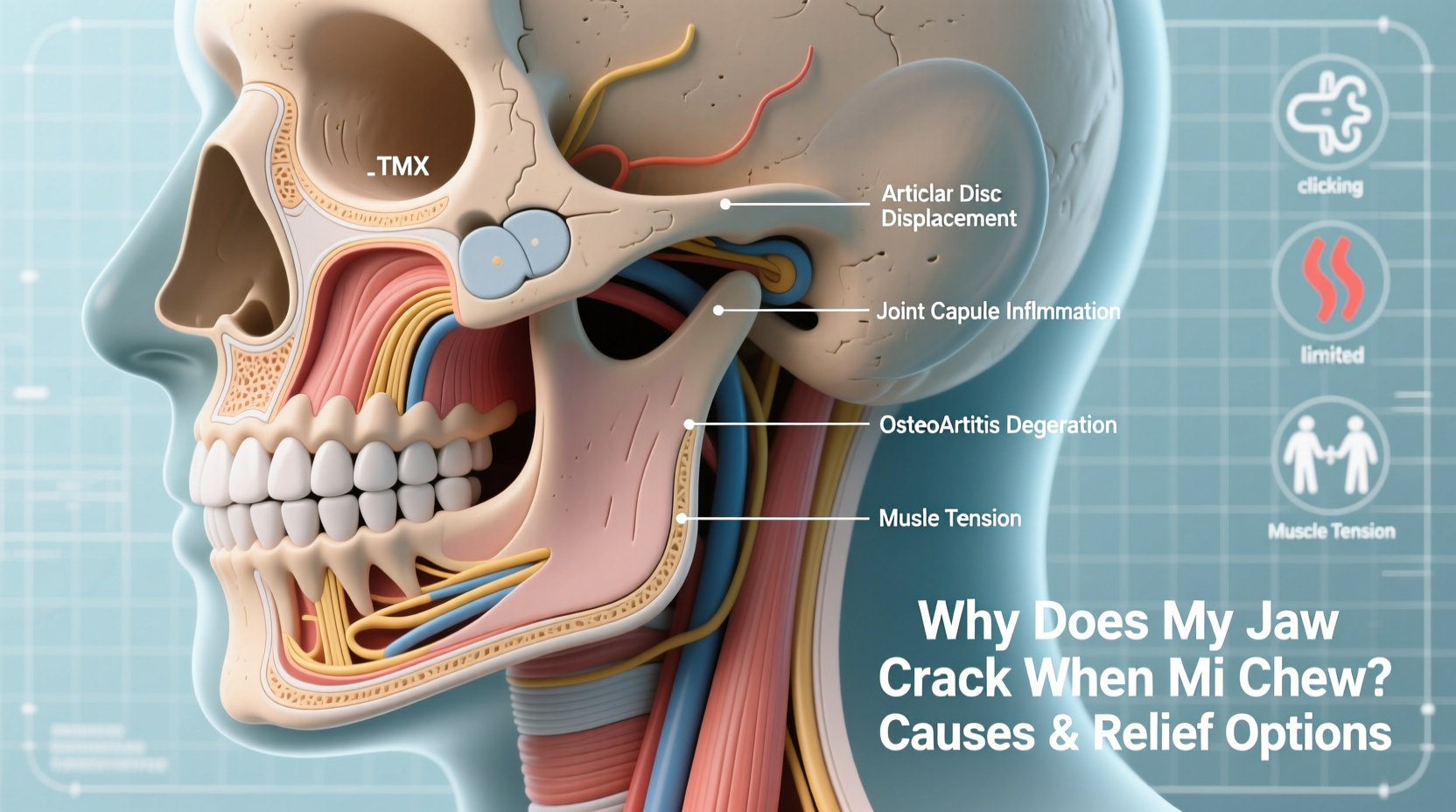
The temporomandibular joint functions like a hinge combined with a sliding motion, allowing the jaw to move up and down, side to side, and forward and back. A small disc of cartilage sits between the mandible (lower jaw) and the temporal bone (side of the skull), cushioning the joint and enabling smooth movement. Ligaments, muscles, and tendons support this joint, making coordinated motion possible.
When you chew, the joint undergoes repeated compression and gliding. If the disc becomes misaligned, inflamed, or damaged, it can produce audible clicks or pops as it snaps back into place—or fails to do so. These sounds are medically referred to as \"crepitus.\" In many cases, crepitus is painless and benign. However, when accompanied by discomfort, limited movement, or locking, it may indicate a more serious condition such as temporomandibular joint disorder (TMD).
Tip: Pay attention to whether the cracking occurs on one side or both, and note if pain increases with certain foods or stress levels—this helps identify patterns.Common Causes of Jaw Cracking During Chewing
Jaw cracking isn’t always a sign of disease. Sometimes, it's simply due to normal joint mechanics. But several medical and lifestyle factors can increase the likelihood of noticeable or problematic joint noise.
1. Temporomandibular Joint Disorder (TMD)
TMD refers to a group of conditions affecting the TMJ and surrounding muscles. It’s one of the most frequent causes of jaw popping and pain. According to the American Dental Association, over 10 million Americans suffer from some form of TMD, with women affected more than men.
TMD can result from disc displacement within the joint, muscle tension, arthritis, trauma, or chronic clenching and grinding (bruxism). Symptoms include:
- Clicking, popping, or grating noises in the jaw
- Pain in the jaw, face, neck, or ears
- Difficulty opening the mouth fully
- Jaw locking in an open or closed position
- Headaches or earaches without infection
2. Muscle Overuse or Bruxism
Clenching or grinding your teeth—especially at night—puts excessive strain on the jaw joint and muscles. This repetitive stress can lead to inflammation, fatigue, and altered joint dynamics that contribute to cracking sounds. Many people with bruxism are unaware they grind their teeth until a partner notices or dental wear appears.
3. Arthritis in the TMJ
Osteoarthritis and rheumatoid arthritis can affect the TMJ just like other joints. Cartilage wears down over time, leading to bone-on-bone contact and rough movements that produce cracking or grinding sensations. Rheumatoid arthritis, an autoimmune condition, may cause swelling and damage to the joint lining.
4. Injury or Trauma
A blow to the jaw, whiplash, or even dental procedures requiring prolonged mouth opening can displace the articular disc or stretch supporting ligaments. Even minor injuries may trigger long-term joint instability and noise.
5. Poor Posture and Jaw Alignment
Chronic forward head posture—common among desk workers and smartphone users—can shift the jaw’s resting position, increasing pressure on the TMJ. Similarly, malocclusion (misaligned bite) may alter how forces are distributed across the joint during chewing.
“Up to 75% of adults experience TMJ sounds at some point, but only about 5–10% develop symptoms severe enough to require treatment.” — Dr. Rebecca Lee, Orofacial Pain Specialist
When to Be Concerned: Red Flags
Not all jaw noises demand medical attention. However, certain warning signs suggest it’s time to consult a dentist or specialist:
- Pain during movement: Discomfort while chewing, talking, or yawning
- Limited range of motion: Inability to open your mouth more than two fingers’ width
- Jaw locking: Feeling stuck when opening or closing your mouth
- Swelling or tenderness: Around the joint, just in front of the ear
- Changes in bite alignment: Teeth no longer fitting together properly
- Symptoms worsening over time: Increasing frequency or intensity of noise and pain
If any of these occur, early evaluation can prevent progression to chronic dysfunction.
Relief Options and Treatment Strategies
Most cases of jaw cracking resolve with conservative care. The goal is to reduce inflammation, correct biomechanical imbalances, and promote healing of soft tissues around the joint.
Nonsurgical Approaches
These are typically the first line of treatment and highly effective for mild to moderate TMD:
- Rest the joint: Avoid hard, chewy foods (like bagels, gum, jerky) and limit excessive talking or yawning.
- Apply heat and cold: Use a warm compress for 15 minutes to relax tight muscles; alternate with ice packs to reduce swelling.
- Practice gentle jaw stretches: Slowly open and close your mouth without forcing movement. Lateral jaw exercises may help realign the disc.
- Manage stress: Stress contributes to clenching. Techniques like meditation, breathing exercises, or biofeedback can reduce muscle tension.
- Use a night guard: Custom-fitted oral appliances prevent grinding and redistribute pressure on the joint.
Medical and Dental Interventions
If home remedies don’t provide relief after several weeks, professional treatments may be necessary:
| Treatment | How It Helps | Considerations |
|---|---|---|
| Physical Therapy | Strengthening and stretching exercises improve joint stability | Requires consistent effort; best guided by a trained therapist |
| Occlusal Adjustment | Reshaping teeth to correct bite issues | Controversial; should only be done after thorough diagnosis |
| Medications | NSAIDs reduce pain and inflammation; muscle relaxants ease spasms | Short-term use recommended due to side effects |
| Injections | Corticosteroids reduce inflammation; Botox relaxes overactive muscles | Temporary relief; not suitable for everyone |
| Surgery | Arthroscopy or joint replacement for severe structural damage | Rarely needed; reserved for advanced cases unresponsive to other therapies |
Prevention Checklist: Protect Your Jaw Long-Term
Maintaining healthy jaw function involves daily habits and awareness. Follow this checklist to minimize strain on the TMJ:
- ✅ Avoid chewing gum or biting nails and pens
- ✅ Cut food into small pieces to reduce chewing effort
- ✅ Keep lips together and teeth slightly apart when not eating or speaking
- ✅ Practice good posture—keep shoulders back and head aligned over spine
- ✅ Use a supportive pillow to maintain neutral neck position during sleep
- ✅ Schedule regular dental checkups to monitor joint and tooth health
- ✅ Address teeth grinding early with a dentist-prescribed night guard
Real-Life Example: Recovery Through Lifestyle Changes
Sarah, a 34-year-old graphic designer, began noticing her jaw cracked loudly every time she ate apples or yawned. Initially, she ignored it—until pain started radiating to her left temple and ear. She visited an orofacial pain clinic where a dentist diagnosed early-stage TMD linked to nighttime bruxism and poor ergonomics at her workstation.
Her treatment plan included a custom night guard, daily jaw stretches, and ergonomic adjustments to her chair and monitor height. Within six weeks, the cracking decreased significantly, and pain subsided. “I didn’t realize how much tension I was holding in my jaw,” Sarah said. “Once I made small changes, the difference was dramatic.”
Frequently Asked Questions
Is jaw cracking always a sign of a problem?
No. Occasional, painless clicking is common and usually harmless. It becomes concerning only when associated with pain, limited movement, or locking.
Can stress really affect my jaw?
Yes. Emotional stress triggers muscle tension, including in the jaw and face. Many people clench unconsciously, especially during high-pressure periods, leading to joint strain and noise.
Should I see a dentist or doctor for jaw cracking?
Start with a dentist, particularly one experienced in TMJ disorders. They can evaluate your bite, joint function, and recommend imaging if needed. In complex cases, referral to an oral surgeon or physical therapist may follow.
Conclusion: Take Action Before Symptoms Worsen
Jaw cracking when chewing is more than just a curious sound—it can be an early indicator of joint stress or dysfunction. While many cases resolve with simple self-care, ignoring persistent symptoms can lead to chronic pain and reduced quality of life. By understanding the causes and taking proactive steps—from dietary adjustments to professional care—you can protect your jaw health and maintain comfortable, pain-free movement.
💬 Have you experienced jaw cracking? What helped you find relief? Share your story in the comments to help others navigate their journey to better jaw health.








