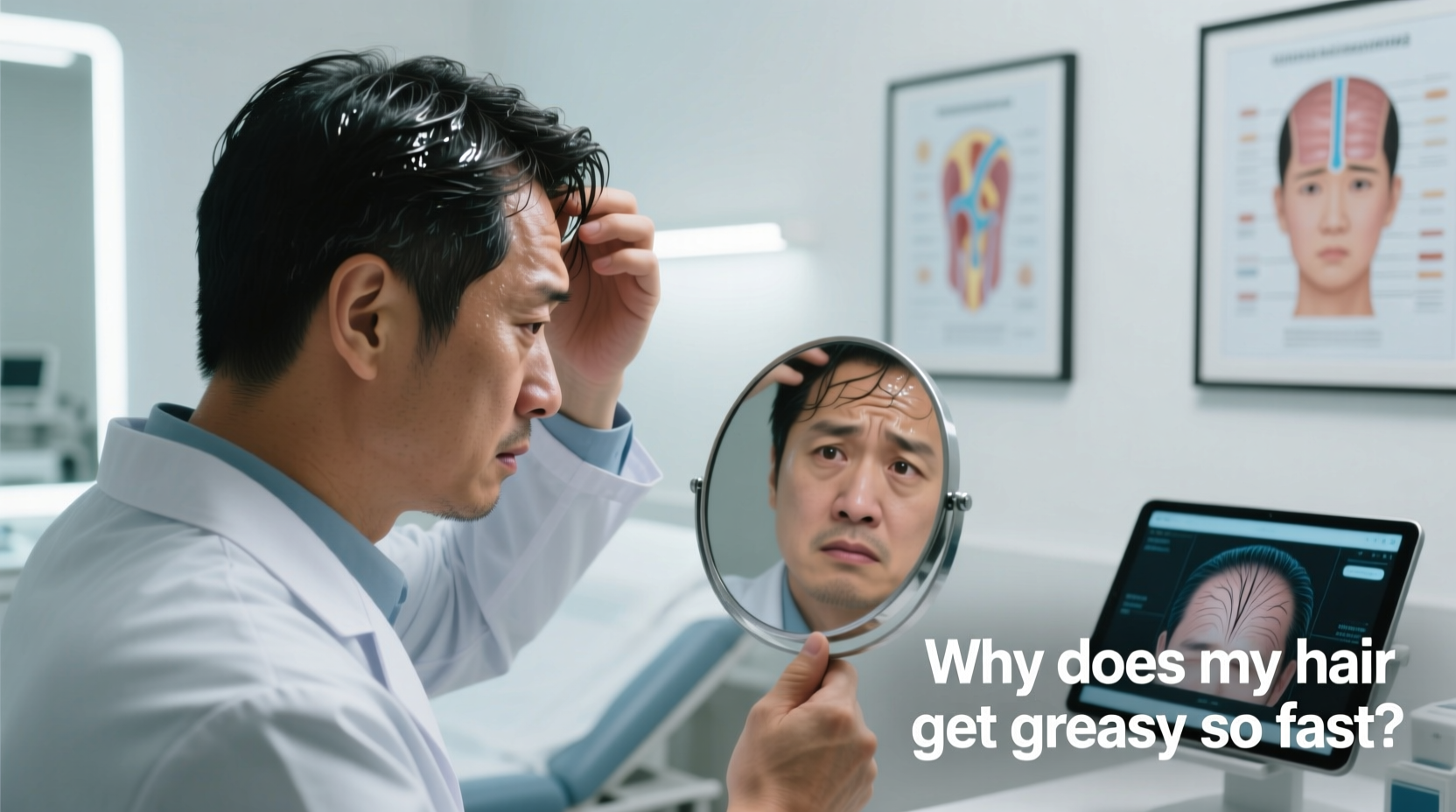
If you’ve ever washed your hair in the morning only to find it limp, shiny, and clinging to your scalp by noon, you’re not alone. This frustrating cycle—washing, then rapid re-greasing—is more common than many realize. While sebum is a natural part of scalp health, excessive oil production can make hair look unclean, feel heavy, and require constant maintenance. Dermatologists see this issue frequently and emphasize that the root cause isn’t always overproduction of oil—it’s often tied to habits, biology, or product misuse. Understanding why this happens is the first step toward regaining control.
The Science Behind Sebum Production
Sebum is an oily substance produced by sebaceous glands located in the scalp. Its primary role is to lubricate and protect the hair and skin from drying out and environmental stressors. However, when sebum accumulates too quickly, it creates the appearance of greasy hair. The rate of sebum production varies significantly between individuals due to genetics, hormones, and lifestyle factors.
Androgen hormones, particularly dihydrotestosterone (DHT), play a major role in stimulating sebaceous gland activity. This explains why some people naturally have oilier scalps, regardless of how often they wash. Additionally, younger adults tend to produce more sebum due to higher hormone levels, which is why teenagers often struggle with greasy hair.
“Sebum isn’t the enemy—it’s essential for healthy hair. The problem arises when there’s an imbalance in production or distribution.” — Dr. Lena Patel, Board-Certified Dermatologist
It's important to recognize that sebum doesn't appear instantly after washing. What you may perceive as \"greasiness\" within hours could be a combination of residual oil redistribution, product buildup, or even sweat mixing with dead skin cells.
Common Causes of Rapid Greasiness
While sebum is the primary culprit, several interrelated factors contribute to hair becoming oily soon after washing:
- Over-washing: Washing too frequently strips the scalp of natural oils, prompting it to compensate by producing more sebum—a rebound effect known as “overcompensation oiliness.”
- Harsh shampoos: Sulfate-based cleansers remove oil aggressively, disrupting the scalp’s pH balance and irritating glands into overproduction.
- Touching your hair: Frequent contact transfers oils and bacteria from your hands directly onto strands and roots.
- Hormonal fluctuations: Menstrual cycles, pregnancy, stress, and conditions like PCOS can increase sebum output.
- Diet and hydration: High-glycemic diets and insufficient water intake may indirectly influence oil production through inflammation and hormonal shifts.
- Product buildup: Conditioners, serums, and dry shampoos applied too close to the roots can weigh hair down and mimic greasiness.
What Dermatologists Recommend: A Balanced Hair Care Routine
The goal isn’t to eliminate oil but to regulate it. Dermatologists emphasize adopting a scalp-first approach rather than focusing solely on hair length. Here’s a science-backed routine designed to reduce post-wash greasiness:
1. Choose the Right Shampoo
Look for formulas labeled “balancing,” “clarifying,” or “for oily scalp.” Ingredients like salicylic acid, pyrithione zinc, tea tree oil, or niacinamide help regulate oil without over-drying. Avoid heavy silicones and sulfates unless used occasionally for deep cleansing.
2. Wash Strategically, Not Daily
For most people with oily scalps, washing every other day or every two to three days is optimal. This allows the scalp to adapt and reduces the overproduction cycle. If daily washing is unavoidable, use a gentle, low-lather formula.
3. Focus Cleansing on the Scalp
Apply shampoo directly to the scalp, massaging gently with fingertips (not nails). Let the suds run through the lengths during rinsing—conditioner belongs only on mid-lengths to ends.
4. Rinse Thoroughly with Cool Water
Residual product can clog follicles and attract dirt. Finish with a cool rinse to seal cuticles and reduce irritation.
5. Limit Heat Styling and Tools
Heat increases blood flow to the scalp, potentially stimulating glands. Minimize blow-drying, especially on high heat near the roots.
6. Use Lightweight, Non-Comedogenic Products
Avoid heavy oils like coconut or castor near the scalp. Opt for water-based leave-ins and styling products labeled “non-comedogenic” to prevent pore blockage.
| Do’s | Don’ts |
|---|---|
| Use lukewarm water to wash | Wash with very hot water (increases oil production) |
| Apply conditioner only from ears down | Apply conditioner directly to the scalp |
| Use dry shampoo between washes (sparingly) | Use dry shampoo daily or excessively |
| Change pillowcases 2–3 times per week | Leave sweat-soaked hair unwashed overnight |
| Detangle with a wide-tooth comb when wet | Brush vigorously on dry, tangled hair (spreads oil) |
Mini Case Study: Sarah’s Oily Hair Turnaround
Sarah, a 28-year-old graphic designer, washed her hair daily because it looked flat and dirty by midday. She used a strong clarifying shampoo thinking it would “deep clean” her scalp. After six months of worsening greasiness and occasional flaking, she consulted a dermatologist.
The diagnosis? Her routine was causing reactive seborrhea—her scalp was overproducing oil in response to aggressive cleansing. The dermatologist advised switching to a sulfate-free shampoo with niacinamide, reducing wash frequency to every other day, and applying conditioner only to the ends. Within three weeks, Sarah noticed her hair stayed fresher longer, and by week six, she could go two full days without washing.
“I thought I needed to scrub harder,” Sarah said. “But I was actually making it worse. Now I wash less and my hair looks better than ever.”
When to See a Dermatologist
Occasional greasiness is normal. But if your hair becomes oily within hours despite adjusting your routine, or if you experience redness, itching, flaking, or hair thinning, it may signal an underlying condition such as:
- Seborrheic dermatitis: A common inflammatory condition causing oily, flaky scalp patches.
- Scalp psoriasis: Can alter sebum flow and lead to buildup.
- Polycystic ovary syndrome (PCOS): Hormonal imbalances often manifest through increased facial and scalp oiliness.
- Fungal overgrowth: Malassezia yeast feeds on sebum and can exacerbate oiliness and dandruff.
In such cases, prescription treatments like ketoconazole shampoo, topical retinoids, or oral medications may be necessary. A dermatologist can perform a scalp examination and recommend targeted therapy.
“Patients often blame themselves for oily hair, but sometimes it’s a medical issue masked as a hygiene problem. Proper diagnosis changes everything.” — Dr. Marcus Lee, Clinical Dermatologist, New York Skin Institute
Actionable Checklist: Reduce Greasiness in 7 Steps
Follow this dermatologist-approved checklist to regain balance:
- Switch to a gentle, sulfate-free shampoo with balancing ingredients (e.g., salicylic acid, tea tree, or niacinamide).
- Limit washing to every other day or less, depending on your hair type.
- Apply conditioner only to the mid-lengths and ends—never the scalp.
- Avoid heavy oils and creams near the roots.
- Wash pillowcases and hats regularly to reduce oil and bacteria transfer.
- Minimize touching, twisting, or brushing hair throughout the day.
- Consider using a weekly clarifying shampoo (once every 7–10 days) to remove buildup.
Frequently Asked Questions
Can drinking more water reduce oily hair?
While hydration supports overall skin and scalp health, drinking water alone won’t stop excess sebum. However, dehydration can trigger the body to produce more oil to compensate for dryness, so staying hydrated helps maintain balance.
Is it bad to sleep with wet hair?
Yes—especially if you have an oily or sensitive scalp. Dampness traps heat and creates a breeding ground for fungi like Malassezia, which thrive on sebum and can worsen greasiness and dandruff. Always dry your hair before bed when possible.
Does hard water make hair greasier?
Hard water doesn’t increase oil production, but mineral buildup (calcium, magnesium) can coat the hair, making it feel sticky or weighed down—often mistaken for greasiness. Using a chelating or clarifying shampoo once a week can help remove deposits.
Conclusion: Balance Over Elimination
Oily hair after washing isn’t a sign of poor hygiene—it’s often a symptom of imbalance caused by routine choices, biological factors, or underlying conditions. The solution lies not in stripping the scalp bare, but in nurturing its natural equilibrium. By choosing the right products, adjusting washing frequency, and listening to your scalp’s signals, you can break the cycle of fast greasiness.
Dermatologists agree: sustainable results come from consistency and understanding your unique hair biology. Small changes, when applied thoughtfully, lead to lasting improvements. Don’t fight your hair—work with it.
💬 Have a tip that worked for your oily hair? Share your experience below and help others find relief from the post-wash grease cycle.








