That sudden, involuntary flicker in your eyelid—usually the upper one—can be more than just a minor annoyance. For many people, eye twitching (clinically known as *myokymia*) appears without warning and often lingers longer than expected. While it's typically harmless, persistent twitching can signal deeper imbalances related to lifestyle habits. The most common culprits? Stress, excessive caffeine intake, and prolonged screen exposure. Understanding how these factors interact with your nervous system is key to finding relief and preventing recurrence.
The Science Behind Eye Twitching
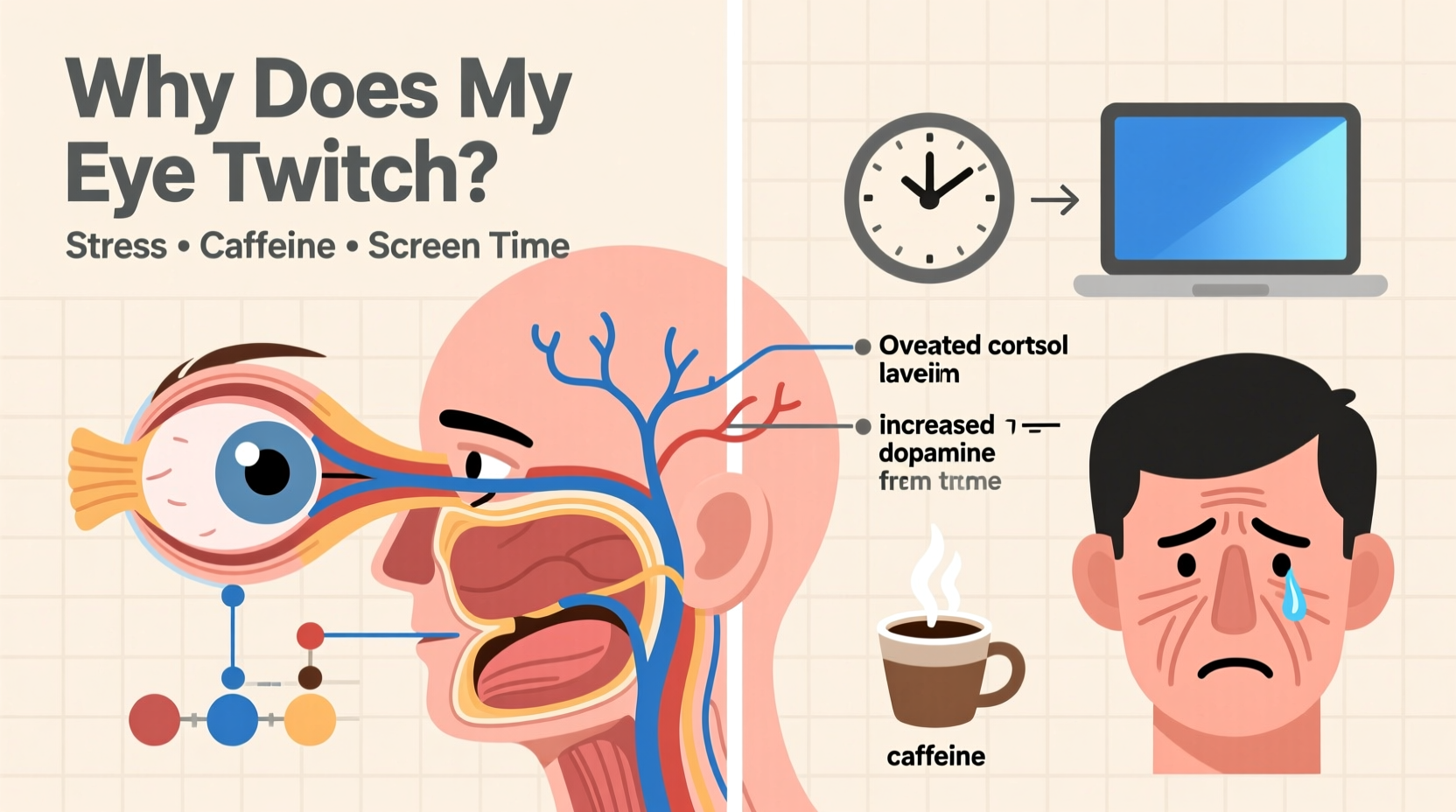
Eye twitching occurs when the orbicularis oculi muscle—the thin muscle that surrounds the eye—fires repeatedly in quick succession. These micro-spasms are caused by misfiring nerve signals, often triggered by overstimulation of the facial nerve (cranial nerve VII). Unlike more serious neurological conditions such as blepharospasm or hemifacial spasm, benign essential blepharospasm, or even dystonia, everyday eye twitching is usually isolated, temporary, and resolves on its own.
However, the frequency and duration of twitches are closely tied to physiological stressors. When your body is under strain—whether mental, chemical, or environmental—the nervous system becomes hyperexcitable. This lowers the threshold for abnormal nerve discharges, making small muscles like those around the eye prone to spontaneous contractions.
Tip: If your eye twitch lasts longer than three weeks or spreads to other parts of your face, consult a neurologist to rule out underlying conditions.Stress: The Hidden Trigger Behind Persistent Twitching
Chronic stress is one of the leading contributors to eye twitching. When you're stressed, your body releases cortisol and adrenaline—hormones designed to prepare you for \"fight or flight.\" In short bursts, this response is protective. But when stress becomes constant, these hormones flood your system continuously, increasing muscle tension and neural excitability.
The delicate muscles around the eyes are especially sensitive to this heightened state. Even low-grade anxiety or mental fatigue from work pressure can manifest physically through subtle tics. People who report frequent eye twitching often describe periods of high workload, emotional strain, or disrupted sleep—all signs of cumulative stress.
A 2022 study published in the Journal of Neuro-Ophthalmology found that over 70% of patients reporting chronic eyelid myokymia also scored above average on standardized stress and anxiety assessments. While correlation isn’t causation, the pattern suggests a strong link between psychological load and neuromuscular instability.
“Stress doesn’t just affect mood—it directly impacts motor control. The eyelid is often the first place we see that disruption.” — Dr. Lena Patel, Neuro-Ophthalmologist, Massachusetts Eye and Ear
Caffeine: How Your Morning Coffee Might Be Making Your Eye Flicker
Caffeine is a central nervous system stimulant. It works by blocking adenosine receptors, which normally promote relaxation and sleepiness. By inhibiting them, caffeine increases alertness—but at a cost. Too much can lead to jitteriness, increased heart rate, and yes, muscle spasms.
For some individuals, consuming more than 400 mg of caffeine per day (about four cups of brewed coffee) significantly raises the risk of eye twitching. But sensitivity varies widely. Some people experience twitching after just one energy drink or a single espresso, especially if consumed late in the day.
Caffeine also disrupts sleep quality—even if you fall asleep quickly. It reduces deep sleep cycles and can cause micro-arousals during the night, leaving the nervous system under-recovered. This creates a vicious cycle: poor sleep leads to daytime fatigue, prompting more caffeine use, which further destabilizes neural function.
Common Sources of High Caffeine Intake
| Source | Average Caffeine (mg) | Equivalent Eye Twitch Risk* |
|---|---|---|
| Brewed Coffee (8 oz) | 95 | Moderate |
| Espresso (1 oz) | 64 | High (concentrated dose) |
| Energy Drink (16 oz) | 160–240 | Very High |
| Black Tea (8 oz) | 47 | Low |
| Milk Chocolate Bar (1.5 oz) | 9 | Negligible |
*Risk levels based on clinical observations and patient self-reporting; individual tolerance varies.
Tip: Try switching to half-caf or herbal teas for two days to see if twitching subsides. Decaf green tea still contains L-theanine, which may support calm focus without stimulation.Screen Time: Digital Overload and Eye Strain
In today’s digital world, most adults spend upwards of 7–10 hours daily staring at screens—computers, smartphones, tablets. This constant visual demand leads to what optometrists call “digital eye strain” or “computer vision syndrome,” a condition characterized by dry eyes, blurred vision, headaches, and yes, eye twitching.
Why does screen time trigger twitching? Several mechanisms are at play:
- Reduced blink rate: People blink about 66% less while looking at screens, leading to dry, irritated eyes. The cornea sends distress signals to the brain, which can provoke reflexive muscle contractions.
- Blue light exposure: High-energy visible (HEV) blue light emitted by LED screens may disrupt circadian rhythms and increase cortical arousal, particularly when used at night.
- Poor ergonomics: Leaning forward, squinting, or holding devices too close forces facial and ocular muscles to work harder, contributing to fatigue and spasms.
A real-world example illustrates this clearly:
Mini Case Study: Sarah, 34 – Marketing Manager
Sarah began experiencing left-eye twitching every afternoon after returning to full-time office work post-pandemic. She worked long hours on dual monitors, often skipping lunch breaks. Her symptoms worsened after she started using a new project management app that required constant notifications. Initially, she dismissed it as fatigue. But after two weeks of persistent twitching—and accompanying headaches—she visited an optometrist.
The diagnosis: severe digital eye strain compounded by dehydration and high caffeine intake (three lattes daily). The solution wasn't medication but behavioral changes: implementing the 20-20-20 rule, reducing screen brightness, switching to matte screen filters, and cutting caffeine after noon. Within five days, her twitch disappeared.
How to Stop Eye Twitching: A Step-by-Step Action Plan
If you're dealing with recurring eye twitching, don’t wait for it to resolve on its own. Take proactive steps to address the root causes. Follow this timeline-based approach for best results:
- Day 1–2: Eliminate Triggers
- Stop all caffeine intake (coffee, tea, soda, energy drinks).
- Reduce screen time by 30%. Use apps like Freedom or Screen Time to monitor usage.
- Apply warm compresses to closed eyes for 5 minutes, twice daily.
- Day 3–5: Optimize Recovery
- Practice the 20-20-20 rule: every 20 minutes, look at something 20 feet away for 20 seconds.
- Use preservative-free artificial tears to combat dryness.
- Begin gentle stress-reduction techniques: 5 minutes of box breathing (inhale 4s, hold 4s, exhale 4s, pause 4s).
- Day 6–7: Reintroduce Mindfully
- If desired, reintroduce caffeine—but limit to one cup before 10 a.m.
- Evaluate improvement. If twitch persists, extend elimination phase another 3–4 days.
- Assess workspace setup: Is your screen at eye level? Are lights glare-free?
- Week 2+: Maintain Long-Term Balance
- Set daily screen limits and stick to them.
- Establish a wind-down routine: no screens 60 minutes before bed.
- Track stress levels using a journal or mood app to identify patterns.
Prevention Checklist: Keep Eye Twitching at Bay
To avoid future episodes, integrate these habits into your routine:
- ✅ Limit caffeine to ≤200 mg/day (approx. 2 small coffees)
- ✅ Take screen breaks every 20 minutes using the 20-20-20 rule
- ✅ Stay hydrated—aim for 8 glasses of water daily
- ✅ Get 7–8 hours of quality sleep consistently
- ✅ Use blue light filters on devices, especially after sunset
- ✅ Practice mindfulness or stretching to manage daily stress
- ✅ Schedule annual eye exams to monitor vision health
Frequently Asked Questions
Can lack of sleep cause eye twitching?
Yes. Sleep deprivation increases neural excitability and reduces the body’s ability to regulate muscle activity. Even one night of poor sleep can trigger a twitch, especially when combined with caffeine or screen use. Chronic insomnia significantly raises the risk of recurrent episodes.
Is eye twitching a sign of a serious medical condition?
In most cases, no. Benign eyelid myokymia is not dangerous. However, if twitching spreads to other facial areas, causes the eye to close completely, or persists beyond three weeks, it could indicate conditions like hemifacial spasm, multiple sclerosis, or Parkinson’s-related tremors. Always seek medical evaluation for persistent or worsening symptoms.
Can magnesium help stop eye twitching?
Potentially. Magnesium plays a critical role in nerve transmission and muscle relaxation. Some studies suggest mild deficiency may contribute to muscle cramps and spasms. While evidence specific to eye twitching is limited, anecdotal reports and clinical experience support trying a short trial of magnesium glycinate (200–400 mg/day) under medical supervision, especially if diet is low in leafy greens, nuts, and whole grains.
Conclusion: Small Changes, Lasting Relief
Eye twitching is rarely dangerous, but it’s never random. It’s your body’s way of signaling imbalance—often due to stress, caffeine overload, or digital fatigue. The good news? Most cases respond quickly to simple, sustainable adjustments. You don’t need expensive treatments or medications. Just awareness, consistency, and a willingness to listen to what your body is telling you.
Start today. Put down the third cup of coffee. Step away from the screen. Breathe deeply. These small acts aren’t just about stopping a twitch—they’re about reclaiming balance in a fast-paced world. Your eyes, and your overall well-being, will thank you.
💬 Experiencing eye twitching? Share your story or tips in the comments below. Let’s build a community of mindful digital living—one blink at a time.








