
It’s a quiet but widespread observation: the same two glasses of wine that once felt pleasantly relaxing now leave you flushed, groggy, or even nauseated by bedtime. You haven’t changed your habits — yet your body has. Alcohol tolerance doesn’t simply “fade” with time; it declines due to measurable, interrelated physiological shifts rooted in human biology. Understanding these changes isn’t about assigning blame or nostalgia — it’s about respecting how aging reshapes our biochemistry, and making informed, health-conscious choices. This article details the core biological mechanisms behind declining alcohol tolerance after age 40, grounded in peer-reviewed research and clinical physiology.
1. Slowed Hepatic Metabolism: The Liver’s Diminishing Capacity
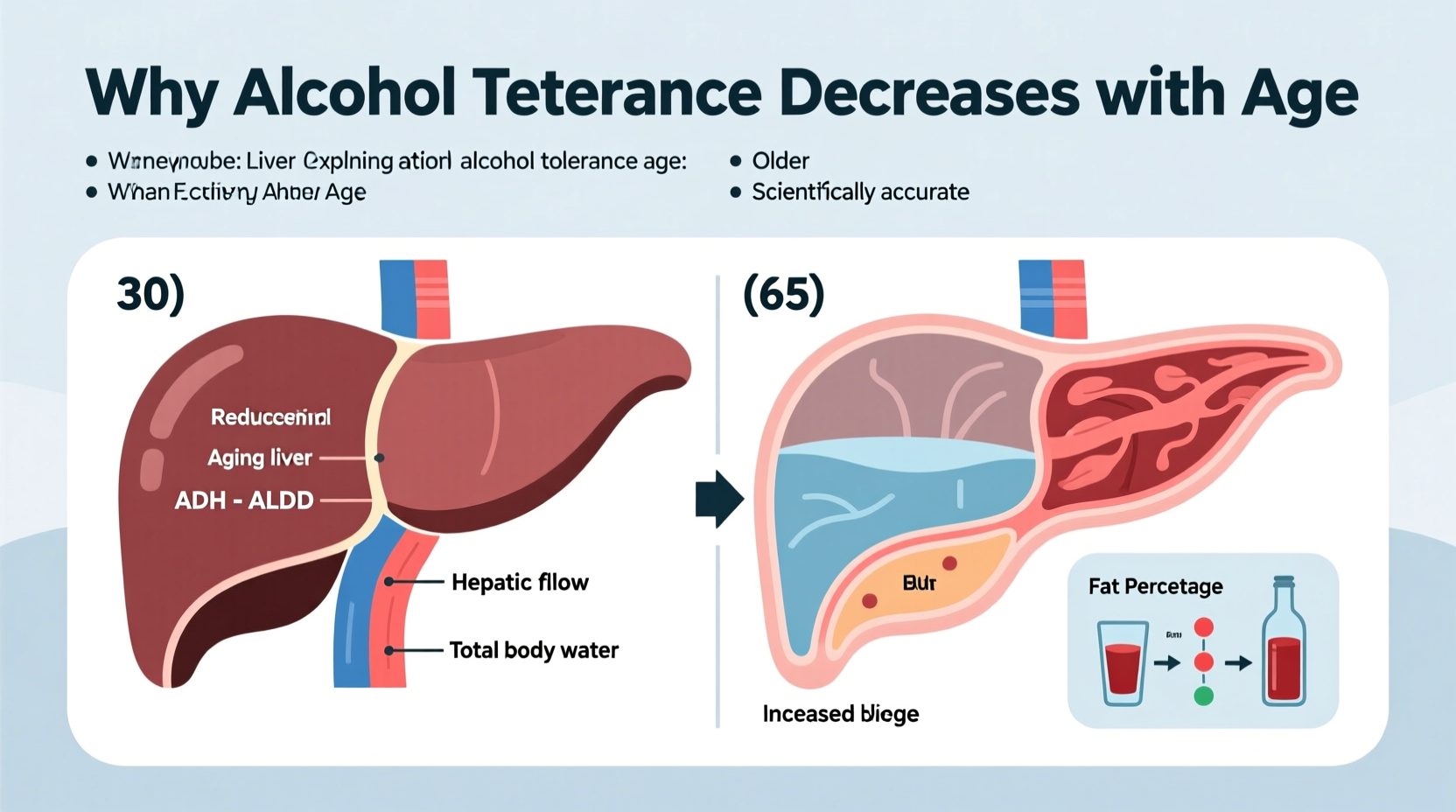
The liver processes over 90% of ingested ethanol through two primary enzymatic pathways: alcohol dehydrogenase (ADH) and aldehyde dehydrogenase (ALDH), followed by the microsomal ethanol-oxidizing system (MEOS). With age, structural and functional changes reduce the organ’s metabolic efficiency. Liver mass decreases by approximately 20–40% between ages 30 and 70. Blood flow to the liver drops by up to 35% — limiting substrate delivery and waste removal. Crucially, ADH activity declines significantly in hepatocytes, particularly the ADH1B and ADH1C isoforms most active in adult humans. A 2022 longitudinal study published in Hepatology tracked 1,247 adults over 15 years and found that mean ethanol clearance rates fell by 0.7 mL/kg/h per decade after age 45 — independent of weight, gender, or drinking history.
This slowdown means ethanol lingers longer in circulation, elevating blood alcohol concentration (BAC) for extended periods. More critically, acetaldehyde — the toxic, carcinogenic intermediate metabolite — accumulates at higher concentrations and for longer durations. That explains the intensified facial flushing, tachycardia, headache, and nausea many experience later in life, even after modest intake.
Tip: If you notice increased sensitivity after one drink, avoid “pushing through” — your liver is signaling reduced detox capacity. Consider switching to non-alcoholic alternatives during social events to maintain engagement without metabolic strain.2. Shifts in Body Composition and Fluid Distribution
From age 30 onward, lean body mass declines at ~0.5–1% per year, while fat mass increases — especially visceral and abdominal adipose tissue. Because ethanol is water-soluble but not fat-soluble, it distributes primarily into total body water (TBW), not fat. As TBW decreases — by roughly 10–15% between ages 30 and 70 — the same dose of alcohol becomes concentrated in a smaller volume. This directly elevates peak BAC.
For example, a 170-pound 35-year-old male with 60% TBW (~61 L) consuming 14 g of ethanol (one standard U.S. drink) achieves an estimated peak BAC of ~0.018 g/dL. The same man at age 65, assuming 50% TBW (~51 L) and unchanged weight, reaches ~0.022 g/dL — a 22% increase in concentration from identical intake. Women experience this effect earlier and more acutely due to naturally higher average body fat percentages and lower baseline TBW.
| Age Group | Avg. Total Body Water (% of body weight) | Typical Ethanol Distribution Volume (L) | Relative BAC Increase vs. Age 30 |
|---|---|---|---|
| 30–39 | 58–60% | 42–48 | Baseline (0%) |
| 50–59 | 52–55% | 37–42 | +8–12% |
| 70+ | 45–48% | 31–36 | +18–25% |
This pharmacokinetic shift occurs silently — no symptoms warn you that your internal “alcohol dilution tank” has shrunk. It’s why many report feeling “drunker faster” despite drinking less than they did decades ago.
3. Hormonal and Endocrine Changes Impacting Detox Pathways
Aging alters key endocrine axes that regulate liver enzyme expression and cellular resilience. Declining growth hormone (GH) and insulin-like growth factor 1 (IGF-1) levels impair hepatocyte regeneration and mitochondrial biogenesis — reducing the liver’s ability to repair oxidative damage caused by ethanol metabolism. Simultaneously, cortisol rhythms become dysregulated: older adults show elevated evening cortisol and blunted diurnal variation. Cortisol suppresses ALDH2 transcription, further delaying acetaldehyde clearance.
Sex hormones also modulate tolerance. In women, menopause triggers a sharp drop in estradiol, which normally enhances ADH activity in gastric mucosa and liver. Postmenopausal women exhibit up to 30% lower first-pass metabolism compared to premenopausal peers — meaning more unmetabolized ethanol enters systemic circulation. In men, testosterone decline correlates with reduced hepatic cytochrome P450 2E1 (CYP2E1) activity — a MEOS enzyme critical for high-dose ethanol clearance — increasing susceptibility to oxidative stress and steatosis.
“Alcohol metabolism isn’t static — it’s hormonally tuned. When estrogen or testosterone fall, so does the body’s built-in ‘alcohol buffer.’ Ignoring this isn’t resilience; it’s metabolic risk.” — Dr. Lena Rodriguez, Hepatologist and Director of the Aging & Metabolism Lab at Johns Hopkins School of Medicine
4. Neurological Sensitivity and Reduced Cognitive Reserve
While tolerance is often framed as a peripheral (liver-driven) phenomenon, central nervous system (CNS) adaptation plays a critical role — and it deteriorates with age. GABA-A receptors, potentiated by ethanol, undergo age-related downregulation and altered subunit composition (e.g., reduced α1, increased α5 expression), diminishing inhibitory neurotransmission efficiency. Simultaneously, NMDA receptor sensitivity increases, amplifying excitotoxicity during withdrawal or rebound. These shifts mean the brain requires less ethanol to produce sedation, motor impairment, or cognitive slowing — and recovers more slowly afterward.
Compounding this is declining cognitive reserve: processing speed, working memory, and executive function begin subtle declines after age 45. Alcohol’s acute effects — even at sub-intoxicating BACs — disproportionately impair divided attention and reaction time in older adults. A 2023 randomized crossover trial in Neurology found that participants aged 60–75 exhibited 40% greater impairment in simulated driving tasks after 0.03 g/dL BAC than those aged 25–35 — well below the legal U.S. limit of 0.08 g/dL.
5. Cumulative Organ Stress and Medication Interactions
Decades of even moderate alcohol exposure cause low-grade, cumulative hepatic inflammation, mitochondrial dysfunction, and fibrotic remodeling — reducing functional reserve. By age 60, up to 35% of adults show mild, asymptomatic hepatic steatosis, further constraining metabolic bandwidth. Concurrently, polypharmacy becomes common: over 40% of adults over 65 take five or more prescription medications daily. Many interact dangerously with ethanol — not just obvious sedatives like benzodiazepines or opioids, but also antihypertensives (e.g., nifedipine), NSAIDs (increased GI bleeding risk), statins (elevated myopathy risk), and antidepressants (serotonin syndrome potential).
These interactions aren’t merely additive — they’re often synergistic. For instance, ethanol potentiates the hypotensive effect of ACE inhibitors by enhancing nitric oxide release, increasing orthostatic dizziness risk. Or consider acetaminophen: chronic low-dose use combined with even light drinking can deplete glutathione stores, permitting NAPQI accumulation and hepatocyte necrosis — a mechanism rarely problematic in youth but increasingly hazardous after 50.
Mini Case Study: Robert, 62, Retired Teacher
Robert enjoyed a nightly glass of red wine for 30 years with no issues. At 62, he began experiencing dizziness upon standing, morning nausea, and unusually vivid dreams after his usual drink. His physician ordered liver enzymes and found mildly elevated ALT and AST. An ultrasound revealed grade 1 hepatic steatosis. Further review revealed he’d started amiodarone (for atrial fibrillation) and low-dose aspirin six months prior. His pharmacist identified the amiodarone–ethanol interaction: both prolong QT interval and impair mitochondrial fatty acid oxidation. Eliminating alcohol resolved his symptoms within three weeks — and follow-up labs normalized. Robert hadn’t developed “intolerance” arbitrarily; his biology had reached a tipping point where longstanding habits collided with new physiological constraints.
Actionable Steps: Adapting Your Relationship with Alcohol After 45
- Track your personal response: Note BAC-approximate effects (e.g., warmth, speech slurring, balance) after each drink — not just quantity consumed.
- Adopt the “half-standard” rule: Replace 14 g ethanol drinks (5 oz wine, 12 oz beer) with 7 g equivalents (2.5 oz wine, light beer) — then assess tolerance over 2 weeks.
- Time your intake: Consume alcohol only with food — never on an empty stomach — to slow gastric absorption and support first-pass metabolism.
- Review all medications: Ask your pharmacist or prescriber: “Does any medication I take interact with alcohol, even at low doses?”
- Hydrate strategically: Drink one 8-oz glass of water before, with, and after each alcoholic beverage to support renal clearance and mitigate dehydration-induced fatigue.
Frequently Asked Questions
Is decreased tolerance reversible if I stop drinking for a while?
Partial recovery is possible. Abstinence for 3–6 months can improve liver enzyme activity, reduce inflammation, and restore some mitochondrial function — especially in early-stage steatosis. However, age-related declines in ADH/ALDH expression and TBW are not reversible; they reflect natural biological trajectories. What improves is functional capacity — not baseline physiology.
Does genetics play a bigger role in late-life intolerance?
Yes — and it becomes more consequential. Polymorphisms like ALDH2*2 (common in East Asian populations) cause severe acetaldehyde buildup. While younger carriers may “push through” symptoms, aging amplifies this effect dramatically. Similarly, variants in ADH1B (e.g., ADH1B*3) alter ethanol clearance rates. Genetic predisposition doesn’t change with age — but its phenotypic expression does, as compensatory systems weaken.
Can exercise offset age-related tolerance loss?
Exercise improves insulin sensitivity, reduces visceral fat, and enhances hepatic blood flow — all beneficial. However, it does not increase TBW or restore ADH activity. A 2021 cohort study found physically active adults over 60 still experienced 15–20% greater BAC elevation per gram of ethanol than their younger counterparts — confirming that while fitness supports overall resilience, it doesn’t reverse core pharmacokinetic aging.
Conclusion
Declining alcohol tolerance after age 45 isn’t a sign of weakness, poor willpower, or “getting old” in a dismissive sense. It’s your body delivering precise, biologically grounded feedback: your liver has less functional reserve, your blood carries more concentrated ethanol, your brain responds more acutely, and your medications may be amplifying risks you never considered. Recognizing these changes isn’t about restriction — it’s about precision. It’s choosing intentionality over habit, physiology over tradition, and long-term neural and hepatic health over transient relaxation. The most empowering step you can take today is to recalibrate your understanding: tolerance isn’t something you lose — it’s something your body wisely recalibrates to protect itself. Start observing your responses without judgment. Adjust portion sizes before waiting for symptoms. Prioritize hydration and food pairing. And most importantly, trust the signals your biology sends — they’re not outdated instructions. They’re your most current, evidence-based user manual.
💬 Your experience matters. Have you noticed shifts in alcohol response after 45? Share what worked — or didn’t — in the comments. Real-world insights help others navigate this universal, yet deeply personal, aspect of healthy aging.








